
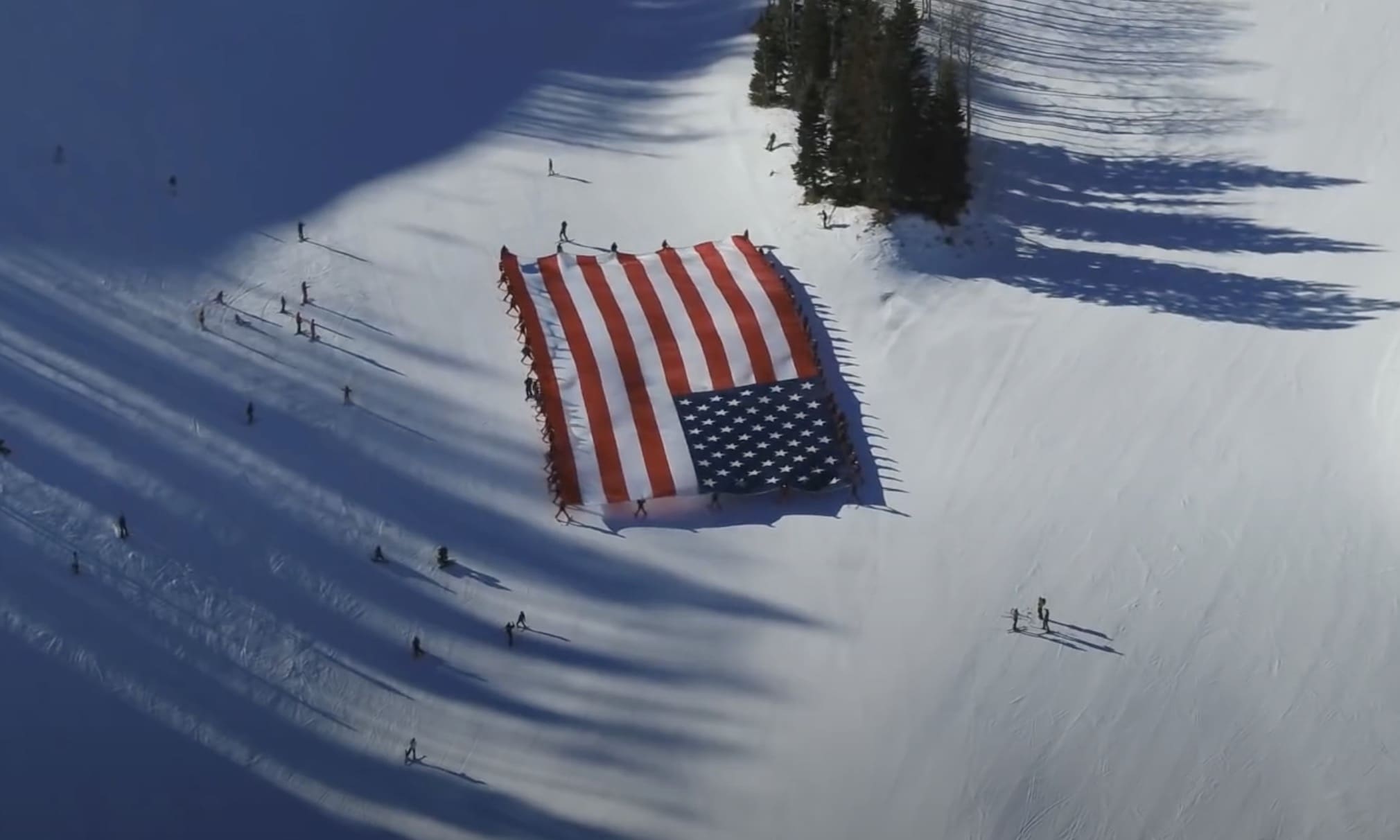
The awe-inspiring spectacle of the world’s largest free-flying American flag cascading down the slopes of Sundance Mountain Resort on Memorial Day several years ago was a testament to remarkable human coordination and patriotic spirit. This monumental event, known as "Big Betsy," involved the collaborative effort of over 100 dedicated volunteers who orchestrated the descent of the flag, measuring an astounding 150 feet by 78 feet, covering a total of 11,800 square feet of vibrant red, white, and blue fabric. The footage capturing this extraordinary display has since become a powerful visual representation of honor and gratitude towards all service members, past and present.
A Monumental Undertaking: The Genesis of Big Betsy
The concept behind deploying such an immense flag on a ski slope was rooted in a desire to create a unique and impactful tribute to American servicemen and women. The planning and logistics for an event of this magnitude were extensive, requiring meticulous attention to detail and the coordination of numerous individuals and resources. The flag itself, "Big Betsy," was not a casual undertaking but a carefully constructed piece of patriotic art, designed to withstand the rigular conditions of a mountain environment while remaining a breathtaking visual. Its sheer size presented significant challenges, from its initial preparation and transportation to the complex process of its controlled deployment on the challenging terrain of a ski resort.
The Event’s Chronology: From Preparation to Descent
While the original article notes the event occurred "a few years back" on Memorial Day, a more detailed chronological breakdown, even if inferred, can enhance the narrative. The days leading up to Memorial Day would have been crucial for the preparation of "Big Betsy." This likely involved volunteers gathering at the resort, meticulously inspecting the flag for any potential tears or weaknesses, and meticulously folding it in a manner that would facilitate a controlled release. The sheer weight and bulk of the fabric would have necessitated specialized equipment for handling and positioning it at the summit.
On Memorial Day itself, the operation would have commenced early. Volunteers, likely equipped with specialized gear suitable for skiing in potentially variable mountain conditions, would have gathered at the designated starting point. Safety briefings would have been paramount, ensuring all participants understood their roles and the procedures for managing the flag’s descent. The process of unfurling and guiding "Big Betsy" down the mountain would have been a carefully choreographed sequence. Skier teams, positioned strategically along the designated run, would have worked in unison to maintain even tension, prevent snagging, and ensure the flag flowed gracefully down the slope. Each segment of the flag’s journey would have required precise timing and communication amongst the volunteer skiers. The final moments would have involved bringing the flag to a controlled stop at the base of the mountain, where it would have been met with applause and recognition from onlookers.
Supporting Data and Technical Specifications
The dimensions of "Big Betsy" are a critical element in understanding the scale of this undertaking. At 150 feet by 78 feet, the flag covers an area equivalent to roughly 1.7 average-sized American football fields laid end-to-end. This immense surface area means the flag is not only visually striking but also highly susceptible to wind, adding another layer of complexity to its management. The total area of 11,800 square feet translates to a significant weight, requiring a substantial number of individuals to manage its movement.
To provide further context, consider the tensile strength required of the ropes and harnesses used to control the flag. The forces exerted by wind on such a large surface area can be considerable. While specific technical data regarding the flag’s material composition, weight, and the exact specifications of the rigging equipment are not provided in the original text, these would be crucial details for a comprehensive engineering or logistical report on the event. For instance, understanding the fabric’s wind resistance properties and the breaking strength of the support lines would highlight the engineering challenges overcome.
The Significance of Memorial Day
The choice of Memorial Day for this event is deeply symbolic. Memorial Day, observed on the last Monday of May, is a federal holiday in the United States dedicated to remembering and honoring the men and women who have died while serving in the U.S. military. It is a day of solemn reflection, remembrance, and often, acts of public tribute. Deploying the world’s largest American flag down a prominent ski resort on this specific day amplifies the message of patriotism and remembrance, transforming a recreational activity into a powerful public demonstration of national gratitude. The backdrop of the majestic mountains further enhances the visual impact and the sense of occasion.
Inferred Reactions and Broader Implications
While the original article focuses on the visual aspect and the act of remembrance, it is logical to infer a range of reactions from various stakeholders. The organizers, likely a coalition of veterans’ groups, community leaders, and the ski resort itself, would have experienced immense satisfaction and pride in the successful execution of such an ambitious project. The volunteers, having dedicated their time and effort, would have felt a profound sense of accomplishment and camaraderie, having participated in a meaningful tribute.
Onlookers, both those present at Sundance Mountain Resort and those who viewed the event through media coverage, would likely have been moved by the visual spectacle and the patriotic sentiment it conveyed. The sheer scale of "Big Betsy" would have elicited gasps of awe, while its descent would have served as a potent reminder of the sacrifices made by members of the armed forces.

The broader implications of such an event extend beyond a single day’s commemoration. "Big Betsy’s" deployment serves as a powerful example of how community engagement and creative initiatives can foster national pride and provide meaningful avenues for expressing gratitude. It highlights the potential for non-traditional platforms, like a ski resort, to become stages for significant patriotic displays. Furthermore, the event likely generated considerable positive publicity for Sundance Mountain Resort, reinforcing its image as a community-oriented establishment with a commitment to national values.
From a logistical standpoint, the success of "Big Betsy" could inspire similar large-scale patriotic events in other locations or with different themes, demonstrating that with careful planning and dedicated volunteers, ambitious public tributes are achievable. It underscores the power of collective action in creating memorable and impactful experiences that resonate with a broad audience. The event also implicitly highlights the importance of supporting organizations that facilitate such patriotic endeavors, whether through donations, volunteerism, or public awareness campaigns.
The Legacy of "Big Betsy"
The legacy of "Big Betsy" lies not only in its impressive dimensions but in the collective spirit it embodied. The image of the world’s largest American flag gracefully navigating the mountain slopes is a powerful metaphor for unity, resilience, and the enduring spirit of a nation. It serves as a poignant reminder that grand gestures of patriotism are often the result of meticulous planning, dedicated teamwork, and a shared commitment to a common cause. The footage captured, as described in the original report, continues to inspire and evoke a sense of national pride, solidifying its place as a memorable event in the annals of patriotic tributes. The enduring message of honor and gratitude to service members is amplified through such visually striking and collaboratively executed endeavors.

