
Canadian speed skier Stef Fleckenstein has defied overwhelming odds, completing an extraordinary two-year journey from a devastating, leg-threatening injury to claiming the NorAm downhill overall championship. This remarkable achievement not only signifies a profound personal triumph but also secures her a coveted guaranteed start spot in every World Cup downhill event for the 2026/2027 season, marking her definitive return to the pinnacle of alpine racing. Her story is a powerful testament to human resilience, medical excellence, and an unwavering spirit that reshapes understanding of what it means to rebuild a career, and a life, from the brink.
The Catastrophic Fall at Val d’Isère
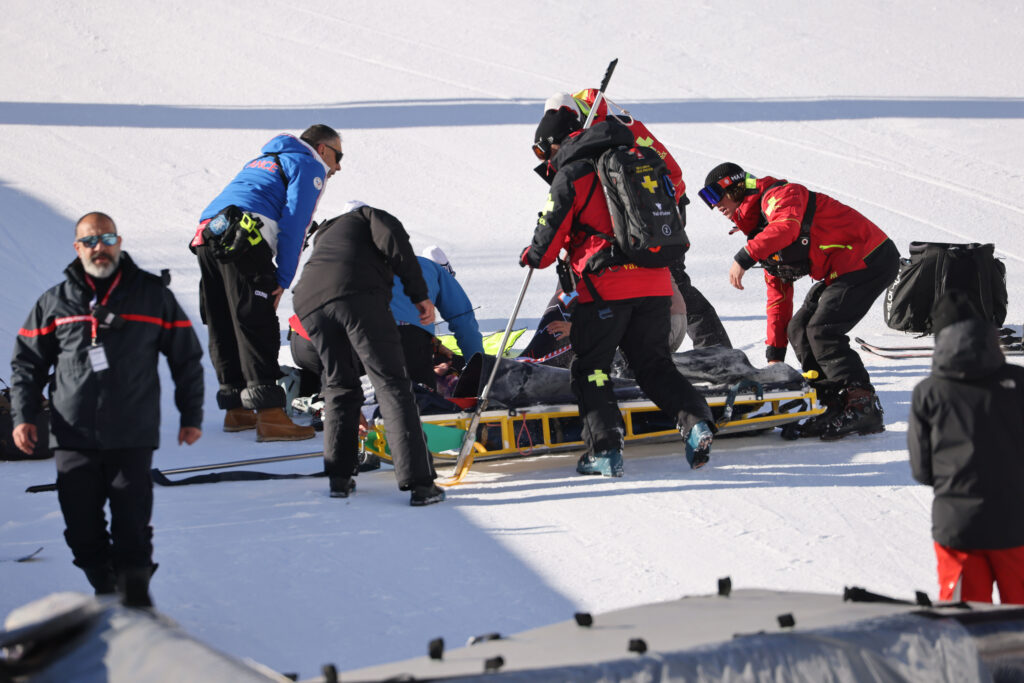
Two years prior, Fleckenstein’s promising career faced an abrupt and brutal halt on the challenging slopes of Val d’Isère, a venue renowned for its demanding downhill courses that test even the most seasoned athletes. The incident, a high-speed crash, left her with injuries so severe that they immediately transcended the typical concerns of an athlete’s return to sport, becoming a desperate fight for limb preservation. "I honestly felt like my leg was just gone. I couldn’t feel anything," Fleckenstein recounted, her words painting a stark picture of the immediate aftermath. "I looked at it and could see the top of my tibia and the end of my femur. It was just scary." This raw, visceral description underscores the gravity of the situation, a scene that few athletes, or indeed anyone, could fully comprehend in the chaotic moments following such an impact.
Yet, amidst the searing pain and shocking visual, Fleckenstein’s mind demonstrated an astonishing clarity. Instead of succumbing to panic, she performed an almost clinical self-assessment. "I was just so happy I could feel everything else. I didn’t hit my head. I was fully conscious," she recalled. "I remember thinking, okay, it is just my leg." This seemingly simple, almost detached thought became an anchor, a foundational piece of her psychological defense. In a moment of absolute despair, it offered a sliver of control, reframing the catastrophe not as an end, but as a singular, albeit immense, challenge that she believed she could confront and ultimately overcome. Medical personnel involved in her initial treatment highlighted the exceptional composure she displayed, which was crucial in guiding first responders.
A Race Against Time: The Medical Ordeal
The severity of Fleckenstein’s injury rapidly escalated beyond a standard ski racing trauma. Following the crash, she developed compartment syndrome, a critical condition where increased pressure within a confined muscle compartment compromises circulation and nerve function, potentially leading to irreversible tissue damage or limb loss if not addressed immediately. This complication thrust her into an emergency surgery, leaving her leg open as doctors battled against the clock. The focus shifted from rehabilitation to survival. "They told me I basically had five days to come up with a plan or I was going to lose my leg," Fleckenstein revealed, detailing the terrifying ultimatum she faced.
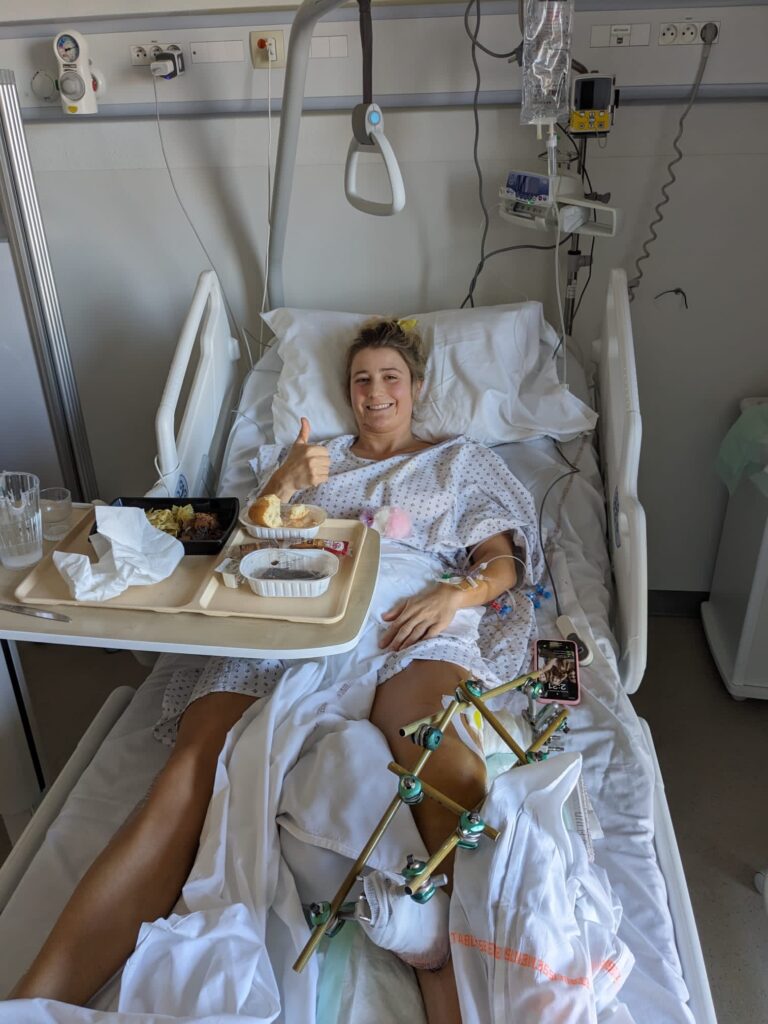
With time running out and the stakes at their absolute highest, her family, alongside the Austrian Ski Federation, orchestrated a swift and critical transfer. Fleckenstein was flown to Austria, a nation with a world-leading reputation in alpine sports medicine, to consult with a specialist. There, she underwent an arduous 17-hour surgery, an monumental effort to reconstruct and repair the extensive damage to her leg. "It was honestly a miracle," she reflected, the gravity of the procedure still palpable in her voice. "They fixed everything except my ACL. At that point it was just about saving my leg." This marathon operation, a testament to the skill of the surgical team, pulled her back from the precipice of amputation.
The surgery was merely the first hurdle in a protracted medical saga. Fleckenstein spent nearly six weeks hospitalized, her world confined to the routines of recovery, the gnawing uncertainty of her future, and the slow march of time. This initial period was followed by an intense regimen of rehabilitation, punctuated by additional procedures. In total, she endured seven surgeries, each one a step forward, but none a singular cure-all. There was no dramatic turning point, no sudden improvement; only a relentless, grinding stretch where progress was painstakingly slow, and the ultimate outcome remained perpetually uncertain. Every minute gain, every small decision, every single day, was a hard-earned victory in itself.
The Long Road to Recovery: Physical and Mental Fortitude
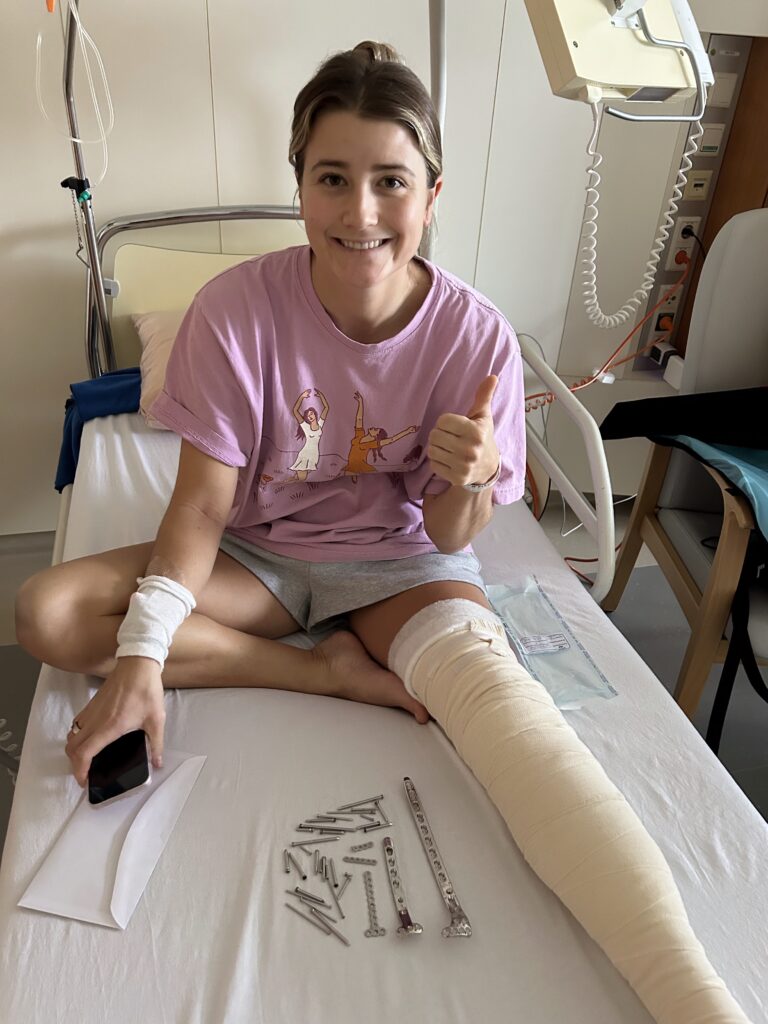
The path to recovery for Fleckenstein was not paved with grand breakthroughs but with an accumulation of seemingly minuscule achievements that, from her perspective, carried immeasurable significance. Progress was no longer measured in race times or podium finishes, but in the most basic, fundamental movements that most people take for granted. "The first day I took three steps on crutches was crazy to me," she expressed, underscoring the profound emotional weight of such an act. "The first time I could lift my leg on my own. Even being able to stand up." Each of these small victories marked a critical shift, a gradual reclamation of her body, moving her from a state of critical survival towards the cherished goal of independence.
This independence, a cornerstone of daily life that often goes unnoticed, became her paramount focus. Tasks that once required no thought—walking, standing, personal hygiene—suddenly demanded immense effort, unwavering patience, and laser-sharp concentration. "Being able to take a shower on my own or walk with one crutch, those were huge milestones," she affirmed. "When you lose that, you realize how much you take it for granted." These everyday moments, once mundane, now served as powerful reminders of her journey and reshaped her fundamental understanding of her body’s capabilities and its intricate workings.
Parallel to the physical healing, the mental component of her recovery remained an omnipresent challenge. Even as her body slowly mended, a heightened awareness of her fragility, and the mechanisms required to navigate her new reality, stayed with her. "You have to be locked in all the time," she noted. "I still don’t walk down stairs without thinking about every step." This persistent vigilance, far from being a burden, has become an integrated part of her existence, a constant, subtle reminder of the profound ordeal she endured and the extraordinary distance she has traveled. It speaks to a deep-seated mental fortitude cultivated through adversity.
Redefining Gratitude and Perspective
Fleckenstein frequently speaks of gratitude, but her candor reveals an evolving understanding of the term. In the initial phases of her recovery, she admitted her gratitude was largely superficial, a rote expression rather than a deeply felt conviction. "At the beginning, my gratitude was very surface," she explained. "I would say I am grateful for my family or my life, but it was repetitive." It was a mindset conditioned by circumstance, a recognition of what she should feel, rather than a profound, embodied perspective.
This superficiality began to erode slowly, not through a singular epiphany, but through the grinding daily reality of rehabilitation. As each small, hard-won step forward accumulated, she started to observe and appreciate aspects of life she had previously overlooked. "I started to realize that everything your body gives you is something to be grateful for. Some days it was as small as being able to sit without pain or make it up the stairs." These incremental victories, often imperceptible to an outsider, fundamentally reframed her perception of her body, her progress, and indeed, life itself.

Over time, this deeper, more authentic awareness of gratitude blossomed into one of the most significant and transformative elements of her comeback. It provided an anchor during periods of uncertainty and served as a powerful reminder of how perilously close everything had come to being irrevocably different. "A lot of what happened could have gone very differently," she acknowledged. "There were a lot of moments that were honestly miracles." This profound sense of having been granted a second chance permeates her outlook, imbuing her return to sport with a unique blend of determination and humble appreciation.
Triumphant Return to the Slopes: NorAm Success
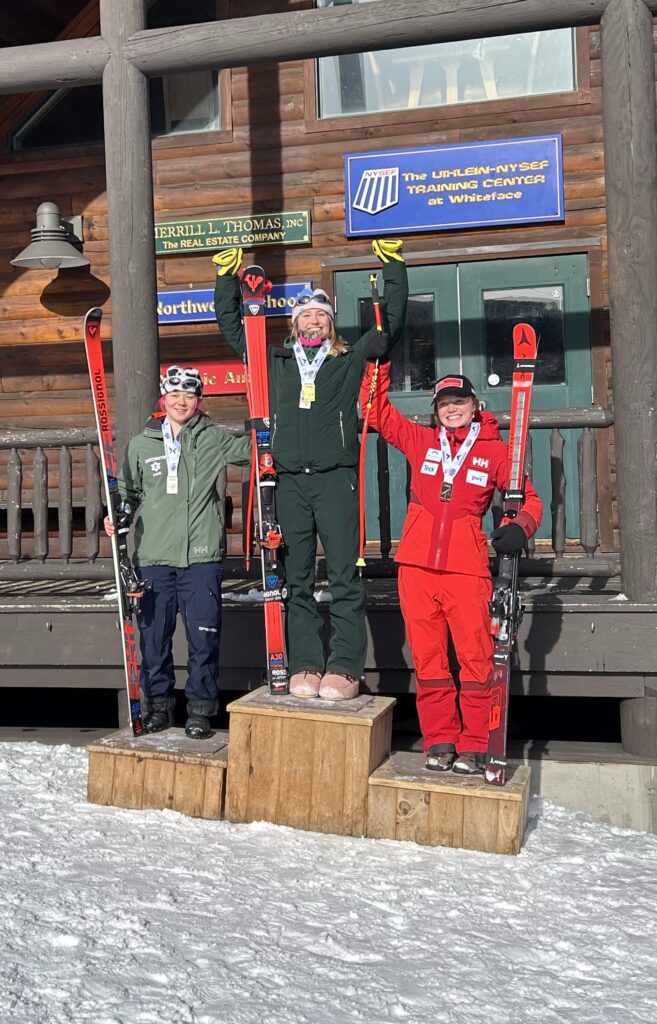
Nearly two years after the life-altering crash, Fleckenstein made her highly anticipated return to competitive racing at a NorAm downhill event in Whiteface, New York. This moment was charged with a potent mix of excitement, trepidation, and profound emotional weight. The nerves were immediate and overwhelming. "I was so nervous I felt like I was going to throw up at the start," she confessed, highlighting the immense pressure of her first real test back in a high-speed, high-stakes environment.
However, the moment she burst from the starting gate, something shifted. As the course unfolded beneath her skis, instinct, honed over years of relentless training, began to reassert itself. By the time she crossed the finish line of that initial training run, the pervasive doubt and anxiety had dissipated, replaced by a surge of pure elation. "When I got to the bottom of that first training run, it was probably the most euphoric moment. I was like, I can do this." This was not merely relief; it was a profound reawakening of belief, a visceral confirmation that she still possessed the skill, the courage, and the physical capability to compete at the elite level she had fought so fiercely to regain.
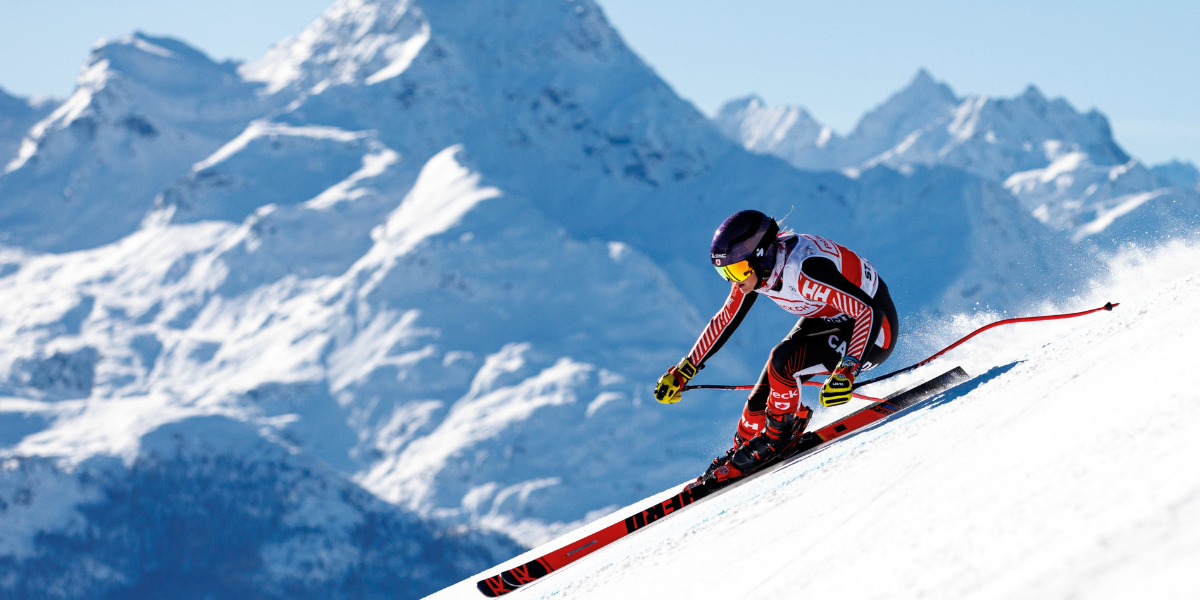
What followed was a rapid and remarkable ascent, perhaps even swifter than anticipated. Within weeks of her return, Fleckenstein was not just participating; she was excelling. She began winning races, accumulating critical points, and building a powerful momentum that silenced any lingering doubts about her capacity to return to form. The culmination of this incredible comeback was her securing the NorAm downhill overall title, an achievement that was far more than just a statistic. "It was very validating," she stated. "But more than that, it just means I have a path again." This victory was a resounding declaration, a concrete manifestation of her indomitable will and an earned ticket back to the World Cup stage. The NorAm circuit, a crucial development ground for aspiring World Cup racers, often serves as a rigorous proving ground, and Fleckenstein’s dominance there underscores her readiness for the highest level of competition.
A Different Kind of Athlete: Reimagining Risk and Sport
The Stef Fleckenstein returning to the World Cup circuit is fundamentally different from the athlete who departed it. Prior to her injury, her approach to speed skiing was characterized by an almost raw, uninhibited instinct and unwavering commitment, where the concept of risk felt straightforward and often unchallenged. "I think I used to just go full gas with no thought," she reflected, articulating a mindset common among downhillers where pushing the absolute limits is an inherent part of the discipline.
However, her experience of a life-altering injury has irrevocably reshaped this perspective. Risk is no longer something to be ignored or merely accepted, but something to be meticulously understood, analyzed, and managed with conscious intention. "I have a different understanding of risk. I don’t think you have to go beyond your ability to be fast. It can be technical and tactical." This profound shift reflects not just the lessons learned from her ordeal, but a more mature and sustainable approach to the sport—one that judiciously balances raw speed with technical precision, strategic awareness, and a newfound respect for the body’s limits.
Her relationship with skiing itself has evolved in tandem. What was once predominantly a pursuit of performance, progression, and competitive success now carries a deeper, more holistic appreciation for the entire ecosystem surrounding the sport. "I always loved skiing, but now I understand how special this life is," she elaborated. "The community, the people, the support. I feel very lucky to be part of it." In many profound ways, the two years spent away from the slopes, fighting for her limb and her future, granted her a perspective that is nearly impossible to acquire otherwise. This deepened sense of gratitude and community now accompanies her as she prepares to re-enter the demanding and intense environment of World Cup racing.
Implications for Canadian Speed Skiing: Forging a Path Forward
As Fleckenstein steps back into the World Cup arena, she enters a system where the pathway for women in speed disciplines, particularly within Alpine Canada, is still very much in flux. Currently, a dedicated World Cup speed team for Canadian women does not exist, a significant challenge for athletes aiming to specialize in downhill and super-G. While talented athletes like Valérie Grenier and Cassidy Gray compete in speed events, they often do so alongside technical disciplines, without the singular, specialized focus that the highest levels of speed racing typically demand.
Rather than viewing this structural limitation as an insurmountable barrier, Fleckenstein sees it as an opportunity to actively contribute to the sport’s evolution in Canada. "We have proven that you can do it on your own. It is hard, but it is possible," she asserted, drawing on her personal experience of self-driven recovery and success. Her return to the World Cup is imbued with a hope that the next generation of Canadian speed skiers will not have to navigate such a solitary path. As she prepares for a full downhill season, there is an underlying aspiration that her achievements will foster greater alignment and robust support from Alpine Canada, not just for her individual trajectory, but for the future of Canadian women’s speed skiing as a collective.
For Fleckenstein, her mission extends beyond personal ambition. "There are young Canadian athletes who want to race speed. They are putting in the work and taking those risks," she emphasized. "They need to be able to see that there is a future for them in it." Visibility and representation are crucial; athletes like Fleckenstein, by demonstrating what is possible through sheer will and exceptional performance, can inspire and pave the way even before formal structures are fully established. However, she understands that lasting progress—a sustainable pipeline for future talent—will only materialize when that individual momentum is met with comprehensive institutional support. "If I can help make that path clearer, even just a little bit, then that is something I am really proud of," she concluded, embodying a leadership role that transcends her athletic achievements.
A Second Chance: Ambition Forged in Gratitude
Ultimately, what defines Stef Fleckenstein’s extraordinary narrative is not solely the horrific injury, nor even the astounding comeback, but the profound clarity and appreciation with which she now approaches the opportunity before her. "I just feel so lucky to be getting a second chance," she stated with genuine humility. "A lot of people with injuries like mine do not get that." This deeply ingrained perspective, far from diminishing her drive, has in fact sharpened it, refining her focus and reinforcing her purpose. "I still have big goals. I am not doing this just to participate. I want to compete," she declared, her ambition undimmed. "But at the same time, everything now feels like a bonus."
Two years ago, Stef Fleckenstein was fighting a desperate battle to save her leg, her career, and her very ability to walk normally. Today, she stands on the precipice of a full 2026–27 World Cup downhill season, every start hard-won and deeply cherished. She carries with her a profound, hard-earned resilience, a sharpened perspective on risk and gratitude, and a powerful narrative built step by agonizing, triumphant step along the way. Her journey serves as an enduring inspiration, a testament to the boundless capacity of the human spirit to not only survive adversity but to emerge from it stronger, wiser, and more determined than ever before.

