
A team of climate scientists recently concluded a critical field operation at the Toolik Field Station on Alaska’s North Slope, marking a significant milestone in Arctic carbon monitoring. Led by Dr. Kelly Gleason, an assistant professor of eco-hydro-climatology at Portland State University, and ecologist Jenny Watts, the expedition successfully installed the first flux tower in the Arctic specifically designed to evaluate methane and carbon dioxide emissions from a permafrost thaw slump. This research, conducted in collaboration with the Protect Our Winters (POW) Science Alliance and the Woodwell Climate Research Center, aims to fill a critical gap in global climate models by quantifying the atmospheric impact of rapidly collapsing permafrost.
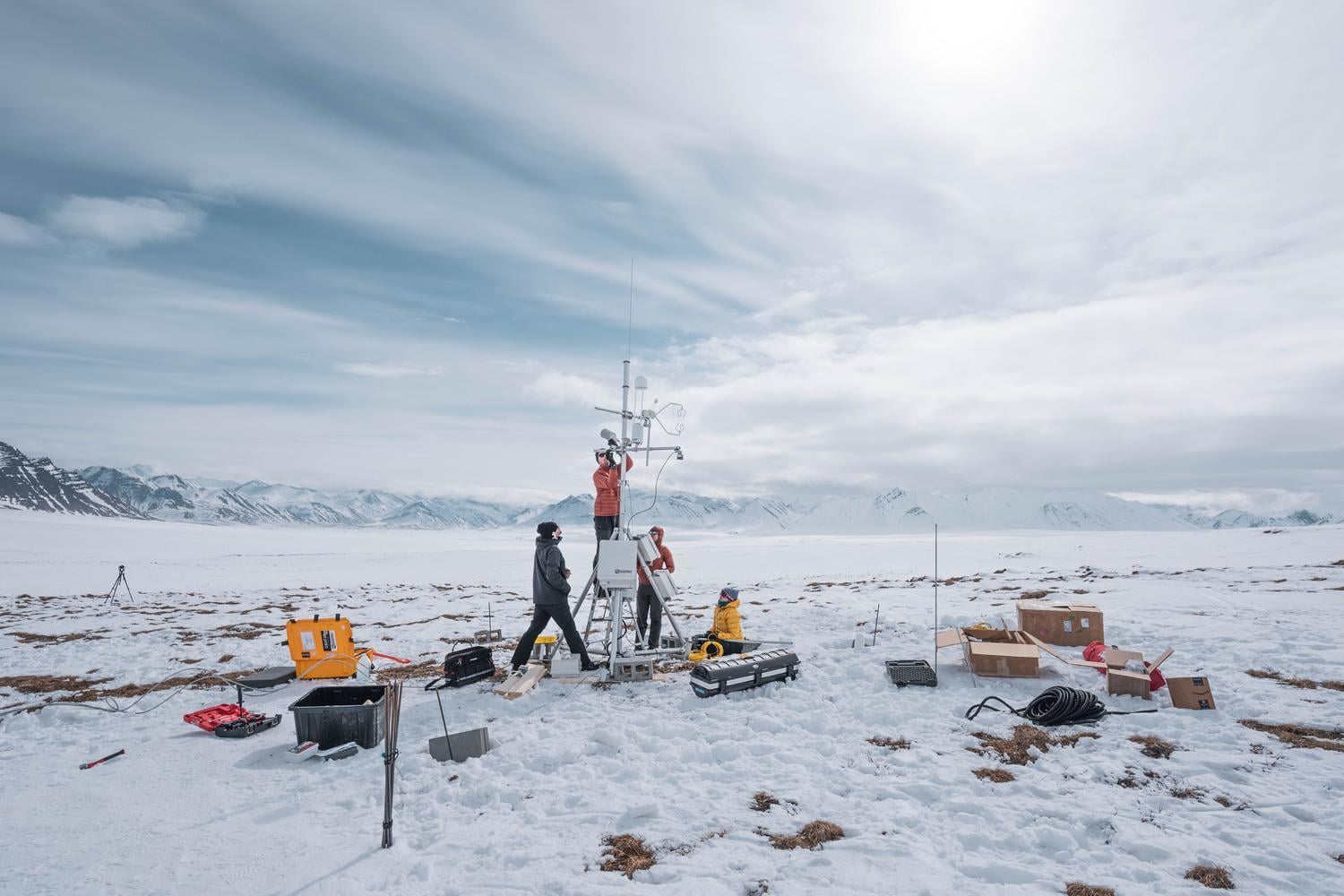
The Arctic is currently warming at a rate nearly four times faster than the global average, a phenomenon known as Arctic amplification. This accelerated warming is triggering "abrupt thaw" events, where ice-rich permafrost melts rapidly, causing the ground to collapse and form steep, eroding features known as thaw slumps. These slumps expose ancient organic matter—some of which has been frozen for thousands of years—to microbial decomposition, which in turn releases potent greenhouse gases into the atmosphere.
The Toolik Field Station Mission and Logistics
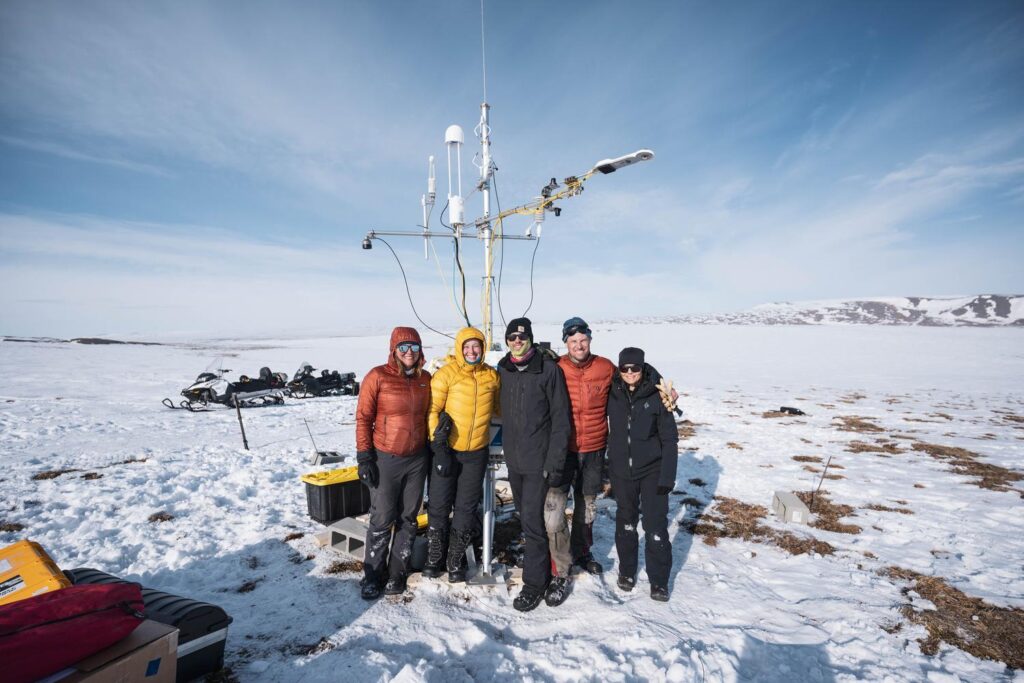
The research team, which included scientists Kyle, Christina, and Kai, operated out of the Toolik Field Station, a premier Arctic research hub managed by the University of Alaska Fairbanks. The primary objective was the deployment of a sophisticated eddy covariance flux tower. Unlike traditional sensors that measure static concentrations of gases, a flux tower measures the "breath" of the ecosystem, tracking the vertical exchange of gases between the earth’s surface and the atmosphere in real-time.
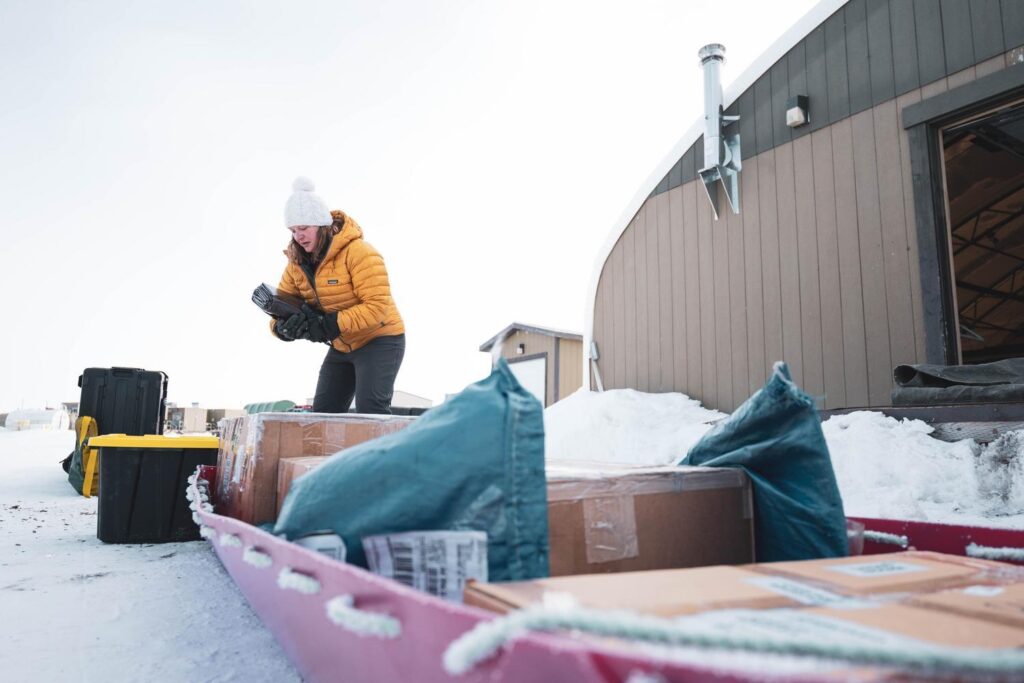
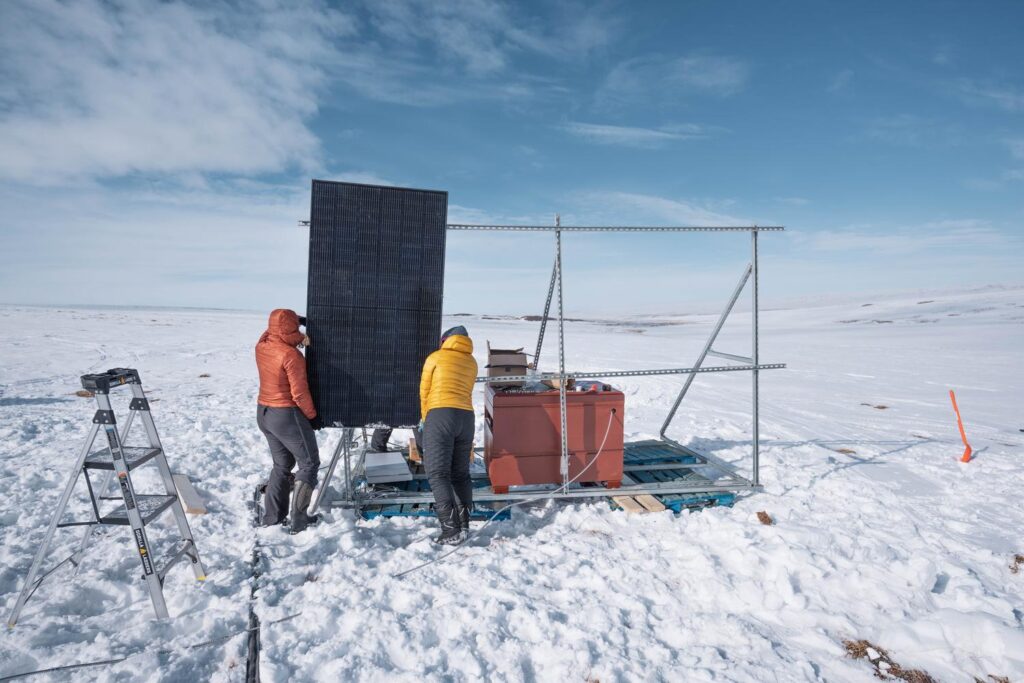
The logistical execution of the mission required navigating the harsh conditions of the Brooks Range during the spring transition. The team utilized snowmachines to haul several thousand pounds of equipment across the tundra, including a 15-foot aluminum frame, guy-lines, cement anchors, and four large-scale solar panels. Powering the station in the remote Arctic environment necessitated the transport of eight deep-cell batteries, each weighing over 100 pounds, and a massive weather-proof electrical enclosure.
The tower was strategically placed at a permafrost thaw slump to monitor the localized "hotspot" emissions that are often overlooked by broader satellite observations or low-resolution climate models. These sites are known to emit significantly higher concentrations of methane—a gas with a warming potential approximately 80 times greater than carbon dioxide over a 20-year period—compared to the surrounding intact tundra.
Chronology of the Expedition and Technical Deployment
The expedition followed a rigorous timeline designed to capitalize on the late-winter snowpack while preparing for the summer thaw:
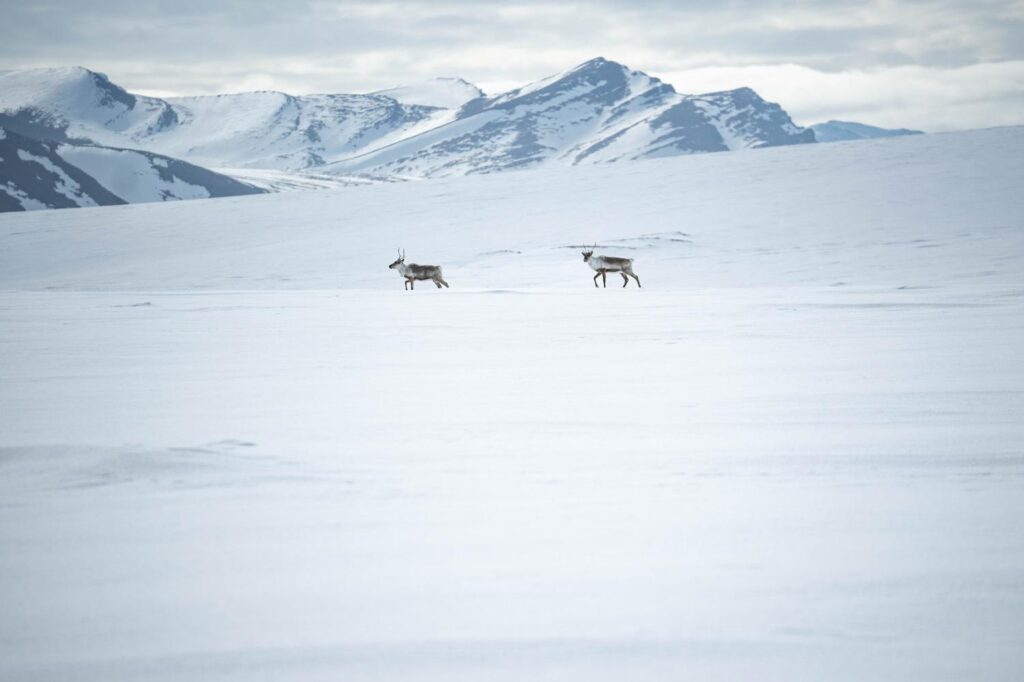
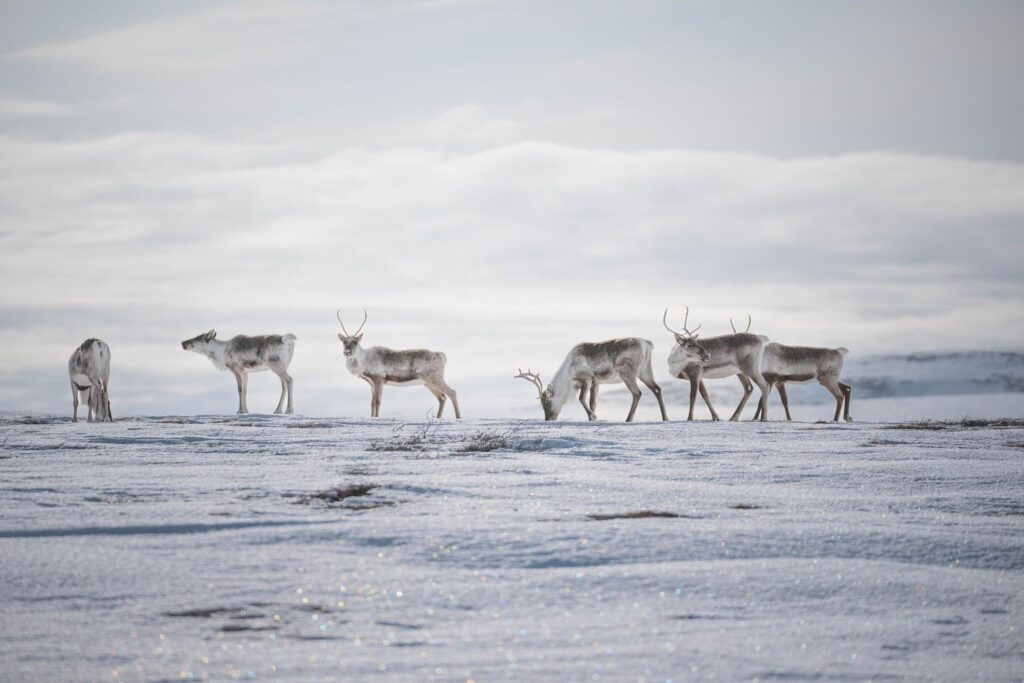
- Site Reconnaissance and Transport: Initial days were dedicated to scouting the thaw slump area and establishing safe transit routes for snowmachines. Caribou migrations in the area required the team to maintain a non-intrusive presence.
- Infrastructure Assembly: The 15-foot aluminum tower was erected and secured with guy-lines and specialized anchors designed to maintain stability in shifting, thawing soil.
- Sensor Integration: Scientists installed high-frequency gas analyzers capable of measuring carbon dioxide and methane concentrations at a rate of 10 to 20 times per second. These measurements are synchronized with 3D wind speed data to calculate the net flux of gases.
- Power System Installation: Given the lack of infrastructure, the team deployed a robust solar array and battery bank designed to keep the sensors operational throughout the Arctic summer, when 24-hour sunlight provides ample energy.
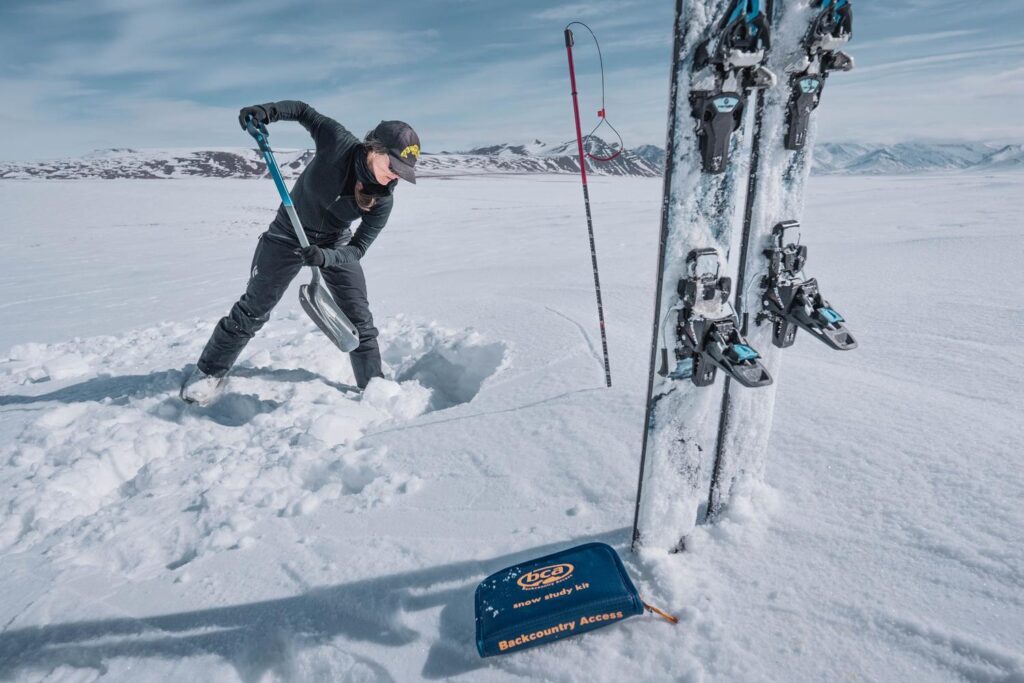
- Snow Hydrology Analysis: Parallel to the tower installation, Dr. Gleason conducted snow pit analyses to study the insulating properties of the snowpack and its influence on sub-surface temperatures.
Supporting Data: The Permafrost Carbon Feedback Loop
The urgency of this research is underscored by the sheer volume of carbon stored in Arctic soils. Scientists estimate that permafrost regions contain approximately 1,400 to 1,600 billion metric tons of organic carbon—nearly twice the amount currently present in the Earth’s atmosphere.
Data collected during the expedition highlighted a concerning trend regarding snow insulation. Dr. Gleason’s measurements revealed that deeper snowpacks (nearly two meters) acted as a thermal blanket for the ground. While surface temperatures in early May hovered around -3°C, the temperature at the base of the deep snowpack was also near -3°C, significantly warmer than the -10°C recorded at the base of shallower snowpacks (57 cm).
This temperature differential is critical. When the soil remains relatively warm throughout the winter due to snow insulation, microbial activity does not fully cease. This allows for the continued decomposition of organic matter and the subsequent release of greenhouse gases even during the coldest months. Furthermore, warmer winter soils reach the thawing point faster in the spring, accelerating the overall degradation of the permafrost.
The Role of Albedo and Hydrological Shifts
A secondary focus of the expedition was the study of albedo—the measure of how much solar radiation a surface reflects. Snow-covered Arctic landscapes have a high albedo, reflecting up to 90% of incoming sunlight back into space, which helps cool the planet. However, as the Arctic warms, the nature of its snowpack is changing.
Increased moisture in the atmosphere, a result of shrinking sea ice and open ocean evaporation, has led to increased snowfall in certain Arctic regions. While more snow could theoretically increase reflectivity, the expedition’s findings suggest that the insulating effect of deeper snow may negate these cooling benefits by accelerating permafrost thaw from below. This "compounding feedback" represents a complex challenge for climate scientists trying to predict the pace of global warming.
Institutional Perspectives and Advocacy
The expedition also highlights the growing intersection between rigorous field science and climate advocacy. As members of the POW Science Alliance, Dr. Gleason and Dr. Watts represent a movement of researchers who argue that data collection alone is insufficient to address the climate crisis.
"Protecting the Arctic starts with understanding it," the team noted in a collective statement regarding the mission. "Science shows us what’s happening, but advocacy gives us a path forward. We have a responsibility to turn research into action."
Protect Our Winters, an organization typically associated with the outdoor sports community, has increasingly invested in scientific partnerships. By bringing specialized researchers into the fold, the organization aims to provide its members and policymakers with evidence-based narratives that illustrate the immediate risks of Arctic degradation to global systems, including mountain snowpacks in the western United States and global sea levels.
Broader Impact and Climate Implications
The data generated by the new flux tower at Toolik will be integrated into larger datasets used by the Woodwell Climate Research Center and other international bodies. Currently, many global climate models utilize a "gradual thaw" assumption, which predicts a slow, steady release of carbon over decades. However, the presence of thaw slumps suggests that "abrupt thaw" could double the climate impact of permafrost emissions.
The implications of these findings extend far beyond the North Slope. The release of methane and CO2 from the Arctic creates a self-reinforcing loop: higher emissions lead to more warming, which leads to more permafrost thaw, and so on. This feedback loop is one of the most significant "tipping points" identified by the Intergovernmental Panel on Climate Change (IPCC).
By establishing high-resolution monitoring at the site of active collapses, the Gleason-Watts expedition provides the granular data necessary to refine these models. Accurate accounting of Arctic emissions is essential for international climate negotiations and for the development of effective carbon mitigation strategies.
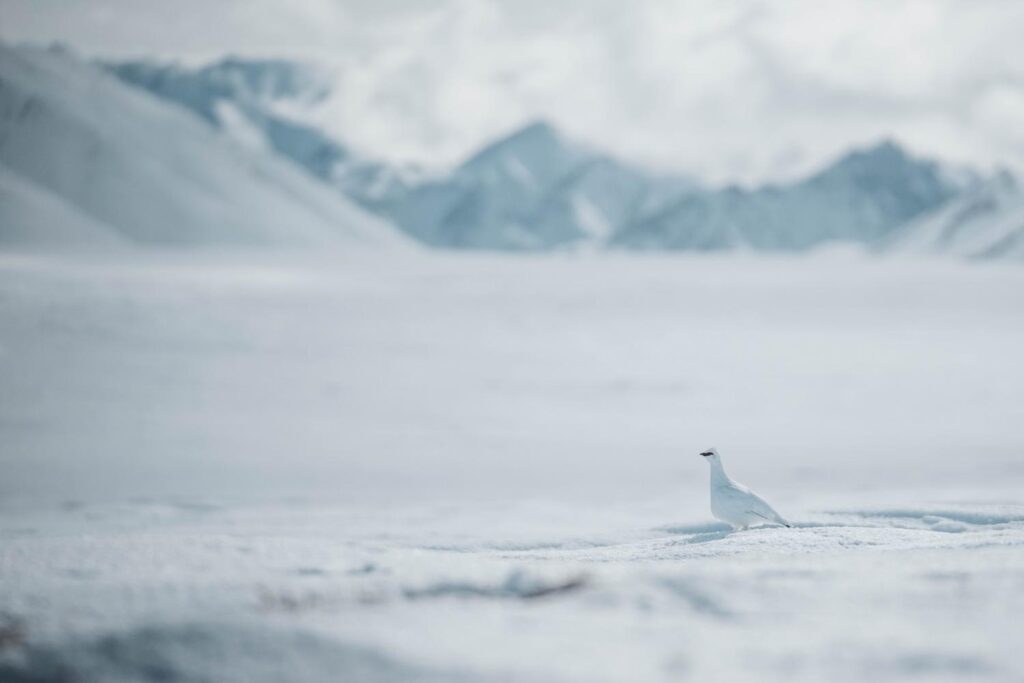
As the flux tower begins its first season of data collection, the scientific community remains focused on the North Slope. The transition from a frozen, reflective landscape to a thawing, emitting one represents one of the most profound shifts in the Earth’s modern history. The work at Toolik Field Station stands as a critical effort to document this change and to provide the scientific foundation for the advocacy required to mitigate its global consequences.

