
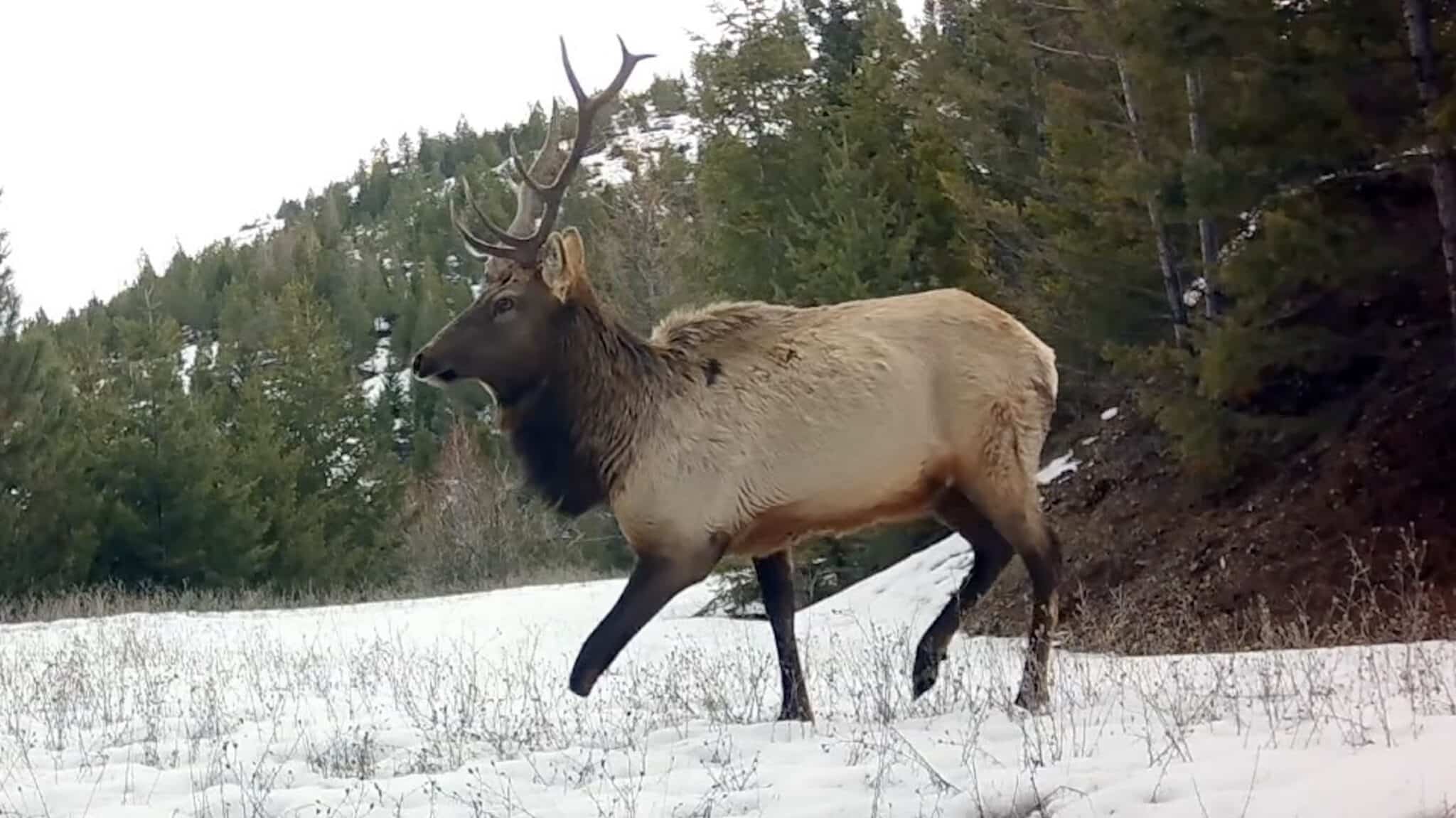
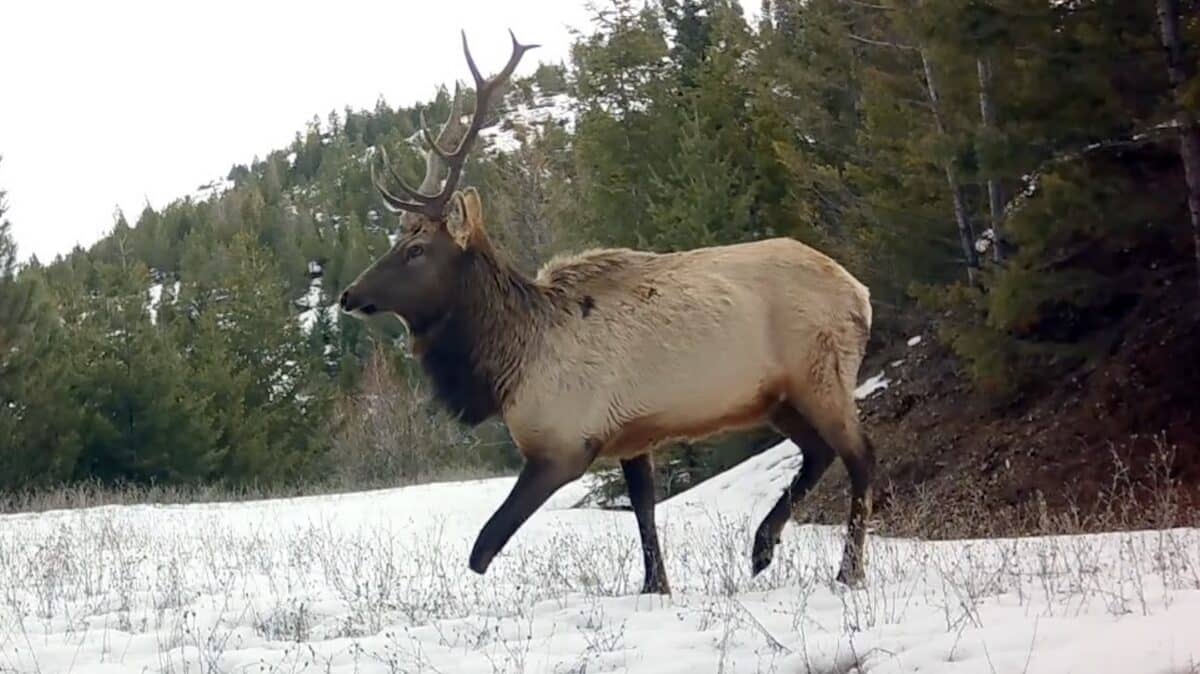
A remarkable image captured by a trail camera in Western Montana has brought to light the extraordinary resilience of wildlife, showcasing a bull elk navigating its environment with a severe, yet seemingly well-healed, injury. The photograph, taken by MPG Ranch, depicts a mature bull elk, identifiable by its impressive rack of antlers, walking with only three functional legs. The lower portion of its front left leg is absent, with the wound appearing to be a clean sever just below the knee. This striking visual offers a poignant glimpse into the challenges faced by wild animals and their capacity to adapt and survive against considerable odds.
The discovery of this unique specimen has generated considerable interest within wildlife conservation circles, highlighting the importance of ongoing monitoring and research efforts. MPG Ranch, a significant conservation property in Western Montana, is dedicated to preserving vast undeveloped landscapes for wildlife and future generations. Their work encompasses restoration, research, education, and information sharing, making them a key player in understanding and protecting the region’s biodiversity. The sighting of this three-legged elk serves as a powerful testament to the effectiveness of such conservation initiatives, even as it raises questions about the animal’s journey and ultimate fate.
The Discovery and Initial Observations
The trail camera footage, which captured the elk in March 2024, provides a clear view of the animal’s condition. The wound is described as a "complete sever," remarkably clean and positioned just below the knee joint. This suggests a significant trauma, yet the elk appears to be ambulating with a degree of functional adaptation. The presence of a full rack of antlers indicates that the bull is likely in its mature years, a period when survival is typically more challenging due to increased energy demands and competition.
Craig Jourdonnais, a big game biologist with MPG Ranch, has offered expert insight into the potential causes of such an injury. He suggests two primary possibilities: an accidental trauma, such as running through dense downfall or thick underbrush, which can lead to severe limb damage, or a past bullet wound. In the case of a gunshot injury, the limb could have been rendered unusable and eventually shed due to infection or decay, leaving behind the clean severance observed. Jourdonnais’s experience with similar cases lends credence to these hypotheses. He also notes that the elk’s ability to place some weight on the limb stub may have contributed to the smooth nature of the healed tissue.
The image itself has become a symbol of wildlife fortitude. The elk, despite its significant disability, is captured in motion, its posture suggesting a determined stride. The clarity of the photograph, facilitated by modern trail camera technology, allows for detailed examination of the injury and the animal’s overall condition. This visual evidence is crucial for biologists seeking to understand the long-term implications of such injuries on an animal’s ability to forage, migrate, and reproduce.
A Timeline of Survival and Uncertainty
The sighting of the three-legged bull elk occurred in March 2024. This date is significant as it places the observation in the late winter to early spring period, a critical time for elk as they transition from the leaner winter months to the more abundant growing season. Survival during this period requires substantial energy reserves, and any impediment to mobility can severely impact an animal’s ability to access food and avoid predators.
Following the initial sighting, there have been no further confirmed observations of this particular elk, either through trail cameras or direct encounters. This lack of subsequent sightings, while not definitive proof of demise, raises concerns among wildlife biologists. The period since March 2024 is approximately a year and a half, a considerable duration for any wild animal, let alone one facing the challenges of a significant physical impairment.
The absence of further data leads to a somber consideration: the bull may have succumbed to opportunistic predation. Large predators, such as wolves, cougars, or bears, often target individuals that are weaker or more vulnerable. An elk with a compromised limb would present a more accessible prey item, particularly if its ability to escape or defend itself was diminished. This is a natural part of the predator-prey dynamic in the wild, and while unfortunate for the individual animal, it is a fundamental aspect of ecosystem balance.
Alternatively, the elk may have found a way to adapt and continue its existence, perhaps moving to a different territory or successfully evading detection. The rugged terrain of Western Montana offers numerous opportunities for animals to seek refuge and concealment. The fact that the initial injury appeared to be well-healed suggests a degree of resilience and perhaps even a learned adaptation to its condition.
Supporting Data: Wildlife Resilience in Challenging Environments
The survival of the three-legged elk aligns with broader scientific understanding of wildlife resilience. Studies on various species have consistently demonstrated their remarkable ability to adapt to physical challenges and environmental stressors. For instance, research on ungulates in areas with high predator density has shown that individuals with minor injuries can still survive and even thrive, provided they can adapt their behavior and foraging strategies.
- Predation Rates: Data from wildlife agencies in Montana indicates that predation is a significant factor in elk mortality, particularly for calves and older or injured animals. However, the specific rate for elk with severe limb injuries is difficult to quantify without extensive tracking and monitoring.
- Habitat Impact: The terrain in Western Montana, characterized by dense forests, steep inclines, and rugged landscapes, can present significant challenges for any elk. For an animal with a mobility impairment, these environmental factors become even more critical. The presence of downfall, as suggested by Jourdonnais, is a common feature of these forests and a known hazard.
- Nutritional Demands: Bull elk, especially during the rutting season, require substantial caloric intake. An injury that impedes foraging efficiency or increases energy expenditure for locomotion can lead to malnutrition and increased susceptibility to disease.
- Conservation Successes: MPG Ranch’s commitment to conservation provides a protected environment for wildlife. While this specific elk may have faced challenges, the existence of such managed lands ensures that habitats remain viable for a wide range of species, offering them a better chance of survival. The ranch’s focus on maintaining large, undeveloped landscapes is crucial for animals that require extensive territories for foraging and migration.
Official Responses and Conservation Implications
While there have been no official statements beyond the initial reporting from MPG Ranch, the organization’s work inherently speaks to their concern for wildlife welfare. The documentation of such cases is vital for their ongoing research and conservation efforts. Biologists like Craig Jourdonnais play a crucial role in interpreting these findings and informing management strategies.
The sighting of this three-legged elk has several implications for conservation:
- Understanding Injury Impact: It underscores the need for continued research into how various injuries affect an animal’s long-term survival and reproductive success. This knowledge can inform habitat management and potentially intervention strategies, although direct intervention for such injuries in wild populations is often complex and carries its own risks.
- Habitat Suitability: The case highlights the importance of healthy, diverse habitats that can accommodate animals with varying physical capabilities. While the elk adapted to its missing limb, a degraded or fragmented habitat would likely have made its survival significantly more improbable.
- Public Awareness: Such compelling visual evidence can significantly raise public awareness about the challenges faced by wildlife. This can foster greater support for conservation initiatives and responsible land use practices. The viral nature of such images often transcends scientific circles and engages a broader audience.
- Long-Term Monitoring: The lack of subsequent sightings emphasizes the need for sustained and comprehensive wildlife monitoring programs. Advanced technologies like trail cameras, drone surveillance, and GPS tracking provide invaluable data, but consistent effort is required to track individual animals and understand population dynamics.
The story of the three-legged elk is a powerful reminder of the tenacity of life in the wild. It is a narrative of survival against adversity, captured by the silent gaze of a trail camera in the vast expanse of Montana. While the ultimate fate of this remarkable bull remains unknown, its image serves as an enduring testament to the resilience of nature and the vital importance of conservation efforts that protect these wild spaces and the creatures that call them home. MPG Ranch’s dedication to this mission ensures that such incredible stories, even those tinged with uncertainty, can continue to be observed and understood for the benefit of both wildlife and humanity.

