
The landscape of action sports underwent a fundamental transformation at Cosm Los Angeles as the X Games officially transitioned from a series of independent competitions into a structured, team-based professional league. The inaugural 2026 MoonPay X Games League (XGL) Draft served as the cornerstone for this new era, establishing four global franchises and drafting 40 of the world’s most elite skateboarders and BMX riders. The event, held within a state-of-the-art immersive venue, signaled a strategic shift toward a year-round competitive narrative designed to mirror the organizational success of traditional sports leagues like the NBA or NFL.
The Inaugural Selection: A New Generation Takes Center Stage
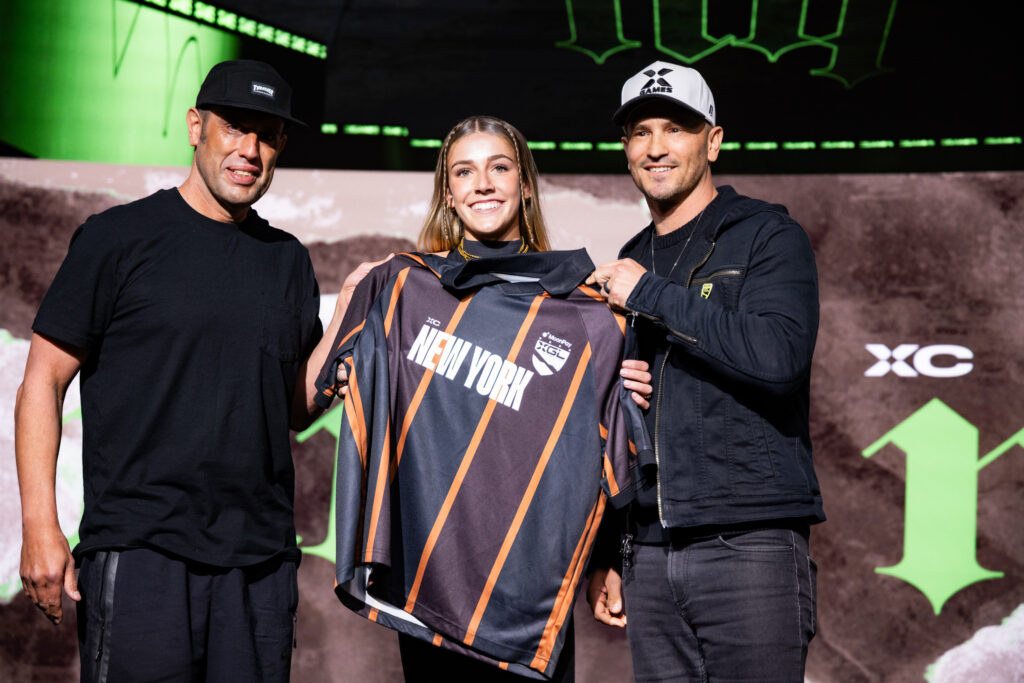
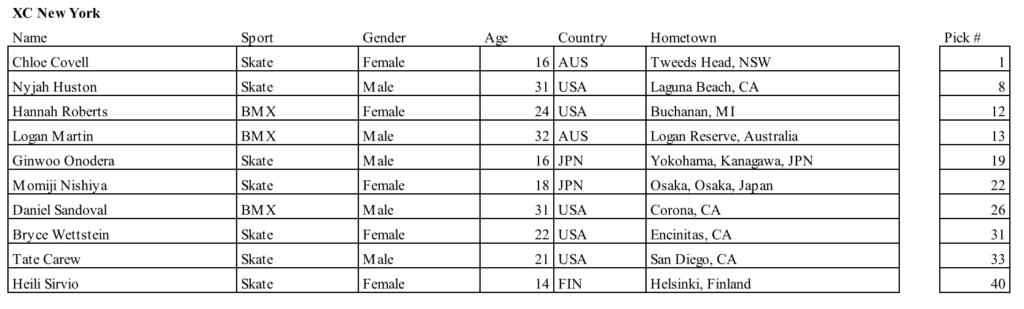
The draft’s most significant moment occurred when XC New York General Manager Steve Rodriguez announced sixteen-year-old Australian skateboarding sensation Chloe Covell as the first-ever overall pick in XGL history. Covell’s selection underscores a broader trend within the action sports world: the rapid ascent of teenage prodigies who are redefining the limits of technical performance. Covell, who has already established herself as a dominant force in street skating, expressed profound gratitude following the announcement, noting that the selection validated years of rigorous training and competitive focus.
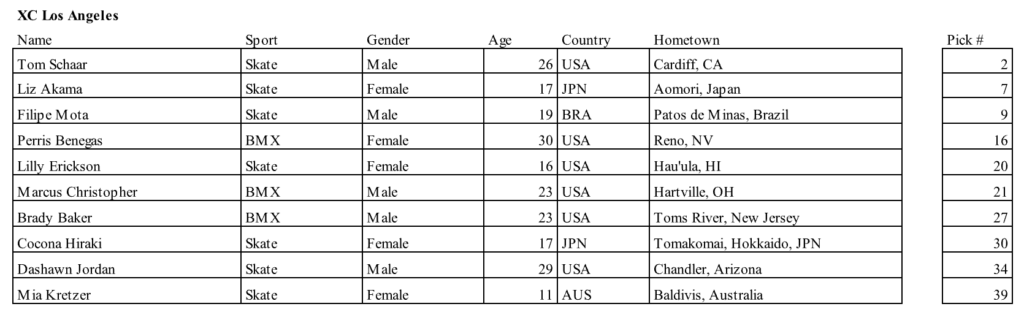
Following the landmark first pick, the draft proceeded with a focus on both legendary experience and youthful dominance. XC Los Angeles General Manager Sharalee “Haze” Hazen secured Tom Schaar as the second overall pick. Schaar, a Southern California native and 17-time X Games medalist, brings a veteran presence and a deep history of "firsts"—including being the first skater to land a 1080—to the Los Angeles franchise.
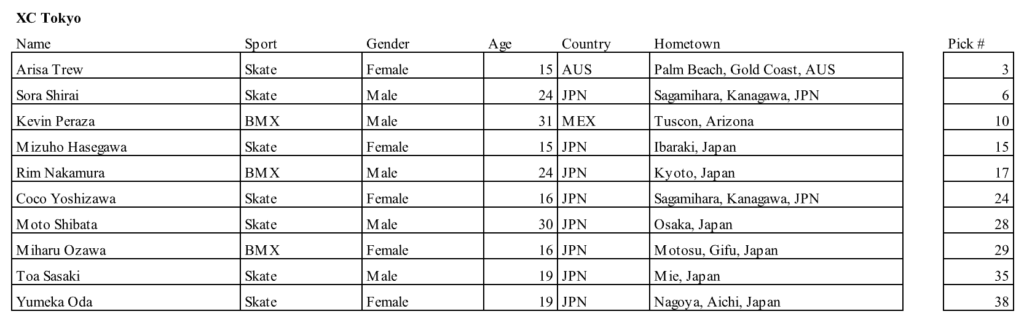
The third pick saw XC Tokyo General Manager Harumi Suzuki select Arisa Trew, an eight-time X Games gold medalist from Australia who has recently dominated the park and vert circuits. To round out the first round of the draft, skateboarding icon and XC São Paulo General Manager Bob Burnquist selected Brazilian phenom Gui Khury. At just 15 years old, Khury already holds the record for the most medals won by a teenager in X Games history, making him the natural cornerstone for the South American club.
Structural Framework of the MoonPay X Games League
The MoonPay X Games League is designed to provide a consistent, narrative-driven framework for action sports, which have historically relied on disparate annual events. The league is composed of four initial "Clubs" representing major global cultural hubs: XC New York, XC Los Angeles, XC Tokyo, and XC São Paulo.
Each club roster consists of 10 athletes, strictly divided into five men and five women. This 50-50 gender split is a deliberate move by the X Games leadership to ensure equal representation and visibility across all disciplines. During the draft, the four General Managers selected from a pool of over 180 athletes who had officially opted into the draft process. The final rosters include 40 athletes representing eight different countries, with ages ranging from 11 to 35, highlighting the intergenerational nature of the sport.
The league format introduces a points-based system where athletes earn scores for their respective clubs throughout the season. This collective scoring mechanism is intended to foster team rivalries and regional fan bases, moving the focus away from individual glory toward franchise success.
Chronology of the Draft Night and Venue Innovation
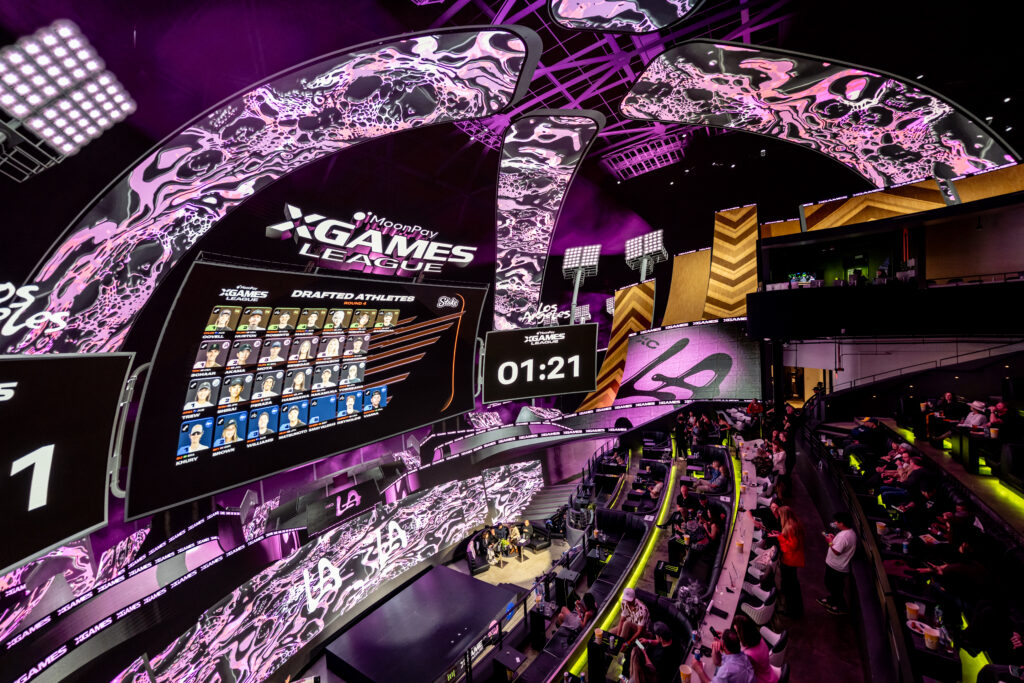
The draft was meticulously choreographed to blend high-stakes sports decision-making with cutting-edge entertainment technology. The event took place at Cosm Los Angeles, a venue characterized by its "Shared Reality" technology. The centerpiece of the evening was a massive, wraparound LED dome that provided 500 invited guests—including industry executives, celebrities, and fans—with a cinematic, high-definition view of the draft proceedings.
The timeline of the evening followed a traditional professional draft structure:
- 7:00 PM PST: Arrival of athletes and red-carpet media sessions.
- 8:00 PM PST: Commencement of the live broadcast and opening remarks by X Games leadership.
- 8:15 PM PST: The first round of selections, establishing the "face" of each of the four franchises.
- 9:00 PM PST – 10:30 PM PST: Subsequent draft rounds (five in total) to fill out the 10-person rosters, interspersed with athlete interviews and tactical analysis.
- 10:45 PM PST: Closing remarks and a transition to the rooftop celebration at Hollywood Park, featuring a performance by Grammy-winning producer BNYX.
The event was broadcast globally, utilizing a multi-platform strategy to reach a digital-native audience. Streaming partners included the ESPN App, The Roku Sports Channel, YouTube, Kick, and the X Games TV FAST Channel on Amazon.
Strategic Implications and Financial Evolution
The transition to a league format is not merely a branding exercise but a strategic financial pivot. Jeremy Bloom, a key figure in the X Games leadership, noted that the league is designed to connect fans with athletes year-round, rather than once or twice a year during traditional X Games "Summer" and "Winter" windows. This provides a more stable platform for sponsors and media partners to engage with the sport’s demographic.
A notable innovation introduced during the draft was the integration of digital asset compensation. League partner Exodus facilitated "crypto signing bonuses" for the drafted athletes. This marks one of the first instances of a professional sports league utilizing self-custody crypto wallets to deliver immediate financial incentives to draftees. This integration with MoonPay (the title sponsor) and Exodus reflects the league’s desire to align with the technological and financial preferences of a younger, tech-savvy audience.
Furthermore, the league is supported by a robust roster of partners including Monster Energy, Stake, 805 Beer, High Noon, and Kraken Rum. These partnerships suggest a strong market confidence in the team-based model’s ability to generate sustained viewer interest.
Background Context: The 30-Year Evolution of X Games
To understand the significance of the XGL Draft, one must look at the three-decade history of the X Games. Founded in 1995, the X Games was instrumental in bringing "extreme sports" into the mainstream. However, as sports like skateboarding and BMX were incorporated into the Olympic Games (debuting in Tokyo 2020), the X Games faced the challenge of differentiating its product.
By creating a league, the X Games is reclaiming its role as an innovator. While the Olympics provide a quadrennial peak for individual athletes, the XGL provides a professionalized, commercialized circuit that allows for deeper storytelling. The inclusion of legendary figures like Bob Burnquist and Steve Rodriguez as General Managers bridges the gap between the sport’s counter-culture roots and its professional future.
The selection of athletes like Nyjah Huston, Kevin Peraza, and Hannah Roberts in the later rounds of the draft ensures that the league possesses the star power necessary to attract global viewership. These athletes are not just competitors; they are global brands with millions of followers, and their participation in a team-based format is expected to drive significant social media engagement.
Analysis of Global Expansion and Competition Schedule
The choice of New York, Los Angeles, Tokyo, and São Paulo as the anchor cities for the inaugural season is a data-driven decision. These cities represent the highest concentrations of action sports participation and viewership. By tethering athletes to these locations, the XGL aims to build "home team" loyalty, a factor that has been missing from action sports for decades.
The inaugural Summer Season is scheduled to follow a condensed, high-intensity timeline:
- June 26: Season opener in Sacramento, California.
- July 4–5: X Games Japan, providing the first international leg of the tour.
- July 24–26: The League Championship at the Caesars Superdome in New Orleans.
The championship in New Orleans will serve as the final proving ground, where the team with the highest cumulative season score will be crowned the first MoonPay X Games League champion. This "road to the championship" format is intended to create a crescendo of stakes that traditional individual competitions often lack.
Conclusion: A Defining Moment for Action Sports
The MoonPay X Games League Draft has effectively ended the era of action sports as a fragmented collection of exhibition events. By establishing formal rosters, regional franchises, and a structured season, the X Games has positioned itself to compete for the attention of modern sports fans who demand consistency, narrative, and high-production value.
The success of the draft night at Cosm Los Angeles—evidenced by the participation of 180 eligible athletes and the backing of major financial and technology partners—suggests that the industry is ready for this evolution. As Chloe Covell and her fellow draftees prepare for the June opener, the focus shifts from the excitement of the draft to the reality of the competition. The 2026 season will determine if the team-based model can truly redefine the commercial and cultural trajectory of skateboarding and BMX for the next generation.

