
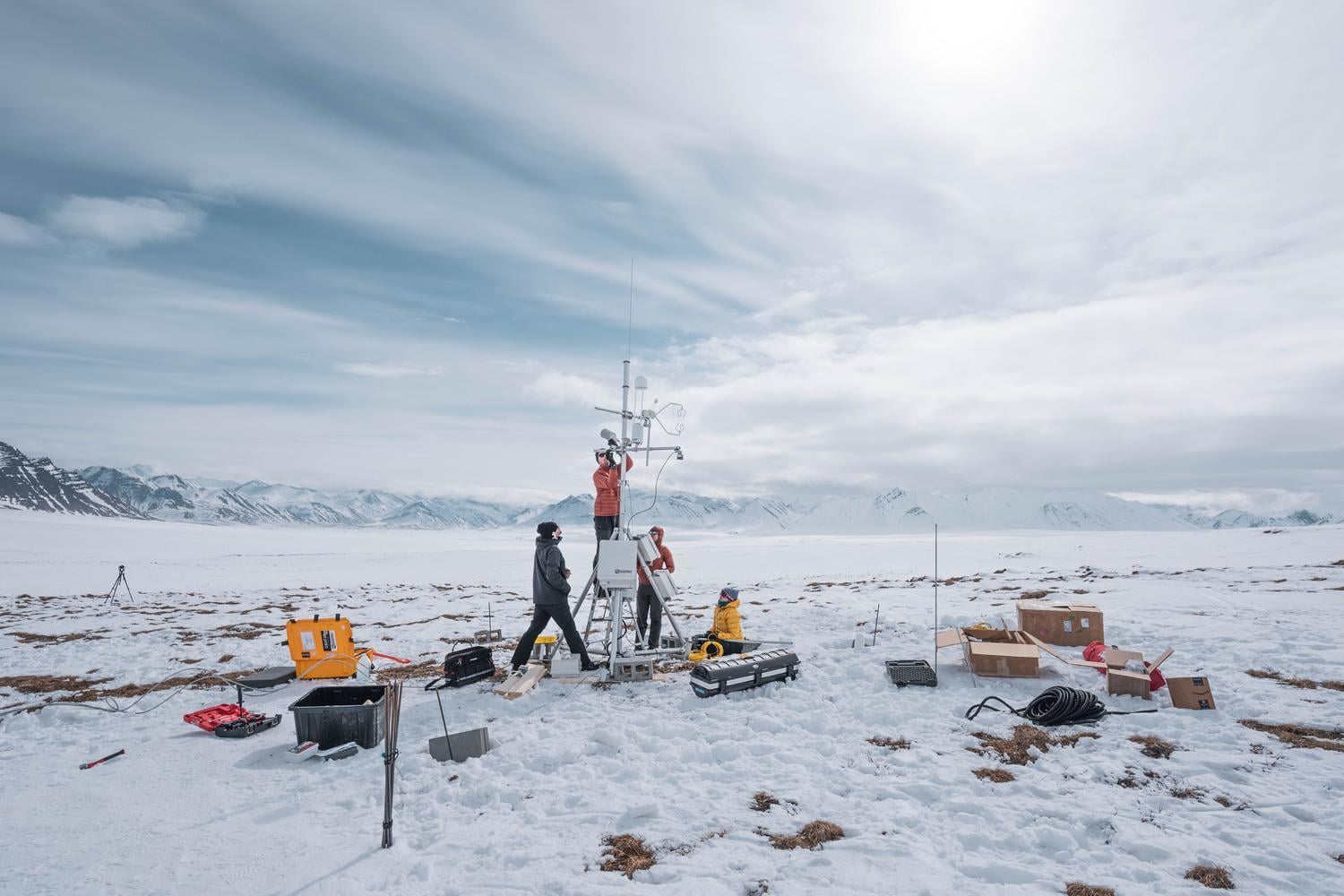
In the remote expanse of Alaska’s North Slope, a team of scientists recently completed a critical mission to monitor one of the most significant yet under-recorded drivers of global climate change: the rapid decomposition of Arctic permafrost. Led by Dr. Kelly Gleason, an assistant professor of eco-hydro-climatology at Portland State University, and Dr. Jenny Watts, an ecologist and carbon flux expert from the Woodwell Climate Research Center, the expedition focused on the installation of a specialized flux tower at a permafrost thaw slump near the Toolik Field Station. This installation represents the first of its kind in the Arctic specifically designed to evaluate methane and carbon dioxide emissions from a localized area of rapidly collapsing permafrost, providing essential data for climate models that have historically struggled to account for these "abrupt thaw" events.
The mission, conducted in collaboration with the Protect Our Winters (POW) Science Alliance, underscores a growing urgency within the scientific community to understand the "invisible" feedback loops of the Arctic. As the region warms at nearly four times the global average—a phenomenon known as Arctic Amplification—the permanently frozen ground that has stabilized the tundra for millennia is beginning to fail. When permafrost thaws, it does not merely turn to mud; it wakes up ancient microbes that consume organic matter, releasing greenhouse gases that have been sequestered for thousands of years.
The Geography of Collapse: Understanding Thaw Slumps
The research team focused their efforts on a feature known as a thaw slump. Unlike the gradual, uniform thawing of the top layer of soil, a thaw slump is a dramatic and violent form of permafrost degradation. These features occur when ice-rich permafrost melts, causing the overlying ground to lose its structural integrity and collapse down a slope. This creates a steep, eroding face that exposes deep layers of ancient organic material to the air and sun for the first time in the Holocene era.
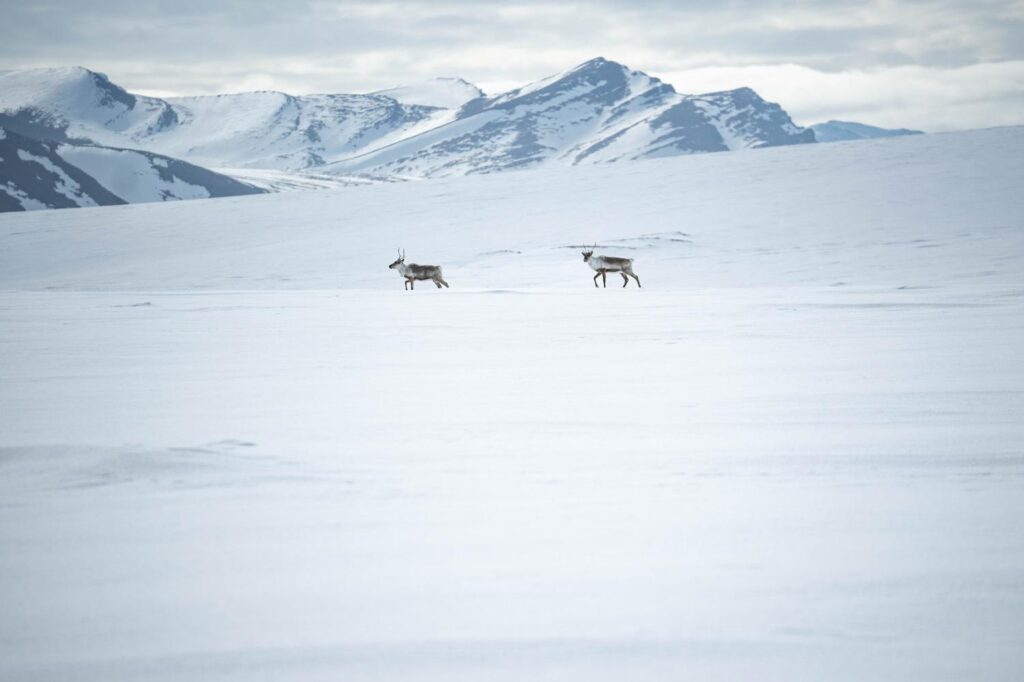
These slumps are significant because they act as "hotspots" for greenhouse gas emissions. While the surrounding intact tundra may absorb or emit carbon at a relatively stable rate, a thaw slump represents a concentrated point of release. Current global climate models (GCMs) frequently overlook these small-scale, high-intensity features because they are difficult to map and monitor. Consequently, scientists suspect that the Arctic’s contribution to the global carbon budget may be significantly underestimated. The installation of the flux tower at Toolik is a direct attempt to rectify this data gap.
Technical Execution and Chronology of the Installation
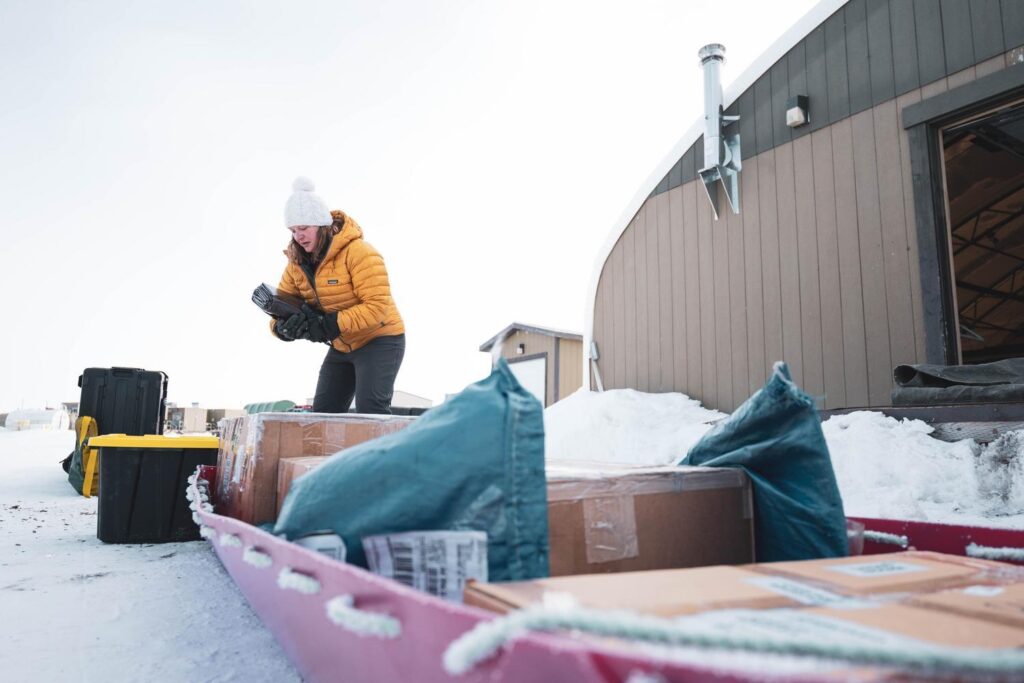
The expedition began at the Toolik Field Station, a premier Arctic research hub operated by the University of Alaska Fairbanks. The logistical challenge of the mission was substantial, requiring the transport of heavy industrial equipment across the fragile tundra during a period of transition between winter and spring.
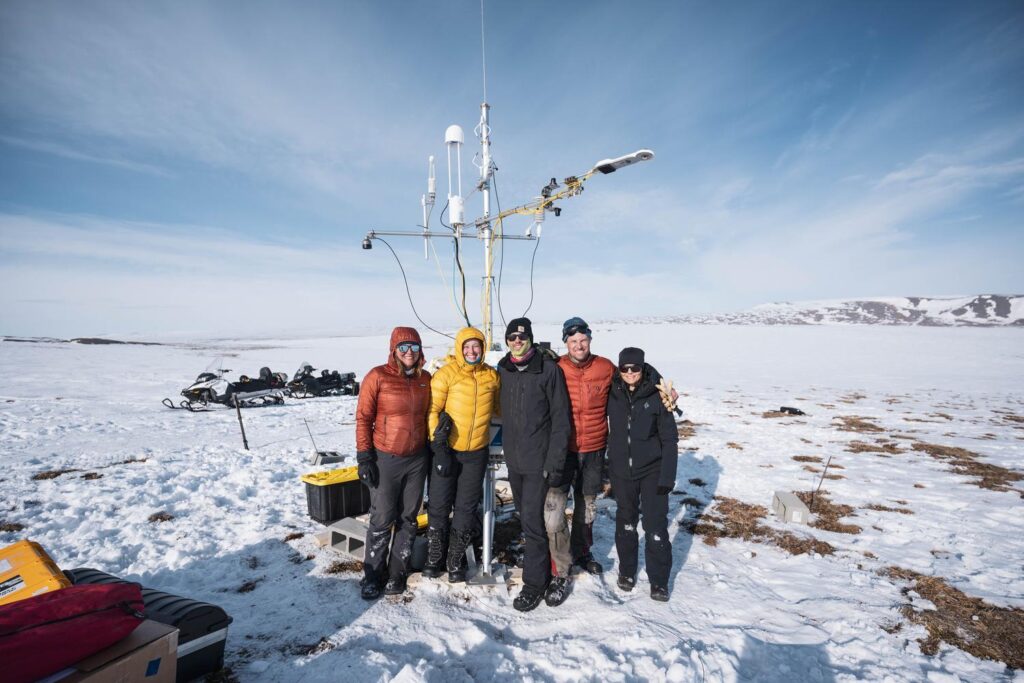
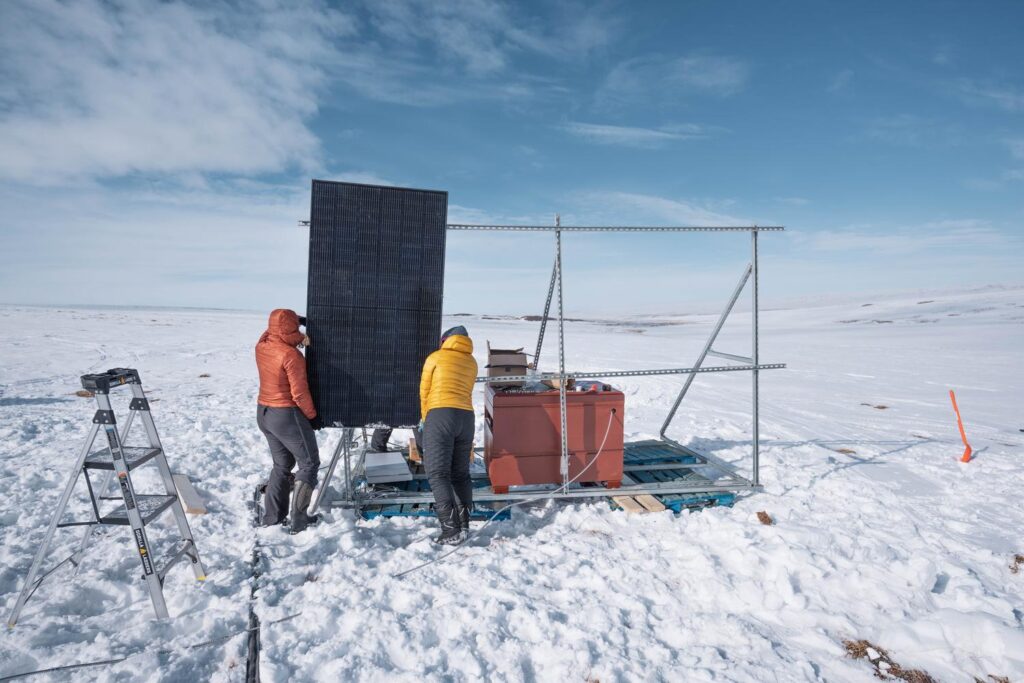
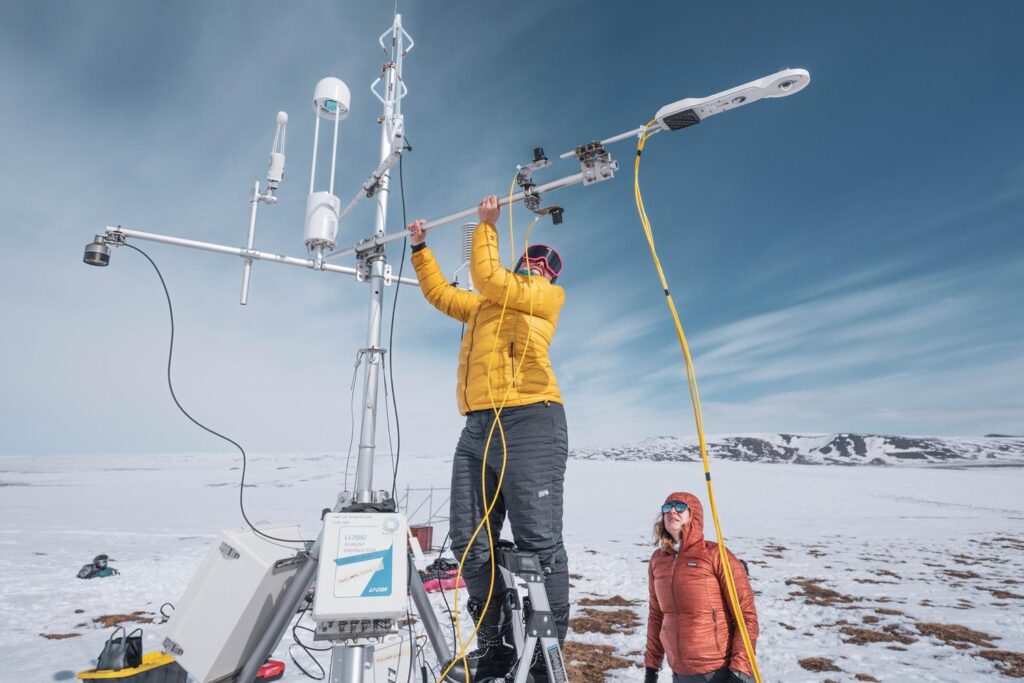
The team, which included researchers Kyle, Christina, and Kai, utilized snowmachines and heavy-duty sleds to haul the components of the flux tower to the research site. The equipment list was extensive, reflecting the harsh conditions and the precision required for carbon flux measurement:
- A 15-foot-tall aluminum frame designed to withstand high Arctic winds.
- Eight deep-cell batteries, each weighing over 100 pounds, to provide a consistent power supply in sub-zero temperatures.
- Four large solar panels to recharge the system during the long days of the Arctic summer.
- A massive electrical enclosure housing the sensors used to detect methane ($CH_4$) and carbon dioxide ($CO_2$) at parts-per-billion concentrations.
- Structural stabilizers, including guy-lines, cement anchors, and steel spikes to secure the tower into the shifting, unstable ground of the thaw slump.
The installation took place over several days, characterized by frigid temperatures and the constant threat of equipment failure. The team had to manually anchor the frame into the soil while navigating the "hoarfrost" and treacherous terrain of the slump. The goal was to place the sensors at a height where they could capture the "breath" of the earth—the invisible gases rising from the decomposing organic matter below.
The Paradox of Arctic Snow: Albedo vs. Insulation
A primary focus of Dr. Gleason’s specific research during the expedition involved the role of snow in the permafrost feedback loop. Traditionally, snow is viewed as a cooling agent for the planet due to the albedo effect. Fresh snow reflects up to 90% of incoming solar radiation back into space, helping to keep the Earth’s surface cool. In the western United States, snow is primarily managed as a water resource—measured by its Snow-Water Equivalent (SWE). However, in the Arctic, the physical properties of snow serve a different, more complex function.
As climate change reduces sea ice cover, more open water is exposed in the Arctic Ocean. This leads to increased evaporation and a wetter atmosphere, which in some regions results in heavier snowfall during the winter months. While more snow might seem beneficial for its reflective properties, Dr. Gleason’s findings in the field revealed a more troubling reality: snow is a highly efficient insulator.
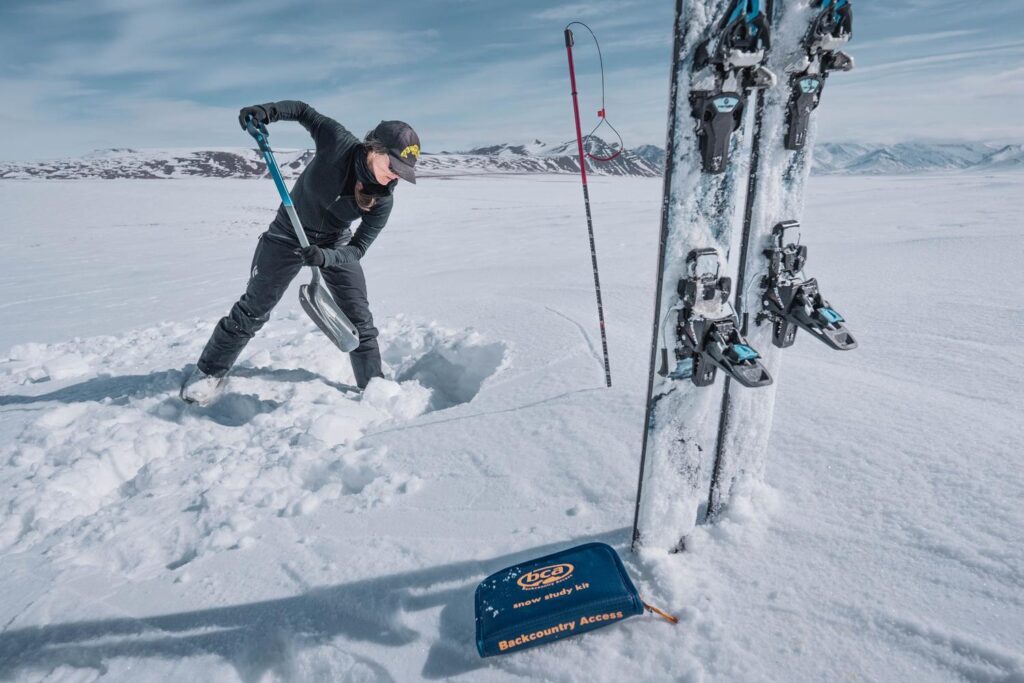
During the mission, Dr. Gleason dug several snow pits to compare the temperature profiles of shallow versus deep snowpacks. The data revealed a stark contrast:
- Deep Snowpack (Approx. 2 meters): While the surface temperature was -3°C, the temperature at the base of the snow (the soil-snow interface) was nearly -3°C. This relative warmth suggests that the deep snow is shielding the ground from the extreme cold of the Arctic air, allowing the soil to remain warm enough for microbial activity to continue throughout the winter.
- Shallow Snowpack (57 cm): In areas with less snow, the insulation was weaker. The temperature at the base of the snow dropped to -10°C. At these lower temperatures, microbial decomposition slows significantly, and the permafrost remains more stable.
This "insulation feedback" means that as the Arctic becomes wetter and snowier, the ground may actually be warming faster, even if the air remains cold. This accelerates the thawing of the permafrost beneath, leading to higher emissions of methane—a gas that is roughly 80 times more potent than carbon dioxide over a 20-year period.
Supporting Data: The Permafrost Carbon Bomb
The implications of the data being collected at Toolik Field Station extend far beyond the borders of Alaska. Permafrost covers approximately 24% of the land area in the Northern Hemisphere and acts as a massive subterranean carbon sink. It is estimated that permafrost contains approximately 1,500 billion tons of carbon—roughly twice the amount currently present in the Earth’s atmosphere.
The "Permafrost Carbon Feedback" is one of the most feared tipping points in climatology. If a significant portion of this carbon is released as methane or $CO_2$, it could trigger a self-sustaining cycle of warming that would be nearly impossible to reverse through human intervention alone.
According to recent data from the Woodwell Climate Research Center, even if human-caused emissions were to cease tomorrow, the ongoing thaw of permafrost could continue to contribute to global warming for decades. The flux tower installed by Dr. Watts and Dr. Gleason is designed to provide the high-resolution data needed to determine exactly how fast this "carbon bomb" is ticking.
Scientific Advocacy and the Role of Protect Our Winters
The expedition also highlighted a shift in how scientists engage with the public. Both Dr. Gleason and Dr. Watts are members of the POW Science Alliance, a branch of the Protect Our Winters organization. This alliance seeks to bridge the gap between complex climate data and effective policy advocacy.
"Science shows us what’s happening," Dr. Gleason noted regarding the mission. "Advocacy gives us a path forward."
The partnership between academic researchers and advocacy groups is becoming increasingly common as the window for staying within the 1.5°C warming limit established by the Paris Agreement continues to close. By turning field observations into narratives and actionable data, the POW Science Alliance aims to mobilize the "outdoor state"—the millions of people who rely on winter environments for recreation and livelihoods—to push for systemic policy changes.
Broader Impact and Implications
The data collected from the Toolik flux tower will be integrated into broader studies on Arctic carbon flux, helping to refine the Earth System Models used by the Intergovernmental Panel on Climate Change (IPCC). As the first tower to specifically target a thaw slump, it provides a unique "magnifying glass" on the most volatile parts of the Arctic landscape.
The findings from the snow pit analysis also suggest that land management and climate mitigation strategies must account for the physical structure of snow. If increased snowfall is indeed accelerating permafrost thaw, the global community may need to adjust its "carbon budget" to account for these natural emissions.
In the long term, the survival of the Arctic permafrost is tied to the survival of global coastal cities and agricultural stability. The methane released from a single thaw slump in Alaska contributes to the rising sea levels in Florida and the heatwaves in Europe. The mission at Toolik Field Station serves as a reminder that the Arctic is not a distant, isolated wilderness, but a central component of the global climate system that is currently in a state of profound and dangerous flux.
As Dr. Gleason and her team concluded their installation, the tower stood as a silent sentinel on the tundra, beginning its long-term task of measuring the invisible gases that will define the future of the planet. The mission underscores a fundamental truth of modern climate science: understanding the Arctic is no longer a matter of academic curiosity—it is a matter of global security.

