
The long-standing debate surrounding the stability of snowpack under pressure has been significantly advanced by groundbreaking research from the Institute for Snow and Avalanche Research (SLF) in Davos, Switzerland. Published on April 17th, 2026, and later refined on April 21st, 2026, the SLF’s latest findings challenge conventional wisdom, indicating that increased pressure on a snowpack does not enhance its stability but, in fact, makes it more prone to catastrophic avalanches. This revelation holds profound implications for avalanche forecasting, safety protocols, and our fundamental understanding of snow mechanics.
For decades, the scientific community has grappled with two competing theories concerning the behavior of weak layers within a snowpack, particularly in the context of slab avalanches. Slab avalanches, a common and often dangerous type of avalanche, occur when a cohesive slab of snow breaks away from the underlying snowpack. The critical factor determining their release has been the subject of intense scientific scrutiny.
The Conflicting Theories of Snowpack Stability
Since the 1970s, two primary hypotheses have dominated discussions regarding how weak layers in snowpack respond to external forces.
Theory One: The "Pressure-Stabilizes" Hypothesis
This perspective posited that additional vertical load on a snowpack, such as from a recent heavy snowfall or a denser snow layer accumulating above, would strengthen any underlying weak layers. Proponents of this theory argued that increased pressure would necessitate greater shear forces – the forces that pull snow down a slope – to initiate a fracture. In essence, more weight was thought to make the weak layer more resilient, requiring a more significant trigger to cause failure. This theory was intuitively appealing to many, aligning with general observations about how compression can solidify materials.
Theory Two: The "Pressure-Destabilizes" Hypothesis
Conversely, the second theory proposed an inverse relationship. This view suggested that increased pressure from above would actually push a weak layer closer to its breaking point. According to this hypothesis, the added load would reduce the margin of safety, making the weak layer more sensitive to shear forces. Consequently, even a relatively minor shear load, which might otherwise be insufficient to cause a fracture, could become a potent trigger for an avalanche under these conditions. This theory implied that a seemingly stable snowpack could be on the verge of collapse due to accumulated pressure.
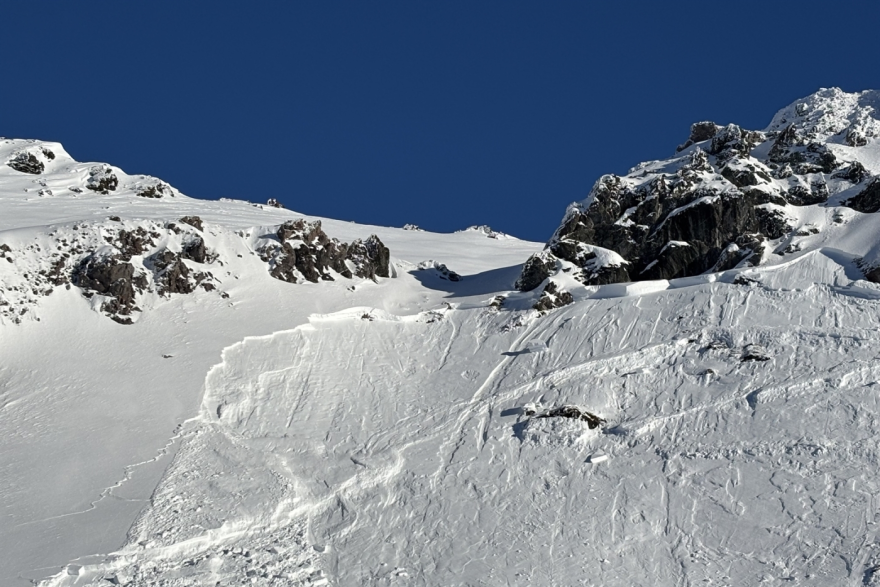
SLF’s Experimental Breakthrough
The new research conducted by the SLF provides compelling evidence that unequivocally supports Theory Two, demonstrating that pressure, far from stabilizing a snowpack, actively contributes to its instability. This conclusion is the result of meticulous laboratory experiments and advanced analytical techniques.
The study involved the analysis of 63 distinct samples of natural weak layers. These samples were carefully collected from the Davos region in Graubünden, Switzerland, an area renowned for its challenging winter conditions and significant avalanche activity. The specimens were transported to the SLF’s state-of-the-art cold laboratory, where researchers could meticulously control environmental conditions to replicate real-world snowpack scenarios.
The core of the experimental methodology involved subjecting these snow samples to a combination of forces that mimic those experienced by snow on a natural slope. This included applying vertical normal forces, representing the weight of the snow above, and parallel shear forces, simulating the gravitational pull downslope. A specially developed test apparatus was employed to precisely control and measure these forces, allowing for a nuanced examination of how the weak layers responded to varying loads.
A critical element of the experimental setup was the use of a high-speed camera. This advanced technology was instrumental in capturing the precise moment of fracture within the weak layers. By recording these events at an extremely high frame rate, the researchers were able to observe the intricate mechanics of failure in unprecedented detail, providing visual confirmation of the forces at play. The video footage, a key piece of evidence from the study, offers a dramatic illustration of how these fragile layers succumb to stress.
The weak layers themselves were characterized by specific properties, including the presence of surface frost. Surface frost, a delicate ice formation that can develop on the surface of snow under specific temperature and humidity conditions, is known to create particularly weak bonding between snow crystals, making it a common culprit in avalanche formation. The SLF’s experiments specifically focused on these types of fragile structures, which are notoriously difficult to predict.
Experimental Findings and Their Implications
Jakob Schöttner, a PhD candidate specializing in snow mechanics at the SLF, spearheaded the research and articulated the study’s central finding: "Pressure doesn’t make the snowpack more stable; rather, both forces together lead to failure of the weak layer." This statement directly refutes the long-held notion that increased load inherently enhances stability.
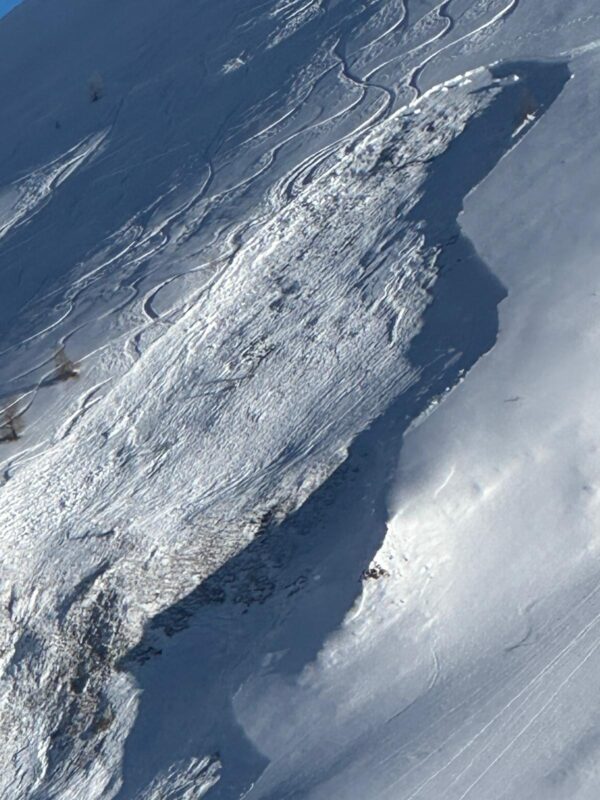
The experiments revealed a clear pattern: as the vertical normal force increased, the threshold for fracture under shear stress decreased. In simpler terms, a heavier snowpack made the weak layer more brittle, requiring less lateral force to break it apart. This finding is a significant paradigm shift in avalanche science. It suggests that periods of heavy snowfall, which might be perceived as increasing the risk of avalanche due to added weight, are in fact creating conditions where the snowpack is more susceptible to triggering by even minor disturbances.
The implications of this research are far-reaching. For avalanche forecasters, the findings necessitate a re-evaluation of current models. Traditional forecasting often considers the total snow depth and recent snowfall as primary indicators of stability. However, this new understanding suggests that the interaction between vertical and shear forces, and how these forces affect weak layers, is paramount. This could lead to more sophisticated predictive models that better account for the complex interplay of stresses within the snowpack.
Furthermore, the research has the potential to enhance public awareness and safety education. Skiers, snowboarders, mountaineers, and other winter enthusiasts are often advised to be cautious after heavy snowfalls. While this advice remains valid, the underlying reason needs to be understood in a new light. The emphasis should shift from simply the amount of snow to the combined stresses it exerts and its impact on pre-existing weak layers.
Broader Context and Future Research
The SLF’s work is situated within a broader effort to improve safety in mountainous regions worldwide. Avalanche accidents remain a significant concern in alpine countries, leading to fatalities, injuries, and considerable economic disruption. Understanding the precise mechanisms of avalanche release is crucial for mitigating these risks.
The Davos region itself, where the samples were collected, experiences a diverse range of snow conditions throughout the winter. This geographical context is important, as different snowpack structures and formation processes can occur in various alpine environments. The SLF’s research, by focusing on natural weak layers representative of such regions, aims to provide insights that are broadly applicable.
The publication of these findings in the esteemed scientific journal Geophysical Research Letters underscores the rigor and significance of the SLF’s research. This peer-reviewed publication ensures that the scientific community has access to the detailed methodology and results, facilitating further scrutiny and advancement of the field.
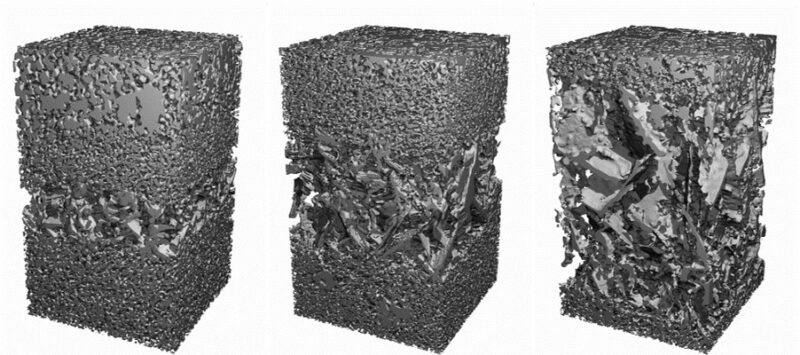
Looking ahead, this research opens up several avenues for future investigation. Scientists may now focus on developing more precise methods for measuring both vertical and shear forces in situ within natural snowpacks. Understanding how these forces evolve over time and in response to weather patterns will be critical. Additionally, further research could explore how different types of weak layers respond to these combined forces, potentially leading to even more refined avalanche risk assessments. The interaction of human activities, such as skiing or snowmobiling, with these stressed snowpacks could also be a subject of further study.
The implications of this research extend beyond recreational safety. For infrastructure development in mountainous areas, such as the construction of roads, railways, and buildings, a deeper understanding of snowpack dynamics is essential for ensuring structural integrity and preventing damage from avalanches.
The Institute for Snow and Avalanche Research (SLF) has a long-standing reputation for pioneering work in snow science. Their commitment to rigorous empirical research and their willingness to challenge established scientific paradigms are evident in this latest breakthrough. The findings from this study represent a significant step forward in our ability to predict and prevent avalanches, ultimately contributing to safer winter environments for all. The ongoing commitment to scientific inquiry at institutions like the SLF is vital for unraveling the complex natural phenomena that shape our world and impact human lives.

