
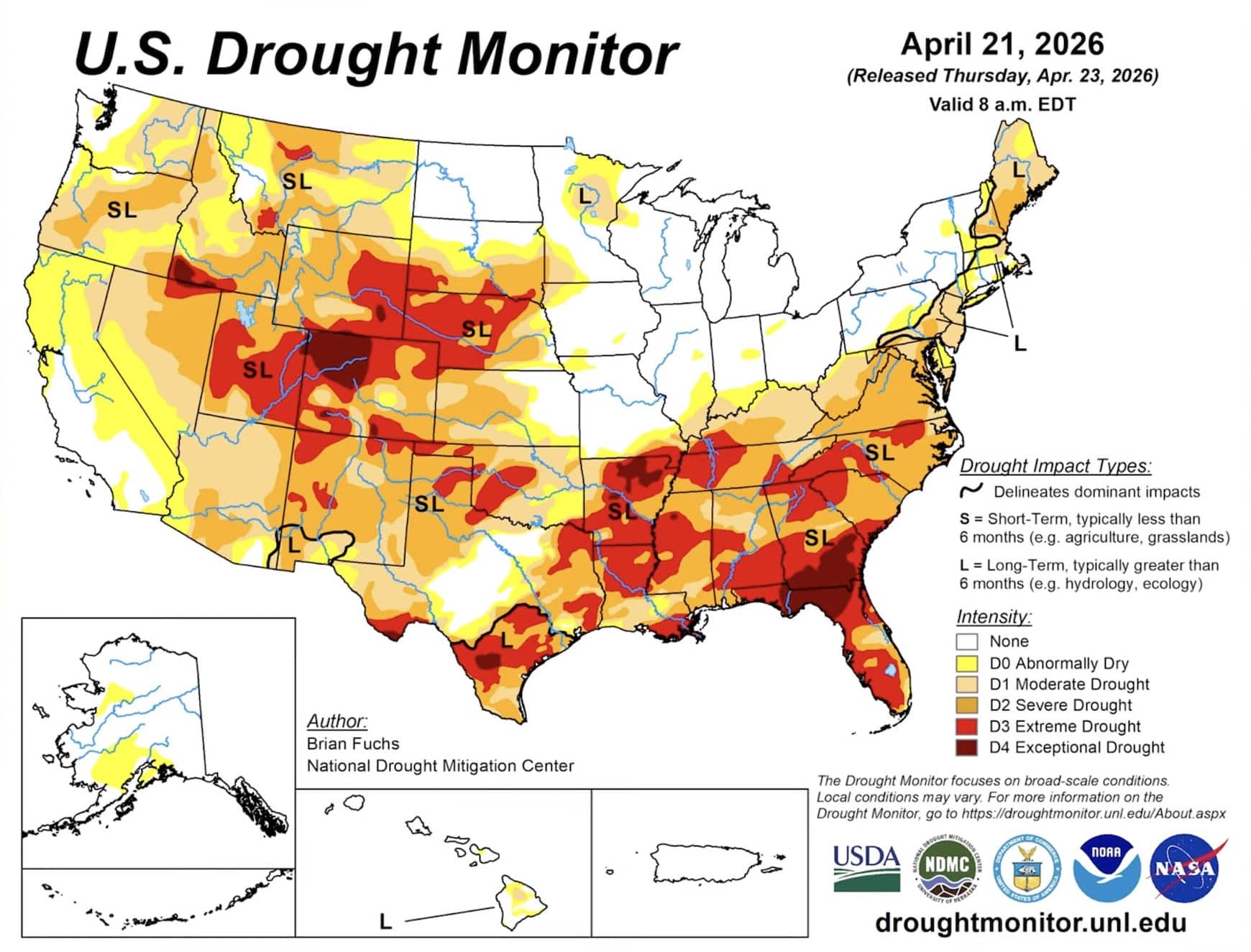
The latest U.S. Drought Monitor report, released on April 23rd, 2026, reveals a stark and expanding water scarcity crisis gripping the nation. More than half of the United States is now experiencing moderate drought or more severe conditions, a significant increase from the previous week. This escalating dryness is impacting an ever-larger segment of the American population, with the number of individuals living within drought-stricken areas climbing by nearly seven million in a single week. As of the report’s release, an estimated 155.7 million Americans are currently residing in areas affected by drought, a concerning statistic that underscores the deepening environmental and societal challenges posed by this widespread aridification.
A Sharpening Picture of National Thirst
The U.S. Drought Monitor, a collaborative effort between the National Drought Mitigation Center at the University of Nebraska-Lincoln, the USDA, NOAA, and NASA, serves as a critical barometer for the nation’s water status. The April 23rd report indicates that 52.46% of the combined area of all 50 states and Puerto Rico is now classified as being in moderate drought (D1) or worse. This represents a notable escalation from the 51% reported just seven days prior. The human impact is equally profound; the number of people living under drought conditions has surged from approximately 148.8 million to 155.7 million, highlighting the growing vulnerability of communities across the country.
A Week of Stark Precipitation Contrasts
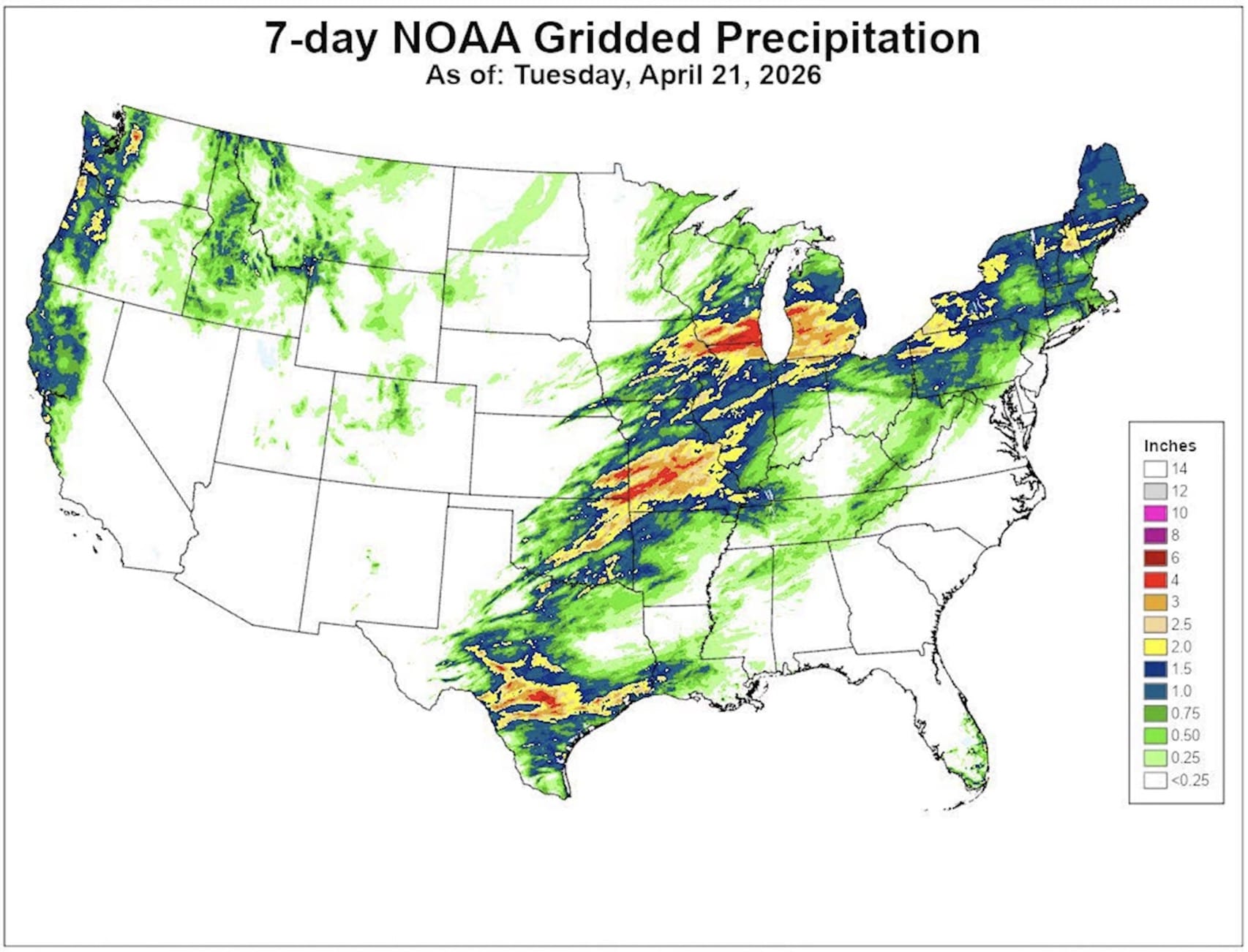
The past week’s precipitation patterns have been characterized by extreme regional disparities, exacerbating drought conditions in some areas while offering temporary respite in others. A significant corridor of above-normal rainfall stretched from South Texas and eastern Oklahoma, extending northward through Missouri, Illinois, Michigan, and into southern Wisconsin. Within this zone, many regions received more than 150% of their typical weekly precipitation, with some localized areas experiencing over 400% of their average rainfall for the period. This substantial influx of moisture provided much-needed relief to these specific areas, potentially aiding agricultural recovery and replenishing local water sources.
Further contributing to this positive trend, the northern Northeast also received beneficial precipitation. Areas from western New York through Maine experienced rainfall exceeding 200% of normal, offering a degree of temporary relief to communities in that region that have also been grappling with dry conditions.
However, the vast majority of the country experienced a starkly different reality. Much of the Ohio Valley and the Southeast received little to no precipitation, leading to the intensification of existing dry conditions and the expansion of drought boundaries. The western United States remained predominantly parched, with above-normal rainfall limited to coastal sections of California and isolated pockets of the Pacific Northwest. The interior West, a region already critically dependent on limited water resources, received virtually no measurable precipitation, further straining reservoirs and increasing the risk of wildfire.
Temperature Anomalies Add Fuel to the Fire
Compounding the issue of insufficient rainfall, fluctuating temperatures have played a significant role in drought intensification. The western United States experienced near-normal to slightly below-normal temperatures, with some areas registering readings up to five degrees Fahrenheit below average. This cooler pattern, while not sufficient to reverse drought conditions, likely provided a modest buffer against accelerated soil moisture loss and evaporation in these regions.
In stark contrast, the Central Plains, Midwest, Northeast, and Mid-Atlantic experienced significantly warmer conditions. Temperatures in these regions ran five to ten degrees Fahrenheit above normal. This prolonged period of elevated temperatures has accelerated evapotranspiration rates, drawing precious moisture from the soil and exacerbating the stress on vegetation and water supplies. The Southeast experienced a mixed temperature profile, with overall near-normal to slightly above-normal conditions. However, the Florida Panhandle bucked this trend, reporting cooler-than-average temperatures.
Regional Drought Intensification and Improvement
The latest U.S. Drought Monitor data reveals a worsening drought situation in key areas, most notably across parts of the Southeast and the West. These regions have seen an expansion of moderate to severe drought conditions, indicating a significant decline in water availability and soil moisture.
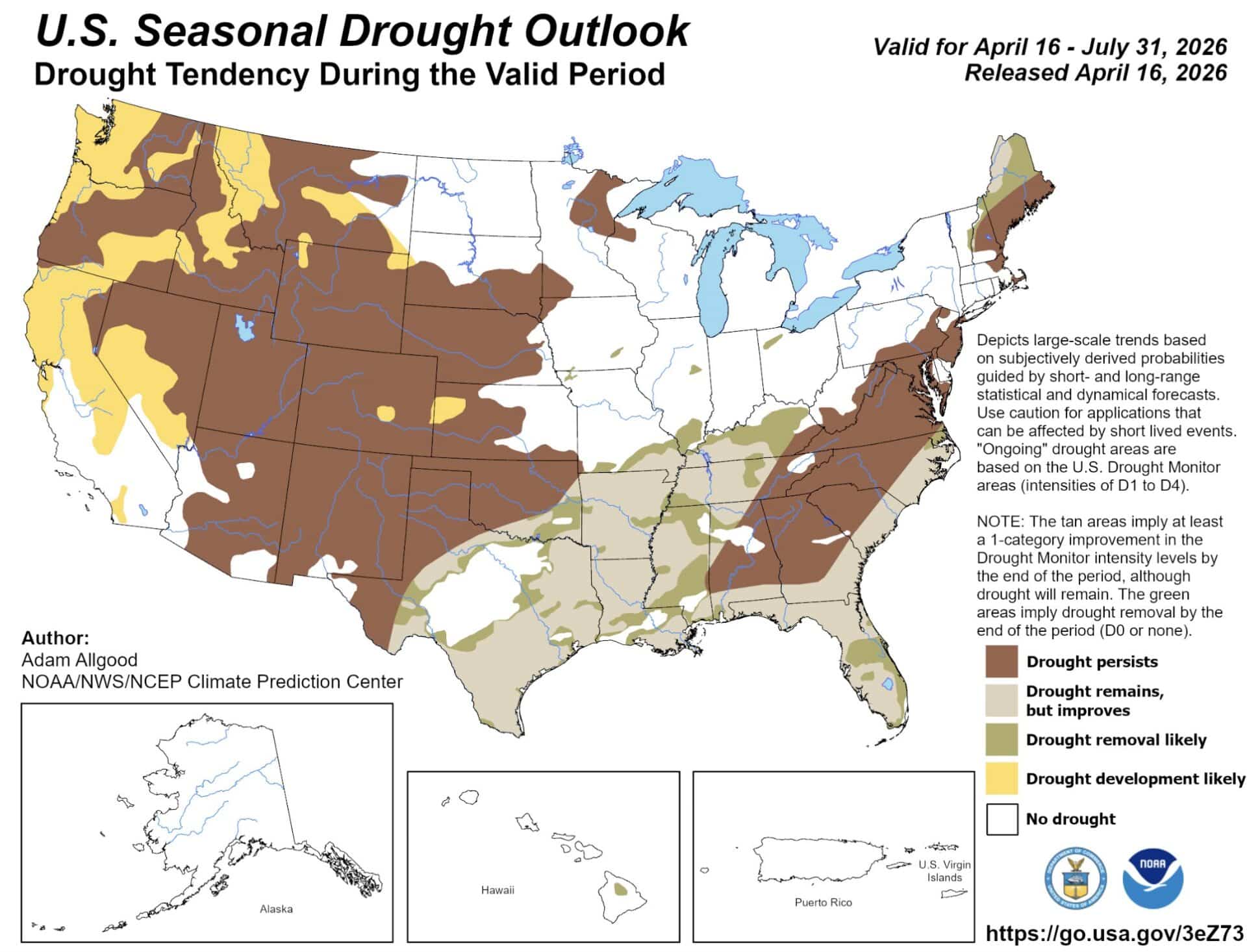
The Northeast, Midwest, High Plains, and South presented a more complex picture, with a mix of drought improvement and degradation across various sub-regions. This suggests that localized weather patterns and specific water management efforts have had varying degrees of success in mitigating drought impacts.
Notably, Alaska registered some improvement in its drought conditions, a welcome development in a region that has also faced its share of dry spells. This improvement highlights the localized nature of drought and the impact of specific meteorological events on regional water status.
A Looming Challenge for Spring and Beyond
The current drought trajectory presents a formidable challenge as the nation moves into the crucial late spring and summer months. The combination of over half the country being in at least moderate drought, a growing number of affected individuals, above-normal temperatures in critical agricultural zones, and persistently dry conditions in the West creates a concerning outlook.
Water resource managers, agricultural producers, and local governments in drought-stricken areas are facing escalating pressure. The agricultural sector, in particular, is vulnerable to the impacts of prolonged dryness, potentially leading to reduced crop yields, increased irrigation costs, and economic hardship for farming communities. Municipalities are also facing increased demand on water supplies for residential use, landscaping, and public services.
The implications extend beyond immediate water availability. Intensified drought conditions can lead to increased wildfire risk, impacting ecosystems, air quality, and public safety. Furthermore, the long-term degradation of soil moisture and groundwater reserves can have lasting effects on agricultural productivity and the overall health of ecosystems.
The U.S. Drought Monitor, released weekly, provides essential data for understanding and responding to these evolving conditions. Its consistent reporting allows for the monitoring of trends, the identification of vulnerable areas, and the development of targeted mitigation strategies. The ongoing efforts by NOAA, USDA, NASA, and the National Drought Mitigation Center are crucial for informing policy decisions and public awareness campaigns aimed at addressing this persistent national challenge.
The information presented in the U.S. Drought Monitor is compiled through a rigorous scientific process, integrating data from a variety of sources, including precipitation records, soil moisture measurements, streamflow data, and the expertise of climatologists and hydrologists. This comprehensive approach ensures the accuracy and reliability of the drought assessments, providing a vital resource for decision-makers at federal, state, and local levels.
As the nation continues to confront the realities of a changing climate, understanding and addressing widespread drought conditions remains a paramount concern. The current report serves as a critical reminder of the ongoing need for proactive water management, conservation efforts, and resilient infrastructure to navigate the challenges posed by increasing aridification across significant portions of the United States.

