
The European State of the Climate (ESOTC) 2025 report, a definitive annual assessment released on May 5, 2026, has confirmed that Europe remains the fastest-warming continent on the planet, with temperatures rising at approximately twice the global average rate. Jointly produced by the Copernicus Climate Change Service (C3S), implemented by the European Centre for Medium-Range Weather Forecasts (ECMWF), and the World Meteorological Organization (WMO), the document represents the collective findings of over 100 scientific contributors. The 2025 report underscores a period of profound transformation for the European cryosphere, characterized by a rapid reduction in snow and ice cover, record-breaking glacier mass loss, and a significant shift in the operational viability of high-altitude tourism.
The comprehensive overview of climate indicators reveals that the year 2025 was marked by high air temperatures, persistent drought conditions, intense heatwaves, and unprecedented sea surface temperatures across European waters. These meteorological stressors have converged to place the continent’s mountain ranges under extraordinary pressure, leading to hydrological and ecological shifts that threaten both local economies and regional water security.
The Warming Continent: A Statistical Overview
The findings of the ESOTC 2025 report indicate that the warming trend in Europe is not merely continuing but accelerating in its intensity. By heating up at twice the global average, Europe is experiencing the effects of "Arctic amplification" and the loss of the albedo effect—whereby white snow and ice, which reflect sunlight, are replaced by dark land or water, which absorb it. This feedback loop has resulted in a continent-wide temperature increase that far outpaces other landmasses.
In 2025, the impact on the cryosphere—the portions of Earth’s surface where water is in solid form—was particularly stark. Glaciers across every European region recorded a net mass loss. Iceland, which possesses some of the largest ice caps in Europe, recorded its second-largest glacier loss since records began. Meanwhile, the Greenland Ice Sheet, a critical component of the global climate system, lost an estimated 139 gigatonnes (139 billion tonnes) of ice over the course of the reporting period. This discharge of meltwater into the North Atlantic has broader implications for ocean circulation and sea-level rise, emphasizing that the changes occurring in the European North have global consequences.

The Crisis in the High Alps and European Mountain Ranges
For the European Alps and other major mountain ranges, the 2025 data paints a picture of a landscape in transition. Snow cover throughout the continent was recorded at 31% below the long-term average. The most alarming data point emerged in March 2025, a month traditionally characterized by peak snow accumulation for the spring melt. During this period, the snow-covered area in Europe was approximately 1.32 million square kilometres below the average. To put this figure into perspective, the lost snow cover is equivalent to the combined land area of France, Italy, Germany, Switzerland, and Austria.
This deficit represents the third-lowest snow extent recorded since satellite observations and standardized record-keeping began in 1983. The scarcity of snow is attributed to a combination of above-average winter temperatures, which caused precipitation to fall as rain rather than snow at increasingly high altitudes, and below-average precipitation in key alpine corridors. This "snow drought" has direct consequences for the replenishment of glaciers and the maintenance of permafrost, which stabilizes mountain slopes.
Operational Impact on the Ski Industry and Alpine Tourism
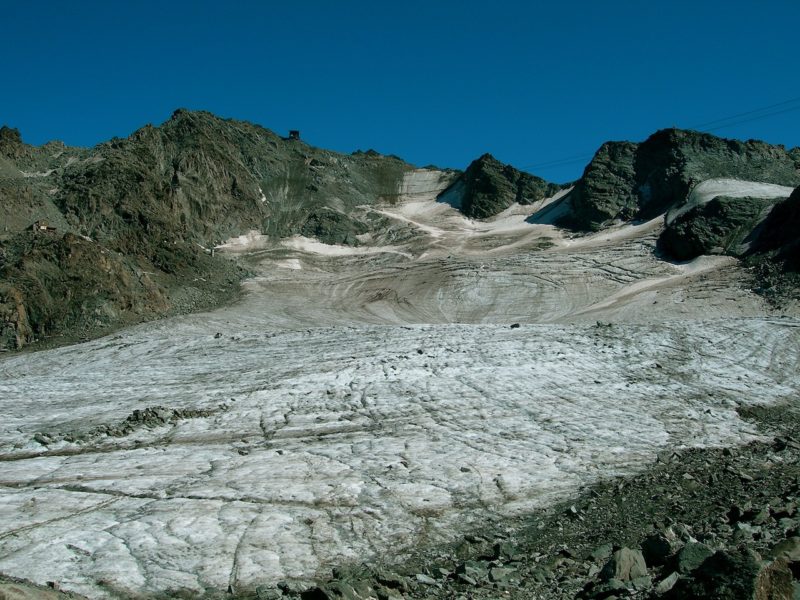
The warming of the continent has transitioned from a long-term projection to a present-day operational crisis for the European ski industry. The ESOTC 2025 report highlights the Hintertux glacier in Austria as a primary example of this shift. Hintertux, long celebrated as one of the few resorts in the world capable of offering 365-day-a-year skiing, has announced that it will be unable to offer summer skiing in 2026. The resort’s administration stated that they will instead pivot to offering non-skiing activities on the glacier, marking a fundamental change in the identity of the destination.
The closure of summer operations at Hintertux follows a pattern established by other iconic resorts. Tignes in France, which historically remained open for year-round skiing, ceased its summer operations several years ago as the receding glacier made the terrain unsafe and environmentally unsustainable to maintain. Currently, Zermatt in Switzerland remains the only alpine ski area attempting to maintain a year-round skiing program, though even there, operations are strictly contingent on day-to-day weather conditions and the preservation of the remaining ice.
The report notes that these closures are "concrete signs of climate change," reflecting a reality where the "eternal snows" of the Alps are no longer a guaranteed feature of the summer landscape. For many mountain communities, this necessitates a total reimagining of the tourism model, moving away from snow-dependent activities toward hiking, mountain biking, and "coolcationing"—where tourists seek higher altitudes to escape the extreme heat of the lowlands.
Chronology of Climate Events in 2025
The 2025 reporting year was defined by a series of meteorological anomalies that contributed to the degradation of the cryosphere:
- Winter 2024-2025: Characterized by "atmospheric rivers" that brought heavy rain to low and mid-altitudes, while high-altitude snowpack failed to reach historical norms.
- Spring 2025: An exceptionally warm March led to premature snowmelt. The lack of reflective snow cover allowed the ground to heat up earlier than usual, further accelerating the melt of deeper glacier ice.
- Summer 2025: Record-breaking heatwaves affected Central and Southern Europe. High-pressure systems, often referred to as "heat domes," became stationary over the Alps, pushing the 0°C isotherm (the altitude at which water freezes) to record heights, often exceeding 5,000 metres.
- Autumn 2025: Ocean temperatures in the Mediterranean and the North Atlantic reached record highs, influencing weather patterns and delaying the first significant snowfalls of the 2025-2026 season.
Official Responses and Scientific Analysis
In response to the report, officials from the WMO and the ECMWF have called for urgent policy interventions. While the report itself is a scientific document, the implications for European policy are clear. Dr. Samantha Burgess, Deputy Director of the Copernicus Climate Change Service, noted that the data from 2025 serves as a stark reminder of the vulnerability of the European environment. Scientists contributing to the report emphasize that the reduction in snow cover is not just a concern for the tourism sector but a major threat to the European hydrological cycle.
Glaciers and snowpacks act as "water towers" for the continent. They store water during the winter and release it slowly during the spring and summer, feeding major rivers such as the Rhine, the Danube, and the Po. The record mass loss in 2025 suggests that these natural reservoirs are shrinking, which could lead to severe water shortages for agriculture, inland shipping, and hydroelectric power generation in the coming decades.
The report also highlights the ecological impact on alpine flora and fauna. As the snowline retreats, species that depend on cold, snowy environments are forced into higher, smaller pockets of habitat, increasing the risk of local extinctions and disrupting established ecosystems.
Broader Socio-Economic Implications
The economic ramifications of the ESOTC 2025 findings extend beyond the loss of lift ticket sales. The ski industry in Europe is a multi-billion-euro sector that supports hundreds of thousands of jobs in remote mountain valleys. The shortening of the winter season and the disappearance of summer glacier skiing threaten the financial viability of these regions.

Furthermore, the increased rate of glacier melt and the thawing of permafrost are creating new geological hazards. The report mentions an increase in rockfalls and glacial lake outburst floods (GLOFs), as the ice that once acted as a "glue" for mountain peaks disappears. This poses a direct risk to infrastructure, including cable cars, hiking trails, and even downstream villages.
Conclusion and Future Outlook
The European State of the Climate 2025 report provides a sobering look at a continent in the midst of a rapid environmental overhaul. The data regarding 139 billion tonnes of ice loss in Greenland and the 31% deficit in European snow cover are not isolated incidents but part of a documented, long-term trend of accelerated warming.
As Europe enters the mid-2020s, the report suggests that the "new normal" for the continent involves shorter winters, more frequent and intense heatwaves, and a mountain landscape that is increasingly devoid of permanent ice. For policymakers, the findings reinforce the necessity of both mitigation—reducing greenhouse gas emissions to slow the rate of warming—and adaptation—investing in water management, disaster risk reduction, and economic diversification for mountain regions. The 2025 report stands as a critical record of the year the "eternal ice" of the Alps became a visible casualty of the changing global climate.

