
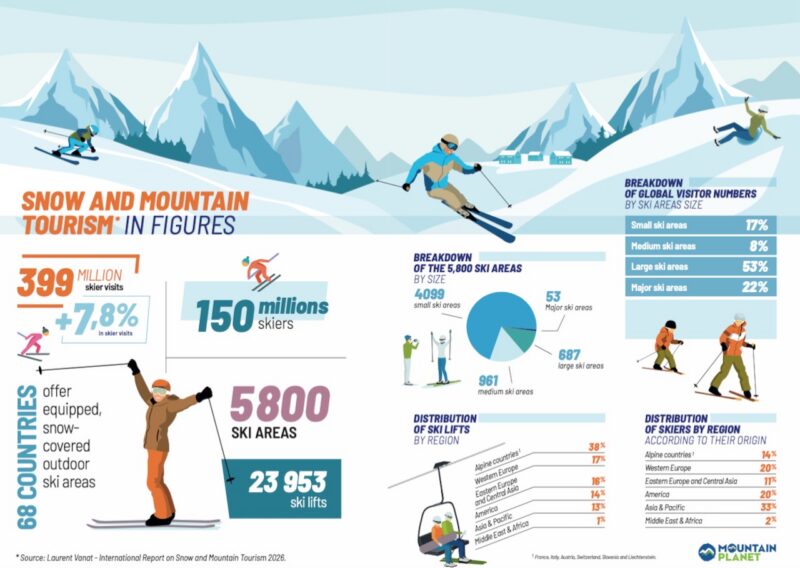
The global ski industry has achieved an unprecedented milestone, recording 399 million skier visits during the 2024/25 winter season, marking the busiest year in the history of mountain tourism. This figure, unveiled in the 18th edition of the International Report on Snow & Mountain Tourism, surpasses the previous record of 392 million visits set during the 2018/19 season, just prior to the global disruptions caused by the COVID-19 pandemic. The data, presented by industry analyst Laurent Vanat at the Mountain Planet exhibition in Grenoble, France, signals a robust recovery and a significant shift in how the industry navigates the dual challenges of public health recovery and environmental volatility.
The 2024/25 season concluded the first quarter of the 21st century, a period defined by rapid technological advancement, shifting demographics, and a global pandemic that once threatened the very existence of international travel. During the height of the COVID-19 crisis in the 2020/21 winter, global skier visits plummeted by nearly 50%. However, the latest figures suggest that the industry has not only regained its footing but has entered a new era of growth, driven by emerging markets and enhanced operational efficiencies in established regions.
A Decoupling of Snowfall and Visitation
One of the most significant findings of the 2024/25 report is the growing structural trend of "decoupling" visitation numbers from natural snowfall. Historically, the success of a ski season was almost entirely dependent on the volume of natural snow. However, the most recent data indicates that visitation remained stable or even increased in regions where snowfall was below historical averages.
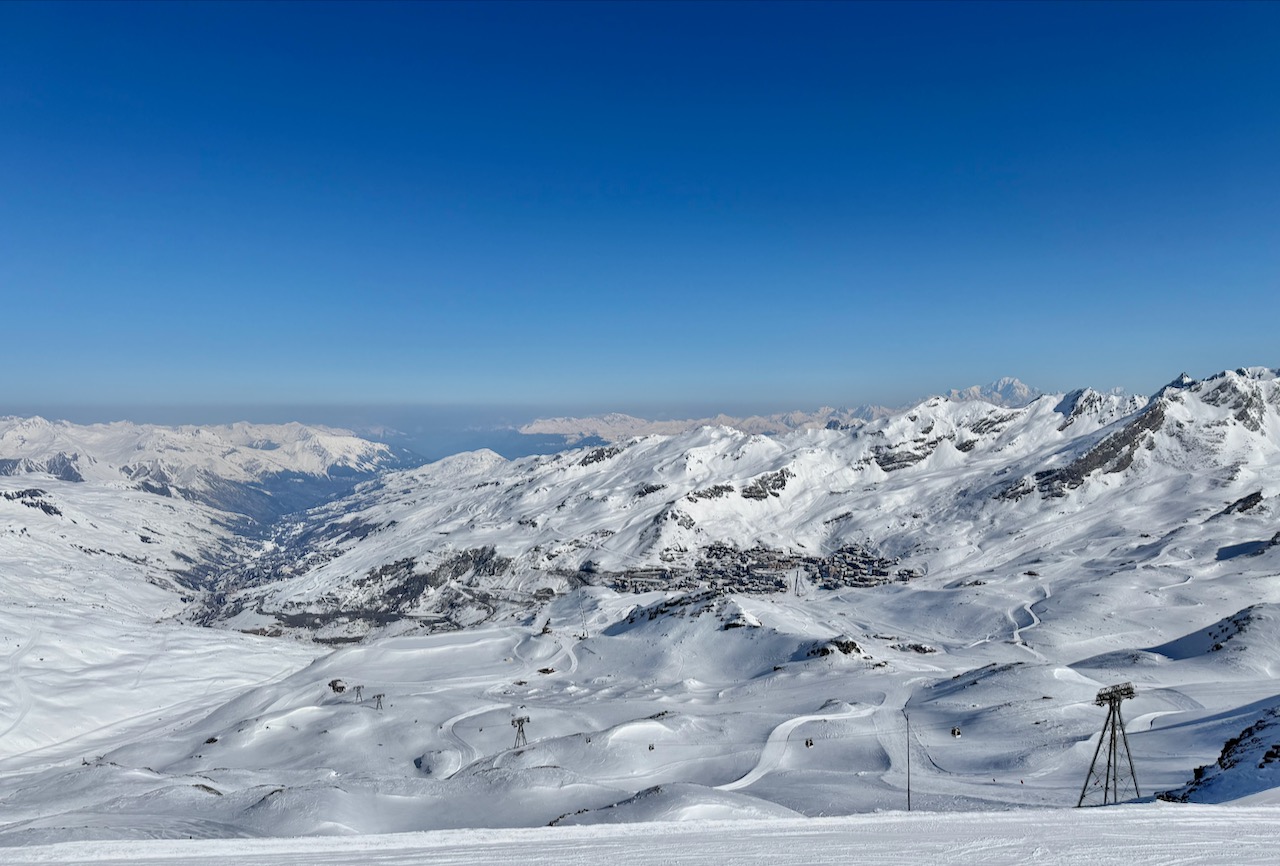
In many European destinations, particularly at mid-altitudes, January 2025 saw significantly lower-than-average snowfall. Despite this, resorts in France, Austria, Spain, and Andorra reported increased visitation. This resilience is attributed to heavy investment in snowmaking technology, more efficient slope management, and a sustained high demand for winter holidays that persists regardless of meteorological fluctuations. The report highlights that as long as resorts can provide a "guaranteed" skiing experience through technical means, the consumer appetite for mountain tourism remains inelastic.
Regional Performance: Winners and Emerging Uncertainties
The recovery has been uneven across the globe, with certain nations emerging as the primary engines of growth while others struggle to return to their pre-pandemic status.
The Dominance of China and the Asian Market
For the second consecutive year, China has led the global ranking of countries performing above their pre-pandemic five-year averages. Following the momentum of the 2022 Beijing Winter Olympics, the Chinese domestic market has seen a surge in interest. The development of massive indoor ski facilities and the expansion of outdoor resorts in provinces like Hebei and Heilongjiang have solidified China’s position as the world’s most dynamic growth market.
In contrast, the Japanese market presents a more complex picture. While international visitors have returned in large numbers to Hokkaido—famed for its "Japow" powder snow—the domestic market on the main island of Honshu continues to face demographic challenges and fluctuating weather conditions. Japan remains one of the few major markets where a return to pre-pandemic visitation levels remains uncertain.
The European Heartland: Switzerland and Italy Lead
Switzerland recorded its best performance in over 15 years during the 2024/25 season. This resurgence is particularly notable given the high cost of Swiss tourism and the competitive nature of the Alpine region. Italy also achieved its third consecutive positive season, benefiting from modernized infrastructure and a strong appeal to both domestic and international tourists.
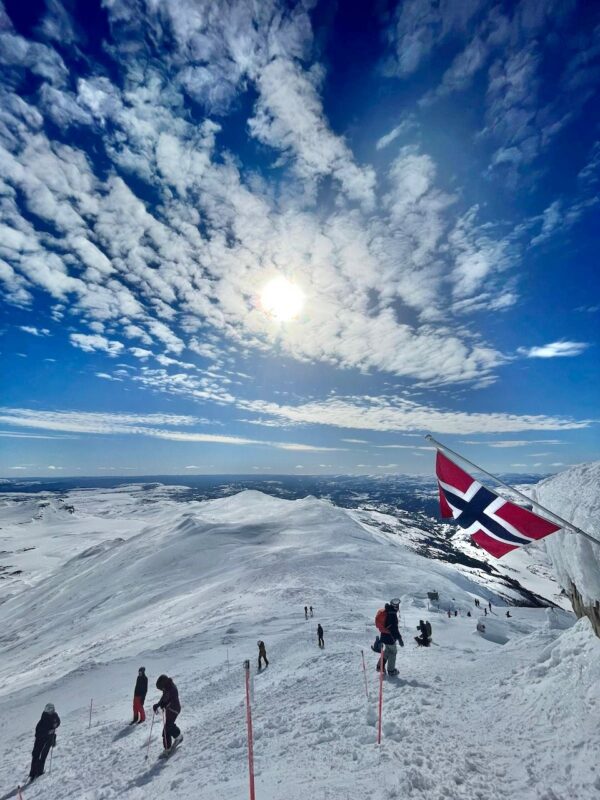
Northern Europe, however, faced greater challenges. Unlike the Central Alps, Nordic markets such as Sweden and Norway remain more heavily dependent on natural snow. These regions were more significantly affected by weather variability in 2025, illustrating that while technology can mitigate climate impacts, it has not yet fully insulated every region from the effects of a warming planet.
North American Stability
In the United States and Canada, visitation levels remained strong despite below-average snowfall in several key regions. The North American market has been bolstered by the continued prevalence of multi-resort season passes, such as the Epic and Ikon passes, which encourage frequent visitation and provide financial stability for resort operators regardless of weekly weather patterns.
The Evolution of the Global Ski Footprint
The International Report on Snow & Mountain Tourism identifies approximately 2,000 ski resorts operating across 68 countries. While the industry is dominated by the "Big Four"—France, Austria, the United States, and Switzerland—the report draws attention to the "small players" that are expanding the global footprint of the sport.
Emerging destinations in Eastern Europe continue to show promise, offering a lower-cost alternative to the Alps. Furthermore, skiing is maintaining its foothold in unexpected locations such as Cyprus, Greece, India, Iran, Israel, Lebanon, Morocco, Turkey, and even Southern Hemisphere outliers like Lesotho and South Africa. These markets, though small in terms of total skier visits, are vital for the long-term diversification of the sport’s global demographic.
Climate Change and Operational Adaptation
The 2024/25 season serves as a critical case study in how the ski industry is confronting climate change. For years, critics have portrayed the industry as uniquely vulnerable to rising global temperatures. However, the report argues that the industry has integrated climate risk into its core operational strategies.
Resorts are no longer passive victims of weather; they are active managers of snow. This includes:

- Snow Farming: The practice of storing large piles of snow under insulated covers during the summer to be used at the start of the following season.
- Advanced Snowmaking: Utilizing automated systems that can produce high-quality snow at higher temperatures and with greater energy efficiency.
- Diversification: Transitioning toward "four-season" models that include summer mountain biking, hiking, and wellness tourism to offset winter volatility.
The report concludes that at this stage, climate change has not triggered the collapse of the industry. Instead, it has accelerated a professionalization of resort management, where data-driven snow production and guest experience management take precedence over reliance on the elements.
Chronology of the Modern Ski Era: 2018–2025
The path to the 399 million record has been marked by extreme volatility:
- 2018/19: The industry reaches a peak of 392 million visits, buoyed by strong snow years in both Europe and North America.
- 2019/20: The season is cut short in March 2020 as the COVID-19 pandemic forces the synchronized closure of resorts worldwide.
- 2020/21: The "lost winter." Global visits drop by 50%. While some markets like the US remained open with restrictions, European giants like France and Italy kept lifts closed for the entire season.
- 2021/22 & 2022/23: A period of "revenge travel" and recovery. Visitation begins to climb as travel restrictions ease.
- 2023/24: The industry approaches pre-pandemic levels, with China beginning its post-Olympic surge.
- 2024/25: The current record-breaking season, characterized by operational resilience and the successful management of a low-snow winter in many regions.
Official Reactions and Industry Implications
Laurent Vanat, the report’s author, emphasized that the 2024/25 results illustrate the "operational resilience" of the sector. "In many destinations, efficient management, reliable snowmaking, and favourable weather conditions were sufficient to sustain high levels of visitation even with limited natural snow," Vanat stated during the Grenoble conference.
Industry stakeholders, including the International Ski Federation (FIS) and UN Tourism, have noted that the record visitation numbers provide a necessary financial buffer for resorts to continue investing in sustainable technologies. However, the report also serves as a warning for smaller, lower-altitude resorts that lack the capital to invest in extensive snowmaking. The "gap" between top-tier, resilient resorts and smaller, weather-dependent areas is expected to widen.
For investors, the 399 million figure reinforces the mountain tourism sector as a viable asset class, despite environmental concerns. The stability of demand suggests that the "ski culture" remains deeply embedded in the social fabric of Europe and North America, while it is rapidly becoming a status symbol and a popular pastime for the growing middle class in Asia.
Future Outlook
As the industry moves into the second quarter of the 21st century, the focus is expected to shift from "recovery" to "sustainability." The 2024/25 season proved that the industry can survive—and thrive—under challenging meteorological conditions. The challenge for the next decade will be maintaining these visitation levels while addressing the carbon footprint of mountain travel and ensuring that the sport remains accessible to a broad demographic.
With 399 million visits as the new benchmark, the global ski industry has demonstrated that it is far from a sunset industry. Instead, through a combination of technological adaptation and a relentless consumer demand for mountain experiences, it has reached a new pinnacle of global popularity.

