
The transition from the pinnacle of elite athletic competition to the rhythms of everyday life often presents a profound identity challenge for many athletes. The structured world of training, competition, and clearly defined goals gives way to an uncertain landscape, leaving many to ponder the fundamental question: What now? For Libby Ludlow, a distinguished alumna of the U.S. Ski Team and an Olympian, this post-athletic journey was not a severance but rather a dynamic evolution, a continuation of core values expressed in new and impactful forms.
Today, Ludlow embodies a multifaceted identity: a devoted mother of two, a successful children’s book author, a dedicated volunteer ski coach, and an increasingly influential voice in the discourse surrounding youth sports development. In a remarkable parallel to her days as a competitive skier, her current endeavors are still driven by a relentless pursuit of improvement, a deep investment in process, and, above all, an unadulterated love for the sport itself. “I loved the process of getting better,” Ludlow reflects, encapsulating a philosophy that transcended podium finishes. “Competing was fine, but it wasn’t what I did it for. I just loved skiing.”
A Distinguished Career on the Slopes
Libby Ludlow’s career as an alpine ski racer was marked by dedication and significant achievement. Hailing from Bellevue, Washington, Ludlow quickly rose through the ranks, demonstrating exceptional talent and an unwavering work ethic. She joined the U.S. Ski Team in 1999, embarking on a demanding journey through the World Cup circuit, the highest level of international ski racing. Throughout her career, she specialized primarily in the speed disciplines of downhill and super-G, earning a reputation for her aggressive style and consistent performance.
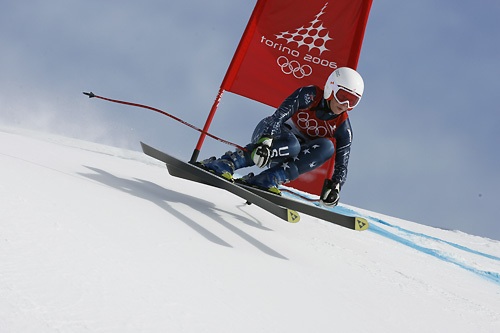
A significant highlight of her competitive tenure was representing the United States at the 2006 Winter Olympics in Torino, Italy. Competing on the world’s biggest stage, Ludlow showcased the culmination of years of rigorous training and sacrifice. While Olympic medals eluded her, her participation solidified her status among the nation’s elite skiers and provided invaluable experience that would shape her post-athletic perspective. Her World Cup career spanned several seasons, where she consistently vied with the best racers globally, proving her mettle against formidable international competition. Her time on the U.S. Ski Team, which concluded in 2007, instilled in her a profound understanding of sports psychology, physical conditioning, and the intricate dynamics of high-performance environments—lessons that now fuel her advocacy.
Navigating the Post-Athletic Transition
The transition out of elite sports is a complex and often under-supported phase for many athletes. Research indicates that a significant percentage of former professional and Olympic athletes struggle with issues ranging from identity loss and mental health challenges to financial instability upon retirement. A 2018 study published in the British Journal of Sports Medicine highlighted that up to 30% of elite athletes experience significant psychological distress during this transition period. The abrupt removal of a lifelong structure, a clear purpose, and the powerful identity associated with being an athlete can leave a void that is difficult to fill.
For Ludlow, the path was less about a clean break and more about a purposeful pivot. While the immediate intensity of competition receded, the underlying drive for personal growth and engagement with skiing remained. Her journey exemplifies a successful re-channeling of athletic discipline into new passions. Her subsequent work with NBC during the Olympics and her coaching roles in Park City served as vital bridges, allowing her to stay connected to the sport she loved while exploring new avenues for contribution. “What I have—my background, my experience—it’s unique,” she notes. “And I’m just happy to be able to get back in and use it.” This sentiment underscores the value of leveraging one’s unique athletic journey to forge new professional and personal identities.
Rediscovering the Pure Joy of Skiing

In recent years, Ludlow has experienced a profound resurgence of passion for skiing, a rediscovery untethered from the pressures of competition. This renewed connection has blossomed through community engagement and, most significantly, through her role as a mother. Her two children, now aged six and nine, are embarking on their own snowy adventures, providing Ludlow with a fresh lens through which to view the sport.
Crucially, Ludlow and her husband, Jake, are deliberately charting a different course than the traditional performance-driven pathway often seen in ski racing households. Their primary objective is unequivocally clear: “Our job is for our kids to love skiing and want to ski for the rest of their life,” Ludlow states emphatically. “No amount of performance pressure should ever come in the way of that.” This philosophy reflects a growing movement within youth sports to prioritize intrinsic motivation and long-term engagement over early specialization and competitive results. It acknowledges that the ultimate measure of success in youth sports should be the fostering of a lifelong love for physical activity, rather than fleeting victories or early talent identification.
Rethinking the Youth Sports Pathway: A Call for Balance
Ludlow’s perspective is not an isolated one; it resonates with a broader paradigm shift gaining momentum within ski racing and the wider youth sports landscape. The traditional model, often characterized by early specialization, high-volume training, and intense competitive schedules, is increasingly being questioned. In its place, advocates like Ludlow are championing an approach centered on balance, patience, and holistic, long-term development.
Her children’s participation in a low-key, after-school program in Park City exemplifies this philosophy. The program emphasizes fun and fundamental skill-building, deliberately de-emphasizing competition. “It’s more consistent with the research—fun, not forcing kids to specialize early,” Ludlow explains. This approach aligns with key principles of Long-Term Athlete Development (LTAD) models, which advocate for varied experiences, play-based learning, and delayed specialization, particularly in pre-adolescent years.
The stark contrast to this balanced approach is the pervasive trend of early intensity, often fueled by parental pressure and a fear of children "falling behind." Ludlow observes, “There are kids skiing gates five days a week. Of course, they’ll get results. But what’s the goal if we’re playing the long game?” This question cuts to the heart of a critical debate in youth sports. Data from organizations like the Aspen Institute’s Project Play reveal that participation rates in organized sports decline sharply in adolescence, with burnout and excessive pressure cited as primary factors. A 2019 report indicated that 70% of kids quit organized sports by age 13, often due to a lack of fun, overemphasis on winning, and parental pressure.
Conversely, extensive research supports the benefits of multi-sport participation and a more balanced childhood experience. Studies consistently show that athletes who participate in multiple sports until at least age 12-14 are less prone to overuse injuries, exhibit better overall athletic development, and are more likely to achieve elite status later in their careers. For instance, a study by the National Collegiate Athletic Association (NCAA) found that 88% of professional athletes played multiple sports as children. These balanced experiences cultivate greater resilience, adaptability, and a sustained love for physical activity—qualities that Ludlow champions.
From Athlete to Author: Crafting Stories on Snow
Beyond her advocacy, Ludlow has forged a unique creative path as a children’s book author. Her highly acclaimed books, A-B-Skis and Goodnight Chairlift, have swiftly become beloved staples in ski-centric households, their popularity spreading organically through word of mouth. “I’ll be standing in the lift line, helmet on with an A-B-Skis sticker, and I’ll see a parent nudge their kid and say, ‘Look, A-B-Skis,’” she recounts, illustrating the genuine connection her stories have made. “The way it’s caught on has been really special.”
These books are far more than mere playful narratives; they are imbued with purpose. They serve as engaging tools to ignite excitement for skiing, gently introduce young enthusiasts to the vibrant culture of the sport, and crucially, assist parents in setting realistic expectations before their children even step onto the snow. This intentional approach reflects Ludlow’s core values. “It helped me zero in on what I care most about,” she explains, citing “character development, imagination, and stoking enthusiasm for skiing” as her guiding principles. In essence, her literary creations mirror her approach to sport itself: a focus less on predefined outcomes and more on the richness of the experience, the joy of discovery, and the cultivation of a positive relationship with skiing from an early age. The entrepreneurial journey of conceiving, writing, illustrating, publishing, and distributing these books also showcases her proactive and independent spirit, a trait honed during her athletic career.
The Enduring Through Line: A Commitment to Process
Those who trained alongside Ludlow frequently recall a singular characteristic: her extraordinary work ethic. “I remember thinking, ‘She works her tail off,’” recalls a former training partner. Ludlow acknowledges this observation but frames it through a distinctive lens. For her, the relentless effort was never merely about grinding; it was fundamentally about control. “There are so many things out of your control,” she wisely observes, reflecting on the unpredictable nature of ski racing. “I just poured myself into what I could influence.” This profound insight into focusing on controllable elements—preparation, effort, attitude—rather than external variables like weather or competitor performance, became a cornerstone of her athletic success.
This same deeply ingrained mindset now propels her entrepreneurial ventures. As an independent author and business owner, Ludlow meticulously manages every facet of her operation, from sourcing materials and overseeing distribution to spearheading marketing efforts for her books. The parallels to her ski racing career are unmistakable. “It’s similar to ski racing,” she asserts. “You focus on each small step, and eventually you create something you’re proud of.” This methodical, process-oriented approach underscores a fundamental truth: sustained success, whether on the racecourse or in the marketplace, is often the cumulative result of diligent, incremental effort.
A New Mission: Championing Healthier Youth Sports
Ludlow’s next chapter represents her most ambitious undertaking yet, leveraging her unique blend of elite athletic experience, parental insight, and passion for child development. She has launched a Substack newsletter dedicated to providing parents, coaches, and organizations with accessible, research-based guidance on what truly serves the best interests of children in sports. The initiative’s core objective is not to prescribe a singular, rigid pathway but to equip stakeholders with clear, evidence-backed insights.
“There’s so much data about what’s good for kids,” she laments, highlighting a crucial information gap. “But no one is putting it together in a way that’s digestible.” Her platform aims to bridge this gap, translating complex developmental psychology and sports science into practical, actionable advice. Her central concern is the perceived drift of youth sports—including ski racing—away from its foundational purpose: fostering growth, joy, and healthy development. “They’re too powerful and important as a vehicle for kids,” she argues, implying that the current trajectory, often driven by adult agendas, risks undermining the inherent benefits of sports for young participants.
Her advocacy aligns with the broader efforts of national governing bodies, like U.S. Ski & Snowboard, which are increasingly emphasizing athlete well-being, long-term development models, and the importance of fostering a positive environment. These organizations are working to educate parents and coaches on the dangers of early specialization and the benefits of diverse athletic experiences. Ludlow’s Substack serves as a grassroots complement to these institutional efforts, offering a relatable and informed voice directly to the community.
Full Circle: The Magic of Discovery
For Libby Ludlow, the narrative arc connecting her days as a World Cup racer to her current roles as a mother, author, and youth sports advocate is remarkably coherent and deeply personal. The through line is not defined by medals or rankings, but by a more fundamental, profound metric: the moment a child first discovers the sheer magic of skiing.
“The best experience on skis,” she declares, her words imbued with genuine warmth, “is watching a kid discover the magic of it.” This sentiment encapsulates her enduring commitment to the sport and her belief in its power to enrich lives. In this sense, her distinguished career has not concluded; it has simply evolved, shifting its focus from personal triumph to fostering the joy and sustainable development of the next generation of skiers and, more broadly, young athletes. Libby Ludlow’s journey stands as a compelling testament to the power of passion, process, and purpose in shaping a life of meaningful impact, long after the finish line of elite competition has faded from view.

