
Alpine ski racing, a sport synonymous with individual prowess and high-speed competition, may be overlooking one of its most potent tools for athlete development: shared training environments. This article delves into the inherent limitations of conventional siloed training models and illuminates how intentional collaboration among clubs and coaches can cultivate more competitive, adaptable, and pro-social daily environments for aspiring racers.
The Current Paradigm: Training in Isolation
Traditionally, the world of alpine ski racing has drawn a stark distinction between training and competition. Training is where athletes hone their skills, often within the confines of their individual clubs, on familiar home hills, and against known teammates. Competition, conversely, is the arena where these preparations are tested, bringing together athletes from diverse clubs and regions to vie for top honors. This prevalent structure, while understandable from a logistical standpoint, inadvertently creates a developmental gap. Clubs often operate in self-contained bubbles, optimizing for their internal systems and familiar dynamics. Only on race day do these isolated entities converge, expecting athletes to perform at their peak against competitors whose styles, tactics, and speed they rarely encounter during daily practice. This operational model unintentionally constrains the holistic development of athletes, limits their performance ceiling, and reduces opportunities for broader social interaction within the sport.
For many young athletes, particularly those who grapple with bridging the often-daunting chasm between their training performance and their race-day execution, the argument for a "third space"—an environment fostering experimentation and consistent exposure to diverse competition—becomes exceedingly compelling. This isn’t merely a theoretical construct; in pockets across the globe, innovative programs are already demonstrating the tangible benefits of such an approach.
The Economic Principle of Clustering: A Sporting Analogy
To understand why training with competitors can elevate performance, one can draw parallels from an unlikely field: economics. Hotelling’s Law of Spatial Competition, a fundamental concept in standard economics, explains why competing businesses frequently cluster together, even when ample space exists elsewhere. Consider a street lined with multiple gas stations, car dealerships, or banks in close proximity. This seemingly counterintuitive arrangement actually serves to grow the overall market. When businesses cluster, they create a destination, attracting a larger volume of customers who appreciate the convenience of choice. While individual businesses share these customers, the total market volume and activity increase, benefiting all participants. This phenomenon, known as the clustering effect, posits that when similar groups operate in close proximity, they collectively benefit by raising the overall level of activity, interaction, and, crucially, performance.
This principle translates directly to alpine ski racing. When athletes train alongside their competitors, the collective standard naturally elevates. The intensity of each training run increases. Technical and tactical standards sharpen, driven by direct comparison and the innate human drive to outperform. Athletes are pushed not only on race day but consistently within a dynamic environment that fosters the continuous change necessary for superior performance. Even the most elite club, with its meticulously crafted internal system and top-tier athletes, can fall prey to the comfort of familiarity. Training repeatedly with the same individuals, no matter how skilled, can inadvertently breed complacency, dulling the competitive edge required for breakthrough performances.
Beyond Economics: The Psychology of Competitive Training
The benefits extend beyond simple economic models, delving into the realm of sports psychology. Concepts such as social facilitation suggest that individuals perform better on well-learned tasks when in the presence of others. In a shared training environment, this translates to athletes pushing harder and executing more precisely when observed by peers and rivals. Observational learning, another key psychological principle, allows athletes to rapidly acquire new skills and tactics by watching others. Exposure to diverse coaching styles and athlete approaches in a multi-club setting provides a rich tapestry of learning opportunities that are absent in isolated training. Furthermore, the regular exposure to competitive pressure in a controlled training environment helps athletes develop greater competitive arousal regulation, teaching them to manage pre-race anxiety and translate it into peak performance rather than debilitating stress. This constant feedback loop, driven by immediate comparison, accelerates skill acquisition and enhances mental toughness, reducing the "shock" of race day.
The Gaps in Current Alpine Ski Development
Present-day alpine ski development frequently suffers from unintended artificial boundaries. These barriers—whether logistical, cultural, financial, or political—often impede the very shared training opportunities that could unlock greater potential. Concerns over fairness, equitable access to hill space, perceived financial burdens, limited time, or the fear of relinquishing a competitive advantage can overshadow the overarching goal of comprehensive athlete development.
While a select few of the sport’s highest-achieving individuals may thrive in highly individualized training models, even these environments are rarely truly isolated. For the vast majority of aspiring athletes, consistent and meaningful exposure to a broader spectrum of competitors is an indispensable catalyst for growth. Sticking exclusively to one’s club means missing out on crucial elements:
- Diverse Styles and Tactics: Athletes develop a narrower technical and tactical repertoire, potentially struggling to adapt to varied course sets, snow conditions, or the approaches of different coaches.
- Realistic Progress Assessment: Without a broader comparative benchmark, athletes may develop a skewed perception of their progress, leading to a false sense of security that crumbles when confronted with wider competition.
- Coach Development: Coaches, too, benefit from observing different methodologies and exchanging ideas, preventing stagnation and fostering collective innovation.
- Motivation and Engagement: The excitement and novelty of training with new faces and challenging different skill sets can significantly boost athlete motivation and prevent burnout.
- Social Connection and Retention: Perhaps most critically, isolation limits the opportunity to forge friendships and build a wider community—the very elements that make ski racing a deeply rewarding and enduring experience for many young participants. A robust social network within the sport can significantly contribute to long-term athlete retention.
Building a Stronger Daily Environment: Tangible Outcomes
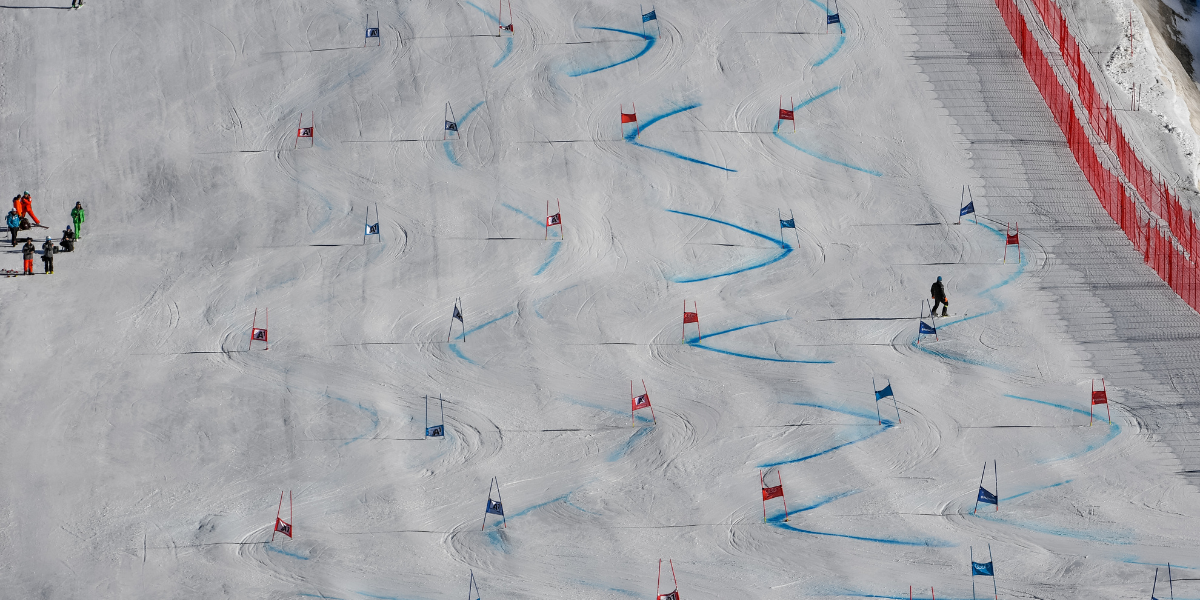
When clubs actively dismantle these silos and embrace open training environments—whether by inviting neighboring teams, coordinating schedules for joint sessions, or co-hosting training blocks—the positive impacts are both immediate and profound:
- Elevated Intensity and Focus: Athletes naturally push harder when surrounded by diverse peers and rivals, leading to more productive training sessions.
- Sharpened Technical Standards: Direct comparison encourages athletes to refine their technique and line choices, striving for efficiency and speed observed in others.
- Increased Tactical Versatility: Exposure to different course settings and coaching philosophies broadens an athlete’s tactical toolkit, making them more adaptable on race day.
- Accelerated Learning and Skill Acquisition: Observational learning from a wider pool of athletes and coaches provides diverse models for improvement.
- Improved Race Day Acclimation: Regular exposure to competitive dynamics in training reduces the mental and emotional "shock" of actual races.
- Enhanced Mental Toughness: Consistently challenging oneself against varied competitors builds resilience and the ability to perform under pressure.
- Broader Social Development: Athletes build friendships and connections across clubs, fostering a stronger sense of community and sportsmanship.
- Coaching Collaboration and Innovation: Coaches gain insights from observing different training methodologies and can share best practices, collectively raising the regional standard.
- Higher Athlete Motivation and Retention: The novelty and challenge of varied training environments keep athletes engaged and passionate about the sport.
Crucially, this collaborative approach does not diminish competition; it enhances it by raising the collective bar, making every race more dynamic and every victory more earned.
Lessons from the Highest Level: The World Cup Model
The concept of shared training is not new at the pinnacle of alpine ski racing. Athletes on the World Cup circuit, representing different nations and teams, routinely train in the same venues, often sharing lanes. The natural tendency to compare, observe, and learn is an embedded part of their preparation. While there are strategic considerations and occasional "cutthroat" dynamics given the high stakes of professional careers and prize money, the fundamental principle of preparing in a competitively rich environment remains. This constant measurement against the world’s best is a critical component of sustaining elite performance.
It’s important to distinguish this from highly selective talent identification events. While such projects offer crucial exposure, they are often limited in scope, infrequent, and targeted at a specific demographic. The focus here is on expanding opportunities for grassroots clubs and teams through consistent, open collaboration for the collective benefit of all participants, not just the identified elite. As an individual with experience coaching at elite junior levels, the World Cup, and the Olympic Games, a consistent pattern has emerged: the most successful performers are invariably shaped in environments where the daily standard is perpetually elevated by the presence and performance of their peers. Wider, more consistent exposure accelerates both athletic and social development in profound ways.
Navigating the Hurdles: Practical Implementation
Building and sustaining shared training environments is not without its complexities. Logistical challenges abound: coordinating schedules across multiple programs, securing adequate hill space, ensuring sufficient staffing, managing transportation, and aligning financial models. For many clubs, the prospect of formalized, multi-team training blocks can appear operationally daunting.
However, many dedicated club leaders and coaches have already embraced this challenge and are successfully implementing collaborative models. Their efforts often involve significant buy-in from parents, who commit to carpooling and navigating travel to different hills. It frequently necessitates proactive preseason conversations between club leadership and resort management to secure discounted or complimentary lift tickets and dedicated training lanes. Most importantly, successful collaboration is driven by a group of well-intentioned adults who understand that the initial effort and perceived trade-offs are a worthwhile investment for long-term athlete development.
Collaboration does not need to be monumental from the outset to be impactful. Some of the most effective models are simple and repeatable:
- Monthly Training Swaps: Two nearby clubs agree to alternate hosting training sessions once a month.
- Standing Midweek Sessions: Clubs coordinate to share lanes or specific training periods on a regular basis.
- Informal Invitations: During key preparation periods, clubs extend open invitations for others to join specific training blocks.
These smaller, consistent touchpoints can yield many of the same benefits as larger, fully coordinated camps, fostering exposure and competitive growth without requiring a complete operational overhaul. The ultimate goal is not perfection in coordination but consistent, meaningful exposure for athletes. Starting with one intentional collaboration can pave the way for broader, more integrated programs.
The Mindset Shift: From Protectionism to Progressive Development
Often, the most significant barrier to implementing shared training environments is not access to resources but a prevailing mindset. The idea of inviting a rival team to train on one’s home hill can evoke feelings of vulnerability or a sense of "giving something away." However, this perspective fundamentally misunderstands the dynamics of athletic development. In practice, welcoming competitors is an investment in raising the overall level and experience of one’s own athletes. A more robust and diverse training environment ultimately benefits everyone involved.
This necessitates a fundamental shift from a short-term protectionist mentality to one focused on long-term athlete development. It requires leaders, coaches, program directors, and administrators to consciously prioritize athlete growth and the collective advancement of the sport over perceived competitive control or insular club interests. Ski racing has always been defined by a compelling duality: individual excellence forged through collective progression. The pertinent question for the sport’s future is whether existing daily environments can be more effectively structured to support this inherent synergy.
Bridging the gap between isolated training and high-stakes competition does not primarily demand more races. Instead, it calls for better, more varied, and more representative training environments—sessions that more closely mirror the realities of actual competition. By intentionally bringing competitors together before race day, the sport does not weaken its competitive field; rather, it strengthens it across the board. This approach fosters a system where more athletes, from a wider array of backgrounds and clubs, are afforded the opportunity to genuinely reach their full potential. This is not a call for a radical structural overhaul, but a practical, actionable opportunity that, if embraced, can quietly yet profoundly elevate the standard of alpine ski racing and forge invaluable connective tissue across teams and associations for generations to come.

