
St. Moritz, a name synonymous with unparalleled luxury and alpine prestige, has long captivated the imaginations of the world’s elite, drawing them to its pristine slopes and opulent lifestyle. However, a recent in-depth review by PeakRankings, a reputable authority in ski resort analysis, has delved beneath the gilded surface to ascertain whether this legendary Swiss destination truly lives up to its illustrious reputation. The findings offer a nuanced perspective, highlighting both the enduring allure and the subtle limitations of one of the globe’s most iconic ski resorts.
A Deep Dive into St. Moritz’s Skiing Landscape
PeakRankings’ comprehensive assessment meticulously dissects the resort’s three distinct ski areas: Corviglia, Corvasch, and Diavolezza/Lagalb. Corviglia, the most accessible area, directly serves the town of St. Moritz and is designed to cater to a wide spectrum of skiing abilities, from novice to expert. Corvasch, positioned to the north, presents a more challenging proposition with its steeper, north-facing slopes, appealing to advanced skiers seeking more demanding terrain. Diavolezza/Lagalb, situated in a more remote locale, stands out for its superior snow retention, a critical factor for consistent skiing conditions throughout the season.
Despite its grand reputation, St. Moritz’s skiable terrain, when measured against the vastness of some other European mega-resorts, is comparatively modest. Corviglia encompasses approximately 1,800 acres, while Corvasch covers about half that area. Diavolezza/Lagalb, though offering excellent snow, is a smaller fraction of these two. This measured scale, while not a detraction for all, suggests that the resort’s appeal may lie more in its quality and exclusivity rather than sheer size.
On-Mountain Excellence and Infrastructure Realities
The culinary experiences on the mountain at Corviglia emerge as a significant strength, with PeakRankings singling out the summit restaurant at Piz Nair as an exceptional outdoor dining venue, potentially one of the finest in Europe. This emphasis on high-quality, aesthetically pleasing dining complements the resort’s luxury image.
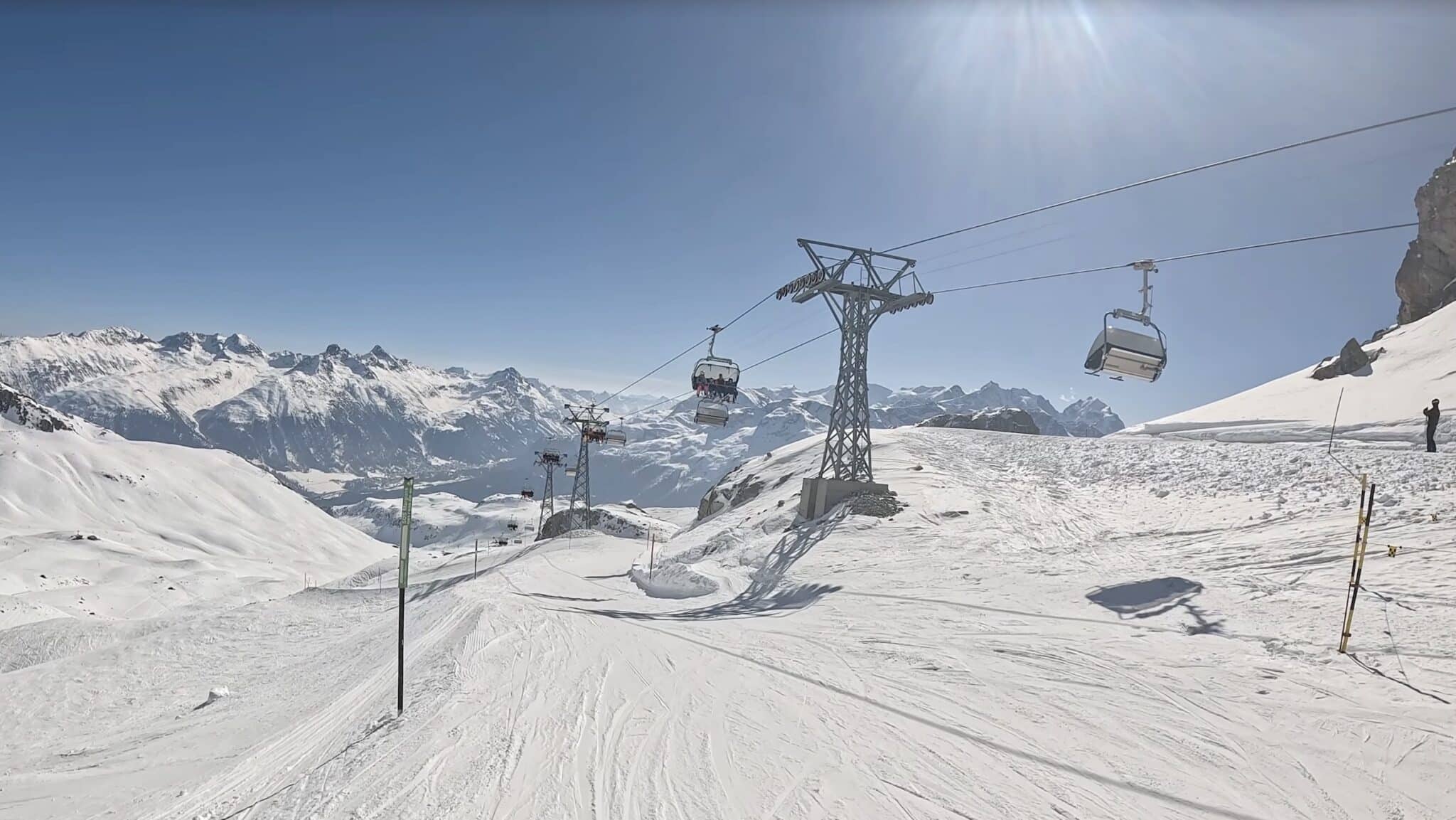
The lift infrastructure at Corviglia is also a testament to modern alpine engineering. The presence of contemporary chairlifts equipped with protective bubbles, designed to shield skiers from the elements, signifies a commitment to comfort and efficiency. Adding a unique historical touch, the resort boasts a venerable funicular with a departure terminal located underground. This blend of cutting-edge technology and historical charm is characteristic of St. Moritz’s curated appeal.
However, this very funicular, a symbol of the resort’s heritage, can become a point of congestion during peak periods. Operating every 15 minutes, it can lead to significant queues and backups, particularly on busy days. This bottleneck, while perhaps a minor inconvenience for some, highlights a potential infrastructural limitation in managing high volumes of visitors, a stark contrast to the seamless luxury the resort typically projects.
Snow Conditions: A Tale of Two Valleys
The Engadin Valley, where St. Moritz is situated, generally receives less precipitation compared to many other prominent Alpine destinations. This geographical reality directly impacts snow quality. PeakRankings notes that the south-facing slopes at Corviglia are particularly susceptible to freeze-thaw cycles, where daytime warming can melt snow, and subsequent nighttime freezing can create icy patches. While the snow is described as “solid,” it does not consistently reach the exceptional levels found in regions blessed with higher snowfall. This suggests that while the skiing experience is enjoyable, it may not always match the powder-laden dreams of avid off-piste enthusiasts seeking deep snow.
PeakRankings’ Verdict: A Measured Scorecard
The thorough analysis by PeakRankings culminated in specific scores for each ski area: Corviglia achieved a score of 68 out of 100, Corvasch received a 62, and Diavolezza/Lagalb garnered a 61 in their comprehensive European rankings. These scores place St. Moritz among the esteemed resorts but also indicate areas where it falls short of the absolute top tier.
The overarching conclusion from PeakRankings is that St. Moritz excels in delivering a world-class hospitality experience, complemented by truly breathtaking scenery. The resort’s ambiance, service, and visual splendor are undeniable draws. However, when assessed purely on the metrics of skiable terrain size and consistent snow volume, it does not quite reach the pinnacle occupied by some other leading Alpine destinations.
Background and Context: The Genesis of a Luxury Icon
St. Moritz’s journey to becoming a global luxury ski destination is a narrative steeped in history and strategic development. The resort’s origins trace back to the mid-19th century when Johannes Badrutt, an enterprising hotelier, began promoting the Engadin Valley as a winter resort. His audacious idea was to attract wealthy British tourists during the summer months and persuade them to return for a winter holiday, challenging the prevailing notion that the Alps were only suitable for summer travel. Badrutt famously offered to cover the travel expenses of his guests if they were not satisfied with the winter experience, a bold marketing strategy that proved remarkably successful.
The late 19th and early 20th centuries saw St. Moritz solidify its status. The construction of luxury hotels, the establishment of winter sports clubs, and its role as the host of the Winter Olympics in 1928 and 1948, and the Winter Paralympics in 1976, further cemented its international prestige. This period saw the development of the ski infrastructure that forms the basis of today’s resort. The early adoption of modern amenities and a keen understanding of the desires of affluent travelers were crucial in establishing its enduring legacy.
Supporting Data and Comparative Analysis
To further contextualize PeakRankings’ findings, it’s beneficial to examine St. Moritz against its competitors. For instance, while Corviglia offers 1,800 acres, resorts like Les Trois Vallées in France boast over 370 miles of pistes and 60,000 acres of skiable terrain, a scale vastly exceeding St. Moritz. Similarly, the Arlberg region in Austria, encompassing resorts like Lech and Zürs, is renowned for its extensive interconnected ski areas and substantial snowfall.
Regarding snow reliability, data from meteorological services often indicates that while the Engadin Valley experiences cold temperatures suitable for snowmaking, its natural snowfall can be less consistent than regions further west in the Alps, such as the French or Western Swiss Alps. For example, average annual snowfall figures for St. Moritz might range from 200-300 cm, whereas some other high-altitude resorts can report averages of 500 cm or more. This difference, though not rendering the skiing poor, does contribute to the perceived variation in snow quality.
Official Responses and Industry Perspectives
While the PeakRankings review offers a critical assessment, it’s important to consider the perspective of the resort management and local tourism bodies. Representatives from St. Moritz Tourism are likely to acknowledge the findings while emphasizing the resort’s unique selling propositions. They might highlight that St. Moritz is not solely about the quantity of terrain but about the holistic luxury experience: the impeccable service, the world-class dining, the sophisticated après-ski scene, and the breathtaking natural beauty.
Industry analysts often view St. Moritz as occupying a distinct niche within the luxury ski market. It is a destination that appeals to those who prioritize exclusivity, comfort, and a refined social scene as much as, if not more than, the sheer challenge of the slopes. Its historical significance and its association with royalty, celebrities, and high society continue to be powerful marketing tools.
Broader Impact and Implications
The PeakRankings review, while critical in some aspects, ultimately reinforces St. Moritz’s established position. The findings suggest that while the resort may not be the largest or snowiest, its strengths lie in its exceptional hospitality and its ability to provide a high-end, aesthetically pleasing alpine vacation. This nuanced perspective can be beneficial for potential visitors, setting realistic expectations.
For the resort itself, the review serves as valuable feedback. It underscores the importance of maintaining and enhancing its existing strengths – its service standards, its unique on-mountain dining, and its infrastructure. It also implicitly points to areas where further investment or strategic planning might be considered, such as optimizing lift operations during peak times or exploring ways to mitigate the impact of variable snow conditions.
In conclusion, St. Moritz remains a jewel in the crown of luxury ski destinations. Its allure is multifaceted, woven from threads of history, glamour, exceptional service, and stunning alpine vistas. While PeakRankings’ assessment provides a grounded perspective on its skiing capabilities, it does not diminish the resort’s enduring appeal to those who seek an unparalleled blend of sport and sophisticated indulgence. The truth behind St. Moritz is that it offers a meticulously crafted experience, where every detail is curated to provide a memorable, albeit not always epic, alpine adventure.

