
Annika Johansson, a burgeoning talent in alpine ski racing, has officially joined the Stifel U.S. Ski Team, marking a significant milestone in a career uniquely shaped by international immersion and profound resilience. The announcement comes as Johansson, rather than being found in the familiar terrains of Aspen, Colorado, where she spent much of her formative years, or the Italian Dolomites, her competitive home for half a decade, was discovered honing her physique in Stockholm. This relocation to the Swedish capital underscores her distinct developmental journey, involving rigorous prep season conditioning with the renowned trainer Andreas Ågren, whose esteemed clientele includes elite NHL players and top-tier alpine skiers. Johansson’s trajectory deviates sharply from the conventional American ski racing pathway, which typically involves a structured progression through regional competitions, NorAm circuits, and subsequently, Europa Cup opportunities.
A Decade Forged Abroad: The Making of an International Racer
At the tender age of 14, Johansson made a bold decision that would define her career: she relocated to Europe. This move initiated a comprehensive immersion into the vibrant and fiercely competitive ski culture of Northern Italy. Her rationale was clear: to consistently challenge herself against the deepest international fields available, believing this environment offered the most potent crucible for growth. This unconventional choice meant navigating a narrower, more demanding pathway than most of her American counterparts. After years of relentless racing abroad, overcoming severe injuries that would have derailed lesser athletes, and demonstrating an unwavering commitment to her craft, Johansson has earned her place among the elite. Her inclusion in the Stifel U.S. Ski Team signifies not just a personal triumph but also an acknowledgment of a diverse route to the apex of American alpine skiing.
"It feels great," Johansson affirmed, reflecting on her momentous achievement. "I’m really looking forward to having their support in the next year and trying to… I’m going to keep doing what I always do." Her statement hints at a continuity of purpose, a steadfast dedication to the methods that have brought her this far, now bolstered by the formidable resources of one of the world’s premier women’s alpine programs.
From Vermont Slopes to Dolomite Peaks: Early Foundations
Johansson’s deep-rooted connection to skiing predates her European sojourn. Born into a family steeped in ski racing, her early years were spent on the slopes of Vermont, having grown up in Connecticut. At eight years old, her family moved to Aspen, Colorado, a move that further cemented her ties to alpine sports. Her heritage is a blend of cultures; her father, Per Johansson, is Swedish, while her mother is American, raised in London. This multinational background perhaps predisposed her to an international outlook from an early age.
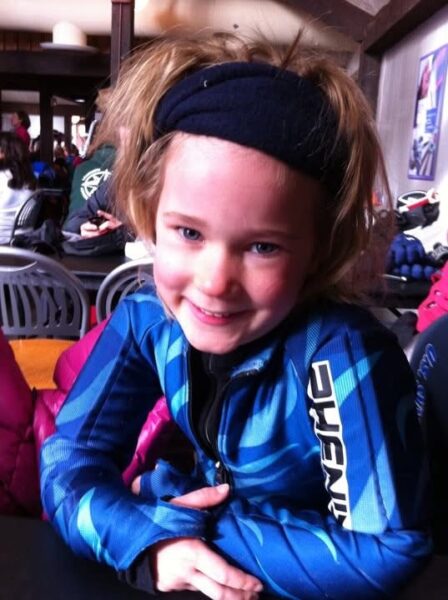
"My father had me on skis when I was 20 months old," Johansson recounted, highlighting her precocious start. "I was always with the family chasing after my sisters." Unlike many young American racers who drew inspiration from iconic figures like Mikaela Shiffrin, Lindsey Vonn, Ted Ligety, or Bode Miller, Johansson’s earliest heroes were much closer to home. "My skiing heroes and my skiing inspirations were my sisters," she revealed, pointing to Isabella and Stella Johansson. These familial bonds were instrumental, even extending to her first lessons, humorously dubbed "butt turns." "They said when you want to turn, you just have to put your butt in the opposite direction and your skis will automatically go," Johansson recalled with a laugh, illustrating the playful yet foundational influence of her older siblings.
The family’s initial relocation to Europe was primarily in support of Stella’s burgeoning Europa Cup career. The original plan was a temporary one-year stay, after which they would return to the United States. However, this provisional arrangement swiftly evolved. As that inaugural season abroad drew to a close, Johansson’s parents presented her with a pivotal choice: return home or embrace the European lifestyle and competitive scene more permanently. Without hesitation, she chose to stay, setting in motion a unique chapter of her development.
Embracing Europe: Cultural Immersion and Athletic Growth
Johansson’s decision to remain in Europe transcended mere athletic ambition; it encompassed a profound cultural and personal transformation. She enrolled in a small, specialized school nestled within Italy’s Dolomite region, an environment where students conversed in Italian, German, and Ladin – an ancient Rhaeto-Romance language unique to a few valleys of the Dolomites.
"I was kind of plopped into the school there speaking only English and Swedish," Johansson recollected, emphasizing the initial linguistic and cultural shock. "It was really tough, but because it was so tough, I grew so much in that one year." This challenging environment proved to be a catalyst for accelerated growth, both personally and athletically. "I believe that it made me such a stronger skier, such a stronger person," she asserted, underscoring the holistic impact of her immersion.
The cultural adjustment extended beyond the academic sphere, permeating her daily life and training regimen. An anecdote from one of her first training camps in Val Senales vividly illustrates the rigorous discipline she encountered. Arriving three minutes late for dinner, Johansson was immediately met with a unique form of accountability from her Italian teammates and coaches: 30 push-ups for every minute of tardiness. Without demur, Johansson dropped to the dining room floor, completing 90 push-ups under the watchful eyes of her team. "After that, I was never late again," she stated, highlighting the effectiveness of the lesson.
Yet, Johansson recounts these experiences not with a sense of grievance, but with profound appreciation. She embraced the strict discipline, the formidable language barriers, and the nuanced cultural differences inherent in living full-time in Europe. "I really did enjoy my time there," Johansson affirmed. "Despite all of our differences, I think we learned a lot from each other." This adaptable mindset proved crucial in her athletic and personal development, fostering a rare blend of toughness and open-mindedness.

The Unconventional Competitive Path: European Fields as the Ultimate Test
Johansson’s commitment to Europe fundamentally reshaped her competitive pathway as an American athlete. Rather than following the well-trodden domestic route, primarily engaging in NorAm racing and the U.S. Ski & Snowboard development pipeline, she focused her efforts on the demanding European FIS races and, subsequently, the highly competitive Europa Cup circuit. This strategic choice meant she regularly competed in extremely robust international fields, often featuring athletes with World Cup experience or those on the cusp of it from powerhouse ski nations like Austria, Switzerland, Italy, and France.
For Johansson, this decision was singularly focused on development. "A large reason why I went to Europe and why I decided to stay in Europe is because the competition is much deeper in Europe," she explained. "That’s what pushed me a lot." She regarded the Europa Cup as arguably the strongest continental cup competition globally, believing that its formidable fields offered the optimal environment for her to elevate her skills. "That was the best way to grow as a skier," Johansson articulated, "to go against the greatest depth of competition."
However, Johansson was careful to clarify that her choice was not a critique of American skiing or the U.S. development system. On the contrary, she repeatedly emphasized the invaluable experiences gleaned from both environments. "I got the best of both worlds," Johansson stated. "I got to ski in the U.S. and race against the girls in the U.S., and then I got to go to Europe and race against the rest of the world there." This dual experience provided her with a comprehensive understanding of different racing styles and competitive pressures.
Despite the advantages, her European focus undeniably narrowed her path to major U.S. team opportunities. Without consistent NorAm results and direct domestic comparisons, Johansson primarily relied on her European performances to validate her competitive level and meet U.S. Ski Team criteria. This necessitated a significantly reduced margin for error and demanded unwavering consistency, as her results were often viewed through a different lens than those of athletes competing exclusively in North America. Ultimately, her consistent, high-level performances against deep international fields proved undeniable, earning her a coveted spot on the Stifel U.S. Ski Team.
The Injury That Redefined Purpose: A Test of Resolve at 16
Johansson’s promising career faced its most severe challenge at the age of 16, an event that nearly altered her trajectory irrevocably. While training giant slalom in Val Senales, she suffered a catastrophic crash that resulted in a litany of severe knee injuries. She tore both ACLs (anterior cruciate ligaments), along with her LCLs (lateral collateral ligaments), MCLs (medial collateral ligaments), and PCLs (posterior cruciate ligaments). Additionally, she sustained a torn meniscus and severe fractures in both tibial plateaus, injuries that required a painstaking 18 months to fully heal. "I basically did the whole thing," Johansson grimly summarized, underscoring the comprehensive nature of the damage.
Both knees necessitated surgery on the same day, a testament to the extent of her injuries. The initial phase of her recovery left her confined to a wheelchair, a stark contrast to the dynamic motion of ski racing. Remarkably, Johansson describes this devastating injury not as a setback that discouraged her, but as a crucible that clarified her passion for the sport more profoundly than any success ever could. "All I wanted to do was just get back on skis," Johansson revealed. "That’s really the moment when I decided, ‘Okay, this is what I want to do.’"
This harrowing experience fundamentally reshaped her perspective, instilling a deeper appreciation for her chosen discipline. "It made me appreciate skiing," Johansson reflected. "You’re able to get up every day and your office is outside in nature and you’re able to do these crazy things with your body." This newfound gratitude and solidified determination provided the bedrock for her arduous rehabilitation and eventual triumphant return to the slopes. The prevalence of ACL injuries in alpine skiing is a constant concern for athletes, but Johansson’s recovery, compounded by additional ligament and bone damage, stands as a testament to her immense physical and mental fortitude.
Concussions, Setbacks, and a Breakthrough in Pozza di Fassa
Johansson’s resilience was once again put to the test during the most recent season. Following a challenging series of races, she endured another significant setback, crashing during a giant slalom event in Austria. This incident resulted in a concussion, a fractured cheekbone, a perforated sinus, and a dislocated jaw. The physical toll was severe, but the emotional blow was compounded shortly thereafter when she learned she would not be selected for the U.S. World Junior Championships team, a coveted opportunity for rising talents. "It was a bit of a beat down after a beat down," Johansson candidly described the cumulative effect of these adversities.
Despite this dual blow, Johansson adamantly refused to let the season unravel. Her internal dialogue was resolute: "I haven’t given up before, so why would I give up now?" Her response was simple and direct: she would keep pushing forward. This unyielding spirit would soon yield remarkable results.
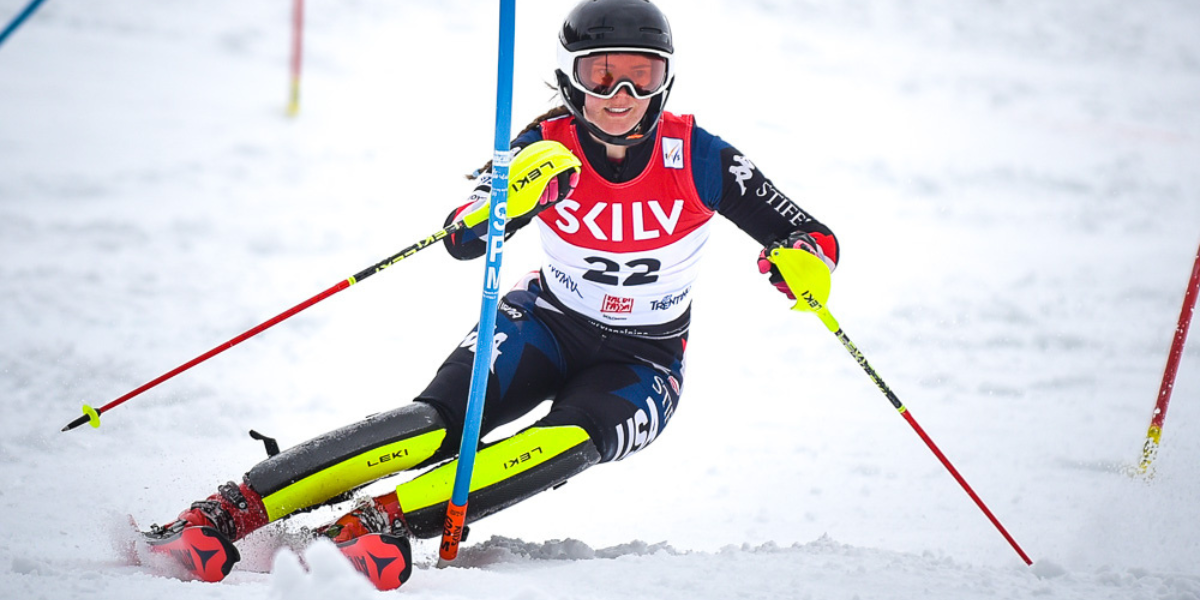
By the end of the season, Johansson found herself at the national championships in Pozza di Fassa, Italy. The event featured a formidable field, including seasoned World Cup athletes and top Europa Cup competitors. Starting 22nd in the slalom, she harbored minimal expectations of victory. "I thought, ‘I don’t have a chance to win this race,’" Johansson recalled, reflecting on her initial assessment. "So all I’m going to do is try my best." In a stunning display of skill and determination, she defied the odds and emerged victorious. "There was no better feeling in the world," Johansson exclaimed, encapsulating the profound joy and validation of her breakthrough win. This victory, against such a strong international field, served as a powerful testament to her unwavering belief and capacity for performance under pressure.
A Circle of Support: Mentors and Coaches
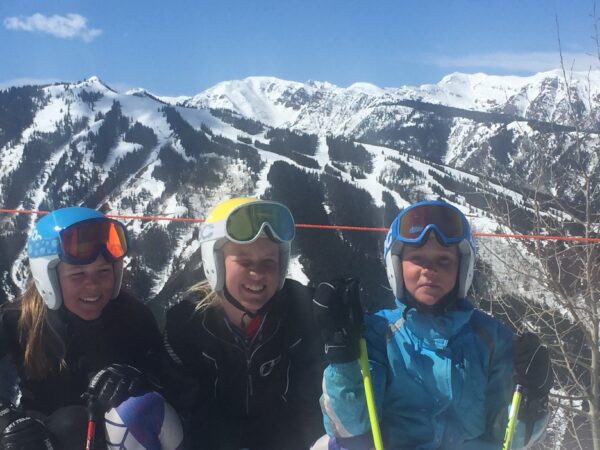
Throughout her unique journey, Annika Johansson has been bolstered by a strong support system. Her older sister, Stella Johansson, has been a significant influence, despite their age difference and Stella’s own injury challenges limiting extensive shared training time. "She’s like my coach away from coaching," Annika revealed, highlighting Stella’s role as a trusted confidante and mentor.
In the past season, Johansson also benefited immensely from working with former Slovenian World Cup star Mitja Kunc. Kunc is a highly respected figure in alpine skiing, with a World Cup slalom victory and six World Cup podium finishes in slalom and giant slalom to his name. Complementing Kunc’s coaching expertise was ski technician Mitja Dragsic, who himself boasts an impressive racing career, including eight World Cup top-10 slalom finishes and two fourth-place results. Together, Kunc and Dragsic provided Johansson with invaluable guidance, technical refinement, and strategic insights crucial for navigating the demanding European competitive landscape. "They really pushed me to a higher level," Johansson acknowledged, crediting her support staff for her recent advancements.
Johansson, who has been an Atomic athlete since her early teenage years, following in her sister Stella’s footsteps onto the brand, now transitions into Miha Kurner’s group within the Stifel U.S. Ski Team. This move signals a new chapter, as she prepares for her first official team camp in Ushuaia later this summer, poised to integrate fully into the national team program.
A Broader Perspective: Implications for American Ski Racing
Annika Johansson’s arrival on the Stifel U.S. Ski Team brings with it an unusually broad and mature perspective for a 19-year-old American skier. Her experiences encompass living in multiple countries, mastering new languages, adapting to diverse cultures, meticulously rebuilding her body and spirit after devastating injuries, and consciously pursuing one of the most unconventional development paths of any American athlete entering the program. Her journey offers a compelling case study for the diversification of talent identification within U.S. Ski & Snowboard, demonstrating that success can emerge from non-traditional routes.
Her motivation, despite the complexities of her path, remains remarkably simple and profound. "I really am just in love with the process of it all," Johansson articulated, "having something that I can go to every single day and put all of my effort into." This intrinsic drive, coupled with her international experience and proven resilience, positions her as a formidable addition to the U.S. team.
For Johansson, that process has already traversed a remarkable geographical and emotional landscape: from the nascent slopes of Vermont to the competitive peaks of Aspen, through intensive conditioning in Stockholm, and formative years in the culturally rich Dolomites. Now, she stands on the threshold of a new era with the Stifel U.S. Ski Team. Her route was never the conventional one, but it was unequivocally hers – a path forged through courage, perseverance, and an unyielding passion for alpine ski racing, now ready to inspire a new generation.

