
Andover, New Hampshire – In a bold move signaling a significant shift in winter sports development, Proctor Academy, a renowned college preparatory boarding school in New Hampshire, has implemented a cutting-edge snow farming initiative to guarantee early-season ski training for its athletes. This innovative approach, undertaken in partnership with Finnish snow farming company Snow Secure, aims to mitigate the growing unpredictability of winter weather patterns and ensure consistent, high-quality on-snow opportunities for its nationally recognized ski team. The project underscores Proctor’s commitment to an athletic philosophy centered on repetition, surface quality, and holistic athlete development, distinguishing it from traditional ski academies.
The challenges posed by a warming climate have become increasingly apparent across the winter sports landscape. Ski resorts and training programs throughout North America have grappled with shorter seasons, delayed openings, and a heightened reliance on energy-intensive snowmaking operations. Data from organizations like Protect Our Winters and studies by climate scientists consistently point to declining snowpacks and fewer cold days suitable for natural snowfall or conventional snowmaking. For a program like Proctor Academy, which prides itself on maximizing on-snow time and repetition, these environmental shifts present a direct threat to its core operational model.
Jason "Moot" Nelson, Alpine Director at Proctor Academy, observed these trends firsthand, particularly noting the severe lack of early-season snow in the Western United States during recent winters, which left many programs scrambling for training venues. "I think for me, looking at what happened in the West this year with no snow and no training available out there for those guys minus Copper," Nelson remarked, highlighting the acute need for a localized solution. Unlike dedicated ski academies that might have the flexibility to relocate their operations to regions with more favorable conditions, Proctor’s identity as a comprehensive college preparatory boarding school means its athletes are deeply integrated into campus life, balancing rigorous academics with multiple extracurricular pursuits. This institutional structure necessitated an on-site, sustainable solution rather than a nomadic approach to training.
The decision to invest in snow farming emerged from this confluence of environmental challenge and institutional commitment. Snow farming, a practice long utilized in Nordic countries, involves stockpiling large quantities of snow during colder months, covering them with insulating materials, and preserving them through the warmer seasons for early-winter use. This method allows for significant reductions in water and energy consumption compared to manufacturing snow from scratch at the onset of winter. Industry analyses suggest that a well-managed snow farm can retain 70-90% of its volume, providing a reliable base layer for early season operations.
A Timeline of Innovation and Implementation
The concept for Proctor’s snow farming initiative began to solidify in the wake of increasingly inconsistent winters over the past few years, prompting Nelson and the academy’s leadership to explore proactive measures. The formal engagement with Snow Secure, a Finnish company known for its expertise in passive snow preservation, commenced earlier this year. The project rapidly moved from planning to execution in the spring, culminating in the construction of a massive covered snow pile. This impressive mound of preserved snow now stands approximately 25 to 30 feet tall, spans 160 feet in length, and measures 80 feet wide.
Crews meticulously laid out specialized tarps and insulation materials over the snow, creating an environmental shield designed to minimize melt-off during the warmer months. The goal is straightforward: to provide Proctor athletes with reliable access to snow significantly earlier than traditional winter conditions would allow. Nelson anticipates that this will enable early-season training sessions even before the team embarks on its customary fall camp. Upon their return, the preserved snow is expected to facilitate opening the full T-bar run perhaps two weeks ahead of schedule. "The idea is that we’ll be having those early season sessions before we go out to our fall camp," Nelson explained. "Then when we come back home, we should be from the top of the T-bar down, maybe two weeks earlier than what we normally are. That’s huge." This early access is critical for fundamental skill refinement, gate training, and conditioning, offering a distinct competitive advantage.
The Proctor Philosophy: Repetition Over Vertical Drop
Proctor Academy’s approach to ski racing development has long been characterized by a unique philosophy that prioritizes high-volume repetition and training quality over the pursuit of larger mountains or extensive vertical drops. While many elite programs might seek out vast Western venues, Proctor has deliberately cultivated an environment where efficiency and focused practice reign supreme.
"Our athletes are able to get up to 12 runs in an hour and 24 runs in a 2.5-hour block," stated Cooper McNealus, Proctor’s U16 Head Coach. "We have no lift lines. It doesn’t take a lot of time to make 12 runs happen at Proctor." This rapid turnaround on a shorter, dedicated training hill ensures that athletes spend minimal time in transit and maximum time actively skiing and refining their technique. Nelson emphasizes that this training efficiency is one of the program’s most significant competitive advantages. "What are you doing in the nine minutes a day that you actually get to ski down the hill? If we’re not using that, then what are we doing?" he posited, underscoring the importance of optimizing every moment on snow. The snow farming initiative directly amplifies this core philosophy by extending the window for such high-efficiency training, allowing athletes to accrue even more valuable repetitions.
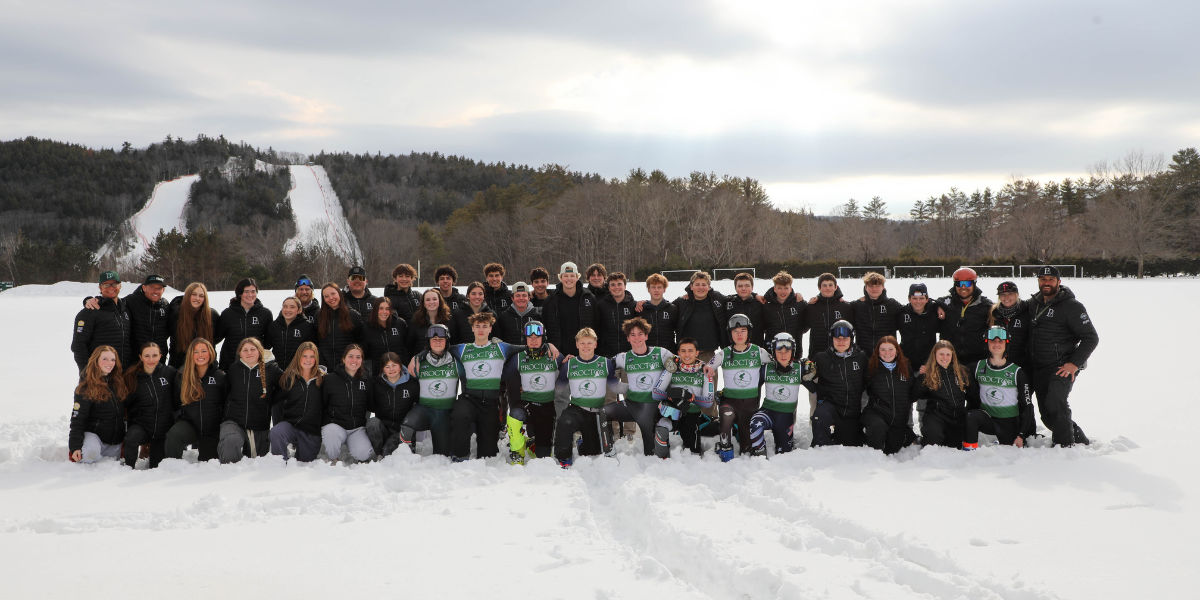
This focused approach has demonstrably translated into outstanding results. In the most recent season, Proctor Academy achieved impressive qualifications, sending four athletes to U18 Nationals, three to U.S. Nationals, five to U16 Nationals, and five athletes to U14 Can Ams. The program also boasted a regional champion and multiple national-level podium finishers across various age groups, a testament to the efficacy of its unique developmental model.
The Imperative of Surface Quality
A cornerstone of Proctor’s ski racing success, and a recurring theme in discussions with Nelson, is the unwavering emphasis on surface quality. Nelson firmly believes that a consistently hard, responsive snow surface accelerates athlete progression faster than almost any other factor. "All Jason ‘Moot’ Nelson does is care about the surface," McNealus affirmed. "Whether it’s grooming, raking, whatever it is, Jason controls that hill. That’s our surface, and that’s our ski team as he sees it."
Proctor’s dedicated race crew and hill staff have earned a formidable reputation throughout the Northeast for their exceptional ability to maintain challenging, consistent conditions, even under demanding schedules. This meticulous attention to detail allows for highly effective training and competition. "We broke 280 gates last year because the snow is that hard," Nelson proudly stated, indicating the aggressive nature of their training environment.
Beyond daily training, this commitment to surface quality enables Proctor to host some of the most efficient and demanding competitions in the region. The academy is renowned for organizing dual-gender slaloms and night races that consistently attract large fields of competitors. Nelson cited a remarkable instance: "We actually ran three full field, (140 competitors) FIS races in one day. And I think that’s a testament to the surface. If you don’t have a surface, you could never do that." This capacity to host and manage high-level events efficiently further solidifies Proctor’s standing as a leader in ski racing development and provides invaluable home-hill advantage for its athletes.
A Holistic Approach to Athlete Development
What truly sets Proctor Academy apart from many contemporary ski programs is its steadfast commitment to a holistic educational and athletic model. It is not a traditional ski academy solely focused on producing elite junior racers. Instead, Proctor is deeply invested in the comprehensive development of its students, encouraging multi-sport participation, rigorous academics, and a wide array of extracurricular interests. Athletes are encouraged to engage in soccer, field hockey, baseball, softball, lacrosse, various arts programs, and off-campus experiential learning alongside their ski training.
"We want kids to develop a passion for the outdoors and be able to ski anywhere in the world when they leave here," Nelson articulated, emphasizing a broader life-skill development over narrow specialization. He describes Proctor’s philosophy as a "slow burn" model, contrasting it with the intense, often high-pressure environments of some junior racing circuits. The objective is sustained, long-term athlete growth that prioritizes skill acquisition and a lasting love for the sport, deliberately avoiding the pitfalls of early burnout. "We’re teaching them life skills along the way," Nelson added. "We’re not just catering to a ski lifestyle."
This balanced approach appears to be increasingly effective. The impressive qualification numbers, particularly for younger age groups, underscore the strength of Proctor’s developmental pipeline. For instance, qualifying five of its 14 U14 athletes to Can Ams is a significant achievement, demonstrating that the "slow burn" model can indeed produce top-tier talent while fostering well-rounded individuals.
Broader Implications and Looking Ahead
Nelson firmly believes that snow farming, currently a niche practice in North America, is poised to become one of the most critical innovations for ski racing development in the coming decade. As climate projections indicate continued warming and increasing variability in winter weather, the ability to control and extend the training season through preserved snow will transition from a competitive advantage to a fundamental necessity for programs aiming to maintain consistent access to quality training.
"We wanted to be the first to do something in the Northeast," Nelson stated, acknowledging Proctor’s pioneering role. "Everybody’s going to be doing this eventually." This forward-looking perspective suggests a potential paradigm shift across the ski industry, with smaller, local hills and training centers possibly adopting similar strategies to secure their futures and provide reliable conditions. The economic implications are significant; while the initial investment in snow farming technology and infrastructure can be substantial, it could offer long-term cost savings by reducing reliance on expensive, energy-intensive snowmaking during marginal conditions, and by extending the operational season.
For Proctor Academy, this project transcends mere snow preservation. It is about proactively controlling the training environment, expanding opportunities for its athletes, and building a sustainable foundation for ski racing development in an uncertain climate future. The academy’s commitment to innovation, coupled with its distinctive philosophy of efficiency, surface quality, and holistic growth, positions it at the forefront of adaptive strategies in winter sports. If Nelson’s foresight proves accurate, the future of athlete development in ski racing may not hinge on sprawling mountains or lavish facilities, but rather on the ingenuity and dedication to cultivating and preserving the optimal "snow surface."

