
The Fédération Internationale de Ski (FIS) has released its provisional calendars for the 2026-27 Alpine World Cup season, signaling a notable redistribution of emphasis across disciplines for both men and women. While the fundamental four-discipline structure of slalom (SL), giant slalom (GS), super-G (SG), and downhill (DH) remains intact, the proposed schedules introduce a clear pivot towards technical events, particularly giant slalom, which is poised to tighten the battle for the coveted overall crystal globe. These adjustments, still subject to final confirmation, suggest a strategic evolution aimed at fostering versatility among athletes and potentially expanding the sport’s global footprint, particularly within North America.
A New Balance on the Women’s Tour: Technical Prowess Takes Center Stage
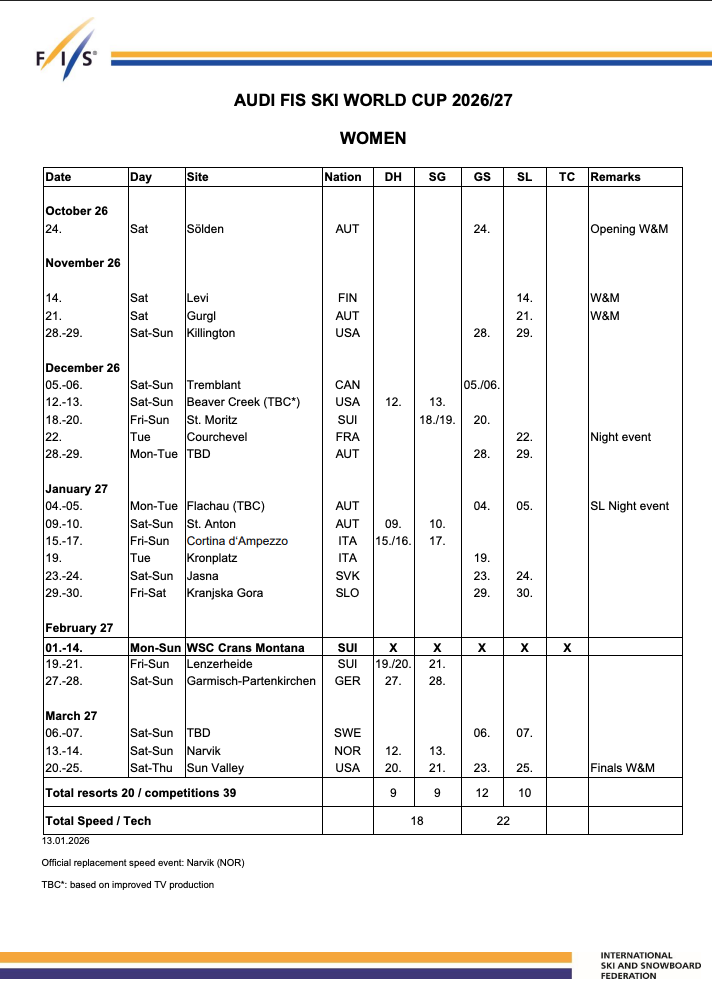
For the women’s circuit, the proposed 2026-27 calendar outlines a robust 39-race season, with a distinct tilt towards technical skiing. The current draft features 22 technical events—comprising 10 slaloms and an expanded 12 giant slaloms—compared to 18 speed races (downhill and super-G). This represents a significant shift from previous seasons where the balance was often more evenly split or even slightly favored speed events in terms of sheer volume. The most prominent change is the addition of two giant slaloms, marking a substantial 20% increase in GS opportunities. Furthermore, the super-G discipline sees a single additional race, a 12.5% increase in SG starts, while slalom maintains its ten-race presence.
This rebalancing elevates the importance of consistent performance in giant slalom, a discipline often considered the bridge between the precision of slalom and the raw power of speed events. Historically, the overall World Cup title has frequently gone to athletes capable of scoring across multiple disciplines, but this calendar structure places an undeniable premium on technical mastery, especially in GS. For context, recent seasons have seen an average of 8-10 giant slaloms, making the proposed 12 a notable expansion. This decision likely stems from various factors, including the increasing popularity and competitive depth in GS, as well as potentially offering more adaptable venues in varying weather conditions compared to high-speed downhill tracks.
Men’s Calendar: Technical Advantage and Heightened Pressure on Speed
The men’s provisional calendar for 2026-27 also reflects a similar strategic shift, with a stated emphasis on more technical races than speed events. While specific numerical breakdowns for the men’s schedule are not as explicitly detailed in the initial draft as they are for the women, the implication is clear: slalom and giant slalom specialists will find more opportunities to accumulate critical points throughout the season. This structural adjustment means that each speed race—downhill and super-G—will carry an even greater weight. With fewer chances to build significant point differentials in speed, the pressure on athletes to perform flawlessly in every downhill and super-G event will intensify dramatically.
This shift represents a departure from periods where speed events dominated the early and mid-season, allowing specialists to build substantial leads. The FIS’s rationale behind such a redistribution often includes promoting a more holistic skiing profile, ensuring that the overall title is contested by athletes demonstrating a wider range of skills. It also reflects the evolving landscape of alpine skiing, where technical disciplines continue to draw large crowds and showcase intricate athletic prowess.
North American Revival: A Strategic Push for Global Reach
Both the men’s and women’s calendars place an unprecedented spotlight on North America, featuring multiple race opportunities across the United States and Canada. This robust North American presence underscores a concerted effort by the FIS to expand the sport’s global reach and cultivate new fan bases in a key market.
For the women, the early-season block kicks off in Killington, Vermont, a proven venue for technical events, hosting giant slalom and slalom races. The tour then crosses the border to Tremblant, Quebec, Canada, which is slated to host a double giant slalom weekend, further solidifying the early-season technical focus and extending crucial point-scoring opportunities. Later in the season, the schedule tentatively shifts to Beaver Creek, Colorado, which is listed as "To Be Confirmed" (TBC), with planned speed races. If confirmed, Beaver Creek would provide a vital test in downhill and super-G before the tour traditionally returns to its European stronghold.
The men’s North American itinerary is equally ambitious, featuring up to six races across three key stops in the United States. The initial North American stretch is proposed to begin at Copper Mountain, Colorado, also listed as TBC, which would add another early-season technical opportunity. Following this, the focus shifts to Beaver Creek, where downhill and super-G events are slated to anchor the early speed season. Given the reduced number of speed races overall in the men’s calendar, strong performances at Beaver Creek will be paramount for speed specialists to remain competitive in the overall standings.
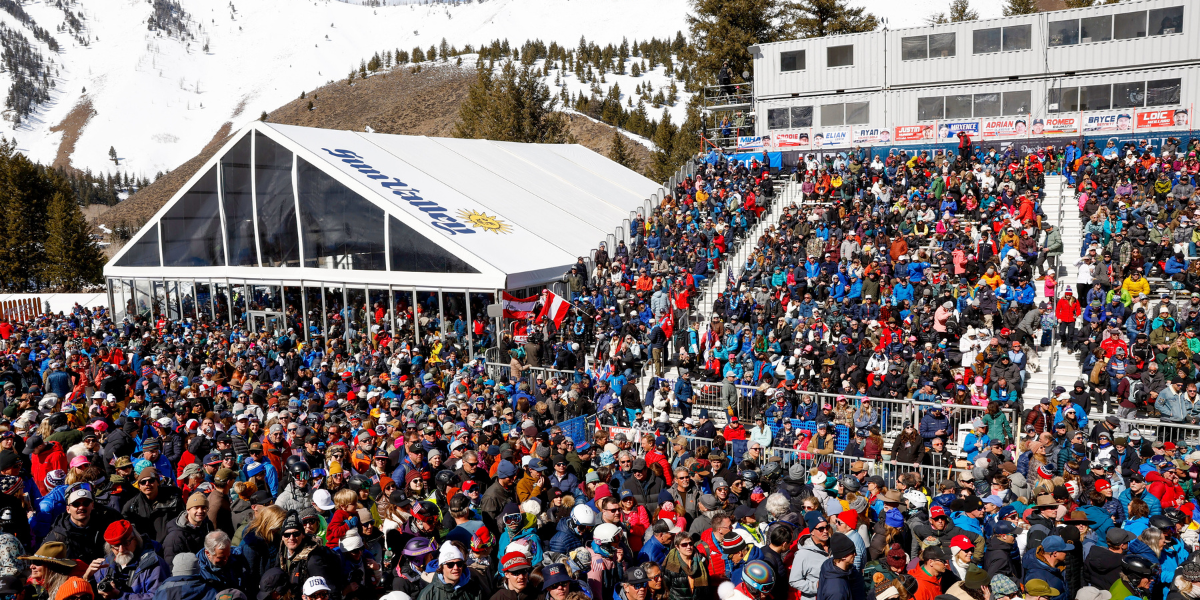
A significant highlight for both genders is the conclusion of the season with the World Cup Finals in Sun Valley, Idaho. This requires a second transatlantic trip to North America late in the season, a logistical challenge that also adds an extra layer of strategic complexity. The choice of Sun Valley, an iconic American ski destination, for the finals underscores the commitment to showcasing the sport in North America and leveraging its legacy.
Athlete Implications: Shiffrin, Odermatt, and Aicher Navigate the New Landscape
The proposed calendar redistribution brings new context to the overall World Cup title races, directly impacting the strategies and prospects of leading athletes.
For Mikaela Shiffrin, widely recognized as the most accomplished technical skier of her generation, the expansion of giant slalom races presents both opportunity and increased pressure. While slalom remains a significant factor with 10 races, it no longer stands on equal footing with giant slalom, which now assumes a larger, more influential role. Shiffrin is a proven giant slalom winner, boasting numerous victories and crystal globes in the discipline. However, maintaining her unparalleled level of consistency and dominance across an expanded GS schedule will be absolutely critical for her pursuit of an unprecedented sixth overall World Cup title. Her training regimen and competitive focus will undoubtedly need to adapt to this heightened GS emphasis, demanding peak performance over a longer series of races. Historically, Shiffrin has strategically managed her schedule, sometimes opting out of speed events to preserve energy for her technical strongholds. This calendar might compel a re-evaluation of such strategies.
Emma Aicher, the promising German talent, stands to benefit significantly from these changes. Aicher has rapidly emerged as a formidable force in speed events, while also consistently scoring points in technical disciplines. The direct increase in both giant slalom and super-G races explicitly expands her opportunities to accumulate points across the season, rewarding her more balanced, multi-discipline profile. As a younger athlete still ascending, Aicher’s trajectory aligns perfectly with a calendar that values versatility. The additional GS and SG starts could provide the critical margin she needs to contend for top-tier standings, potentially accelerating her development into an overall contender. Her ability to consistently place well in both speed and technical races positions her as a prime candidate to capitalize on the new competitive structure.
On the men’s side, the subtle shift towards more technical races poses a unique challenge for the dominant Swiss star, Marco Odermatt. Odermatt has been virtually unassailable in recent seasons, showcasing extraordinary dominance in giant slalom, super-G, and downhill. However, the proposed calendar, with its implication of more technical races and potentially fewer speed events, means his closest challengers—many of whom excel in slalom—will have more chances to accumulate points. While this doesn’t directly disadvantage Odermatt, it undeniably reduces the significant margin he has historically built over the field through his speed and GS prowess. More slalom races create additional opportunities for rivals to respond, recover from setbacks, and stay firmly in contention in the overall standings. For Odermatt, this intensifies the pressure on every start, particularly in speed races, where any missed opportunity or sub-par performance could prove costly in a season with fewer chances to build separation. His strategic race selection and ability to maintain his near-perfect record will be under even greater scrutiny.
FIS Rationale and Broader Implications for the Sport
The motivations behind these calendar adjustments are multi-faceted. One primary objective is likely to promote a more holistic and versatile athlete profile. By increasing the number of giant slalom races, the FIS encourages skiers to develop a broader skill set, moving beyond hyper-specialization in a single discipline. This could lead to more dynamic and exciting overall World Cup battles, where consistency across multiple event types is paramount.
Another significant driver is the continued effort to globalize alpine skiing. The substantial increase in North American races, culminating in the Sun Valley Finals, is a clear strategic move to tap into new markets, engage a broader fan base, and potentially attract new sponsors. The logistics of a second transatlantic trip for the finals, while challenging for teams and athletes, signifies the importance placed on this market. It also reflects a desire to rotate the prestigious World Cup Finals locations, moving beyond the traditional European strongholds.
Furthermore, these shifts could subtly influence training methodologies. Teams and athletes may need to adjust their off-season and in-season preparation to accommodate the increased technical demands, especially in GS. Equipment manufacturers might also see a shift in focus, with increased emphasis on GS-specific innovations.
The provisional nature of the calendar means changes are still possible, as venues are confirmed and logistical details finalized. However, in its current form, the 2026-27 World Cup calendar promises a more compressed and intensely competitive structure. Fewer speed races on the men’s circuit elevate the consequence of each result, while the expanded technical schedule for both genders extends opportunities for rivals to score consistently. This combination is designed to tighten the overall race, shifting it away from periods of runaway dominance and towards sustained pressure, strategic brilliance, and ultimate versatility across the entire season. The outcome will be a World Cup season that demands not just excellence, but adaptive and enduring performance from its champions.

