
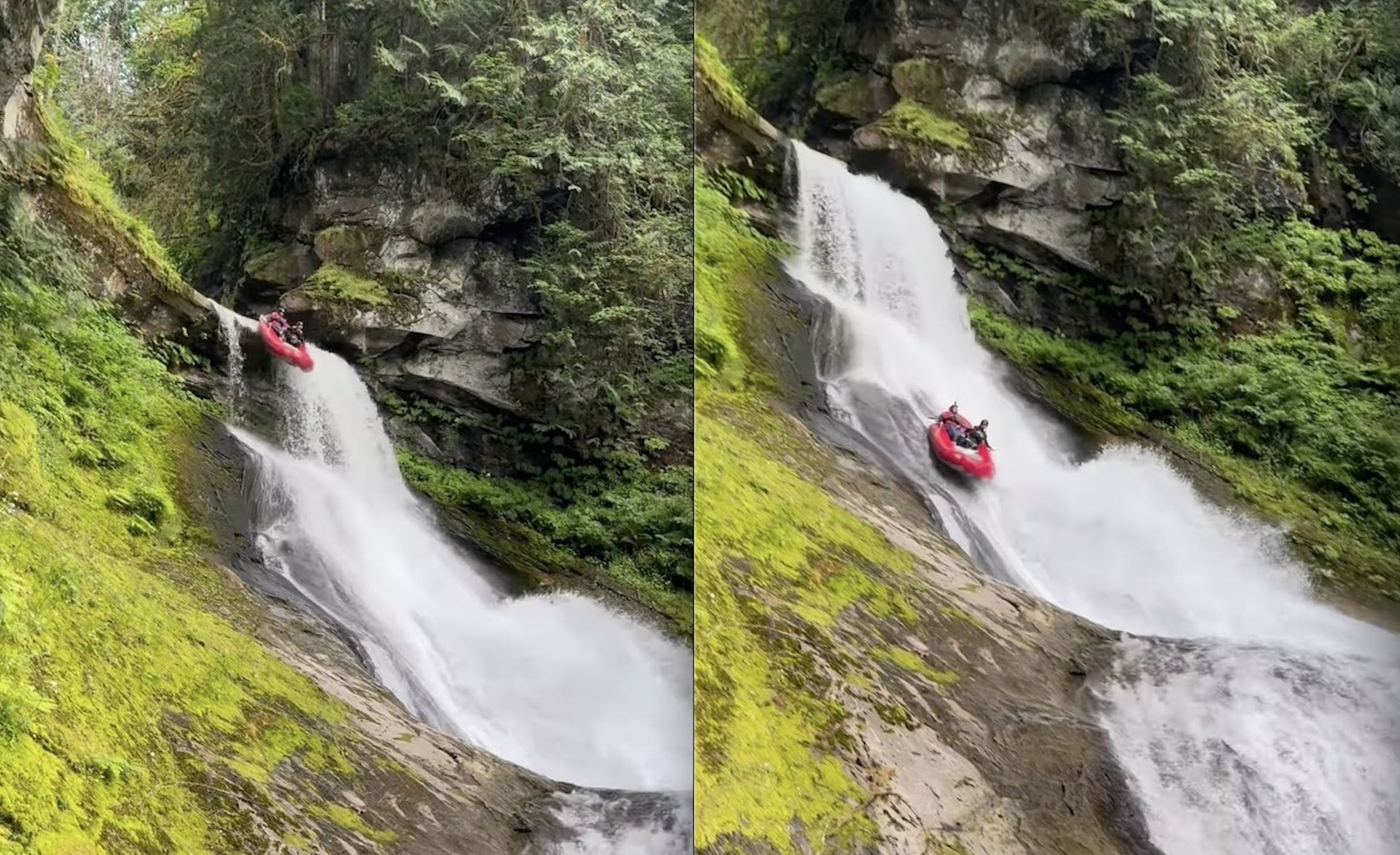
In a feat that defies conventional whitewater descent, rafters Conor Gorospe and Jon Loke have successfully navigated the formidable 169-foot multi-stage waterfall at Racehorse Creek in Washington State. The daring exploit, captured on video, showcases an extraordinary display of skill, courage, and a profound understanding of extreme water dynamics, positioning this event as a benchmark for high-consequence aquatic endeavors.
The Setting: Racehorse Creek and its Cascading Spectacle
Racehorse Creek, a waterway situated near Deming in Washington State, has long been recognized for its natural beauty and geological significance. It is a locale that attracts both recreational hikers and amateur paleontologists, drawn to the rich fossil beds present in the area. However, the undisputed crown jewel of Racehorse Creek is its namesake waterfall, a majestic cascade that plunges an astonishing 169 feet in a series of dramatic stages. This multi-tiered waterfall presents a formidable natural obstacle, characterized by steep drops, churning rapids, and complex hydraulic features that demand respect and expertise from any who approach its waters. The sheer verticality and intricate flow patterns make it an environment where conventional watercraft, particularly rafts designed for river travel, would typically be considered entirely unsuitable for descent.
The Challenge Accepted: An Unconventional Descent
Against this backdrop of natural extremity, Gorospe and Loke made the audacious decision to attempt a descent of the Racehorse Falls in a raft. This undertaking represents a significant departure from typical whitewater rafting, which generally involves navigating navigable rivers with varying degrees of turbulence. The vertical drop and the cascading nature of the waterfall introduce a unique set of challenges, including immense G-forces, potential for extreme impact, and the critical need for precise maneuvering to avoid catastrophic outcomes.
While the exact specifications of the raft and the strategic planning involved in this specific descent are not detailed in publicly available reports, such an endeavor would necessitate an advanced understanding of hydrodynamics, raft stability under extreme stress, and the physics of freefall. The ability to maintain control and integrity of the raft through multiple stages of significant drops would require exceptional skill in anticipating water flow, weight distribution, and potential points of impact.
The Chronology of a Historic Run
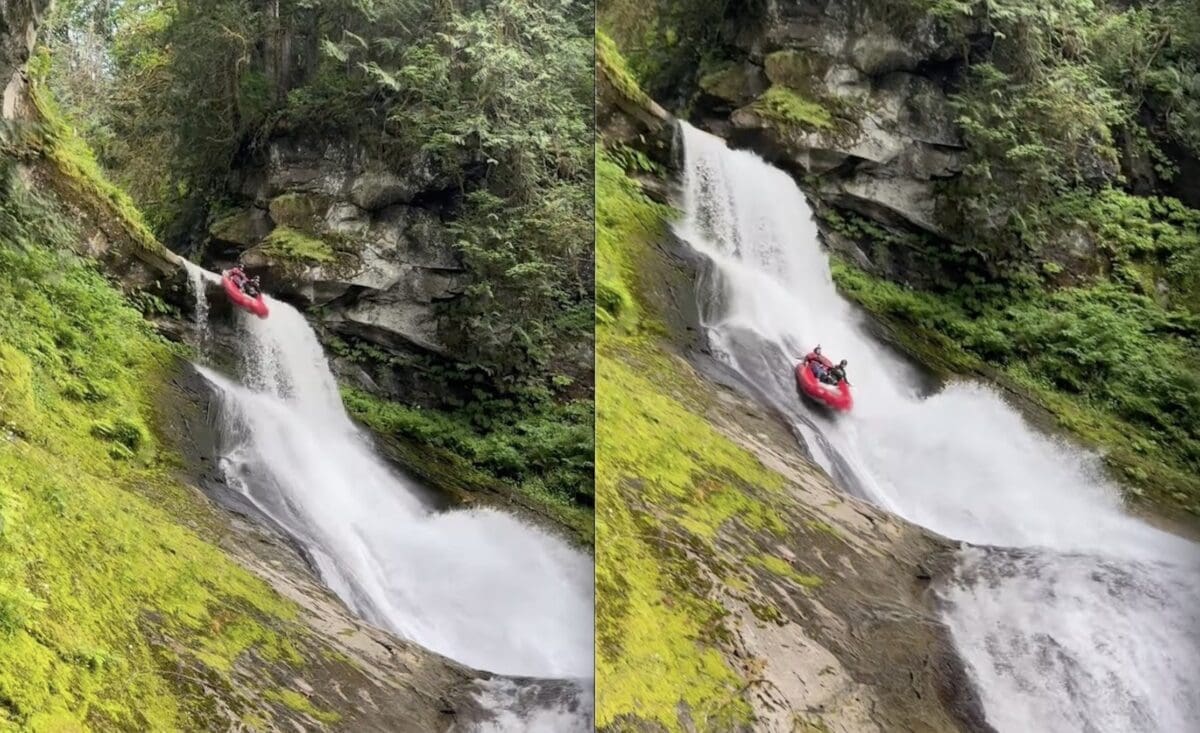
The precise timeline leading up to this documented descent is not fully established, but the video evidence suggests a calculated approach. The rafters, identified as Conor Gorospe and Jon Loke, are shown initiating their descent from the uppermost section of the waterfall. The act of pointing their raft directly down the precipitous flow and "holding on for dear life" underscores the immediate and overwhelming forces they encountered.
The descent itself would have been a matter of seconds, but within that compressed timeframe, the rafters would have experienced a series of violent impacts and rapid changes in water pressure. Each stage of the waterfall presents its own unique set of challenges, from the initial plunge to the turbulent pools and subsequent drops. The successful negotiation of each stage without capsizing or compromising the raft’s structure is a testament to their proficiency.
Upon reaching the calmer waters at the base of the falls, the rafters’ elation and relief are palpable. Their immediate celebration signifies the immense pressure and danger they had just overcome. The term "sending it," often used in extreme sports to describe pushing boundaries and taking on significant risks, is aptly applied here, highlighting the sheer audacity and successful execution of their plan.
Analysis of the Feat: Pushing the Boundaries of Rafting
This successful descent of Racehorse Falls has significant implications for the perception and practice of extreme watersports. Historically, waterfalls of this magnitude are generally considered impassable for rafts, often serving as portage points for kayakers and canoeists, or as purely aesthetic natural features. The successful navigation by Gorospe and Loke suggests a potential evolution in the capabilities of modern rafting equipment and the advanced skill sets of extreme rafters.
The multi-stage nature of the waterfall adds a layer of complexity not typically encountered in single-drop descents. Each stage requires a distinct approach to maintain stability and forward momentum. The visual evidence indicates that the rafters were able to maintain a degree of control, which would have been critical in preventing the raft from spinning uncontrollably or becoming trapped in dangerous hydraulics.
Reactions and Inferred Perspectives
While direct statements from governing bodies or environmental agencies regarding this specific event are not immediately available, such an undertaking would likely draw attention from various stakeholders.
- Extreme Sports Community: Within the whitewater rafting and extreme sports community, this feat is likely to be viewed with a mixture of awe and admiration. It sets a new benchmark for what is considered achievable in raft descents and may inspire other highly skilled individuals to explore similar challenges. The videos circulating on social media platforms have already garnered significant attention, serving as a powerful testament to the daring nature of the accomplishment.
- Safety Advocates and Authorities: From a safety perspective, this event would undoubtedly raise concerns among park officials and water safety organizations. The inherent risks associated with such a descent are substantial, and there is always a concern about potential copycat attempts by individuals who may not possess the requisite skill or experience. It is probable that discussions may arise regarding the safety protocols and accessibility of such extreme natural features.
- Environmental Considerations: While the focus is on the human achievement, there is also an implicit environmental consideration. The impact of such a descent on the natural environment, particularly the waterfall’s ecosystem, would be a point of consideration for conservationists. However, given the brief and direct nature of the descent, significant long-term environmental damage is unlikely if proper practices were followed.
Broader Impact and Future Implications
The daring run by Gorospe and Loke at Racehorse Falls contributes to a growing narrative of human exploration and pushing the limits of what is possible in natural environments. It highlights the synergy between advanced equipment, meticulous planning, and extraordinary human skill.
The visual documentation of this event, widely shared online, serves as a powerful tool for demonstrating the potential of extreme sports and the breathtaking beauty of natural landscapes. It underscores the importance of respecting nature’s power while also celebrating the human spirit’s drive to challenge its boundaries.
In conclusion, the 169-foot multi-stage waterfall descent by Conor Gorospe and Jon Loke at Racehorse Creek stands as a remarkable achievement in the annals of extreme watersports. It is an event that not only showcases incredible bravery and skill but also prompts reflection on the evolving capabilities within disciplines that engage with the most formidable aspects of the natural world. The legacy of this descent will likely inspire future generations of adventurers to pursue their own audacious goals, always with a deep respect for the power and beauty of nature.

