
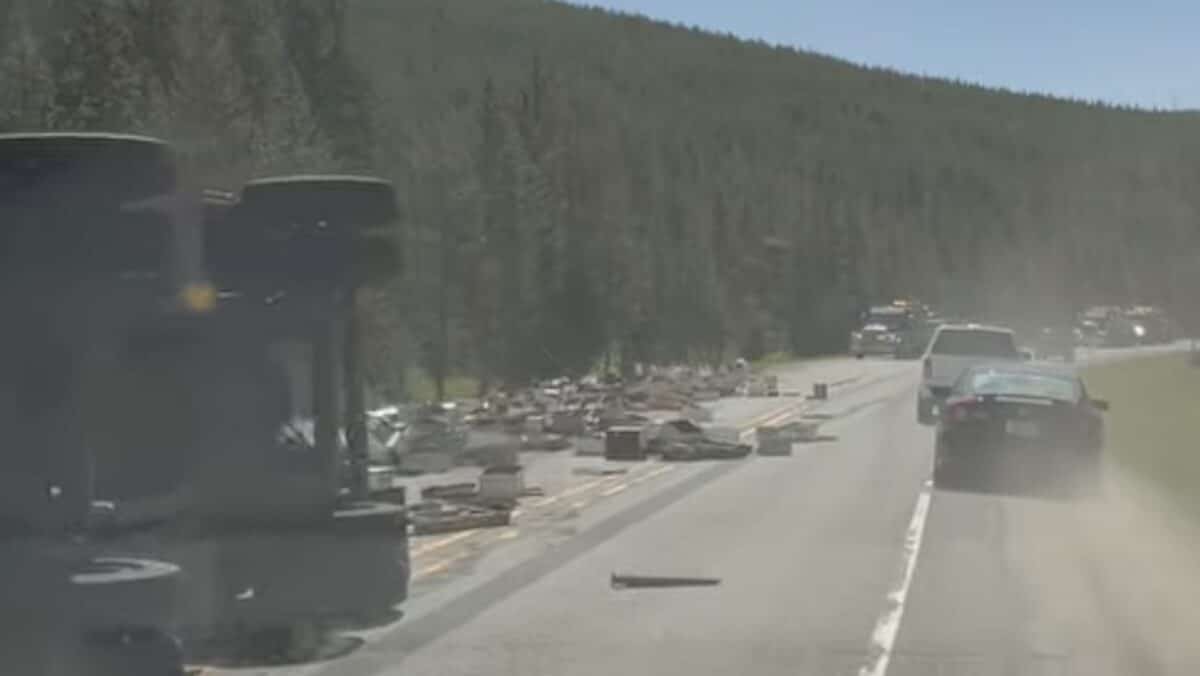
A significant incident involving the accidental release of tens of thousands of honeybees occurred on Tuesday, June 16th, when a truck carrying a substantial bee population overturned on Highway 191 within the vicinity of Yellowstone National Park. The crash, which took place north of West Yellowstone and potentially within the Idaho portion of the park, has prompted an immediate response from authorities to manage the ecological and safety implications of the widespread bee dispersal.
Incident Overview and Initial Response
The precise circumstances leading to the truck’s overturn remain under investigation, but eyewitness accounts confirm the vehicle was carrying a large number of bee colonies. Upon notification, emergency services, believed to include National Park Service personnel and potentially state agencies, were dispatched to the scene. Their primary objective was to secure the area, assess the extent of the bee release, and initiate containment and cleanup protocols. The location of the crash, along a vital transportation corridor adjacent to a world-renowned natural preserve, amplified the urgency of the situation.
The Scale of the Event: Millions of Bees Released
While exact figures are not yet public, a commercial truck carrying bees typically transports thousands of individual colonies. Each colony can house tens of thousands of worker bees, drones, and a queen. Therefore, the overturned truck likely released a population numbering in the millions into the Yellowstone ecosystem. This event poses immediate challenges, not only for the bees themselves but also for the park’s native wildlife and visitor safety.
Understanding the Bee Industry and Transportation
Commercial beekeeping is a critical component of modern agriculture, providing essential pollination services for a vast array of crops. Bees are transported across the country in specialized vehicles, often in large, climate-controlled trucks, to follow blooming cycles and meet agricultural demands. These operations are meticulously planned, but accidents, though rare, can have significant consequences. The value of a single bee colony can range from hundreds to thousands of dollars, depending on its strength and productivity. The loss of an entire truckload represents a substantial economic impact for the beekeeper involved.

Protocols for Bee-Related Incidents
The handling of a large-scale bee release from a transport vehicle follows established emergency response guidelines. Such protocols, exemplified by plans like the "Emergency Response to Accidents Involving Honey Bees" developed by Michigan State University, emphasize a multi-stage approach. The primary goal is to mitigate risks to the public and the environment while attempting to salvage as many bees and as much product as possible.
Key elements of these response protocols include:
- Containment and Recovery: The most immediate step involves containing the released bees and recovering as many as possible. This is a task best suited for experienced commercial beekeepers who possess the specialized equipment and knowledge to handle large numbers of agitated bees. They would typically deploy empty hive boxes or other attractants near the spill site. The scent of the queen, honey, and comb can draw surviving bees together, allowing for their collection.
- Decontamination and Disposal: Any bees that cannot be safely collected pose a potential threat to park visitors and wildlife. These bees may need to be humanely destroyed to prevent stinging incidents or the disruption of natural ecosystems. Similarly, any spilled honey or damaged hive materials can attract not only bees but also bears and other wildlife, creating prolonged hazards. Thorough cleanup and decontamination of the crash site are therefore crucial.
- Equipment Management: The recovery operation often requires significant logistical support. Additional trucks and trailers may be needed to transport salvaged hives and equipment. If a substantial number of hive boxes are destroyed, dumpsters or dump trailers might be necessary for their disposal.
- Follow-Up Procedures: The response doesn’t conclude with the initial cleanup. A critical follow-up involves ensuring all salvageable equipment is removed and that residual honey or bee pheromones are washed away from the affected area to prevent further attraction of insects and animals.
The Yellowstone Context: An Ecosystem Under Pressure
Yellowstone National Park is a globally significant biodiversity hotspot, home to an incredible array of flora and fauna. The introduction of millions of non-native honeybees, even temporarily, into this delicate ecosystem raises several ecological questions. While honeybees are not typically considered a direct threat to the park’s iconic megafauna like bison, bears, or wolves, their presence can influence native pollinator populations through competition for floral resources. The park’s vast meadows and diverse plant life support a rich community of native bees, butterflies, and other insects. The sudden influx of a highly efficient, non-native pollinator could temporarily alter the dynamics of plant-pollinator interactions.
Furthermore, the presence of a large, concentrated population of agitated bees poses a direct safety concern for park visitors and staff, especially during the busy summer season. Highway 191 is a frequently traveled route, connecting the west entrance of Yellowstone to communities south of the park. Any incident involving swarming bees necessitates immediate public advisement and potential route closures to ensure safety.
Potential Economic and Ecological Repercussions
The economic loss for the beekeeper is immediate and quantifiable. Beyond the cost of the lost bees and equipment, there are potential losses in future honey production and pollination services. From an ecological standpoint, the long-term impact on native pollinators is difficult to ascertain without further study. However, in areas with intense agricultural activity, honeybees have been shown to compete with native bees for nectar and pollen. Whether this impact would be significant in the vastness of Yellowstone, even for a temporary period, remains to be seen.
The incident also highlights the inherent risks associated with the transportation of live animals and insects. While essential for agriculture, these operations require stringent safety measures and robust emergency response plans. The success of the cleanup operation will depend on the swift and efficient implementation of these established protocols.
Information Scarcity and Future Updates
At the time of reporting, details surrounding the incident remain limited. Information regarding the specific trucking company involved, the origin and destination of the bee shipment, and the exact number of colonies lost has not been publicly disclosed. National Park Service officials and relevant state agencies are expected to provide further updates as the investigation and cleanup efforts progress. Unofficial Networks will continue to monitor this developing story and provide additional information as it becomes available. The incident serves as a stark reminder of the intricate balance of ecosystems and the potential consequences of even unforeseen disruptions.

