
Following a deeply disappointing 27th-place finish at the Italian Olympics, French biathlon star Justine Braisaz-Bouchet has made a series of drastic decisions in her pursuit of returning to the pinnacle of the sport. In a bold move that underscores her unwavering commitment, the former Olympic and World Champion has severed ties with the national team, discarded her entire ski equipment inventory, and relocated to Norway for a significant portion of her training. This radical overhaul, while aimed at propelling her back into the world’s elite this coming winter, comes at a staggering personal cost, as Braisaz-Bouchet has revealed the harsh reality of financing her ambitious comeback entirely out of her own pocket.
“I am left with nothing. I have to pay for everything myself, training camps, equipment… everything,” Braisaz-Bouchet stated in a candid interview with French sports publication L’Équipe, as reported by Ski-Nordique.net. This stark admission highlights the immense financial burden now resting squarely on her shoulders, a significant departure from the structured support typically afforded to athletes of her caliber.
From Full Support to Financial Autonomy
The 29-year-old’s decision to break away from the French national team was driven by a desire for greater control over her training regimen and to tailor it precisely to her individual needs. However, this newfound autonomy came at the immediate expense of all financial backing from the national federation. “Now I have nothing left. It’s a case of either taking the whole package or nothing. It’s a choice. I am dependent on my partners, and they know the situation I am in,” Braisaz-Bouchet explained, emphasizing her reliance on corporate sponsorships to bridge the financial gap.
The financial implications are substantial. Braisaz-Bouchet disclosed that she spent an estimated €30,000 (over 330,000 Norwegian Kroner) on her own training camps in the previous season alone. While she has made bookings for the current season, a precise total expenditure remains to be calculated, but it is clear the financial outlay will be considerable. This figure does not include the cost of essential equipment, which has also become her sole responsibility.
The Expensive Shift in Equipment
Shortly after her departure from the national team, Braisaz-Bouchet also ended her long-standing partnership with Fischer, an Austrian ski manufacturer that had supported her throughout her senior career. She has since switched to Rossignol, a move that necessitates a complete acquisition of new equipment. This transition, while potentially offering performance benefits, adds another layer of significant expense to her independent campaign. The cost of high-performance skis, poles, bindings, and other crucial gear can easily run into tens of thousands of euros, further exacerbating her financial commitment.
A Calculated Risk with No Guarantees
Braisaz-Bouchet’s strategic relocation to Norway for her training is a deliberate attempt to leverage the country’s renowned biathlon infrastructure and expertise. Norway, a perennial powerhouse in the sport, boasts world-class training facilities and a deep pool of talent, offering an environment conducive to intense preparation. However, her return to the national team fold is not guaranteed. While she was initially selected for the elite national team in the spring, the terms of her reintegration are subject to ongoing discussions with team management.
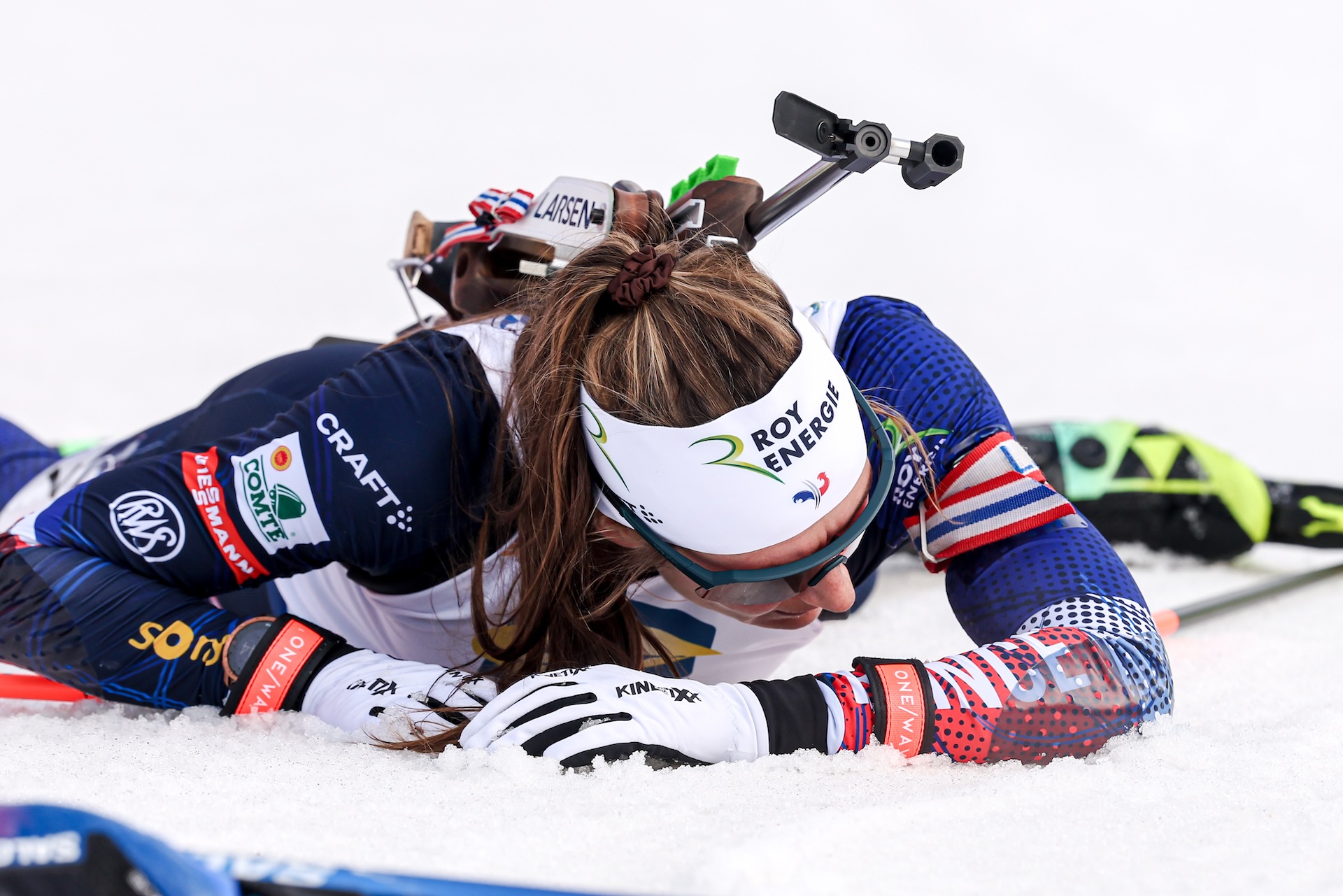
“I am preparing on my own, without support from the national team, but I am holding onto the national team cap and hope to be able to return to the team for the last training camp in November,” she stated. “Normally, those selected for the A-team get to compete in the first two World Cup rounds, but I need to speak with management to see what applies to my situation.” This uncertainty adds a layer of pressure, as her performance throughout the pre-season will be crucial in demonstrating her readiness and justifying her inclusion in the national team for the upcoming World Cup circuit.
The Shadow of Internal Strife and Scandal
Adding another complex dimension to Braisaz-Bouchet’s decision is the documented history of an strained environment within the French national biathlon team. The athlete has previously spoken openly about these challenging dynamics. A significant contributing factor to this tense atmosphere was the fraud scandal involving her national teammate, Julia Simon. In the autumn of last year, Simon was convicted of fraud and theft from Braisaz-Bouchet and several other members of the national team. This incident sent shockwaves through the biathlon community.
Simon was handed a three-month suspended prison sentence and a €15,000 fine. The French Ski Federation (FFS) also imposed a six-month ban on Simon, with five months of that suspension being conditional. Despite these sanctions, Simon was permitted to rejoin the national team in December, subsequently securing four medals at the Winter Olympics and finishing third overall in the World Cup standings. This situation undoubtedly created a difficult working environment for Braisaz-Bouchet and other affected athletes, potentially influencing her desire for a more controlled and supportive personal training setup. The contrast between Simon’s swift return to competition and Braisaz-Bouchet’s current independent struggle underscores the multifaceted challenges faced by athletes within national sporting structures.
The Broader Implications for Biathlon Athletes
Braisaz-Bouchet’s situation raises pertinent questions about the support structures for elite athletes in biathlon and potentially other sports. While national federations provide essential resources, the increasing professionalization and financial demands of elite sports can place individual athletes in precarious positions. Her decision to self-fund her career, while a testament to her dedication, highlights a potential gap in financial safety nets for athletes who choose to deviate from the standard national team pathway, even if temporarily.
The trend of athletes seeking greater control over their careers, often driven by performance optimization and personal well-being, is becoming more prevalent. However, as Braisaz-Bouchet’s experience demonstrates, this pursuit of independence can come with significant financial and logistical hurdles. Her journey will be closely watched by fellow athletes and sports administrators, as it may offer insights into sustainable models for athlete development and support in the evolving landscape of professional sports. The success or failure of her ambitious comeback, funded entirely by her own resources and determination, will undoubtedly serve as a compelling case study.
The financial strain, coupled with the pressure to perform at the highest level without the institutional backing she once had, presents a formidable challenge. Yet, Braisaz-Bouchet’s resolve suggests an unwavering belief in her ability to overcome these obstacles. Her story is a powerful narrative of sacrifice, resilience, and the relentless pursuit of excellence in the face of adversity, painting a vivid picture of the often-unseen sacrifices made by elite athletes striving to reach the top. The biathlon world awaits to see if her radical approach will indeed pave the way for a triumphant return to form.

