
The 2025/26 alpine ski season marked an indelible turning point for Giovanni Franzoni, a year defined by unprecedented triumphs, profound emotional depth, and a newfound philosophical outlook that resonated far beyond the racecourse. From the hallowed slopes of Wengen and Kitzbühel to the grand stage of the Milan-Cortina Olympics, Franzoni emerged not just as a formidable competitor but as one of the most compelling figures in the sport, captivating audiences with his solid skiing, legendary victories, and an Olympic silver medal. His breakthrough was inextricably linked to the tragic loss of his teammate and friend, Matteo Franzoso, an event that reshaped Franzoni’s perspective on life and sport, imbuing his performances with a poignant dedication that inspired many. This spring, Franzoni reflected with Ski Racing Media on the extraordinary path that led him to this pivotal moment, a journey underpinned by diligent preparation, unwavering passion, and a commitment to honoring memory.
Laying the Foundation: A Childhood Steeped in Alpine Ambition
Giovanni Franzoni’s ascent to the pinnacle of alpine skiing was not an overnight phenomenon but the culmination of a lifelong dedication. Born on March 30, 2001, in Manerba del Garda, a picturesque town on the Brescia shore of Lake Garda, Giovanni and his twin brother Alessandro were introduced to a myriad of sports by their parents, seeking to channel their youthful energy. Alpine skiing quickly captivated them, despite the geographical challenge of living far from the mountains.
"I was pretty fanatical [about] skiing when I was a child. I was in my room all the time watching videos, sports videos of the best athletes of the world. It was just my passion," Franzoni recounted. This early obsession translated into a rigorous lifestyle. The family initially traveled to the mountains near Madonna di Campiglio for skiing, eventually moving there for the winter seasons when Franzoni was eight, a routine that continued for a decade. This commitment underscored a fundamental principle instilled by his parents: education was paramount.
The Franzoni twins pursued a demanding science curriculum, including Latin, a choice their mother linked to fostering a "sense of sacrifice" and preparing them for hard work, as reported by La Gazzetta dello Sport in February 2026. Good grades were non-negotiable for skiing privileges. "The most important thing was school and then skiing. So, if you are good at school, you could go skiing. This was our ‘law’ in the family. It was a pretty good rule, so I’m happy with that," Franzoni told Ski Racing Media.
The initial years were particularly arduous, involving daily two-hour commutes from Brescia to Madonna di Campiglio for training after school. Meals and homework were often completed during these long drives. While "pretty hard," Franzoni believes this demanding routine significantly fortified their character and personality. This dual pursuit of academic excellence and athletic prowess culminated in the twins attending Ski College Veneto in Falcade, a specialized institution in the Dolomites that better integrated elite sports training with a comprehensive science education.
Franzoni’s tenure at Ski College Veneto-Falcade left a lasting impression. Eddy Gaspari, an academic tutor, described him as a "calm and well-organized student," consistently excelling in both academics and sports, with an "A+" for manners and respect. Michele Costa, the current principal, echoed these sentiments, calling Franzoni a "model student" and a "great and beautiful example" for younger athletes and students. This unique blend of academic rigor and athletic commitment became a significant talking point within Italy’s educational and sports communities, exemplifying a potential pathway for student-athletes.
A Career Forged Through Junior and European Cup Success
Franzoni’s competitive journey began with steady, incremental progress. He joined the Italian national team in 2020, following a promising junior career. He competed in three FIS Junior World Ski Championships between 2020 and 2022, securing an impressive haul of three gold medals, one silver, and one bronze across downhill, super-G, giant slalom, and alpine combined disciplines. Notably, at the 2022 Junior World Championships, he shared the podium in three events with Franjo von Allmen, who was four months his junior. Franzoni claimed downhill gold that year, besting von Allmen by 0.24 seconds – a margin that would echo on the Olympic stage years later, albeit with reversed fortunes.
His talent was further evidenced by his dominance in the European Cup, the feeder circuit for the World Cup. In 2022, Franzoni clinched both the European Cup overall title and the super-G discipline title, a clear signal of his readiness for the sport’s highest level. These early successes, though not in the glare of the World Cup spotlight, were crucial in building the technical skill, mental fortitude, and competitive experience necessary for his future breakthroughs.
The Shadow of Tragedy: A Season Redefined by Loss
The prelude to Franzoni’s spectacular 2025/26 season was cast under a profound shadow of grief. September 2025 brought devastating news to the Italian team and the wider ski racing community: Matteo Franzoso, a promising 25-year-old athlete and Franzoni’s close friend and teammate, tragically passed away following a training accident in Chile. This loss was particularly poignant, coming less than a year after 19-year-old Matilde Lorenzi had also suffered a fatal training crash, highlighting the inherent risks and fragility within elite ski racing. These successive tragedies sent shockwaves through the sport, prompting renewed discussions on athlete safety and mental well-being.
The loss of Franzoso deeply impacted Franzoni, fundamentally altering his approach to racing and life itself. His season became a powerful tribute, each race dedicated to the memory of his friend. This emotional backdrop transformed his competitive drive, infusing his performances with a deeper purpose.
The Breakthrough: A Season of Firsts and Unforgettable Victories
The 2025/26 ski season was a cascade of "firsts" for Giovanni Franzoni: his first World Cup podium, first World Cup victory, first Olympic Games appearance, and first Olympic medal. His previous World Cup rankings – 49th overall, 32nd in downhill, and 13th in super-G in 2024/25 – underscored the magnitude of his sudden leap. By the end of the 2025/26 season, he had dramatically improved to 10th overall, 5th in downhill, and 4th in super-G, a testament to his transformative performance.
His breakthrough began in December 2025 at Val Gardena-Gröden, where he secured his first World Cup podium, finishing third in the super-G. In the immediate aftermath, visibly emotional, Franzoni spoke openly about Franzoso: "I will ski for him all my life. So, we will do this together. I think the most important thing is the result, as a team, because we struggled a lot this summer because of our loss of our teammate, Matteo." This statement set the tone for a season where personal grief fueled extraordinary achievement.
January 2026 saw Franzoni claim his maiden World Cup victory in the Wengen super-G. Wengen, home to the iconic Lauberhorn race, is the longest downhill course on the World Cup circuit, demanding immense stamina and technical precision. His victory there was a significant marker. The very next day, he added a third-place finish in the Wengen downhill, demonstrating his versatility and growing confidence in speed disciplines.
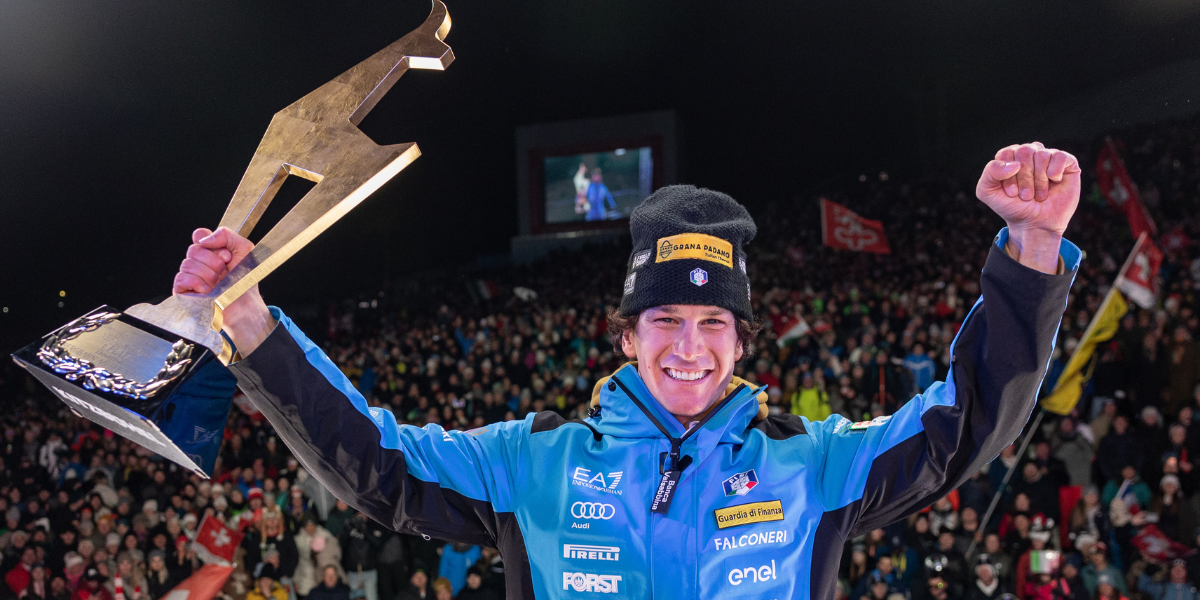
A week later, Franzoni delivered what he considers his greatest accomplishment: a victory at the legendary Kitzbühel Hahnenkamm downhill. The Streif, Kitzbühel’s downhill course, is renowned as the most dangerous and prestigious race in alpine skiing, a true test of nerve and skill. Its electric atmosphere and historical significance make a victory there a career-defining moment. Franzoni’s triumph was particularly poignant, as he had shared a room with Franzoso during his first Hahnenkamm experience just a year prior. Returning to conquer the Streif, Franzoni carried those memories with him, channeling his grief into an emotional and dominant performance.
"Maybe the win in Kitzbühel – yeah, absolutely! The Olympics were incredible, but what I felt in Kitzbühel was something special and magical and I will not, I think, feel these emotions again in another race," he stated. Smiling through tears during an FIS interview after his Hahnenkamm victory, he added, "I won this race, and it’s the max that I can do for him. I thought he’s watching right now from the heaven, so it’s unbelievable. Today, I take the win, and I am so happy, also for my parents. They worked a lot to give me this possibility to race here." This victory was not just a personal milestone but a powerful public testament to his enduring bond with Franzoso.

Olympic Glory on Home Snow: Milan-Cortina 2026
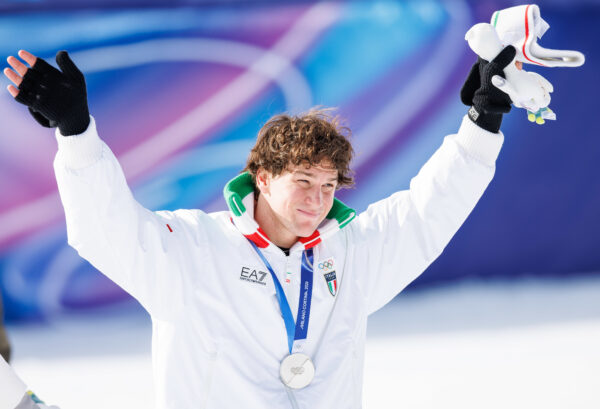
By February 2026, Franzoni arrived at the Milan-Cortina Olympics as a major contender and a beloved figure among Italian fans. The pressure of a home Olympics, combined with his recent World Cup successes and the emotional weight of the season, might have overwhelmed a lesser athlete. Instead, Franzoni thrived, capturing an Olympic downhill silver medal in front of an ecstatic home crowd.
He finished just 0.20 seconds behind Franjo von Allmen, who claimed his first of three Olympic gold medals at those Games. Italian legend Dominik Paris, a long-time idol and mentor to Franzoni, secured the bronze, creating a memorable podium for the host nation. The image of the young Franzoni standing alongside his hero and a formidable peer epitomized a passing of the torch and the dawn of a new era.
Following his Olympic success, Franzoni used his platform to inspire the next generation. In a Sky Italia interview, as reported by Olympics.com, he articulated a powerful message: "I hope to be an inspiration to kids who aren’t confident in what they’re doing. You don’t need an extreme ego to be an athlete and win medals or races; the important thing is to enjoy it." This sentiment, emphasizing joy and self-belief over ego, resonated deeply, establishing him as a role model far beyond his athletic achievements.
A New Vision on Life: Enjoying Every Moment
The Ski Racing Media interview delved into the profound impact of Franzoso’s loss on Franzoni’s skiing and personal philosophy. His response revealed a fundamental shift in perspective. "I think that’s a really good question, because after that, I changed something in my mind, not just something in my skiing, but my vision about life," he explained.
"The year before, I was always thinking about the results and the performance. But this year, I could find a new perspective on life; that I really have to enjoy every day, whether it’s bad or good, and really enjoy the day of skiing, the day that I rest, the day that I train. Because not everyone can do it, so it’s good to not waste time and do all this 100%, every day." This shift from a results-driven mindset to one centered on gratitude and presence underscores a maturity forged through adversity, a philosophy that now guides his every move on and off the snow.
The Scholar-Athlete Model: A Legacy for Italian Sport
Franzoni’s unique educational journey, balancing demanding studies with elite sports, has garnered significant attention in Italy. Combined education and ski racing programs are less prevalent in Italy compared to alpine nations like Austria or Switzerland, where specialized "ski gymnasiums" are common. Franzoni strongly advocates for creating more such opportunities. "It’s important to grow up with the healthy values and all the responsibilities," he emphasized.
His family’s success in integrating academics and high-level sport became a case study for educational reform. Orizzonte Scuola, an Italian digital newspaper dedicated to education, highlighted Franzoni’s path, stating, "Giovanni Franzoni’s journey exemplifies a potential integration between school and high-level sport, in which the student-athlete maintains a strong scholastic identity." The article concluded by posing a challenge: "The story opens a space for reflection for educational institutions."
Franzoni expressed pride in his story serving as an inspiration: "Pretty good! I think it’s inspiring. We didn’t do magical stuff, but with some commitment we could do school and skiing together. It is not so easy. But leaving this story behind to the next generation, I think it’s important to give them confidence to do both." This humble yet impactful statement resonates with his mentors’ descriptions of his calm demeanor and respectful attitude. The ongoing discussion in Italy about developing pathways for young athletes to combine education with elite sport, exemplified by conferences like the annual "school-sport" event promoted by La Rosa Bianca-Weisse Rose institute, suggests Franzoni’s journey may indeed catalyze systemic change.
Close Ties: The Enduring Bond with His Twin Brother
Giovanni’s remarkable journey was never solitary. His twin brother, Alessandro, has been a constant presence and source of support. "It was a pretty good journey, always with my twin brother. That’s very special," Franzoni reflected, highlighting their shared upbringing in skiing and their time together at ski college in Falcade.
Alessandro, now working at their family winery and as a ski instructor during winter, remains Giovanni’s "biggest fan." Their bond extends to technical analysis; Giovanni often sends Alessandro videos for tips and analysis, valuing his brother’s deep understanding of the sport. This familial connection provides a grounding influence, reminding Giovanni of his roots and the shared dreams that propelled them both.
Rivalries and Aspirations: Challenging the Elite
Franzoni’s success has placed him squarely among the world’s best, leading to renewed rivalries and aspirations. His shared podiums with Franjo von Allmen at the Junior World Championships foreshadowed their Olympic encounter, where von Allmen’s dominant performance saw him secure three Olympic golds in Milan-Cortina. Franzoni, after finishing sixth in the Olympic super-G, acknowledged his competitor’s excellence: "Chapeau to Franjo, what an amazing week, such a great guy, such an amazing skier. I need to take him as an inspiration, to learn about the gliding part and to be a more competitive athlete." His philosophy of "sometimes you win, sometimes you learn" reflects his resilient and growth-oriented mindset.
Looking ahead, Franzoni’s ambitions stretch to the overall World Cup title, currently dominated by Marco Odermatt. When asked about challenging Odermatt, Franzoni responded with a laugh, "Yes, it would be great. Maybe when Marco will be tired of winning that, it would be a chance. Because he wins in three disciplines, it’s so hard right now. But, in the long term, never say never. We will see."
His plan for the 2026/27 season includes maintaining his progress in speed disciplines while gradually re-integrating giant slalom, his original World Cup discipline. "It’s a discipline I want to keep up, but it’s a long journey," he admitted, acknowledging the difficulty of training GS amidst a packed speed race schedule. He aims to compete in the early giant slaloms in Sölden, Copper Mountain, and Beaver Creek, using them as opportunities to build strength year by year, recognizing that a strong GS foundation benefits speed disciplines.
Franzoni’s breakthrough 2025/26 season defied expectations, transforming him from a promising talent into an Olympic medalist and a World Cup winner. Only a year ago, such achievements seemed distant. Now, he embarks on the next chapter of his career armed with a new, profound perspective on life, an Olympic silver medal, and the unwavering confidence that he belongs at the pinnacle of alpine skiing. His journey is a powerful narrative of resilience, dedication, and the human spirit’s capacity to find purpose and inspiration even in the face of profound loss, making him a compelling figure both on and off the slopes.

