
On June 1, 2026, Alpine Canada released its highly anticipated nominations for the 2026-27 Canadian Alpine Ski Team. The announcement, a routine fixture in the annual sports calendar, listed the athletes, their hometowns, and affiliated clubs, accompanied by a statement of optimism from then-CEO Thérèse Brisson regarding the upcoming season. However, beneath the surface of this customary declaration lies a growing concern within the Canadian alpine ski racing community: a significant disparity between the federation’s published nomination criteria and the actual composition of the men’s team, particularly in the technical disciplines.
Of the thirteen men nominated to the national squad, an analysis of publicly available results against Alpine Canada’s own objective criteria suggests that only four athletes definitively met the established standards. The remaining nine nominations appear to have relied heavily on discretionary provisions, including considerations for injury recovery. This notable reliance on subjective selection, rather than transparent, measurable benchmarks, has ignited debate about the long-term health and strategic direction of Canada’s men’s alpine program, with many observers pointing to a multi-year "managed decline" in technical skiing performance.
The Erosion of Technical Prowess: A Chronology of Decline
While Canada has celebrated significant successes in recent years, particularly in speed events, a closer examination reveals a worrying trend in men’s technical skiing. The federation has lauded victories such as Jack Crawford’s triumph in the 2025 Kitzbühel downhill, where teammate Cameron Alexander also secured a podium finish. Prior to that, Laurence St-Germain and Crawford earned World Championship titles in slalom and super-G respectively in 2023, with Alexander adding a downhill bronze. Crawford also secured an Olympic bronze in the alpine combined at the 2022 Beijing Games. These achievements, however, predominantly stem from downhill, super-G, and alpine combined events, masking a stark reality in slalom and giant slalom.
The decline in technical skiing began to manifest clearly over the past five seasons. In the 2021-22 World Cup season, Erik Read and Trevor Philp represented Canada’s strongest technical showing, finishing 16th and 21st respectively in the giant slalom standings. This marked the last instance of Canada having two men within the top 25 of a World Cup technical discipline. The following season saw Read maintain his position at 21st in giant slalom, but Philp’s season was cut short by injury, leading to his eventual retirement.
The 2023-24 technical team included Read, Asher Jordan, Liam Wallace, and Justin Alkier. Alkier, a graduate of Middlebury College, was a promising addition who met the published criteria following a successful NorAm season with the Ontario Ski Team. Yet, his tenure with the national program was brief, lasting only one season before he was removed from the roster. This quick exit raised questions within the community about whether a single season offered sufficient time and comprehensive support to fairly evaluate an athlete’s potential to transition to the demanding World Cup level.
The situation escalated dramatically in the 2024-25 season when Alpine Canada made the decision to eliminate its men’s World Cup technical group entirely. This left Canada’s remaining World Cup technical skiers, such as Read, Simon Fournier, and Declan McCormack, to pursue independent programs, often self-funding their World Cup and Europa Cup campaigns. Jordan and Wallace were later brought back into the fold through injury-related discretionary consideration, further highlighting the reliance on subjective criteria in the absence of a structured program.
The nadir of this trend arrived in the 2025-26 season, the year of the Milano Cortina Olympic Winter Games. Despite the global stage featuring the world’s elite technical skiers, including representatives from nations with significantly smaller alpine programs, Canada notably failed to enter a single male athlete in either the giant slalom or slalom events. This absence, while Canada did have athletes competing internationally in these disciplines during the season, was not a mere anomaly. Instead, it was widely perceived as the predictable consequence of a progressively weakened development foundation and a strategic drift away from technical events.
Canada was allocated a total of thirteen alpine quota positions for the Games – eight for women and five for men. All five men’s positions were utilized in the speed disciplines, a strategic choice that Alpine Canada leadership likely justified as maximizing medal potential. However, this decision simultaneously ensured Canada’s complete absence from the men’s technical races, leaving a glaring void in a cornerstone of alpine skiing. Following the Games, CEO Thérèse Brisson acknowledged the issue in an interview with The Globe and Mail, stating, "We need to rebuild our strengths in the men’s technical events. It’s a work in progress." However, for many within the ski community, this "work in progress" had spanned over five years without public evidence of a coherent, actionable plan to rejuvenate the men’s technical team. Brisson’s subsequent departure from Alpine Canada in July 2026 to become CEO of Skate Canada, leaving the federation without a named successor at a critical juncture, only amplified concerns about the continuity and leadership required to address these deep-seated issues.
A Roster Under Scrutiny: The Weight of Discretion
The 2026-27 team nominations brought the issue of selection transparency to the forefront. Alpine Canada’s published nomination criteria delineate a clear hierarchical process: automatic nomination, followed by criteria for the current Olympic quad, then the next Olympic quad, and finally, discretionary nominations. The objective thresholds for age-based categories are specific and include achievements such as World Cup podiums, top-15 to top-60 World Cup discipline standings (depending on age), top-20 Europa Cup discipline standings, top-two North American status in a NorAm discipline, a NorAm overall title, or a Junior World Championships podium.
Based on these publicly available criteria and results, only four of the thirteen nominated men appear to have met these objective standards. While the names of the nominated athletes are publicly available, specific details on which of the four met objective criteria are often derived from detailed tracking by informed community members. Two other athletes, Kyle Blandford and Kyle Alexander, reportedly received injury-related consideration, a legitimate use of discretion. However, the remaining seven nominations—more than 50% of the roster—seem to fall under Section 5.6, the broad category of discretionary nominations.
While coaches’ discretion is not inherently problematic and can be crucial for factors like injury comebacks, training-group dynamics, and recognizing unique developmental trajectories, its pervasive application raises significant questions. When over half of a national team roster is selected based on internal judgment without public explanation, the credibility of the federation’s own published criteria is undermined. This opacity leaves athletes, their families, and clubs across Canada without a clear, reliable roadmap for progression. It fosters an environment where the men’s program operates with insufficient public accountability, particularly during the critical prime development years when athletes must make pivotal decisions about their continued investment in the sport. Without knowing how or when national team support might become available, talented skiers may opt to step away from the sport prematurely.
The Unacknowledged Pathway: NCAA Athletes
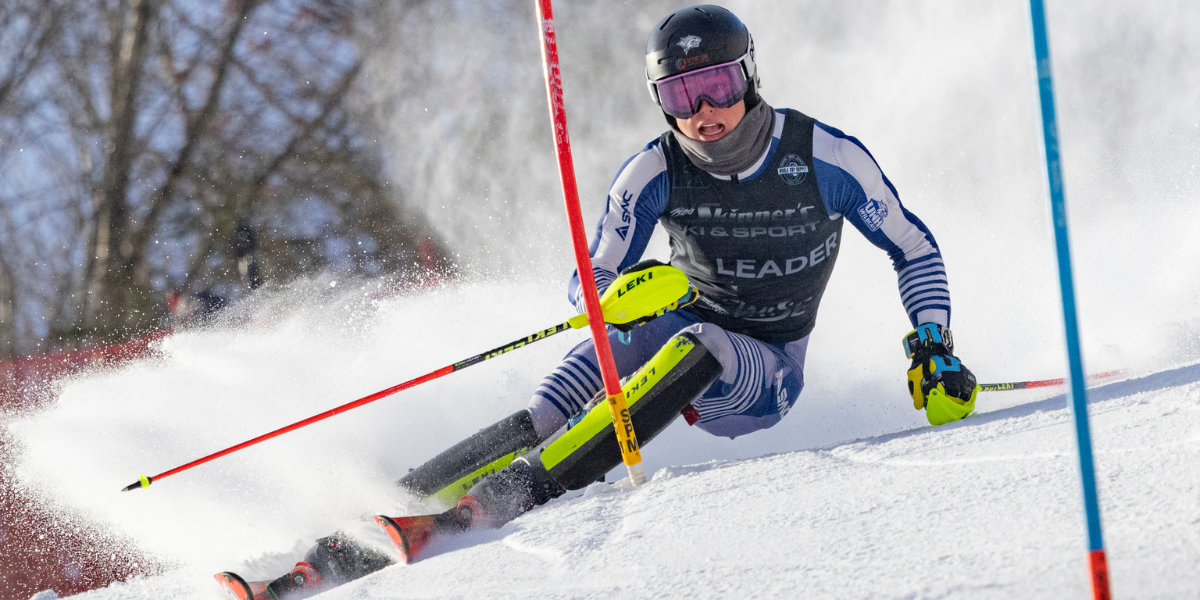
A significant systemic gap identified by critics is Alpine Canada’s failure to explicitly recognize and integrate the NCAA collegiate racing pathway into its national team selection criteria. While the criteria include subjective considerations such as "attitude, commitment and positive contribution," they conspicuously lack any direct acknowledgment of the fact that many of Canada’s most promising young alpine skiers spend four crucial developmental years competing within NCAA programs.
These athletes engage in FIS-sanctioned events, steadily improve their world rankings, and compete against strong international fields in Division I programs at institutions like Utah, Colorado, Denver, Vermont, New Hampshire, and Dartmouth. The Eastern Intercollegiate Ski Association (EISA) and Rocky Mountain Intercollegiate Ski Association (RMISA) circuits consistently host high-level FIS races, providing a robust competitive environment. A substantial proportion of Canada’s leading young slalom and giant slalom skiers matriculate through the NCAA system. For many, a university scholarship also represents one of the only financially sustainable avenues to continue racing at a high level into their early to mid-20s, a crucial consideration in a country where even national team athletes often face substantial team fees and personal costs.
The provided data (from 2020/21 to 2025/26) visually reinforces this point, showing significant NCAA participation among Canadian athletes ranked within the FIS World Top 500 in both slalom and giant slalom. This graphic illustrates that the talent pool is indeed active and competitive within the collegiate system.
In stark contrast, U.S. Ski & Snowboard has recognized the inherent value of collegiate racing by incorporating an explicit NCAA route into its nomination criteria. Their pathway typically combines a top-three result at the NCAA Championships with two top-three NorAm finishes, alongside age-based FIS world ranking standards. While not without its own challenges, the American system acknowledges university racing as a legitimate development environment. Alpine Canada’s criteria, by not offering similar clarity, leave Canadian athletes who excel academically and athletically in a predicament. They are often forced to choose between conflicting NorAm Cup races and NCAA carnival weekends, hindering their ability to meet the primary performance routes outlined in the national criteria. Without a defined pathway, these athletes, who may win NCAA titles, lower their FIS points, improve world rankings, and even represent Canada at Junior World Championships, often graduate at ages 22 to 25 with no clear route onto the national team. They are then left to self-fund independent seasons, hoping to catch the attention of national team coaches through informal networks, or abandon the sport altogether. This reliance on "coaching relationships" rather than a transparent, structured pathway is seen as a significant barrier to talent retention.
The Human Cost and Systemic Gaps
The consequences of these systemic gaps are tangible and impact individual athletes directly. Promising talents like Declan McCormack, who won NorAm slalom races while competing for the University of Vermont, did not receive sustained national team support. Justin Alkier, after meeting objective criteria, was given a single season with the national program before being dropped. Simon Fournier and Étienne Mazellier were compelled to build independent programs due to the absence of an established national team structure to support their technical skiing aspirations. Most recently, Jayden Buckrell, who won the 2025 NCAA slalom championship as a freshman and rapidly emerged as one of Canada’s leading young slalom skiers, was notably not nominated to the 2026-27 national team.
These examples are not isolated incidents; collectively, they reveal a consistent pattern. They underscore a fundamental flaw in Canada’s system: the lack of a formal and transparent mechanism to consistently identify, evaluate, and retain technical skiers developing through NCAA and independent programs. While no single strong result should automatically guarantee national team funding, the current system fails to recognize the broader potential demonstrated by young Canadian male skiers who maintain competitive world rankings while simultaneously excelling academically. Such athletes are often only beginning to realize their full potential and could thrive with greater support.
Leadership Transition and the Path Forward
The departure of Thérèse Brisson as CEO after the Olympic Winter Games means that the responsibility for rebuilding the men’s alpine program now rests squarely with Alpine Canada’s next leadership team. The search for a successor and the establishment of new strategic priorities will be crucial. The new leadership will inherit a program facing significant challenges in technical skiing, transparency, and athlete development pathways. They will be tasked with restoring trust within the ski community and demonstrating a clear commitment to a sustainable future for Canadian alpine racing.
Calls for Reform and Transparency
Observers within the Canadian alpine ski community and beyond have articulated a clear set of reforms essential for reversing the current trajectory and fostering a more robust, transparent, and equitable development system:
- Establish an Explicit NCAA Pathway: Alpine Canada should integrate a formal NCAA pathway into its selection criteria. A reasonable starting point could involve a top-three result at the NCAA Championships combined with a minimum FIS world ranking threshold or relevant NorAm results. The goal is not generosity but existence and clarity.
- Incorporate Age-Based World Ranking Objectives: Creating additional objective standards based on age and FIS world rankings would provide more measurable routes for younger athletes developing outside the traditional national team system. While world rankings should not supersede direct competition results, they are valuable indicators of progression.
- Create an Associate Team Tier: An associate team could offer formal access to selected camps, coaching, testing opportunities, and equipment support for athletes in NCAA, independent, private, or provincial programs. This would allow Alpine Canada to recognize and monitor emerging talent without committing to fully funded national team positions immediately, bridging the gap between provincial and national team levels.
- Publish an Annual Selection Report: To enhance transparency and accountability, Alpine Canada should publish an annual report detailing which athletes met objective criteria, which were selected through discretion, and the general rationale behind those discretionary decisions. This would not require disclosing private medical or personal information but could identify broad categories such such as injury protection, development potential, training-group needs, or exceptional performances outside the principal criteria.
These proposed changes represent more than just adjustments to selection criteria; they signify a fundamental shift towards a program built on coherence and transparency. The current method, which can see athletes with seemingly similar achievements end up on opposite sides of a roster decision without public explanation, erodes trust and hinders the development of a sustainable infrastructure for future generations.
The cumulative effect of past selection decisions, development priorities, and financial choices has shaped the program seen today. Looking ahead, within the next five to ten years, the current leaders of Canada’s successful men’s speed program will likely retire from competitive racing. Without a significantly stronger and more transparent technical pathway, Canada risks facing a much broader and more profound crisis in men’s alpine skiing across all disciplines.
The athletes have consistently been present, demonstrating dedication and talent. The critical question now facing Alpine Canada’s new leadership is whether the system itself is prepared to evolve sufficiently to identify, support, and effectively retain them, ensuring a vibrant and competitive future for Canadian alpine skiing.

