
Katie Rowekamp didn’t just make the Stifel U.S. Ski Team; she accomplished this extraordinary feat after a singular, breathtaking season of FIS racing, marking her as one of the most promising young talents in American alpine skiing. Her rapid ascent from the rugged slopes of Alaska to the national stage is a testament to inherent talent, relentless dedication, and a unique developmental path forged by diverse training environments.
At just 16 years old, the Girdwood, Alaska native concluded her rookie FIS season with a global ranking of 78th in giant slalom and 105th in super-G – an exceptionally rare achievement for an athlete of her age and experience level. Her impressive year included a 32nd-place finish in the highly competitive Europa Cup giant slalom standings, securing a personal World Cup super-G start position by finishing second in the NorAm super-G standings, and earning a coveted spot on the U.S. team for the FIS Junior World Ski Championships. Along this remarkable journey, she stunned the ski world by placing seventh in her inaugural Europa Cup giant slalom from bib 54, clinched a NorAm super-G victory at Whiteface, and firmly established herself as a force to be reckoned with in the sport.
The Formative Years: Alyeska’s Rugged Classroom
Rowekamp’s skiing odyssey commenced in Girdwood, a small Alaskan community where the mountains dictated the terms of engagement. Far from the manicured pistes and consistent conditions often found in European resorts, Alyeska Resort, her home mountain, presented a dynamic and often unpredictable environment. Here, skiing was less about pristine conditions and more about mastering adaptability – a lesson that would prove invaluable.
"Winter was kind of my off-season, and we would go powder skiing all the time, which was really fun," Rowekamp recounted to Ski Racing Media, illustrating a childhood steeped in the joy of free skiing. While she raced with the Alyeska Ski Club through the U12 level, competitive ski racing was initially secondary to the pure exhilaration of the mountain. "They would just pull me out of school and we would go powder skiing because we get a lot of snow here," she added, highlighting the profound influence of Alaska’s natural bounty on her early development. "And then ski racing kind of just happened."
The unique challenges of Alyeska—its notoriously challenging visibility, rapidly changing snow conditions, and unpredictable weather—forged a resilient mindset in Rowekamp. Rather than succumbing to frustration, she learned to embrace these variables as opportunities for growth. When confronted with adverse conditions during training or races in Norway, Burke, or Central Europe, "where it’s cloudy and foggy and the snow is soft and rutty," Rowekamp finds a familiar comfort. "Growing up here and being able to turn those days into something that’s fun has helped me know how to get something out of those days," she reflected. "The conditions don’t have to be great to still have fun and learn something." This powerful perspective, that difficult conditions are not merely obstacles to overcome but chances to improve, has remained a cornerstone of her approach, subtly fueling her rapid ascent.
The Eastern Shift: Burke Mountain Academy’s Structured Excellence
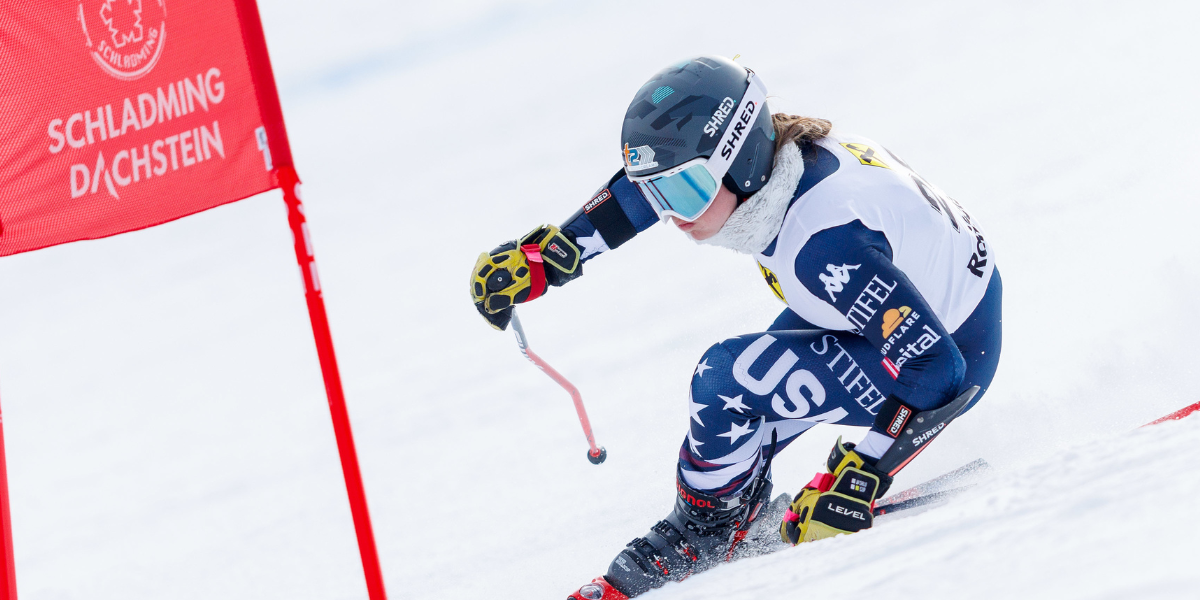
The pursuit of elite-level ski racing eventually necessitated a significant geographical shift. For her U14 years, Rowekamp transitioned from Alaska to the renowned Burke Mountain Academy in Vermont, a move that marked a crucial evolution in her training regimen. Initially, the relocation was not full-time, with her parents renting a house nearby as Burke’s junior program didn’t offer boarding for U14 athletes. This allowed her to train intensely during the winter before returning to Alaska for the spring and fall.
The change, while professionally necessary, came with personal challenges. "I did a lot, actually," Rowekamp admitted about missing Girdwood initially. "Now I’ve been away so much that I don’t get homesick anymore. I definitely still do miss it, but back then it was pretty hard for me." This familial commitment, involving her parents’ willingness to relocate across the country, underscores the profound support system enabling her dream. "I don’t think a lot of other parents would be willing to move their whole lives across the country to help me ski race," she acknowledged gratefully.
Burke Mountain Academy provided a stark contrast to Alyeska, complementing her Alaskan-honed adaptability with a rigorous, structured environment focused on volume and technical precision. "When I first went to Burke, I didn’t know how to ski on ice, and that’s almost all they have," Rowekamp noted, emphasizing the steep learning curve. "So I learned really quickly." The academy’s famous T-bar system facilitated an unparalleled volume of training runs. "With the T-bar, you could take, I don’t know, 14 runs on Training Hill in a day, which was a lot," she explained, highlighting the sheer repetition that built her technical foundation.
Beyond the slopes, Burke fostered personal growth. Moving into the dorms as she progressed, Rowekamp embraced the academy’s unique community. "Burke is such an open community and everybody knows each other," she observed. "I think that kind of lets people embrace their weirdness. It’s a place where it’s okay to be weird and have quirks." This environment allowed her to mature, gain independence, and, crucially, relax into her own skin. "I think being around that sort of community has let me relax a little more when skiing and have more fun," she stated, underscoring how personal comfort translated into improved performance. Burke not only refined her as a racer but also shaped her into a more confident and independent individual.
The Breakthrough Season: A Rookie’s Revelation on the FIS Circuit
Rowekamp’s transition to the FIS circuit in the past season was nothing short of spectacular. For an athlete typically needing several years to gain traction, her immediate impact was unprecedented. Her achievements included not only a NorAm super-G victory at Whiteface and a second-place finish in the NorAm super-G standings—which remarkably secured her a personal World Cup super-G start—but also a ninth-place finish in the NorAm giant slalom standings despite missing the finals. These results individually were impressive; collectively, for a 16-year-old rookie, they signaled a rare talent.
However, one particular event served as a true turning point: her debut in the Europa Cup giant slalom in Oppdal, Norway. The Europa Cup circuit is considered the primary stepping stone to the World Cup, featuring a deep field of highly experienced international competitors. Starting with bib 54, a position that often makes advancing to a second run a challenge, Rowekamp defied expectations by finishing 29th in the first run. "The first run, I was so happy that I even made the flip," she recalled, reflecting her initial surprise and satisfaction.
What followed was a display of aggressive, uninhibited skiing. "The second run I was just like, ‘Oh yeah, let’s just go for it,’" she described her mindset. She not only attacked the course but dominated it, winning the second run outright. This propelled her to an astonishing seventh-place overall finish in her very first Europa Cup start. At 16, and in her inaugural year of FIS racing, she had just secured a top-ten finish in one of the most competitive giant slalom circuits outside of the World Cup. This moment, witnessed by her father on-site and her mother via FaceTime, crystallized a new belief. "I got down from my run and I went to my dad and he had my mom on FaceTime and we hugged, and so that was really nice," she recounted. Initially thinking her early start in the second run would lead to a lower final position, she was stunned as her time continued to hold. "Then my time just kept holding. I thought, ‘This is great.’" It was at this point, she confirmed, that the possibility of joining the Stifel U.S. Ski Team transformed from a distant dream into a tangible reality. "I remember thinking, ‘This is it. I’m in. Let’s go.’" The Oppdal performance was not an anomaly; Rowekamp consistently scored Europa Cup points in all three giant slalom races she entered, culminating in her 32nd-place season ranking.

Junior Worlds: A Glimpse of the Future
Following her Europa Cup success, Rowekamp headed to Narvik, Norway, for the FIS Junior World Ski Championships. Here, she continued to impress, securing 14th in giant slalom, 27th in super-G, eighth in the team combined, and 11th in the team parallel event. Beyond the individual results, the experience of competing alongside and bonding with her American teammates, including fellow Stifel U.S. Ski Team rookie Mari Renick, held immense value.
"Mari and I have known each other for a long time," Rowekamp shared. "We’ve always been pretty competitive, but we’re still really good friends and I really like rooming with her." Junior Worlds provided an opportunity to strengthen these connections. "It was super cool to be with her at World Juniors and to go through the entire series with her," she added. "Going through the same thing together was really awesome." The camaraderie extended to the entire U.S. contingent. "I think all of us formed this super strong, fun bond," Rowekamp observed. "The racing was definitely a big part of it, and that was super cool, but I also liked how much fun we had." This emphasis on enjoyment and relationships underscores Rowekamp’s holistic approach to her demanding sport, balancing serious ambition with a foundational love for skiing.
Defining a Skier: Versatility and Role Models
Rowekamp’s performance profile resists easy categorization, demonstrating remarkable versatility across disciplines. Her NorAm super-G win and subsequent World Cup start position, coupled with strong giant slalom results—including a seventh-place Europa Cup finish and a top-80 world ranking—highlight her proficiency in both speed and technical events. While she expresses a fondness for super-G, "I don’t know. I just really like GS," she admits, indicating a deep passion for giant slalom as well.
Her role models reflect this blend of power, precision, and personality. She looks up to Lara Gut-Behrami and Alice Robinson. Gut-Behrami inspires her not only with "phenomenal" skiing and style but also with her authentic approach to the sport, particularly regarding public expression. Rowekamp appreciates Gut-Behrami’s willingness to acknowledge that athletes should be allowed to express both positive and negative emotions, believing that "being emotionally connected to the sport is super important." Robinson, on the other hand, appeals to Rowekamp for her sheer physical prowess. "I just always liked her skiing," she said. "I like how strong she is." These influences converge to paint a picture of the skier Rowekamp is rapidly becoming: powerful, aggressive, versatile, and keenly aware of the emotional and mental dimensions of elite competition.
The Next Frontier: Mastering Consistency
As Rowekamp embarks on her second FIS season and her tenure with the Stifel U.S. Ski Team, her primary focus shifts from producing standout runs to achieving consistent excellence. She articulates her preparation goals with clarity: tactically, she aims for greater depth, improved patience, and stronger turn building—a fundamental aspect she summarizes simply as, "Build the turn."
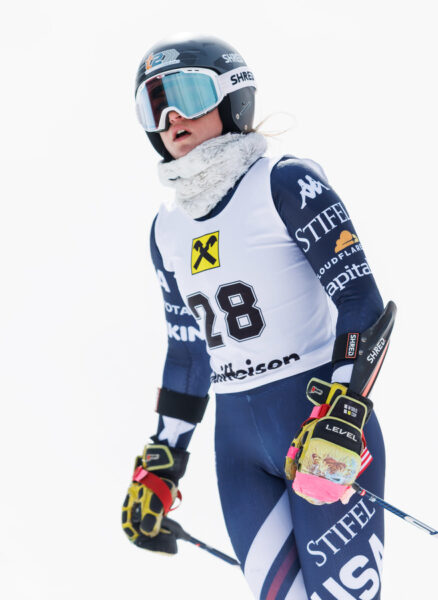
Mentally, Rowekamp identifies consistency as her biggest challenge. "Next season, my goal is to get my head in a consistent place because skiing isn’t consistent," she explained. "The conditions change, the weather changes, the sets change." Her rookie season, while replete with triumphs, also featured moments where her performance varied. She acknowledges having "these random, just really good runs"—like her stellar performances at Junior Worlds, Oppdal, and Whiteface—but recognizes that "getting those to be consistent is the real challenge."
This pursuit of consistency is central to ski racing’s unique demands. Unlike many sports with immediate scoreboards, skiers operate without real-time feedback during a run, relying solely on feel and intuition. "It’s one of the few sports where you don’t know how you’re doing when you’re doing it," Rowekamp stated. The constant uncertainty necessitates a delicate balance of confidence, focus, and aggression. For Rowekamp, cultivating this mental equilibrium will be the crucial step in transforming a remarkable rookie season into a sustained career at the pinnacle of the sport.
Embracing the National Team Environment and a Strategic Future
Joining the Stifel U.S. Ski Team has provided Rowekamp with invaluable exposure to an elite training environment. During a training block in Mammoth, California, she and Mari Renick trained alongside seasoned members of the women’s speed group, observing the routines and mindsets of World Cup athletes. "I just thought it was really cool to be surrounded by so many accomplished women who knew what they were doing," Rowekamp remarked. "Just to watch and observe them and how they warm up and how they inspect and all this kind of stuff and learning from them I think was really cool." This mentorship and shared experience are central to her development. "I’m really excited to have the opportunity to do more of that and to actually, for a whole season, be surrounded by other girls who are older and more experienced and to be able to learn from them," she added.
She also participated in a rookie camp in Park City, Utah, connecting with new U.S. Ski & Snowboard athletes across various disciplines. The presence of fellow alpine rookies—Beatrice May, Annika Johansson, and Mari Renick—fostered an immediate sense of camaraderie. "We had a lot of fun because we knew each other prior," she said. Her support team on the national squad is robust: Foreste Peterson will oversee her strength and conditioning, Miha Kürner will lead her on-snow program, and her former Burke coach, Kyle Darling, will join as an assistant, ensuring continuity and familiarity. Her next major on-snow training block is anticipated in Ushuaia, Argentina.
Remarkably, Rowekamp intends to remain enrolled at Burke Mountain Academy, demonstrating a pragmatic and long-term view of her development. Burke’s flexible academic plan will allow her to stretch her junior and senior years over three academic years, providing the necessary bandwidth to balance rigorous schooling with the demands of elite ski racing. "Last season, I took three classes, and then I think this next season and the year after that, I’m also just going to be taking two classes every year," she detailed. This strategic academic pacing allows her to "focus more on skiing and have more time to put into my sport," reflecting her commitment to a holistic and sustainable path.
Despite already securing a World Cup super-G start position and earning Europa Cup GS points, Rowekamp, at 16, maintains a measured perspective on her immediate future. She has not yet decided whether to utilize her World Cup super-G start this season. "I’m not sure if I’m going to use it yet," she stated. "I’d like to, but, I mean, I’m only first-year FIS, or I guess next year I’ll be second-year FIS." This patience is a hallmark of truly promising athletes, understanding that long-term success often outweighs immediate gratification.
Katie Rowekamp’s journey is a compelling narrative of how a unique upbringing in Alaska, combined with structured training at an elite academy, propelled her to the national stage with unprecedented speed. Her first year in FIS racing did more than just make her one of the youngest rookies ever nominated to the Stifel U.S. Ski Team; it showcased why a rare blend of resilience, adaptability, and an unyielding passion for the sport has positioned her as a beacon of American alpine skiing’s future. The challenge now lies in transforming extraordinary moments into consistent performances, a task she seems uniquely equipped to tackle.

