
A dramatic encounter unfolded recently in Yellowstone National Park when a mature grizzly bear approached a boardwalk teeming with tourists, prompting a swift and orderly dispersal of visitors. The incident, captured on video and shared widely online, highlights the ever-present reality of wildlife in this iconic national park and the critical importance of maintaining safe distances from its powerful inhabitants. While no injuries were reported, the close proximity of the bear served as a stark reminder of the wild nature of Yellowstone and the need for adherence to park safety guidelines.
The Encounter Near Grand Prismatic Spring
The event occurred in the Midway Geyser Basin, a popular area renowned for its vibrant geothermal features, including the breathtaking Grand Prismatic Spring. Yellowstone National Park, a vast wilderness spanning over 2.2 million acres across Wyoming, Montana, and Idaho, is home to a significant population of grizzly bears, estimated to be between 600 and 800 individuals within the Greater Yellowstone Ecosystem. These magnificent predators, while a symbol of the park’s wild character, demand respect and caution from all visitors.
According to eyewitness accounts, a grizzly bear was observed walking along the boardwalk, a structure specifically designed to provide safe access to the park’s delicate thermal areas while protecting the underlying environment. The boardwalk, which extends over 15 miles throughout Yellowstone’s hydrothermal zones, is a vital piece of infrastructure that allows millions of visitors annually to experience the park’s unique geological wonders. However, on this occasion, the boardwalk became an unexpected pathway for a wild animal.
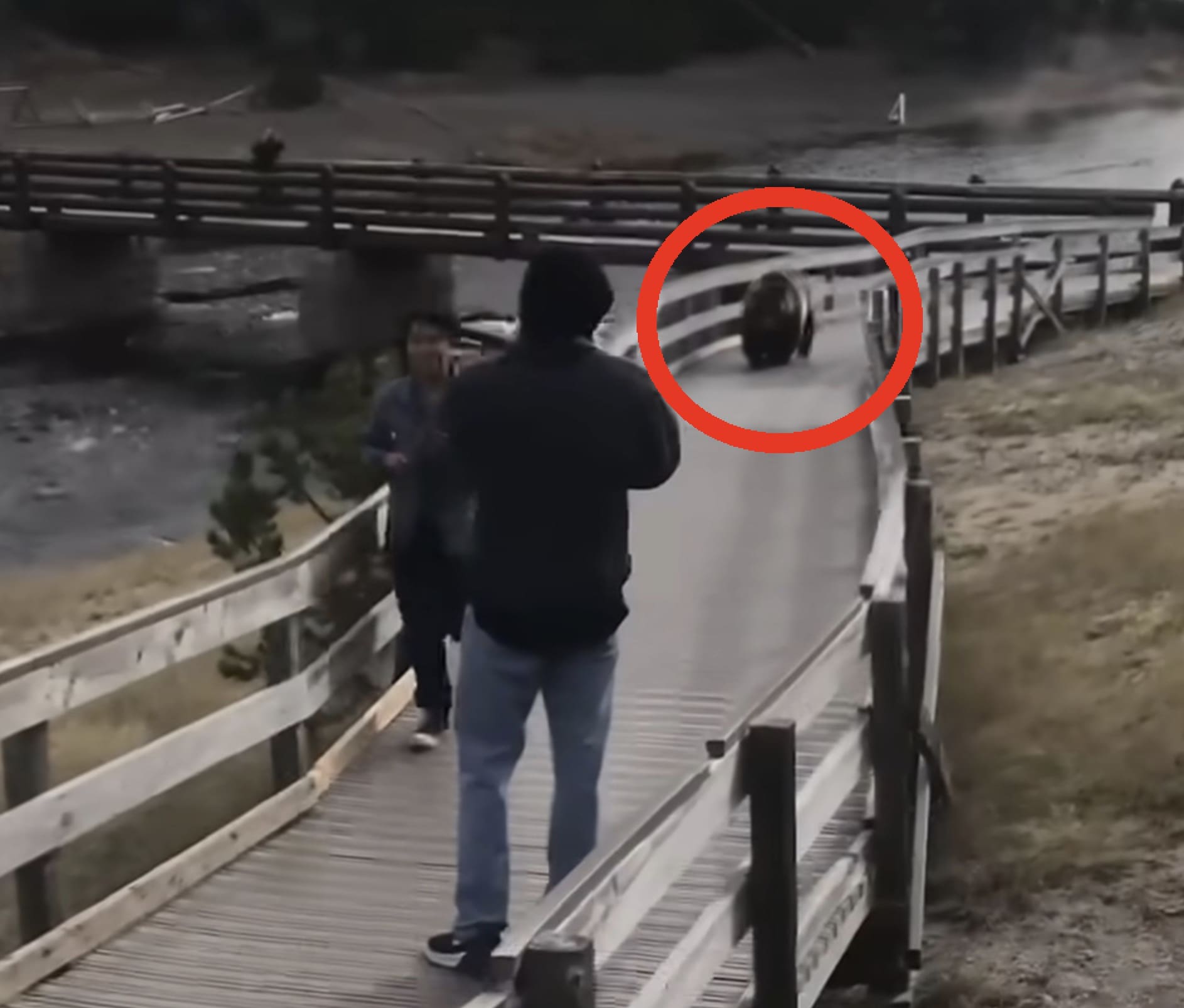
One visitor, who wished to remain anonymous, described the moment the bear appeared: "My wife, son, and I happened upon a big bear at the Grand Prismatic Spring in Yellowstone that wanted to follow us on to the boardwalk for a good ways before he leaped over the railing and sauntered off. No injuries but he was way closer than the recommended safe distance. About 15-20 feet from my wife at first." This account underscores the unnerving proximity experienced by the family.
Chronology of the Event
While a precise timeline is difficult to establish without official park reports, the sequence of events can be pieced together from the available information and video footage.
- Initial Sighting: Tourists were present on the boardwalk near the Grand Prismatic Spring, enjoying the geothermal features.
- Bear’s Approach: A grizzly bear, likely traversing the area, entered the boardwalk. Its motivations remain speculative, but it appeared to be moving in the general direction of the tourist group.
- Tourist Reaction: Visitors, recognizing the potential danger, began to move away from the approaching bear, creating space and maintaining a safe distance. The bear itself did not exhibit aggressive behavior towards the humans.
- Bear’s Departure: The grizzly bear eventually veered off the boardwalk, reportedly leaping over the railing and continuing on its way, seemingly unfazed by the human presence.
- Aftermath: Fortunately, no injuries were sustained by any of the visitors. The incident was documented, and the bear moved on without further interaction.
The bear’s behavior, as described, suggests it was not actively seeking confrontation but rather navigating its environment. Its decision to cross the boardwalk and then dismount suggests it was likely en route to another location, possibly the Firehole River, which runs nearby and can be a source of food or a route for travel.
Supporting Data and Park Context
Yellowstone National Park’s boardwalks are a testament to the park’s commitment to balancing visitor access with environmental protection. These elevated pathways are constructed to prevent damage to the fragile microbial mats and underlying soil that characterize hydrothermal areas. Stepping off boardwalks in these zones is strictly prohibited, not only to protect the delicate ecosystems but also to prevent visitors from encountering hidden hazards such as boiling mud pots and scalding hot springs.
The presence of grizzly bears in Yellowstone is a success story for wildlife conservation. Following significant population declines in the mid-20th century, intensive conservation efforts led to the delisting of grizzly bears from the Endangered Species Act in some areas, although they remain protected. The Greater Yellowstone Ecosystem is one of the largest intact temperate ecosystems on Earth, providing critical habitat for a diverse array of wildlife, including wolves, bison, elk, and of course, grizzly bears.
However, this success also brings increased human-wildlife interactions. Yellowstone National Park advises visitors to maintain a minimum distance of 100 yards (91 meters) from bears and wolves, and 25 yards (23 meters) from other large animals like bison and elk. This particular encounter, with the bear reportedly as close as 15-20 feet, significantly breached these recommended safety margins.
Official Responses and Safety Guidelines
While specific official statements on this individual incident were not immediately available, Yellowstone National Park has a long-standing and robust protocol for managing wildlife encounters. Park rangers are trained to monitor wildlife activity, educate visitors, and, when necessary, implement closures or other protective measures.
The park’s official safety guidelines, available on its website and at visitor centers, emphasize the following for bear encounters:

- Stay Alert: Be aware of your surroundings, especially in areas known for bear activity. Make noise while hiking to avoid surprising bears.
- Maintain Distance: Never approach or feed wildlife. Use binoculars or telephoto lenses to observe animals from a safe distance.
- Carry Bear Spray: For those venturing into the backcountry, bear spray is a recommended deterrent and should be carried and readily accessible.
- Report Sightings: If you encounter a bear, especially one that appears habituated to humans or is exhibiting unusual behavior, report it to a park ranger immediately.
- Follow Boardwalks: In thermal areas, always stay on designated boardwalks.
The incident near Grand Prismatic Spring serves as a powerful visual reinforcement of these guidelines. While the bear in this case appeared unaggressive, the potential for danger in such close proximity is undeniable. Grizzly bears are powerful animals with a diet that includes meat, and a defensive or predatory reaction, even if unintentional, could have severe consequences.
Broader Impact and Implications
This event, amplified by its viral dissemination, has several broader implications for Yellowstone National Park and its visitors:
- Visitor Education: The incident underscores the continuous need for effective visitor education on wildlife safety. While many visitors are responsible, the sheer volume of park attendance means that some may not be fully aware of the risks or proper protocols.
- Wildlife Management: While this encounter did not result in harm, it highlights the delicate balance park managers must strike between providing access to natural wonders and ensuring the safety of both humans and wildlife. The park’s management strategies aim to minimize human interference with natural bear behavior.
- The "Wildness" of Yellowstone: Encounters like these, while sometimes alarming, are also what define the authentic wilderness experience that draws millions to Yellowstone. They are a reminder that visitors are guests in the bears’ home, and their behavior must reflect an understanding and respect for that.
- Technological Impact: The proliferation of smartphones and cameras means that such encounters are increasingly documented and shared. This can serve as a powerful educational tool, but also raises concerns about visitors prioritizing photography over safety.
The grizzly bear’s casual departure from the boardwalk, leaping over the railing as if it were a minor inconvenience, is a testament to its natural agility and strength. It also subtly illustrates a point: while the boardwalk is a human-constructed barrier for safety and preservation, it is not an insurmountable obstacle for the park’s wild inhabitants. For the bear, it was simply another part of its territory to traverse. For the tourists, it was a moment of awe and a stark lesson in the untamed beauty and inherent risks of Yellowstone.
The National Park Service continues to emphasize that the best way to ensure safety for both visitors and wildlife is to maintain a respectful distance and allow animals to behave naturally. The approaching grizzly bear incident, though unnerving for those involved, ultimately reinforces the vital importance of these established safety protocols within America’s first national park.

