
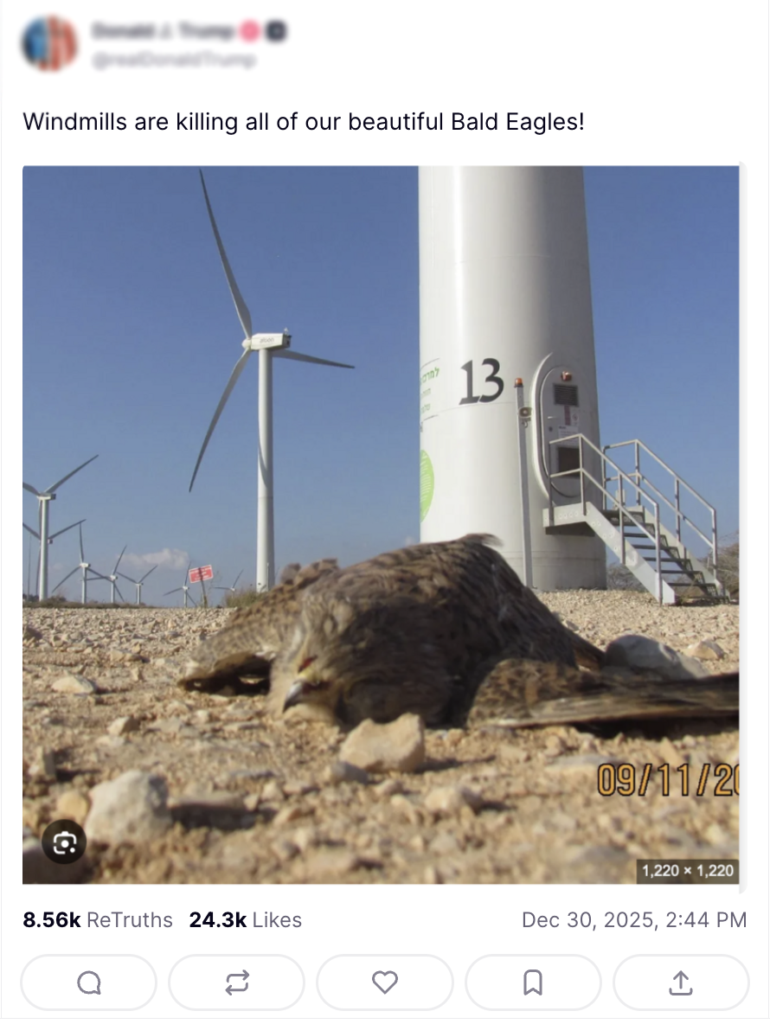
As the global energy sector undergoes its most significant transformation since the Industrial Revolution, the rapid scaling of renewable energy technologies has been met with an equally sophisticated and well-funded campaign of opposition. Across social media platforms, community forums, and news editorial pages, a recurring narrative has emerged, suggesting that offshore wind turbines devastate property values, solar farms permanently destroy arable land, and wind energy is responsible for mass avian mortality. While these claims often circulate through organic community concerns, investigative research suggests they are frequently the product of coordinated disinformation campaigns designed to protect the market share of the fossil fuel industry.
The challenge facing the public today is distinguishing between legitimate concerns regarding infrastructure development and strategic falsehoods intended to stall the transition to a low-carbon economy. This distinction is critical as policymakers and citizens weigh the long-term benefits of energy independence and climate mitigation against the immediate disruptions of new construction.
The Distinction Between Misinformation and Disinformation
To understand the current landscape of energy rhetoric, one must first distinguish between misinformation and disinformation. While both result in the spread of false or misleading claims, their origins and intentions differ significantly. Misinformation occurs when individuals share incorrect data without the intent to deceive—often motivated by genuine concern or a lack of access to updated scientific findings. An example is a local resident expressing concern about wind turbines based on a viral but debunked social media post.

In contrast, disinformation is the intentional seeding of misleading or false narratives by bad actors to achieve a specific strategic goal. In the context of the energy transition, disinformation is often deployed to dodge corporate accountability, delay legislative progress, and manufacture "astroturf" (fake grassroots) opposition to renewable projects. By introducing narrow, exaggerated claims into the public discourse, these actors shift the conversation away from systemic climate solutions toward localized infighting, effectively derailing progress through a "death by a thousand cuts" strategy.
The Historical Context of Fossil Fuel Influence
The current wave of anti-renewable rhetoric is not a new phenomenon but the latest iteration of a decades-long strategy. Internal documents from major oil and gas corporations, dating back to the 1970s and 1980s, reveal that industry scientists were well aware of the link between fossil fuel combustion and global warming. However, rather than pivoting toward cleaner alternatives, many companies chose to fund a multi-decade campaign of climate denial.
As the scientific consensus on climate change became undeniable to the general public, the strategy shifted from outright denial to "climate delay." This involves acknowledging the reality of climate change while simultaneously arguing that renewable technologies are too expensive, unreliable, or environmentally damaging to be viable. Today, major energy suppliers often publicly pledge support for "decarbonization" while privately allocating significant capital to the expansion of oil and gas production—a contradiction that climate policy experts highlight as a primary barrier to meeting international emission targets.
Lifecycle Analysis: Electric Vehicles vs. Internal Combustion
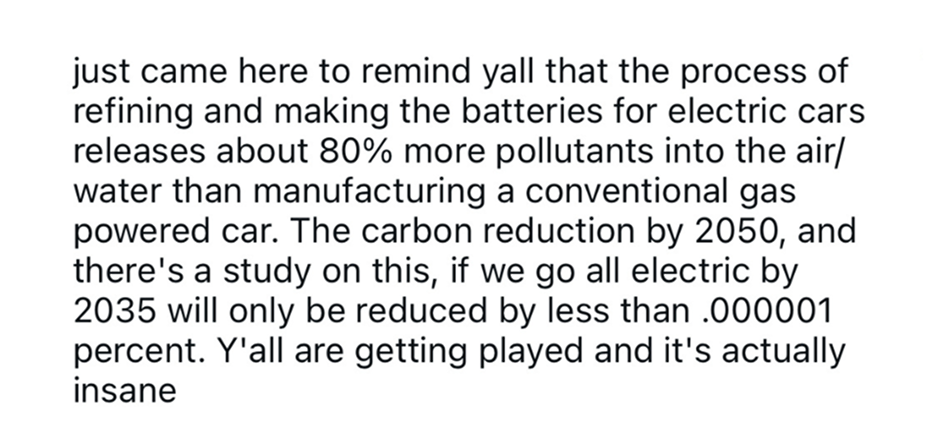
One of the most persistent narratives in the disinformation playbook concerns the environmental impact of electric vehicles (EVs). Critics frequently argue that the resource extraction required for battery production—specifically lithium, cobalt, and nickel mining—is more ecologically damaging than the production and operation of conventional gasoline-powered cars.
However, comprehensive lifecycle assessments (LCAs) from institutions such as the Massachusetts Institute of Technology (MIT) provide a more nuanced reality. While it is true that mineral mining has a significant environmental footprint, the total carbon intensity of an EV over its lifespan is drastically lower than that of an internal combustion engine (ICE) vehicle. According to MIT researchers, gasoline-powered cars emit an average of 350 grams of CO2 per mile driven. In comparison, hybrid and plug-in hybrid vehicles average approximately 260 grams per mile, while fully battery-electric vehicles generate just 200 grams per mile, even when accounting for the current carbon-heavy power grids used for charging. As the electricity grid itself becomes greener, the carbon advantage of EVs will only continue to widen.
Evaluating the Impact of Offshore Wind on Marine Ecosystems
Offshore wind energy has recently become a primary target for disinformation, with claims often linking turbine installation to whale strandings and the collapse of commercial fisheries. These narratives often rely on "red herring" arguments—logical fallacies that distract from the primary drivers of ecological decline.
While any large-scale industrial infrastructure requires careful environmental oversight, federal agencies such as the National Oceanic and Atmospheric Administration (NOAA) and the Bureau of Ocean Energy Management (BOEM) have found no scientific evidence linking offshore wind development to recent whale mortality events. Instead, researchers point to ship strikes, entanglement in fishing gear, and the warming of ocean temperatures—driven by climate change—as the actual primary threats to marine life.
Furthermore, the environmental risks of offshore wind must be weighed against the proven risks of offshore fossil fuel extraction. Oil spills, seismic airgun blasting used for exploration, and the chronic leakage of methane from offshore rigs pose continuous threats to aquatic habitats. Climate change remains the single greatest threat to ocean biodiversity; therefore, the transition to wind energy represents a net reduction in the long-term risk to marine ecosystems.
The Economic Reality of the Energy Transition
A central pillar of anti-renewable campaigns is the claim that clean energy is prohibitively expensive and will lead to soaring utility bills. However, data from the International Renewable Energy Agency (IRENA) shows that the cost of renewable energy has plummeted over the last decade. Since 2010, the cost of solar power has dropped by approximately 89%, and wind energy has seen similar declines.
In many regions of the world, building new renewable energy capacity is now cheaper than continuing to operate existing coal or gas plants. The volatility of fossil fuel prices, often influenced by geopolitical instability, contrasts sharply with the price stability of wind and solar, which have zero fuel costs once the initial infrastructure is built. Disinformation campaigns often ignore these long-term savings, focusing instead on the upfront capital costs of the transition to create a false narrative of economic hardship.
Identifying Logical Fallacies in Public Discourse
Advocates for the energy transition emphasize the importance of identifying specific rhetorical devices used to undermine clean energy. Two of the most common are the "straw man" argument and the "false analogy."
The straw man argument involves misrepresenting a position to make it easier to attack—for example, claiming that proponents of renewable energy want to "ban all cars," when the actual policy goal is to transition the fleet to electric power. The false analogy involves comparing the localized footprint of a solar farm to the global impact of fossil fuels without accounting for the massive disparity in total ecological damage.

By recognizing these patterns, the public can better navigate the "noise" of the comment sections and focus on the fundamental data: renewables require land and minerals, but they produce a fraction of the harm and offer a sustainable pathway for human development.
Strategic Responses and the Path Forward
To counter the influence of coordinated disinformation, climate scientists and advocacy groups like Protect Our Winters (POW) are calling for a multi-pronged approach rooted in scientific literacy and civic engagement.
- Source Verification: Individuals are encouraged to scrutinize the funding behind anti-renewable advertisements. Many "local" groups opposing wind or solar projects are found to be supported by national think tanks with ties to the fossil fuel industry.
- Institutional Support: Strengthening the role of organizations that provide transparent, peer-reviewed data on energy technology is essential for empowering the public to make informed decisions.
- Democratic Participation: Engaging in local municipality elections and zoning board meetings is vital. Disinformation is often most effective at the local level, where small groups of vocal opponents can stall projects that have broad regional support.
- Prioritizing Progress Over Perfection: Experts warn that "perfection is the enemy of the good." While no energy source is without impact, waiting for a "flawless" solution while the climate continues to warm is a strategy that favors the status quo.
The transition to clean energy is not merely a technical challenge but a communicative one. As disinformation tactics become more sophisticated, the ability of the public to discern fact from manufactured fear will determine the pace of global climate action. Clean energy remains the most viable, affordable, and scientifically sound method to power modern society while preserving the ecological systems upon which human life depends. The "love letter to human progress" represented by these innovations is currently being written, provided that the narrative remains rooted in evidence rather than engineered doubt.

