
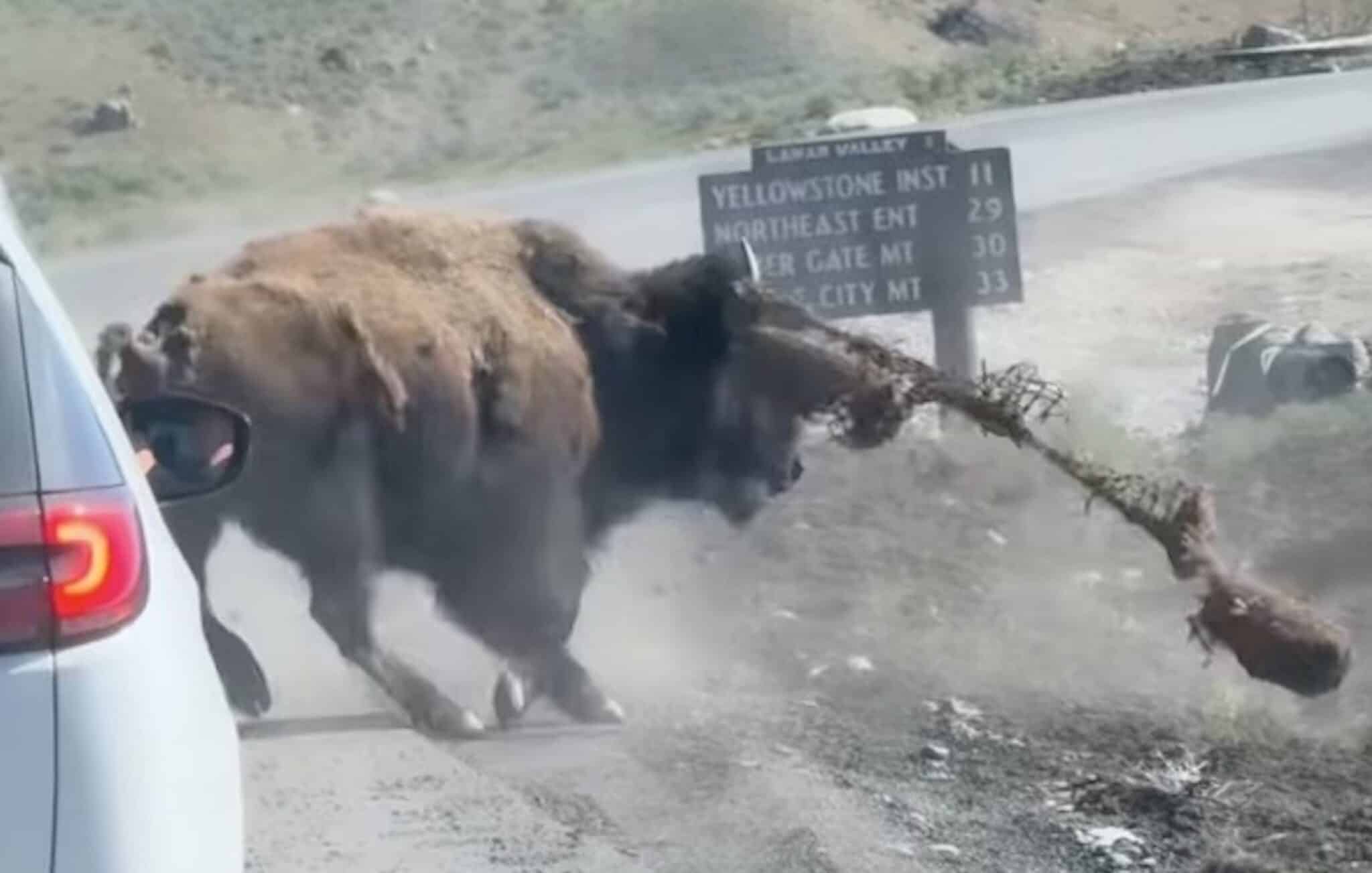
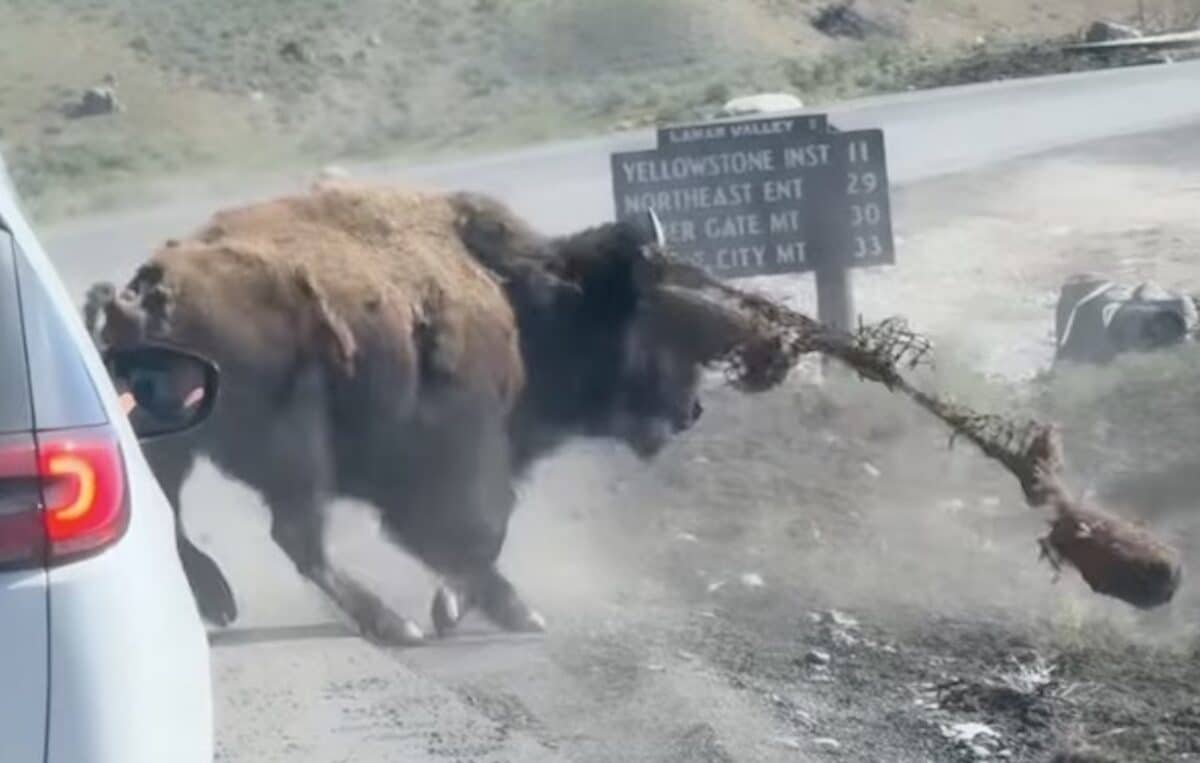
Yellowstone National Park, Wyoming – A powerful display of wildlife resilience unfolded recently in the picturesque Lamar Valley of Yellowstone National Park when a mature bull bison, observed struggling against a tenacious entanglement of netting, ultimately managed to break free. The dramatic event, captured by wildlife cinematographer Tanner Haver, underscores the persistent challenges faced by the park’s iconic megafauna and the delicate balance between human-made materials and the natural environment. While the immediate outcome was positive, the incident serves as a potent reminder of the importance of responsible wildlife viewing and the potential hazards present in protected natural areas.
The incident occurred in the Lamar Valley, an area renowned for its abundant and visible wildlife, often referred to as the "Serengeti of North America." This expansive valley, characterized by rolling grasslands and the meandering Lamar River, provides critical habitat for a vast array of species, including the park’s significant bison population. Yellowstone is home to the largest free-roaming bison herds in the world, a testament to decades of conservation efforts following near extinction in the late 19th and early 20th centuries. The current population fluctuates annually, typically ranging between 3,500 and 6,000 individuals, with the Lamar and Hayden Valleys being prime locations for observation.
The visual evidence of the bison’s struggle, shared by Unofficial Networks, depicts the immense animal with what appears to be biodegradable anti-erosion netting wrapped around its formidable horns and neck. Such netting, often made from natural fibers like jute or coir, is commonly employed in land management and restoration projects to stabilize soil and prevent erosion. While designed to degrade over time and minimize environmental impact, these materials can still pose significant risks to wildlife if they become ensnared. The U.S. Fish and Wildlife Service has been a proponent of these wildlife-friendly erosion control products, aiming to mitigate potential harm.
A Moment of Wildlife Resilience
The exact timeline of how the bison became entangled remains unconfirmed. However, the video footage showcases the animal’s desperate attempts to dislodge the foreign material. The sheer power and determination of the bison were evident as it thrashed and maneuvered, a visceral demonstration of its instinct for survival. After what appeared to be a prolonged and strenuous effort, the bison successfully tore free from the netting, disappearing into the vast expanse of the valley. This successful self-extraction is a testament to the animal’s strength and the inherent drive to overcome obstacles.
Witnesses to the event, as reported, maintained a commendable distance, observing from their vehicles. This adherence to safety protocols is paramount in Yellowstone, where interactions with large wildlife can quickly turn dangerous. Bison, despite their often placid appearance, are wild animals with unpredictable behavior and possess the capacity for rapid acceleration, capable of reaching speeds up to 35 miles per hour. Their size, approximately 2,000 pounds for adult males, makes them a formidable force, and they have historically been responsible for more human injuries in Yellowstone than any other animal.
Expert Analysis and Conservation Context
Dr. Sarah Jenkins, a wildlife biologist specializing in ungulate behavior, commented on the incident, stating, "Encounters like this highlight the pervasive impact of human infrastructure, even materials designed with environmental considerations. While biodegradable netting is a step in the right direction, it’s crucial that deployment is meticulously planned to avoid areas with high wildlife traffic or where entanglement risks are significant. The fact that this bison was able to free itself is fortunate, but many animals are not so lucky, suffering injury, starvation, or increased vulnerability to predation."
The presence of netting in a protected area like Yellowstone raises questions about its origin and purpose. While it is described as anti-erosion netting, its exact placement and the specific project it was associated with would require further investigation by park authorities. Park rangers and wildlife management teams are tasked with monitoring such situations and intervening when necessary, though direct intervention with large, potentially aggressive animals like bison is a high-risk endeavor.
Yellowstone’s Commitment to Wildlife Safety
The incident also brings to the forefront Yellowstone National Park’s ongoing efforts to educate visitors about safe wildlife viewing practices. The park’s official guidelines emphasize maintaining a safe distance from all wildlife, particularly bison. Visitors are advised to stay at least 25 yards (23 meters) away from bison and to never approach them for photographs or closer observation.

The park’s safety recommendations are clear and direct:
- Maintain Safe Distances: Always keep a minimum of 25 yards (23 meters) from bison. If a bison approaches closer, calmly retreat or turn around.
- Never Feed Wildlife: Feeding bison or any other wild animal can lead to unnatural dependence, disease transmission, and aggressive behavior.
- Be Aware of Your Surroundings: Bison can appear unexpectedly and may move across roads without warning.
- If Charged, Run: If a bison exhibits warning signs such as head bobbing, pawing the ground, or bellowing, and charges, do not stand your ground. Immediately walk or run away. If the bison pursues, deploy bear spray if available and seek cover behind sturdy objects like trees or vehicles.
- Drive with Caution: Expect bison on or near roadways, especially during dawn, dusk, and nighttime. Adhere to speed limits, drive slowly, and patiently wait for bison to clear the road. Avoid honking or aggressive maneuvers.
The "bison jam," a common occurrence where traffic halts due to bison on or near the road, underscores the dominance of these animals within their natural habitat. While it can be a frustrating experience for some visitors, it is a vital reminder of the park’s primary purpose: to preserve these ecosystems and their inhabitants.
Broader Implications for Wildlife Conservation
This specific incident, while resolved favorably for the individual animal, serves as a broader cautionary tale. As human activity increasingly encroaches upon natural landscapes, the potential for conflict and unintended harm to wildlife escalates. The use of materials, even those intended to be environmentally benign, requires rigorous assessment of their potential risks to fauna.
Park officials consistently work to balance visitor access and enjoyment with the imperative of protecting wildlife and their habitats. This involves ongoing research, public education campaigns, and the implementation of management strategies designed to minimize human impact. The successful disentanglement of the bison, captured by a skilled cinematographer, provides valuable visual data that can inform future conservation efforts and reinforce the critical importance of respecting the wild nature of Yellowstone’s magnificent inhabitants. The enduring image of the bison’s struggle and eventual freedom is a powerful symbol of nature’s resilience, but also a stark reminder of the responsibilities that accompany our presence in these irreplaceable wild spaces.

