
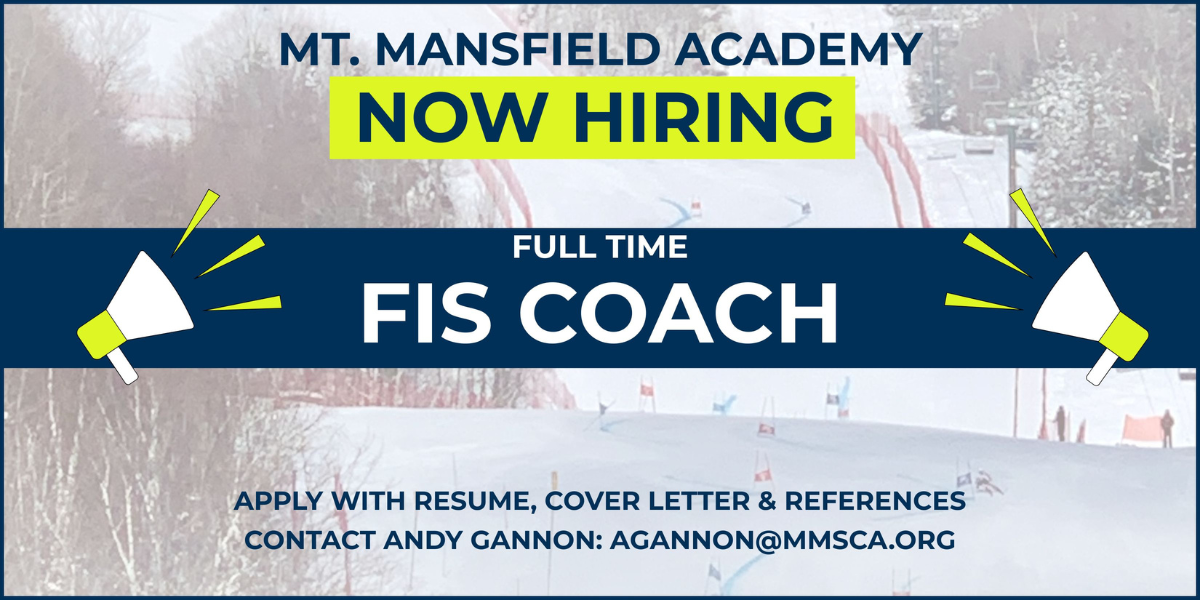
Mount Mansfield Academy (MMA), a preeminent institution in alpine ski racing development, has announced a nationwide search for highly qualified FIS Coaches to join its esteemed coaching staff. The full-time, year-round positions, based in the Eastern Region, are integral to the academy’s mission of fostering elite alpine athletes, with successful candidates reporting directly to the Athletic Director. These roles demand significant travel and offer competitive benefits, including a 401k with a 4% company match and comprehensive medical coverage, underscoring MMA’s commitment to attracting top-tier talent in the demanding world of ski coaching.
A Pillar of Alpine Excellence: The Mount Mansfield Academy Legacy
Nestled in the heart of Vermont’s renowned ski country, Mount Mansfield Academy has long stood as a beacon for aspiring ski racers. Since its inception, MMA has carved out a distinct niche in the landscape of winter sports, providing a rigorous academic curriculum alongside an intensive, high-performance alpine training program. The academy’s strategic location, often associated with the challenging terrain of Mount Mansfield and its rich ski racing heritage, offers unparalleled access to world-class training venues and conditions throughout the ski season. This unique dual-path approach ensures that athletes not only excel on the slopes but also maintain academic progress, preparing them for collegiate careers, professional racing, or other future endeavors.
MMA’s reputation is built on a legacy of developing athletes who consistently achieve success at national and international levels. Many alumni have progressed through the ranks of US Ski & Snowboard programs, gone on to compete in NCAA Division I ski racing, or even represented their nations on the World Cup circuit and at the Olympic Games. This track record of success is a testament to the academy’s holistic development model, which emphasizes technical mastery, tactical acumen, physical conditioning, and mental resilience, all underpinned by a strong sense of sportsmanship and discipline. The current search for FIS Coaches is a critical step in maintaining and further enhancing this legacy, ensuring the next generation of MMA athletes benefits from the highest caliber of professional guidance.
The Crucial Role of a FIS Coach in Elite Development
The FIS Coach position at Mount Mansfield Academy is far more than a typical coaching role; it is a comprehensive leadership and mentorship opportunity at the pinnacle of junior and post-graduate alpine ski racing. FIS (Fédération Internationale de Ski) refers to the international governing body for ski sports, and FIS-level racing is the stepping stone for athletes aspiring to professional and Olympic careers. Post-Graduate athletes, typically those who have completed high school but wish to continue intensive training before college or professional circuits, represent a highly motivated and skilled cohort.
These coaches are entrusted with leading the daily training environment and guiding the competitive development of these elite alpine athletes. The core of the role revolves around on-snow leadership, driving athlete progression, and meticulous program execution, all while aligning with the broader strategic vision set by MMA leadership. A successful FIS Coach at MMA is expected to deliver a structured, high-performance training system that intricately balances the demanding requirements of athletic excellence with academic achievement, fostering well-rounded individuals prepared for success in all facets of life.
Core Responsibilities: A Deep Dive into the Demands of Elite Coaching
The breadth of responsibilities associated with the FIS Coach role highlights the multifaceted nature of elite alpine ski coaching:
On-Snow Leadership: This is perhaps the most visible aspect of the job. Coaches are expected to be on the snow daily, providing direct, hands-on instruction. This includes expert course setting, ensuring training environments are challenging yet safe, and executing precise technical and tactical drills. They must possess an in-depth understanding of current alpine racing techniques, equipment setup, and snow conditions, adapting training plans to maximize effectiveness. This also involves demonstrating proper technique, analyzing athlete performance in real-time, and providing immediate, constructive feedback. Safety protocols on the mountain are paramount, and coaches are responsible for their strict adherence.
Athlete Development: Beyond technical instruction, coaches are vital in the holistic development of each athlete. This encompasses designing individualized training plans that address specific strengths and weaknesses, integrating video analysis into daily routines to refine technique, and fostering mental toughness and race-day strategy. They work closely with athletes on goal setting, performance review, and developing a growth mindset. Understanding the biomechanics of ski racing and applying sports science principles to training is also a key component.
Training and Competition Management: The year-round nature of the position implies a comprehensive approach to the training cycle. This includes organizing and executing pre-season dryland conditioning programs, coordinating domestic and international on-snow training camps (e.g., glacier camps in Europe or Southern Hemisphere training), and managing the demanding competitive schedule. Coaches are responsible for race day logistics, athlete preparation, course inspection strategies, and post-race analysis. The competitive calendar typically includes USSA, FIS, NorAm, Europa Cup, and potentially World Junior events, requiring extensive travel and meticulous planning.
Team Culture and Standards: A strong team culture is fundamental to success. Coaches are instrumental in fostering an environment of discipline, mutual respect, and sportsmanship. They act as role models, instilling values of perseverance, integrity, and accountability. This includes setting clear behavioral expectations, promoting a positive and supportive team dynamic, and ensuring that academic responsibilities are integrated seamlessly with athletic pursuits. Coaches help athletes manage the pressures of elite competition while maintaining a healthy balance in their lives.
Collaboration: Elite sports programs thrive on collaboration. FIS Coaches at MMA must work seamlessly with a diverse team, including the Athletic Director, other alpine coaches (across different age groups), academic staff, athletic trainers, strength and conditioning specialists, and mental performance consultants. Effective communication with parents and guardians is also critical, providing updates on athlete progress, travel plans, and overall well-being. This collaborative approach ensures a comprehensive support system for each athlete.
Program Support: Administrative duties form an essential part of the role. This includes managing training schedules, coordinating travel and accommodation for camps and races, maintaining equipment inventory, and assisting with the maintenance of training facilities. Coaches may also be involved in recruitment efforts, representing MMA at various events and identifying promising young talent. Their contributions ensure the smooth operation and continued success of the entire alpine program.
Qualifications and Expectations: The Profile of an Elite Coach
To meet the rigorous demands of these positions, Mount Mansfield Academy seeks candidates with a specific blend of experience, expertise, and personal attributes:
Coaching Experience: A minimum of 3-5 years of demonstrated coaching experience at the FIS, USSA, or collegiate level is typically required. Candidates should have a proven track record of developing high-performing alpine athletes and guiding them through the competitive pipeline. Experience with both male and female athletes across different disciplines (Slalom, Giant Slalom, Super-G, Downhill) is highly valued.
Certifications: Active US Ski & Snowboard coaching certifications, ideally at Level 200 or higher, are essential. Additional certifications in first aid, CPR, and potentially PSIA/AASI (Professional Ski Instructors of America/American Association of Snowboard Instructors) for advanced technique instruction may also be beneficial.
Technical Expertise: A deep and current understanding of alpine ski racing technique, tactics, and equipment technology is non-negotiable. Coaches must be adept at video analysis software and able to translate complex technical concepts into actionable feedback for athletes.
Leadership and Communication Skills: Exceptional leadership abilities, including strong communication, motivational, and problem-solving skills, are paramount. Coaches must be effective mentors, able to inspire confidence and foster resilience in young athletes. The ability to communicate clearly and professionally with athletes, parents, staff, and officials is critical.
Organizational Acumen: Given the extensive travel and logistical coordination involved, strong organizational and time-management skills are a must. Coaches will be responsible for managing complex schedules, budgets, and travel arrangements efficiently.
Educational Background: While not explicitly stated as mandatory, a Bachelor’s degree in a related field (e.g., Sports Science, Kinesiology, Education) is generally preferred and can provide a strong foundation for understanding athletic development.
Physical Fitness and Driving: The role demands a high level of physical fitness to maintain presence on the snow for extended periods and demonstrate drills. A valid driver’s license with a clean driving record is required, and a Commercial Driver’s License (CDL) may be necessary for transporting athletes in larger vehicles.
Expectations: Beyond qualifications, MMA expects its coaches to embody professionalism, unwavering commitment, adaptability to changing conditions, and impeccable communication skills. They are expected to be positive role models, demonstrating passion for the sport, a strong work ethic, and an unyielding dedication to the success and well-being of every athlete.
The Broader Landscape: Alpine Ski Racing in Focus
The search for elite FIS coaches by Mount Mansfield Academy occurs within a dynamic and highly competitive global alpine ski racing landscape. Data from organizations like US Ski & Snowboard indicates a robust pipeline of young talent entering the sport, with thousands of athletes competing at various levels across the United States. The journey from junior recreational racing to the FIS circuit and beyond is arduous, demanding years of dedicated training, significant financial investment, and unwavering commitment from athletes and their families.
Academies like MMA play a pivotal role in this ecosystem, providing structured environments where athletes can maximize their potential. They offer the necessary infrastructure – specialized training facilities, dedicated coaching staff, and competitive schedules – that are often beyond the reach of traditional public school programs. The international nature of FIS racing, with events held across continents, underscores the travel requirements and the need for coaches who are adept at managing athletes in diverse environments. The implications of hiring top-tier coaching talent are significant, directly influencing an academy’s ability to attract promising athletes, maintain its competitive edge, and ultimately contribute to the national and international success of alpine skiing.
Inferred Statements and Perspectives
While no direct statements from MMA leadership are provided in the job description, the very nature of this extensive search speaks volumes. It can be logically inferred that Andrew Gannon, likely the Athletic Director or a key hiring manager, would emphasize the critical importance of these coaching positions: "Our coaches are the bedrock of our program. They don’t just teach skiing; they shape character, instill resilience, and guide young individuals through some of the most formative years of their lives. We are looking for individuals who not only possess exceptional technical knowledge but also embody the values of Mount Mansfield Academy and are committed to holistic athlete development."
Furthermore, a hypothetical Head of School might add: "MMA is committed to maintaining its position as a premier institution where athletic and academic excellence go hand-in-hand. The investment in top-tier coaching talent is an investment in the future success of our athletes and the continued strength of our academy’s reputation on the global stage."
From the perspective of current or former MMA athletes, the impact of dedicated coaching is often highlighted. A hypothetical former athlete might remark: "My coaches at MMA were more than just instructors; they were mentors who pushed me beyond what I thought was possible. Their guidance, both on and off the snow, was instrumental in my development as a racer and as a person." Similarly, parents of current athletes would likely express: "We entrust our children to MMA because we believe in the program and, most importantly, in the coaching staff. Knowing that experienced, passionate coaches are leading them every day gives us immense confidence in their growth and safety."
Application Process and Future Implications
Prospective candidates are directed to submit a comprehensive application package consisting of a resume, a compelling cover letter outlining their coaching philosophy and relevant experience, and professional references. All materials should be sent directly to Andrew Gannon at [email protected]. The application process is likely to be highly competitive, given the prestige of Mount Mansfield Academy and the specialized nature of the role.
The successful appointment of these FIS Coaches will have profound implications for Mount Mansfield Academy. Strong coaching talent is a direct determinant of athlete performance, program reputation, and the academy’s ability to continue attracting the brightest young talent in alpine ski racing. These new hires will not only contribute to the immediate success of the FIS and Post-Graduate programs but will also play a crucial role in shaping the long-term trajectory of MMA, ensuring its legacy of developing world-class athletes and well-rounded individuals endures for years to come. The continuous evolution of coaching methodologies, incorporating advancements in sports science and technology, means that these new coaches will be at the forefront of innovation in alpine ski racing development, further solidifying MMA’s standing as a leader in the sport.

