
As winter sports enthusiasts prepare to hit the slopes for the upcoming season, orthopedic specialists and sports medicine professionals are shifting their focus toward a frequently overlooked muscle group that plays a pivotal role in joint stability: the gluteus medius. While conventional ski-conditioning programs heavily emphasize large lower-body muscle groups such as the quadriceps, hamstrings, and the gluteus maximus, medical experts warn that neglecting smaller stabilizing muscles significantly elevates the risk of severe knee injuries, particularly anterior cruciate ligament (ACL) tears.
Among those advocating for a more comprehensive approach to dryland training is Dr. Gregory Lichtman, an orthopedic surgeon based in northern California who serves as a physician for the U.S. Women’s Ski Team. According to clinical observations and sports medicine data, structural knee injuries remain among the most prevalent and debilitating hazards in alpine skiing. By targeting the gluteus medius—a key muscle located on the outer hip—athletes can substantially improve lateral knee stability, enhance carving performance, and mitigate the physical toll of high-speed descents.
Anatomical Function and Biomechanical Significance in Alpine Skiing
To understand why the gluteus medius is critical for skiers, one must examine its primary biomechanical functions. The muscle is principally responsible for hip abduction, the motion that draws the leg away from the midline of the body. Beyond this movement, it acts as a dynamic stabilizer for the knee joint, preventing a condition known as dynamic valgus, wherein the knee collapses inward during weight-bearing activities. Furthermore, the gluteus medius is essential for single-leg balance, a fundamental requirement when an athlete weights their downhill ski during a turn.
During alpine skiing, biomechanical failures often occur when a skier shifts their center of gravity backward—a common positional error known colloquially as being "in the back seat." When a skier loses forward-leaning equilibrium and permits their knees to collapse inward into valgus alignment, the tibia can undergo internal rotation. Medical literature consistently identifies this specific kinetic chain reaction as a primary mechanism for non-contact and semi-contact ACL tears. Even when catastrophic ligamentous failure is avoided, chronic valgus stress contributes significantly to patellofemoral pain syndrome, a painful inflammatory condition affecting the anterior aspect of the kneecap.
Conversely, developing a robust gluteus medius increases the structural resistance of the knee joint against valgus collapse. Beyond injury mitigation, clinical and athletic performance analyses indicate that a strong outer hip complex allows skiers to engage their downhill ski more aggressively. When navigating high-velocity turns, gravitational and centrifugal forces exert intense lateral pressure on the body. A well-conditioned gluteus medius, working in tandem with the quadriceps and core musculature, establishes a powerful lateral pillar that helps the athlete absorb and resist these formidable G-forces without sacrificing edge control.
The Training Deficit: Why High-Level Athletes Fall Short
A prevailing misconception in athletic conditioning is that general lower-body strength work is universally sufficient for injury prevention. Dr. Lichtman notes that even elite, high-level athletes frequently present with localized weakness in the gluteus medius. Unlike the quadriceps, hamstrings, calves, and gluteus maximus—which receive considerable passive activation through routine activities such as running, cycling, and hill climbing—the gluteus medius requires targeted, intentional stimulation.
Standard daily movements rarely demand significant lateral stabilization under heavy loads. Consequently, without dedicated cross-training interventions, the gluteus medius often remains underdeveloped relative to the larger agonist muscles of the lower extremities. This muscular imbalance creates a vulnerability that becomes readily apparent under the unique physical demands of alpine skiing, where lateral stability is paramount.
Chronology and Seasonal Training Timeline
Sports medicine protocols dictate that injury prevention cannot be achieved through sporadic preparation immediately preceding the first snowfall. Medical professionals recommend a structured, year-round conditioning timeline divided into distinct phases:
- Off-Season Base Building (Spring to Summer): Athletes establish general cardiovascular endurance and address fundamental strength asymmetries identified during postseason physical evaluations.
- Pre-Season Conditioning (Late Summer to Autumn): Training intensifies with a specific focus on functional stability, core integration, and targeted activation of smaller stabilizing muscles, including the gluteus medius. This phase typically spans eight to twelve weeks prior to the opening of the ski season.
- In-Season Maintenance (Winter): Cross-training routines are adjusted to maintain strength levels without overtraining or fatiguing the central nervous system. Experts recommend continuing supplemental hip and core exercises two to three times per week, particularly for individuals who ski only on weekends.
A common pitfall identified by sports physicians is the abrupt cessation of dryland training once the ski season commences. Weekend warriors—individuals who ski two to three days a week—are particularly susceptible to deconditioning and fatigue-related injuries if they rely solely on time spent on the mountain to maintain their physical preparedness.
Targeted Conditioning: Moving Beyond Isolation Exercises
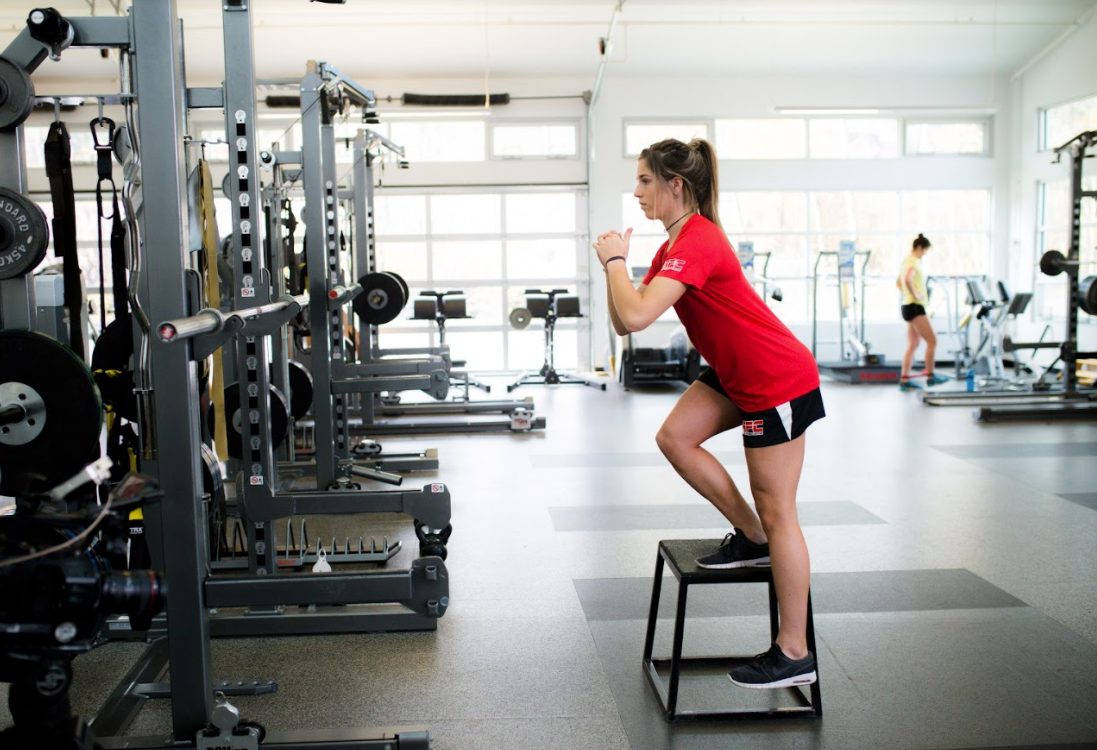
Historically, physical therapists prescribed basic isolation movements to strengthen the outer hip, such as side-lying leg raises performed with ankle weights. While these exercises successfully engage the gluteus medius in a controlled clinical setting, sports scientists argue that they fail to replicate the complex, multi-planar movement patterns required in dynamic athletic environments.
Modern athletic conditioning favors integrated movements that engage the gluteus medius simultaneously with other major muscle groups, thereby mirroring the neuromuscular coordination demanded on the ski slopes. A favored exercise among top-tier trainers is the "monster walk," a banded lateral movement that activates the outer hip while simultaneously recruiting the core, hamstrings, quadriceps, and gluteus maximus.
Execution and Programming of Monster Walks
To perform a monster walk effectively, athletes place a resistance band around their legs—either around the ankles or just above the knees—and assume an athletic quarter-squat position. Maintaining constant tension on the band, the practitioner steps laterally, forward, or diagonally while keeping the knees properly aligned over the feet to prevent inward collapse.
Experts recommend incorporating monster walks into a conditioning regimen three times weekly, ensuring at least one day of rest between sessions to allow for muscle repair and adaptation. To prevent training plateaus and stimulate different fibers within the hip complex, routines can be varied by stepping forward, backward, or diagonally. As conditioning improves and the exercise becomes manageable, athletes should progressively increase resistance by utilizing heavier bands.
The Broader Injury Prevention Paradigm
While a fortified gluteus medius is an indispensable asset for alpine safety, medical authorities emphasize that it represents only one component of a comprehensive injury-prevention framework. True protection requires a multifaceted physiological approach encompassing core strength, quadriceps endurance, and overall cardiovascular fitness.
As previously noted, many severe knee injuries originate when a skier is forced into the back-seat position due to fatigue or terrain miscalculation. While a strong gluteus medius defends against the resulting valgus collapse, it does not prevent the initial backward displacement of body weight. Maintaining an upright, centered posture under duress requires a synergistic triad of core stability, quadriceps power, and systemic endurance.
Fatigue Management as a Critical Safety Factor
Clinical data consistently demonstrates a strong correlation between physical exhaustion and the incidence of traumatic ski injuries. As the operational day progresses, muscular fatigue degrades neuromuscular control, proprioception, and reaction time. Consequently, skiers who are physically exhausted by the afternoon are significantly more likely to adopt poor biomechanical postures, drift into the back seat, and sustain severe ligamentous injuries compared to their well-rested counterparts.
To combat this risk, sports physicians advise athletes to design their dryland preparation programs with a balanced focus on both strength and endurance. The ultimate objective of pre-season conditioning is to ensure that an athlete maintains the same physical freshness and structural integrity during the final run of the afternoon as they possessed during the first run of the morning.
Implications for the Broader Winter Sports Community
The growing emphasis on targeted stabilization of the gluteus medius reflects a broader evolution in sports medicine toward proactive, evidence-based injury prevention. As winter tourism continues to grow and recreational skiing attracts participants of varying fitness levels, educational initiatives focusing on biomechanical safety are becoming increasingly vital.
Sports governing bodies, resort medical clinics, and physical therapy practices are placing greater emphasis on pre-season conditioning education. By bridging the gap between traditional weightlifting and functional movement science, the athletic community aims to reduce the annual societal and personal burden of severe alpine injuries, ensuring that participants can enjoy winter sports safely and sustainably.

