
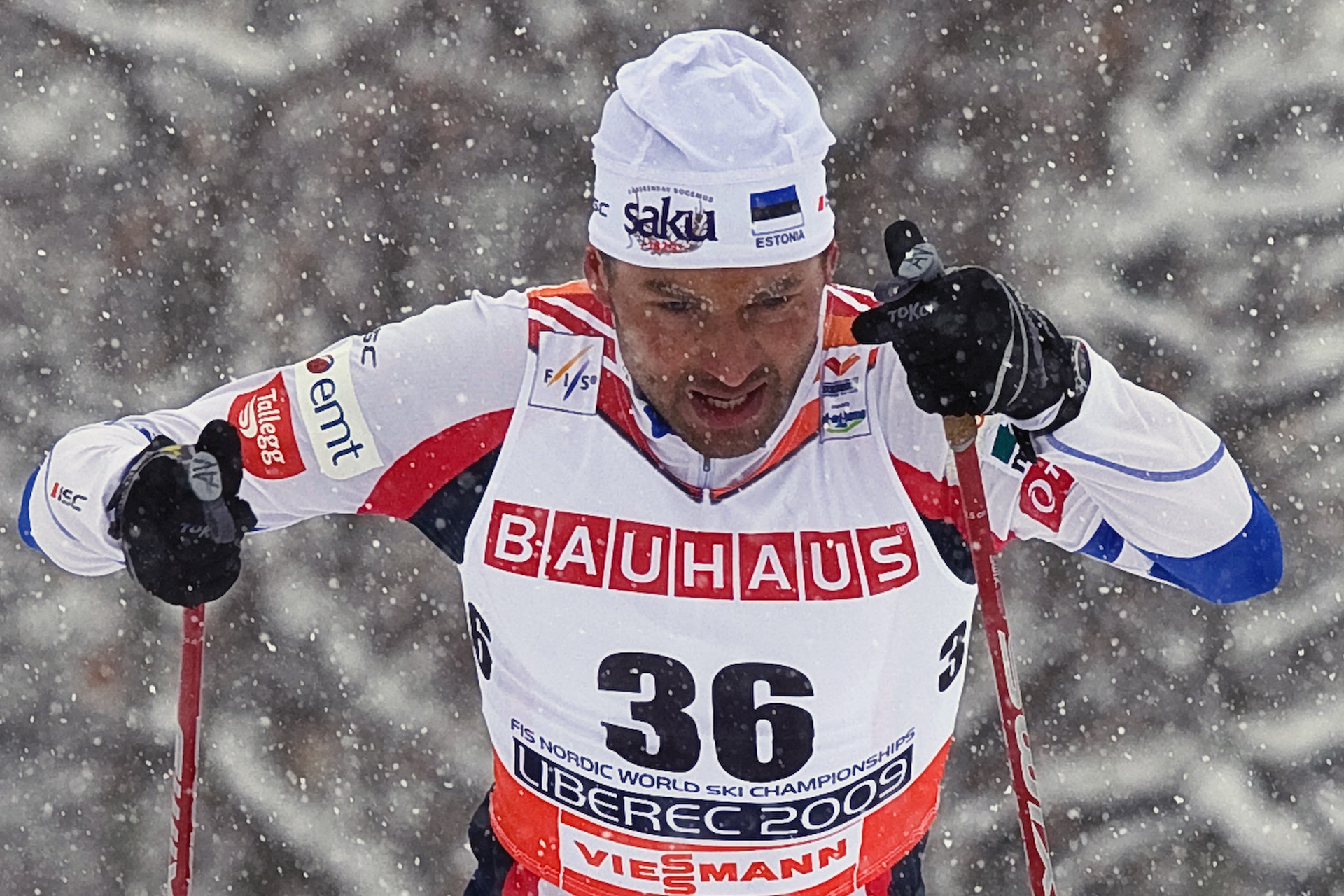
Freshly uncovered documents have cast a dark shadow over one of cross-country skiing’s most surprising victories, suggesting that Andrus Veerpalu’s 2009 World Championship gold medal may have been achieved through illegal means. Veerpalu, then 38 years old, delivered a stunning performance on the 15-kilometer freestyle course at the World Championships in Liberec, an achievement that has now come under intense scrutiny. Estonian media outlets are reporting that new evidence indicates the former skiing legend is suspected of blood doping in the lead-up to this remarkable win.
The core of these renewed suspicions lies in newly surfaced documents detailing the alleged involvement of Austrian middle-distance runner Stefan Matschiner. According to these records, Matschiner is reported to have assisted Veerpalu with blood doping shortly before the 2009 championships. Crucially, these documents reportedly contain admissions from Matschiner himself to Austrian authorities regarding his role. This development reopens a painful chapter for a sport that has been plagued by doping scandals, forcing a re-evaluation of past triumphs and the integrity of the competition.
A Shadow Over a Historic Victory
Andrus Veerpalu’s gold medal in Liberec in 2009 was a moment of immense national pride for Estonia. His age at the time, coupled with his long and distinguished career, made the victory particularly poignant. However, the revelations surrounding Matschiner’s alleged involvement cast a pall over this celebrated achievement, raising questions about the fairness of the competition and the efficacy of anti-doping measures in place at the time. The nature of blood doping, which involves the transfusion of red blood cells to increase oxygen-carrying capacity, is particularly insidious as it can be difficult to detect without sophisticated testing protocols and whistleblowers.
Stefan Matschiner, the alleged facilitator of Veerpalu’s doping, has a significant history within the doping underworld of endurance sports. He is recognized as a predecessor to Dr. Mark Schmidt, the Austrian physician who became a central figure in the extensive "Operation Aderlass" blood doping scandal. This scandal erupted in the aftermath of the 2019 World Championships held in Seefeld, Austria, a major international event that was severely tarnished by widespread revelations of doping.
Operation Aderlass and Its Lingering Repercussions
Operation Aderlass, meaning "bloodletting" in German, was a meticulously planned police investigation that led to a series of raids and arrests across multiple countries. The investigation primarily targeted athletes and support staff involved in blood doping. The dramatic raids saw numerous cross-country skiers apprehended, including prominent figures like Austrian star Max Hauke, who was famously caught with a needle in his arm during one of the operations. The scandal sent shockwaves through the international sports community, highlighting the systemic nature of doping in certain circles.
The ripple effects of Operation Aderlass extended to Veerpalu’s own family and coaching circle. His son, Andreas Veerpalu, was also implicated and arrested during the same raids. Andrus Veerpalu himself was later convicted of complicity in doping offenses, ultimately leading to his current ban from international competition. This personal connection to the broader doping scandal adds another layer of complexity and gravity to the new allegations concerning his 2009 victory.
The Chain of Evidence and Veerpalu’s Defense
The current investigation into Veerpalu’s 2009 medal hinges on the testimony and documentation provided by Stefan Matschiner. While Matschiner was not directly involved in the operational aspects of Operation Aderlass as it unfolded in 2019, his past activities and knowledge of doping networks made him a person of interest. The emergence of documents detailing his admissions to Austrian authorities occurred during the appeals process following the initial verdicts in the Operation Aderlass cases, specifically in 2021.
These documents provided Veerpalu with an opportunity to respond to the accusations. Veerpalu has consistently denied any knowledge of or involvement with Stefan Matschiner, a figure he claims he did not know. He has asserted that the allegations are unfounded, arguing that without his knowledge of Matschiner, the claims of assistance and doping cannot be accurate. The legal proceedings related to the initial Operation Aderlass verdicts were finally concluded in 2024, but the re-examination of Veerpalu’s past now takes center stage.
It is important to note that Veerpalu does not have a prior history of blood doping convictions. His previous encounter with anti-doping regulations occurred in 2011, shortly before his retirement, when he tested positive for growth hormones. However, he appealed this decision, and in 2013, the Court of Arbitration for Sport (CAS) overturned the ban. This earlier incident, while not a blood doping violation, adds to the complex narrative surrounding his career and the scrutiny he has faced.
Veerpalu’s Storied Career Under a Microscope
Andrus Veerpalu remains Estonia’s most decorated cross-country skier, a national hero whose achievements have inspired generations. His medal haul is impressive: two Olympic gold medals (2002 and 2006), one Olympic silver (2002), two World Championship gold medals (2001 and 2009), and one World Championship silver (1999). The 2001 World Championship gold came in the 30-kilometer race in Lahti, Finland.
The 2009 Liberec 15-kilometer race saw Czech skier Lukas Bauer take the silver medal, with Finland’s Matti Heikkinen securing the bronze. The best performance by a Norwegian athlete in that race was Eldar Rønning, who finished in seventh place, highlighting the international field and the significance of Veerpalu’s unexpected victory.
A Controversial Return to International Sport
In a remarkable and controversial turn of events, Andrus Veerpalu has recently reappeared in the international sports arena, despite his ongoing ban from the International Ski and Snowboard Federation (FIS). This time, his involvement is in the sport of biathlon. The 54-year-old has been employed as part of the coaching staff for the Ukrainian national biathlon team, a move confirmed by the Ukrainian team itself. This reappearance, while coaching, has raised eyebrows given his suspended status in traditional skiing disciplines and the unresolved doping allegations. It underscores the complex pathways athletes and coaches can navigate even when facing sanctions.
The Broader Implications for Sport
The renewed allegations against Andrus Veerpalu have significant implications for the credibility of the sport and the legacy of past competitions. If confirmed, these findings would mean that a celebrated World Championship victory, one that brought immense joy to a nation, was achieved through illicit means. This not only tarnishes Veerpalu’s personal record but also raises questions about the fairness of the competition for athletes like Lukas Bauer and Matti Heikkinen, who finished behind him on the podium.
The persistence of doping scandals, even years after the events, highlights the ongoing challenges in maintaining a clean sport. The sophistication of doping methods, coupled with the potential for individuals to operate in the shadows, necessitates continuous innovation in testing, intelligence gathering, and enforcement. The testimony of individuals like Stefan Matschiner, while potentially crucial, also underscores the reliance on human sources and the complexities of legal processes to bring such cases to light.
The involvement of figures like Dr. Mark Schmidt and Stefan Matschiner points to a network that facilitated doping across different sports and national borders. The "Operasjon Aderlass" investigation demonstrated the interconnectedness of these networks and the need for international cooperation in combating doping.
Future of Anti-Doping Efforts
The ongoing scrutiny of Veerpalu’s 2009 victory serves as a stark reminder that the fight against doping is a continuous battle. The re-examination of historical results based on new evidence is a difficult but necessary process for ensuring accountability and maintaining the integrity of sport. For athletes, coaches, and governing bodies, it reinforces the importance of transparency, robust testing protocols, and a commitment to ethical conduct.
The reappearance of Veerpalu in a coaching capacity, despite his ban, also prompts discussions about the scope and enforcement of sanctions. While his current role is in a different discipline, the principle of ensuring that individuals sanctioned for doping do not return to positions of influence within sport remains a critical concern for many. The International Olympic Committee (IOC) and various sports federations continue to grapple with these complex issues, striving to balance rehabilitation with the need to protect the clean athlete and the spirit of fair play.
The full impact of these new documents and the potential consequences for Andrus Veerpalu’s legacy and the historical record of the 2009 World Championships will likely unfold in the coming months. The sports world will be watching closely as these allegations are investigated further, with the hope that justice and truth will prevail, ultimately strengthening the foundation of fair competition for all athletes.

