
More than a decade after shaking up the ski industry with a revolutionary design that permanently altered how recreationalists approach the mountain, iconic French manufacturer Rossignol is officially bringing back the soul of its legendary ski lineup. The newly unveiled Soul 102 and Soul 92 models seek to recapture the cultural phenomenon and universal acclaim of their predecessor, the Soul 7, while introducing modern engineering, advanced construction techniques, and updated geometry tailored to contemporary skiing demands.
The original Soul 7, which debuted over ten years ago, occupied a unique space in winter sports history. Affectionately and unofficially dubbed the "cheater ski" by both industry insiders and everyday resort guests, it earned a reputation for its remarkable accessibility. By bridging the performance gap between intermediate capabilities and expert demands, the ski allowed a wide range of ability levels to navigate varied terrain with unprecedented confidence. Its massive popularity created a secondary cultural footprint: resort rack theft rates for the Soul 7 were notoriously high, driven largely by persistent year-after-year sellouts.
With the introduction of the Soul 102—named the 2027 SKI Test pick for Best Value All-Mountain Ski—and the Soul 92—recognized as the 2027 SKI Test pick for Most Versatile Wide All-Mountain Ski—Rossignol aims to resurrect that distinct on-snow spirit while refining performance metrics for a new era of skiers.
The Evolution of an Industry Icon: A Historical Timeline
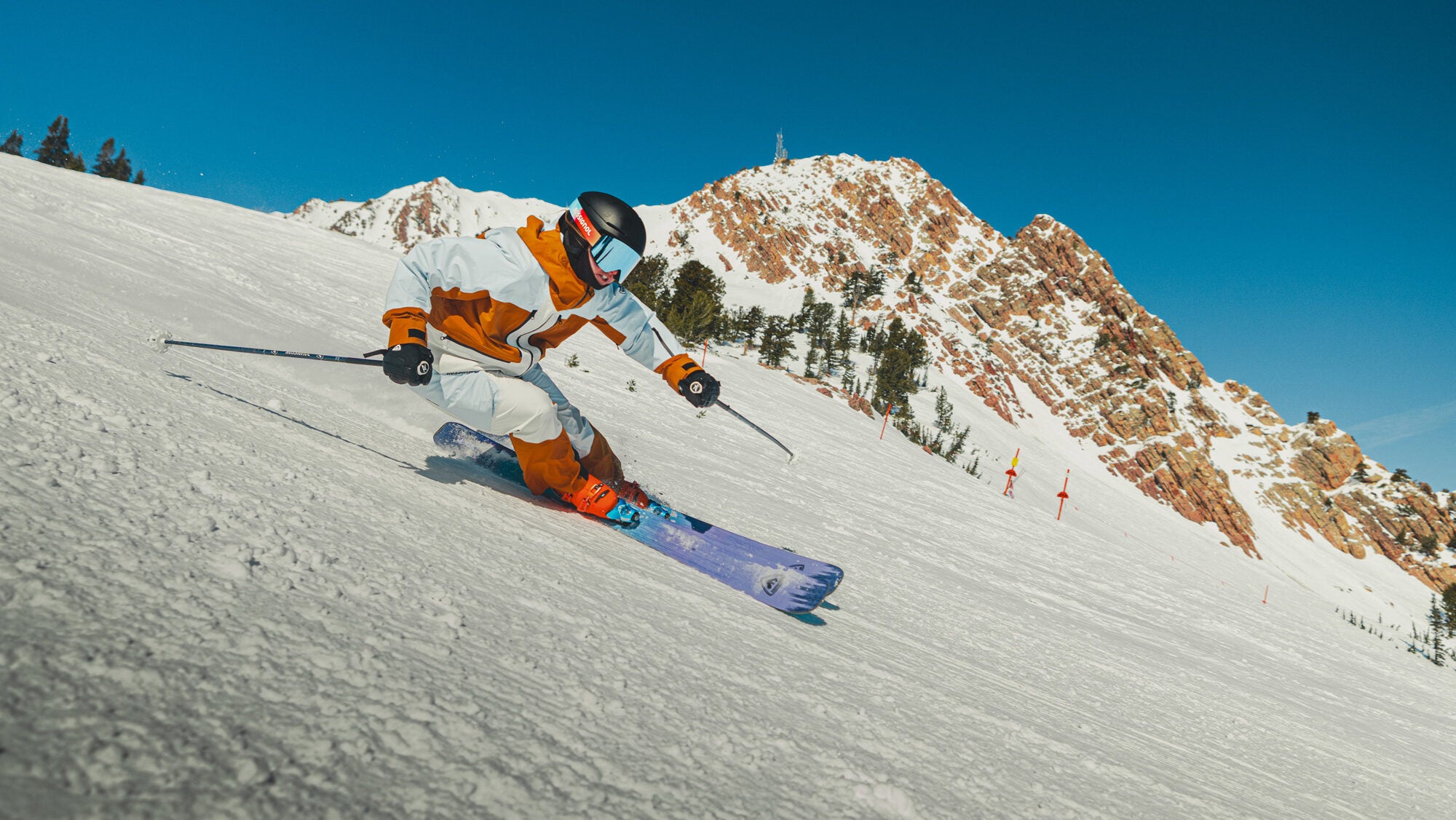
To understand the significance of the 2027 Soul lineup, industry analysts look back at the trajectory of all-mountain ski design over the past fifteen years.
In the early 2010s, the ski market was sharply divided. True powder skis were wide, cumbersome, and difficult to maneuver on hardpack, while carving skis offered narrow platforms that struggled significantly in deep snow or choppy afternoon crud. The introduction of the original Soul 7 disrupted this dichotomy by popularizing a rockered tip and tail combined with a lightweight honeycomb construction. It proved that a wide-waisted ski could be nimble in tight trees, float in powder, and still hold an edge on groomers.
However, as skiing styles evolved and speed demands increased, some expert skiers noted that the original design could feel slightly hooky or soft underfoot in high-speed, hard-snow conditions. Recognizing this feedback, Rossignol spent several years engineering a successor that would maintain the approachable playfulness of the original line while incorporating the stability required by modern, aggressive skiers. The result is a two-tier release strategy spanning the 2027 season, carefully engineered to target distinct segments of the all-mountain market.
Engineering Modern Versatility: Design and Technological Features
The engineering philosophy behind the new Soul series centers on a difficult compromise: providing enough mechanical forgiveness to encourage intermediate skiers to explore off-piste terrain, while maintaining enough structural power and edge hold to satisfy advanced and expert skiers who demand high-speed stability.

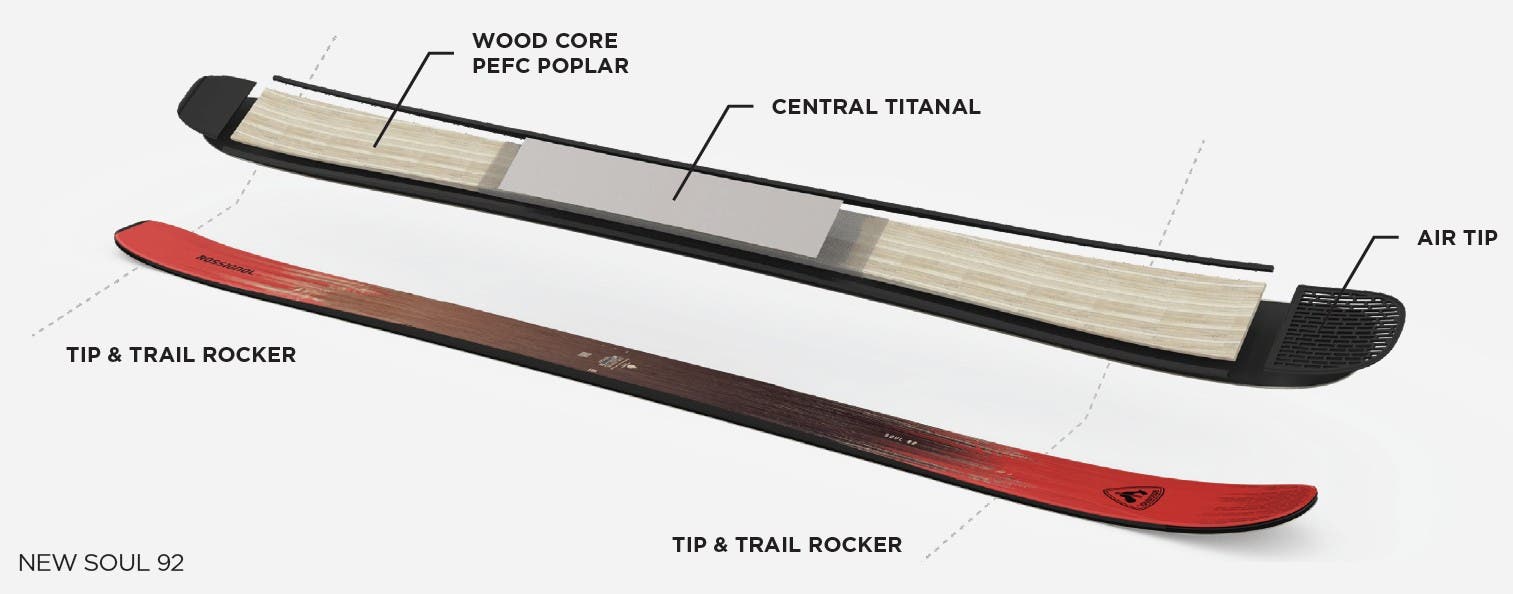
To achieve this balance, Rossignol’s R&D team integrated several proprietary technologies into the Soul 102 and Soul 92. Chief among them is the company’s Vibration Absorption System (VAS). This system utilizes a specialized rubber damping pad positioned beneath the binding area to absorb high-frequency chatter and smooth out variable snow conditions. Additionally, a layer of titanal metal is placed underfoot to increase torsional rigidity, enhance hardpack grip, and deliver reliable power transmission at high speeds.
Up front, the skis feature Rossignol’s signature honeycomb Air Tip technology. By hollowing out the tip and replacing heavy core material with a lightweight matrix, engineers successfully reduced the ski’s swing weight. This reduction makes initiating turns significantly easier and more instantaneous, reducing leg fatigue over a full day of skiing.
Furthermore, the Soul collection departs from traditional single-radius sidecuts by implementing a progressive sidecut geometry. Traditional skis utilize a single continuous circle radius along the entire edge, which dictates a fixed turn shape. The progressive sidecut blends multiple radii together along the length of the edge. According to brand representatives, this mathematical approach yields tangible on-snow benefits: skiers can effortlessly pivot, smear, and surf through soft powder, yet instantly transition to carving clean, predictable arcs on packed snow when returning to the resort trail network.
Targeting Different Snowpacks: The Soul 92 and Soul 102 Breakdown
Rather than relying on a single width to serve the entire all-mountain category, Rossignol has segmented the new Soul family into two distinct platforms, each optimized for different regional snow conditions and skier preferences.
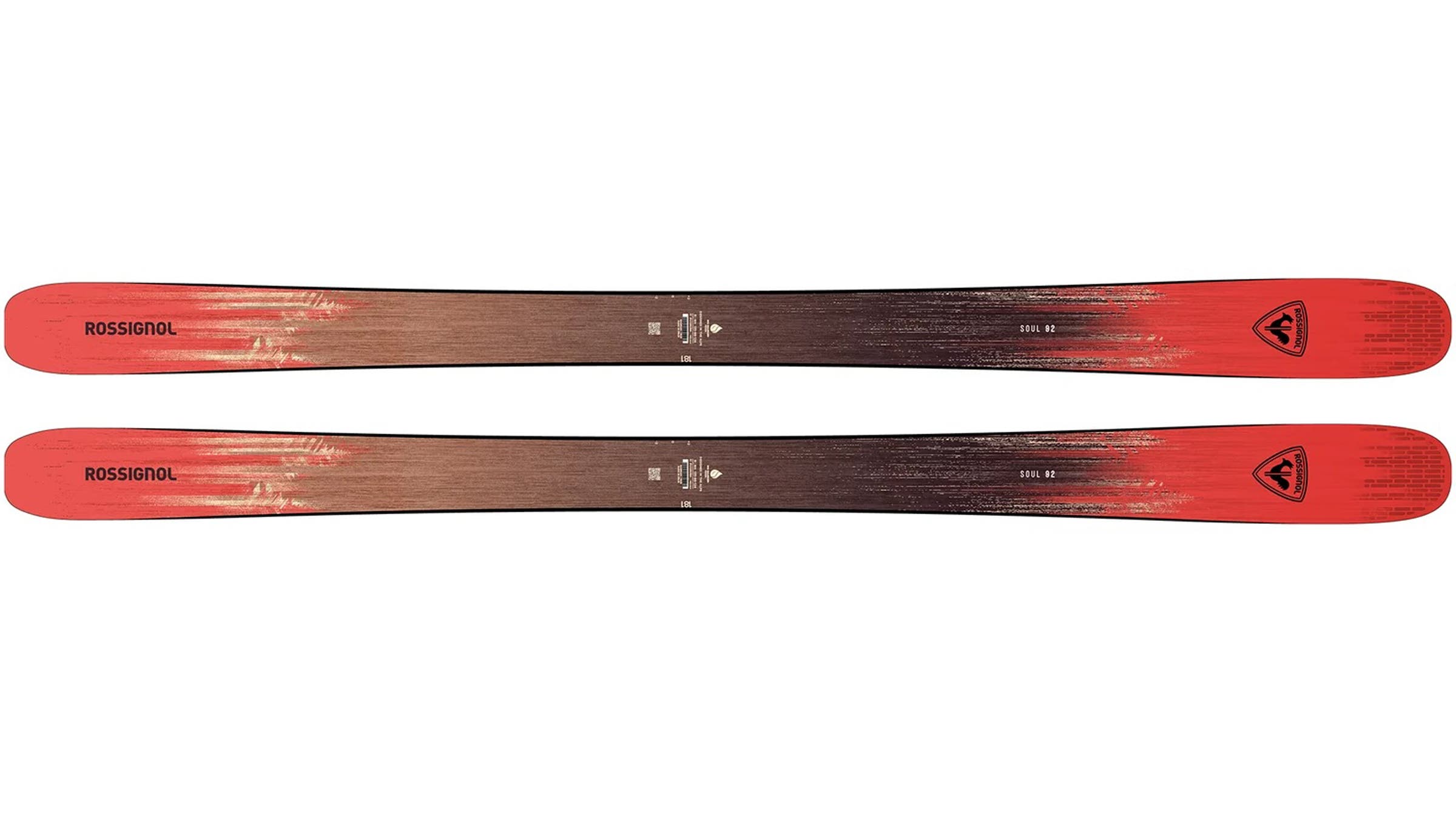
The Soul 92 is built with a 92-millimeter waist, positioning it squarely as a versatile, everyday one-ski quiver for regions where deep powder is an occasional treat rather than a daily occurrence. Designed for intermediate to expert skiers who spend their time cruising groomers, navigating tight tree runs, attacking mogul fields, and occasionally exploring fresh snow, the 92 emphasizes agile edge-to-edge responsiveness.
"We really wanted to create a carving ski with a wider platform and a freeride spirit," explains Jake Stevens, Rossignol’s North American sales and product director. By focusing on a narrower waist than its predecessor, the brand optimized the 92 for rapid edge transitions without sacrificing the playful attributes that made the original architecture famous.
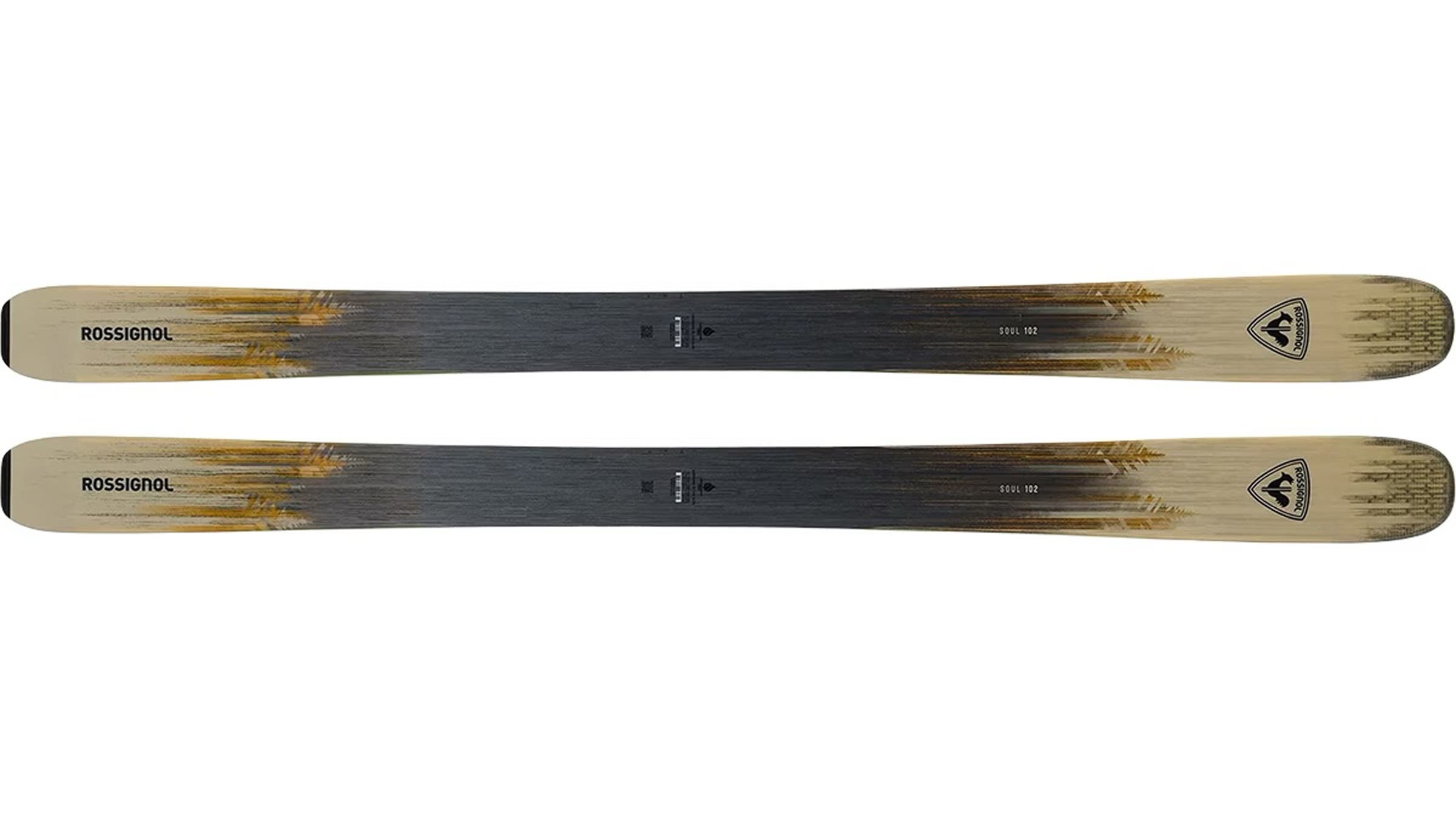
Conversely, the Soul 102 caters to skiers who prioritize soft snow, deep accumulation, and off-piste exploration. Boasting a 102-millimeter waist, this model is engineered to float effortlessly through deep powder while maintaining composure at high speeds. Despite its generous width, testing indicates that it pivots quickly in tight chutes, absorbs heavy moguls, and carves surprisingly well on groomed terrain. It is positioned as a do-it-all tool for skiers who charge hard down steep alpine lines one moment and cruise mellow groomers with family the next.
Corporate Strategy and Market Positioning
The rollout of the Soul series is part of a broader corporate strategy by Rossignol to reconnect with recreational skiers across every ability spectrum.
"We wanted to get back to touching all skiers and ability levels," Stevens notes, outlining the brand’s product roadmap. "The first piece of that project was to build the 102 to be a powder ski that was accessible for all. The next phase was to redesign our 92 and elevate it to the intermediate and expert level."
By positioning the Soul 92 as an accessible, high-value option and the Soul 102 as a premium, highly versatile wide all-mountain tool, Rossignol covers a broad demographic of skiers. Market analysts suggest this dual-model approach is strategically sound, particularly as consumers increasingly demand equipment that can transition seamlessly between resort-bounds exploration and varied weather conditions.
Sustainability Commitments in Modern Ski Manufacturing
Beyond on-snow performance, the development of the 2027 Soul collection reflects increasing industry pressure to adopt environmentally sustainable manufacturing practices. Since 2020, Rossignol has maintained a corporate mandate to reduce its carbon footprint without compromising technical performance or product durability.
The Soul series incorporates several eco-conscious materials. The internal wood cores are crafted from PEFC-certified poplar, ensuring that the timber is responsibly sourced from managed forests that protect regional biodiversity and ecosystem health. Additionally, the resin used to laminate the structural layers together utilizes bio-sourced materials, replacing a significant portion of traditional petroleum-based chemical inputs with renewable, plant-derived alternatives.
Environmental economists and product lifecycle analysts note that durability remains one of the most critical factors in sustainable manufacturing. Skis that resist premature degradation and remain functional over many seasons ultimately reduce waste. Rossignol designed the Soul series to accommodate a wide range of skill progressions, meaning that intermediate skiers are unlikely to quickly outgrow the performance ceiling of the equipment as their technical abilities improve.
Broader Industry Implications and Outlook
The return of the Soul moniker carries considerable weight within the snowsports industry. As brands navigate shifting consumer preferences and economic pressures, heritage branding backed by substantial technological updates remains a powerful tool for driving retail engagement.
Whether the new Soul 102 and Soul 92 will achieve the exact cultural ubiquity—and the accompanying high theft rates—of the original Soul 7 remains to be seen. However, early accolades from rigorous testing environments, including recognition from leading ski publications, suggest that the hardware is fully capable of meeting consumer expectations. As the 2027 winter season approaches, retail shelves are expected to see high demand for both models, prompting industry observers to offer a lighthearted piece of advice to prospective buyers: keep a close eye on the outdoor resort racks.

