
The Freeride World Tour (FWT) has officially unveiled its competitive roster for the 2027 season, signaling the beginning of a transformative chapter for the sport. With the announcement made on October 8, 2026, the tour confirmed that the upcoming season will be characterized by a high-stakes convergence of veteran world champions, battle-hardened returning contenders, and a fresh wave of rookies who have successfully navigated the grueling FWT Challenger series. As the sport continues its integration into the broader Olympic framework following the 2022 partnership with the International Ski and Snowboard Federation (FIS), the 2027 season is poised to be the most rigorous test of technical skill and mental fortitude in the history of the tour.
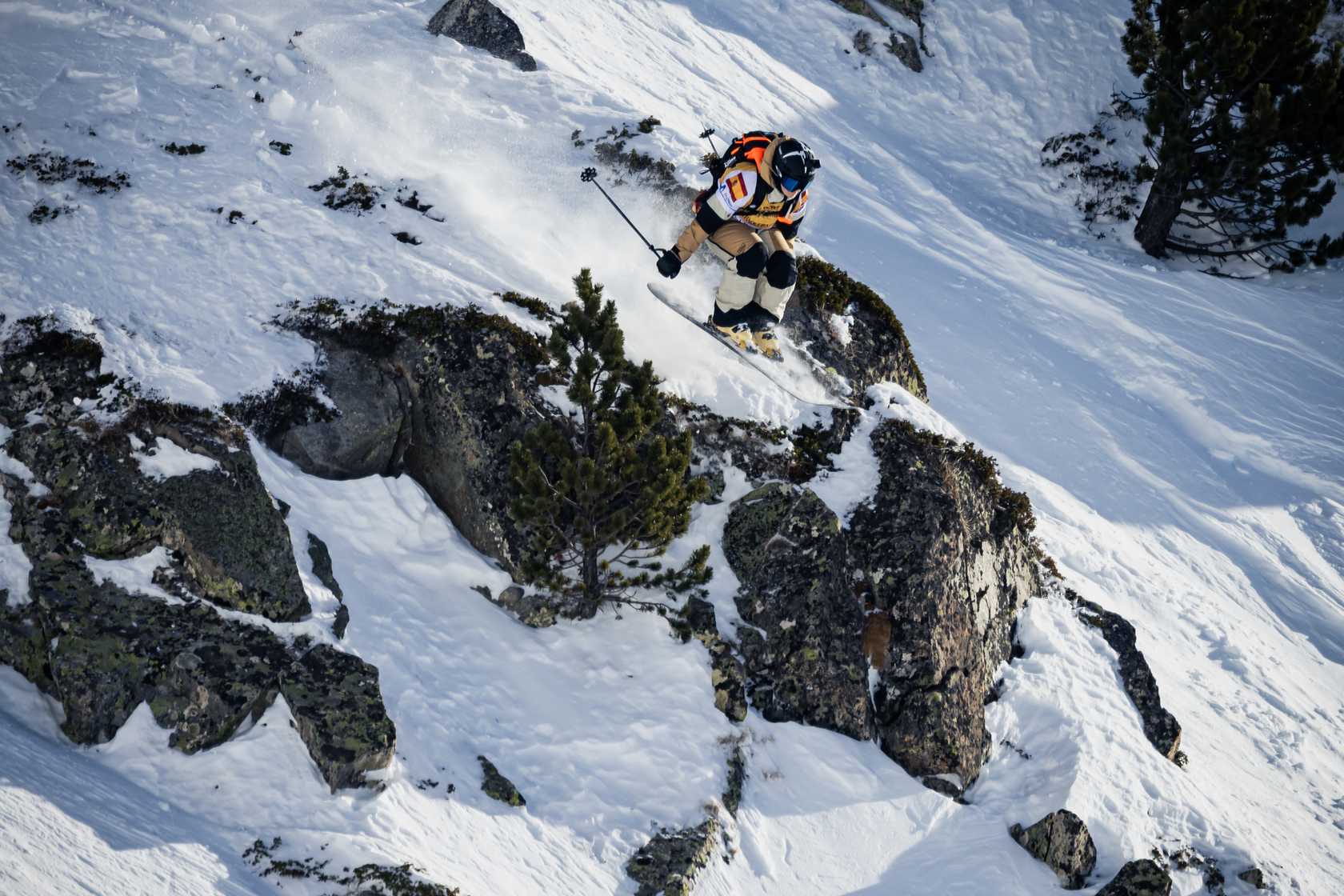
The 2027 roster comprises a blend of talent that underscores the sport’s increasing professionalization. With 11 unique riders stepping up from the Challenger circuit and a total of eight former FWT champions competing across the four categories—Ski Men, Ski Women, Snowboard Men, and Snowboard Women—the competitive density has reached an all-time high. The pressure on these athletes is exacerbated by the fact that only four individual champions will be crowned at the conclusion of the season, marking the end of a long, arduous campaign that spans several continents and diverse snow conditions.
The Evolution of the FWT in the Olympic Age
Since the landmark collaboration with FIS in December 2022, the FWT has shifted from an independent extreme sports event into a structured, globally recognized competitive pathway. This evolution has brought significant shifts in how athletes prepare for the season. The integration into the FIS ecosystem has introduced more rigorous standardized judging criteria, enhanced safety protocols, and a more defined developmental pipeline through the FWT Qualifier and Challenger series.

For the 2027 season, the stakes are elevated by the growing influence of the FIS Freeride World Championships, which now operate in tandem with the tour. This dual-track approach ensures that riders are not only competing for the FWT title but also for international standing in a sport that is clearly signaling its intent to align with Olympic-level expectations. The inclusion of reigning FIS Freeride World Champions in the 2027 roster, such as Zuzanna Witych in the Ski Women’s category and Liam Rivera in Snowboard Men, highlights the increasing prestige of these titles.
Ski Men: A Battle of Champions and Contenders
The Ski Men’s category remains the most volatile sector of the tour. Ben Richards (NZL), who dominated the 2026 season with a masterful combination of power and precision, enters 2027 as the primary target. Richards’ ability to read complex terrain while maintaining a high-speed line set a new benchmark for his peers. However, his defense of the title will be challenged by a deep field that includes four former FWT champions.

The “Battle of the Maxes” serves as a compelling narrative for the season, with Maxime Chabloz (SUI) and Max Hitzig (GER) representing two distinct styles of dominance. Chabloz, a versatile athlete who has successfully returned from the Challenger circuit, brings an explosive, freestyle-influenced approach to the mountains. Conversely, Hitzig, the 2024 champion, offers a calculated, line-focused strategy that has historically proven difficult to beat on the technical faces of the Verbier final.
The inclusion of Marcus Goguen (CAN), the 2025 champion, further complicates the hierarchy. Having spent the 2026 season recalibrating, Goguen is expected to return with a more aggressive approach to the technical sections of the tour’s stops. Meanwhile, the consistent performance of Toby Rafford (USA) and Ross Tester (USA)—who finished second and third overall in 2026, respectively—suggests that the American contingent is arguably the strongest it has been in a decade.

Ski Women: A Wide-Open Field
In the Ski Women’s category, the 2027 season begins without a clear favorite, a reflection of the parity that defined the 2026 tour. Defending champion Lou Barin (FRA) returns to the circuit following a breakthrough rookie season that culminated in a historic performance on the Bec des Rosses. Barin’s ability to navigate high-consequence terrain while maintaining fluid, stylistic turns made her the standout athlete of the previous year.
However, the field behind her is exceptionally deep. Sybille Blanjean (SUI) remains a persistent threat, characterized by her deep knowledge of the European Alps and a high-risk, high-reward riding style. Additionally, the presence of veteran Justine Dufour-Lapointe (CAN) adds a layer of tactical complexity to the category. As a multi-year champion, Dufour-Lapointe brings a level of competition management that is often lacking in less experienced riders.

Perhaps the most discussed entrant for 2027 is the rookie Mila de Le Rue (FRA). As part of the famed de Le Rue family, expectations are inevitably high, yet she has demonstrated a unique capacity for technical adaptability during her rise through the Challenger series. Her performance will be closely scrutinized, as will the return of Zuzanna Witych, whose FIS World Champion status provides her with the wildcard entry needed to disrupt the established hierarchy.
Snowboard Men: The Quest for Continued Supremacy
Victor de Le Rue (FRA) continues to define the standard for men’s snowboarding on the FWT. With five career titles, including a remarkable streak from 2024 to 2026, he is effectively chasing his own legacy. De Le Rue’s dominance is built on a rare combination of backcountry expertise and the ability to execute high-difficulty tricks on natural features that would challenge even the most seasoned freestyle professionals.

The challenge to his throne will likely come from the next generation of riders, most notably Sacha Balicco (FRA), who earned Rookie of the Year honors in 2026. Balicco’s rapid ascent has been characterized by an unconventional line choice and a fearlessness that contrasts with the more methodical approach of his elders. The addition of Liam Rivera (SUI) adds another layer of intrigue, as the FIS World Champion brings a fresh set of tactical maneuvers that may force de Le Rue to adjust his traditional approach.
The inclusion of Cody Bramwell (GBR) as a wildcard is a testament to the international expansion of the sport. Bramwell’s performance at the 2026 Baqueira Beret stop, where he showcased an impressive ability to handle variable snow conditions, earned him his place in the 2027 roster. His presence, alongside established riders like Timm Schröder (GER), ensures that the competition will be fierce across all five scheduled events of the season.

Snowboard Women: The End of an Era
The Snowboard Women’s category faces a historic shift in 2027: for the first time in three years, the field will not feature any rookies. This absence of newcomers is significant, as it signals the stabilization of the category. Mia Jones (USA), the reigning FWT Champion, dominated the 2026 season with such clinical efficiency that the “tornado” of her performance became the standard by which all other riders were measured.
However, the streak of rookies storming the podium—a trend that defined the 2024–2026 era—is officially broken. This puts the pressure squarely on veterans like Tiphanie Perrotin (FRA) and Katie Anderson (CAN). Both former champions have spent the last season refining their craft, and their return to the tour is viewed as a direct challenge to Jones’ dominance. The tactical battle between the raw talent of Jones and the seasoned experience of Perrotin and Anderson is expected to be the central conflict of the season.

Broader Implications and Future Outlook
The 2027 FWT season represents more than just a series of athletic competitions; it serves as a litmus test for the long-term viability of freeriding as a mainstream professional sport. The organizational stability provided by FWT Management SA, coupled with the technical backing of partners like Peak Performance, has created an environment where athletes can focus exclusively on performance.
Data from the previous three seasons indicates a consistent increase in viewership and digital engagement, particularly among the 18–34 demographic. This growth has prompted organizers to invest further in high-definition broadcast technology and on-mountain sensor arrays, which provide viewers with real-time data on speed, jump height, and turn radius. Such metrics are crucial for the sport’s ongoing efforts to translate the subjective art of "line choice" into objective, quantifiable data.

As the athletes prepare for the upcoming winter, the narrative is clear: the gap between the established elite and the rising challengers is closing. With the 2027 calendar expected to be announced in the coming weeks, the industry is bracing for a season that will likely redefine the limits of what is possible on a snowboard or a pair of skis. The mountains of Europe, North America, and beyond are once again prepared to serve as the stage for what is universally regarded as the pinnacle of competitive mountain sports. For the riders, the time for preparation has passed; the time for execution, in the high-stakes arena of the 2027 Freeride World Tour, is at hand.

