
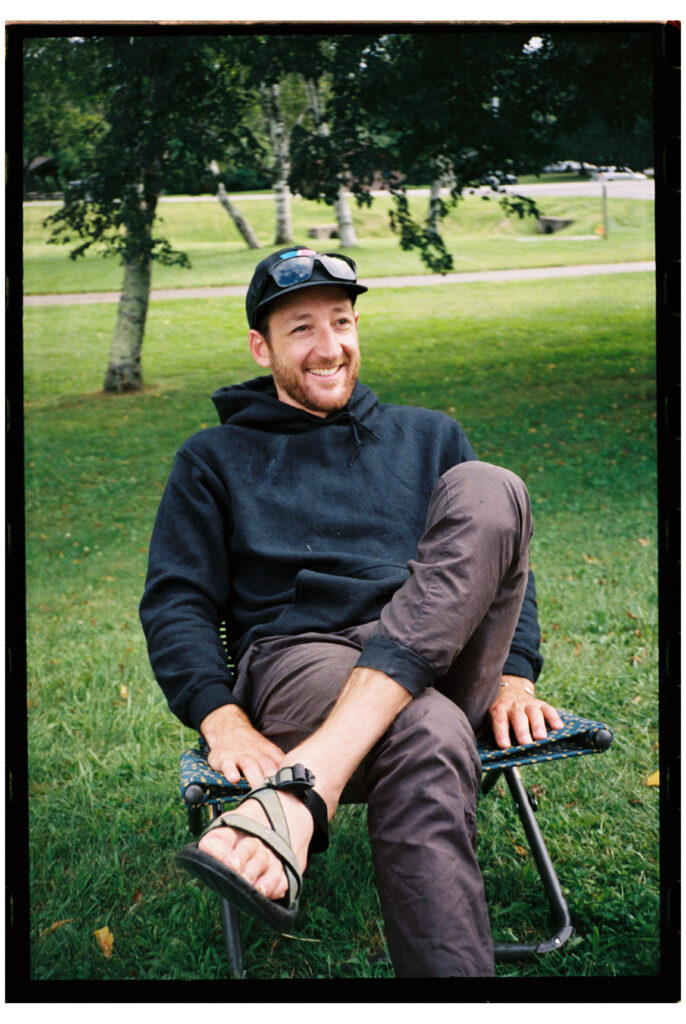
Rusty Rustigian’s tenure at the Northwest Avalanche Center (NWAC) is a compelling narrative of dedication, evolving roles, and a significant push towards technological advancement in avalanche safety. What began as a volunteer effort in 2010, spurred by a challenging job market in Seattle, has blossomed into a pivotal role as Product Manager, driving critical initiatives that are reshaping how avalanche centers operate and how backcountry users access vital safety information. This journey, marked by a return to NWAC after a nearly decade-long hiatus, highlights Rustigian’s deep-seated commitment to the organization and his forward-thinking approach to leveraging technology for enhanced public safety.
From Volunteer Roots to Strategic Leadership
Rustigian’s initial involvement with NWAC was born out of necessity. Upon relocating to Seattle in 2010, he found himself unemployed. The organization, then comprising only two non-profit staff members, offered him a volunteer opportunity. This initial engagement proved mutually beneficial, as NWAC eventually created a dedicated position for him. After five years, Rustigian ventured to Bozeman, Montana, accumulating diverse experience in both the non-profit and tech sectors. This period of growth and learning proved invaluable, preparing him for his eventual return to NWAC. His re-engagement with the organization came about nine years later, when he was instrumental in guiding NWAC through a significant website initiative, a project that ultimately led to his current leadership role.
Redefining Avalanche Center Operations Through Technology
In his current capacity as Product Manager, Rustigian is at the forefront of two major technological advancements for NWAC: the management of its mobile application, "Avy," and the development of a new, collaborative website platform that will unite avalanche centers across the nation. This ambitious project is conceptualized as a shared digital infrastructure, moving away from individual centers maintaining their own disparate systems towards a consolidated, efficient ecosystem. Rustigian likens this to building a "condo complex for avalanche centers rather than building and maintaining our own single-family homes."
This strategic shift aims to optimize resources and enhance the dissemination of crucial avalanche information. The development process involves extensive coordination among stakeholders and the design/build team, with a constant focus on prioritizing features within the constraints of a small organizational budget. This delicate balancing act is essential for delivering impactful technological solutions that benefit both the avalanche centers and the public they serve.

A Legacy of Rebranding and Community Building
Rustigian reflects with particular pride on his contributions to NWAC’s past initiatives, notably the organization’s rebranding effort around 2011. He recalls this period as a time of significant momentum, where the rebrand, coupled with extensive outreach, helped transform NWAC into an organization that resonated with and attracted greater community engagement. This focus on making NWAC an accessible and desirable entity underscores Rustigian’s understanding of the importance of public perception and community involvement in the success of a safety-focused non-profit.
Navigating the Backcountry: Wisdom for the User
Beyond his operational and strategic roles, Rustigian also offers invaluable insights for backcountry enthusiasts. His favorite area within NWAC’s forecast zones is the Snoqualmie Pass region, citing its "hidden gems" as a particular draw. This implies an appreciation for areas that offer unique challenges and rewards, often requiring deeper knowledge and careful navigation.
His most impactful piece of advice for backcountry users comes from a long-standing mentor, Scott Schell. Over a decade ago, Schell imparted wisdom that has stayed with Rustigian: "Persistent Weak Layers are truly so unpredictable and as uncertainty increases, your terrain choice should become equally conservative." This principle emphasizes the critical importance of humility and adaptability in avalanche safety. It suggests that as conditions become more uncertain, the safest course of action is to reduce exposure to potential hazards, rather than attempting to outsmart or predict complex avalanche dynamics. This guidance highlights a core tenet of avalanche education: prioritizing safety through conservative decision-making when faced with unpredictable conditions.
The Future of Avalanche Safety: A Technological Horizon
Rustigian is exceptionally enthusiastic about the future of NWAC and the broader landscape of avalanche safety, largely driven by the ongoing technological advancements. He sees immense potential in streamlining not only forecasting products but also in consolidating redundant content that is currently maintained by individual avalanche centers. The vision of collaborative development and the resulting products, he believes, will offer significant benefits to both the end-users who rely on this information and the dedicated staff who work behind the scenes to produce it. This future-oriented perspective underscores a belief that technology can be a powerful force multiplier in saving lives and enhancing the backcountry experience.
Memorable Days on Snow: Community and Connection
When asked about memorable days on snow from the past season, Rustigian’s response transcends the purely physical act of skiing. He emphasizes that for him, these experiences are now as much about "the people, place, and community as it is about sliding on snow." He recounts a period in February when he hosted a string of visitors, sharing his favorite spots amidst what he describes as "world-class conditions." The ability to share these experiences and the reasons behind his passion for his locale with others, and witnessing their appreciation, was a deeply meaningful aspect of his winter. This sentiment speaks to the broader human element of outdoor recreation and the profound connections forged through shared experiences in nature.
Broader Implications for Avalanche Forecasting and Public Safety
Rustigian’s work at NWAC, particularly his leadership in developing a unified technological platform for avalanche centers, has far-reaching implications. The current model, where each center independently manages its website, data, and forecasting tools, is inherently inefficient. This fragmentation can lead to inconsistencies in data presentation, redundant development efforts, and missed opportunities for cross-collaboration.
The creation of a shared infrastructure, as envisioned by Rustigian, promises to standardize data formats, improve the accessibility and user experience of avalanche forecasts, and potentially reduce operational costs for individual centers. This could lead to more consistent and timely information being available to the public, regardless of their geographic location within partner centers. Furthermore, a more robust and integrated digital platform could facilitate advanced data analytics, potentially leading to improved forecasting models and a deeper understanding of avalanche phenomena.
The "Avy" mobile application, managed by Rustigian, represents another critical component of this technological push. Mobile accessibility is paramount for backcountry users who often find themselves in areas with limited or no internet connectivity. A well-developed and user-friendly mobile app can provide essential safety information, real-time updates, and potentially even user-generated data that can inform forecasting efforts.
The NWAC’s Evolving Role in a Changing Climate
The work being undertaken by NWAC, under leaders like Rustigian, is increasingly critical in the context of a changing climate. Shifting weather patterns, increased frequency of extreme events, and a growing popularity of backcountry recreation all contribute to a heightened need for accurate, accessible, and timely avalanche hazard information. By investing in technological solutions and fostering collaboration among avalanche centers, NWAC is positioning itself to meet these evolving challenges more effectively.
The consolidation of resources and the development of shared digital tools can allow smaller centers to benefit from the expertise and development capacity of larger ones, thereby elevating the standard of avalanche safety information across a wider geographic area. This collaborative approach is not just about efficiency; it’s about building a more resilient and responsive avalanche safety network capable of adapting to the dynamic environmental conditions of the 21st century. The vision Rustigian champions is one where technology serves as a cornerstone for enhanced public safety, ensuring that backcountry enthusiasts have the best possible information to make informed decisions in potentially life-threatening environments.

