
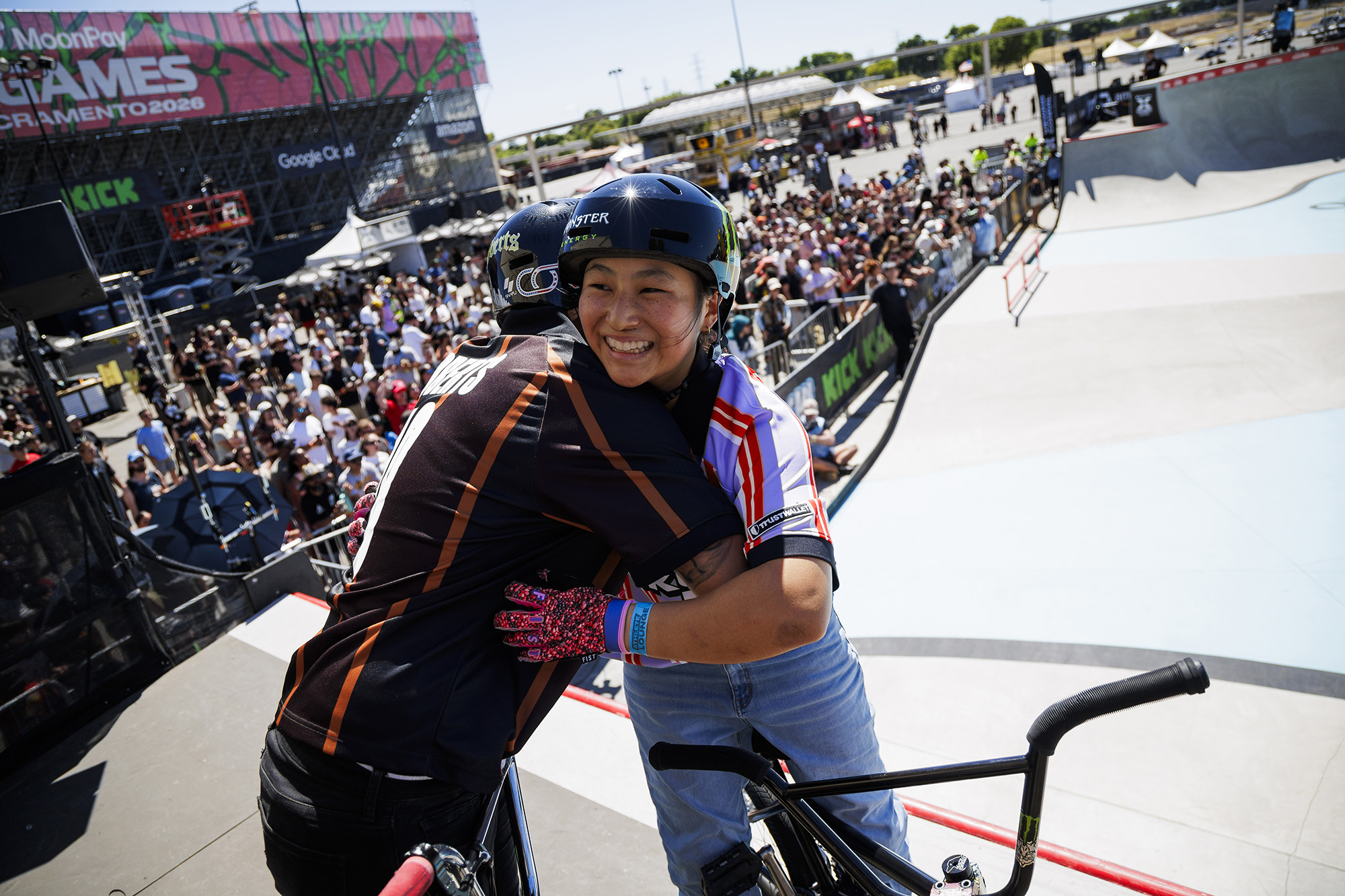
The inaugural MoonPay X Games Sacramento 2026 concluded on Sunday at Cal Expo, marking a transformative moment in the history of action sports. The three-day festival served as the official debut of the MoonPay X Games League (XGL), a structured team-based competition featuring four distinct franchises: XC Los Angeles, XC New York, XC São Paulo, and XC Tokyo. With nearly 100 elite athletes representing 17 nations, the event blended individual brilliance with a new team-oriented narrative, attracting record-breaking crowds and witnessing several "never-been-done" (NBD) tricks that pushed the boundaries of modern physics.
The final day of competition was defined by a cross-generational showcase of talent. While legendary veterans like Garrett Reynolds and Ryan Williams extended their historic medal tallies, the narrative was equally driven by a burgeoning youth movement. Athletes as young as 11 years old secured podium finishes, signaling a shift in the competitive landscape as the league prepares for its next stops in Chiba, Japan, and the championship finale in New Orleans.
The Evolution of Competition: The MoonPay X Games League Format
The Sacramento event introduced the X Games League’s unique structure, which departs from the traditional individual-entry format. In this new era, athletes are either drafted into one of the four city-based clubs or compete as "Free Agents." This system is designed to foster regional rivalries and provide a consistent narrative throughout the season.
The club rosters were finalized during the inaugural X Games League Draft in March 2026. XC Tokyo and XC São Paulo emerged as dominant forces during the Sacramento weekend, leveraging a mix of seasoned champions and high-upside rookies. The league format also introduces a season-long points race, culminating in a $500,000 team prize purse at the MoonPay X Games Championship.
Morning Sessions: The Rise of the Teenagers in Skateboard Street
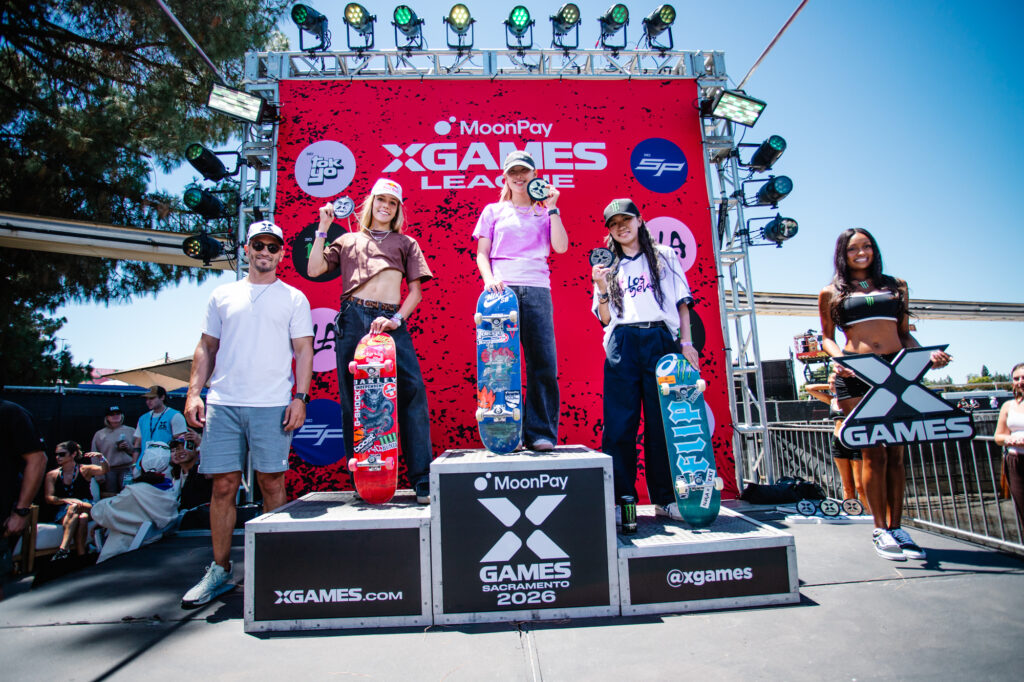
The final day commenced with the Monster Energy Women’s Skateboard Street Final, a discipline that has seen a rapid influx of technical progression in recent years. The field of eight finalists represented a wide age gap, ranging from 14 to 28, yet the podium was ultimately swept by teenagers.
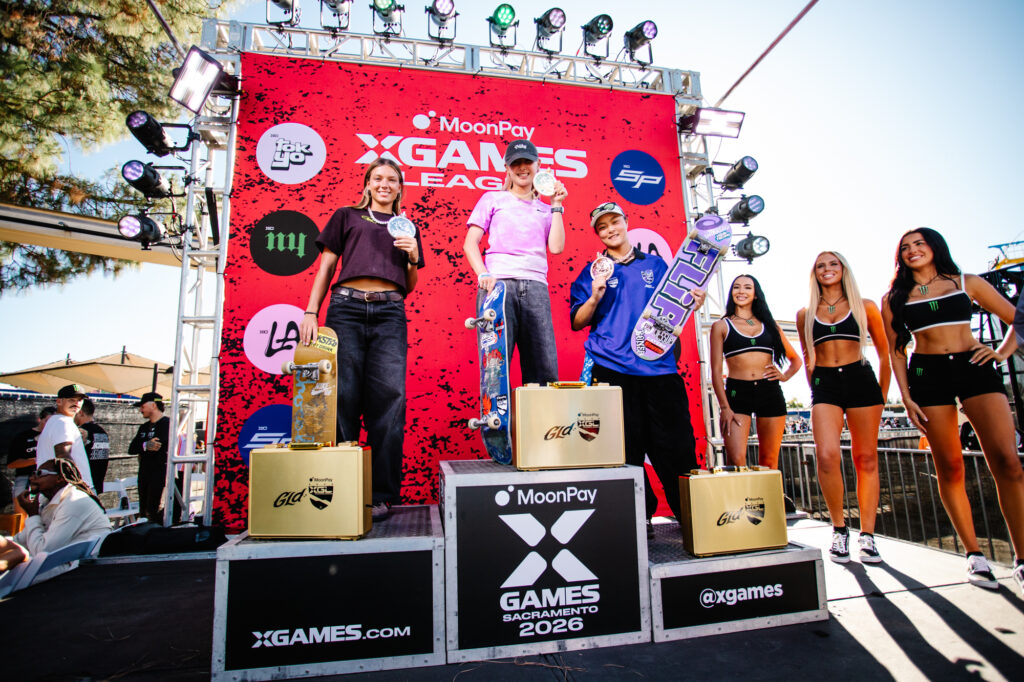
Miyu Ito, representing XC Tokyo as a free agent call-up, secured the gold medal. The 19-year-old’s performance was a masterclass in technical consistency. Her high-scoring run included a frontside boardslide on the handrail, a precise 5-0 on the quarterpipe, and a frontside feeble grind on the handrail to seal the victory. This win marked Ito’s fifth career X Games medal and her second gold, reinforcing her status as a cornerstone of the Tokyo franchise.
Following closely was 16-year-old Chloe Covell of XC New York. As the No. 1 overall pick in the MoonPay X Games League draft, Covell faced immense pressure to perform. Her silver-medal finish earned her a ninth career medal, maintaining her trajectory as one of the most successful young skaters in the history of the sport. Liz Akama of XC Los Angeles completed the podium, earning bronze in her return from a 2025 ankle injury. Akama’s return is a significant boost for the Los Angeles club, as she has now medaled in seven of her last eight X Games appearances.
Vertical Dominance: Gui Khury’s Historic Run
In the MoonPay Men’s Skateboard Vert Final, 17-year-old Gui Khury of XC São Paulo continued his unprecedented dominance of the ramp. Khury captured his fifth consecutive gold medal in the discipline, further cementing his legacy as the most decorated teenage competitor in X Games history.
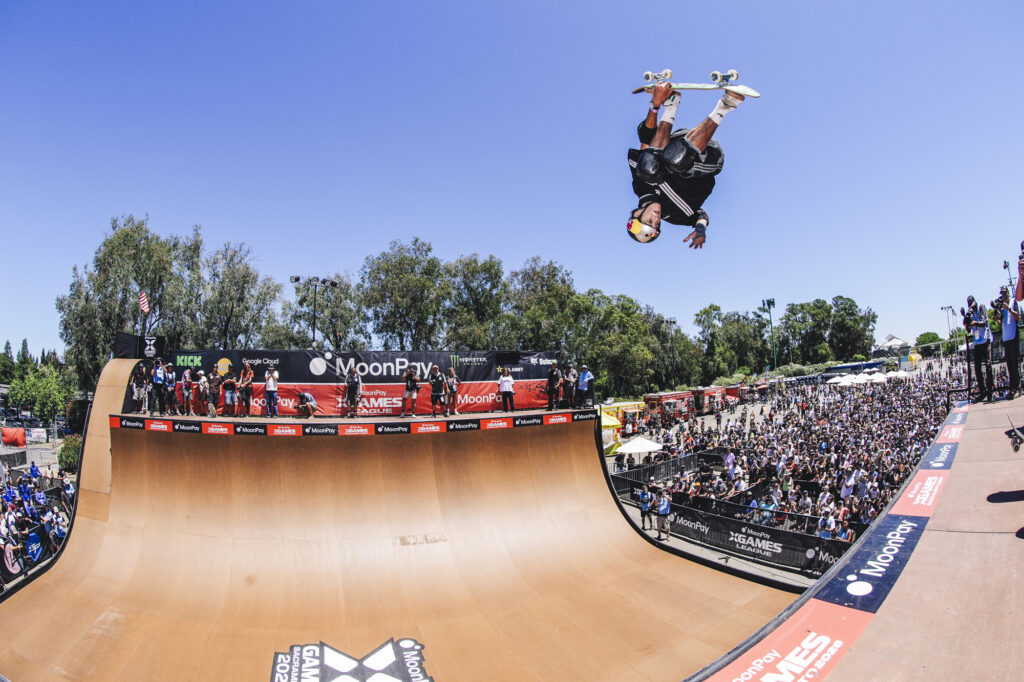
Khury’s run was a technical barrage that included an alley-oop backside 540 kickflip Indy 900 and a body varial 900. His ability to stack high-rotation tricks with fluid style has made him nearly unbeatable in the Vert category. Khury’s victory was essential for XC São Paulo, providing the club with critical points in the overall league standings.
The silver medal was awarded to JD Sanchez, a 17-year-old free agent who was notably overlooked in the inaugural draft despite high rankings in mock drafts. Sanchez’s performance—featuring a Cab heelflip and a tailgrab 720—served as a statement to club managers regarding his value. Tom Schaar of XC Los Angeles took the bronze, marking his 19th career medal and his second podium of the Sacramento weekend.
BMX Street: The Legend of Garrett Reynolds
The afternoon moved to the BMX course, where 35-year-old Garrett Reynolds proved that experience remains a formidable asset in the MoonPay X Games League. Representing XC São Paulo, Reynolds became the oldest athlete in the field and arguably the most impactful. In a dramatic third run, Reynolds surged past Kevin Peraza to claim his 17th career X Games gold medal.
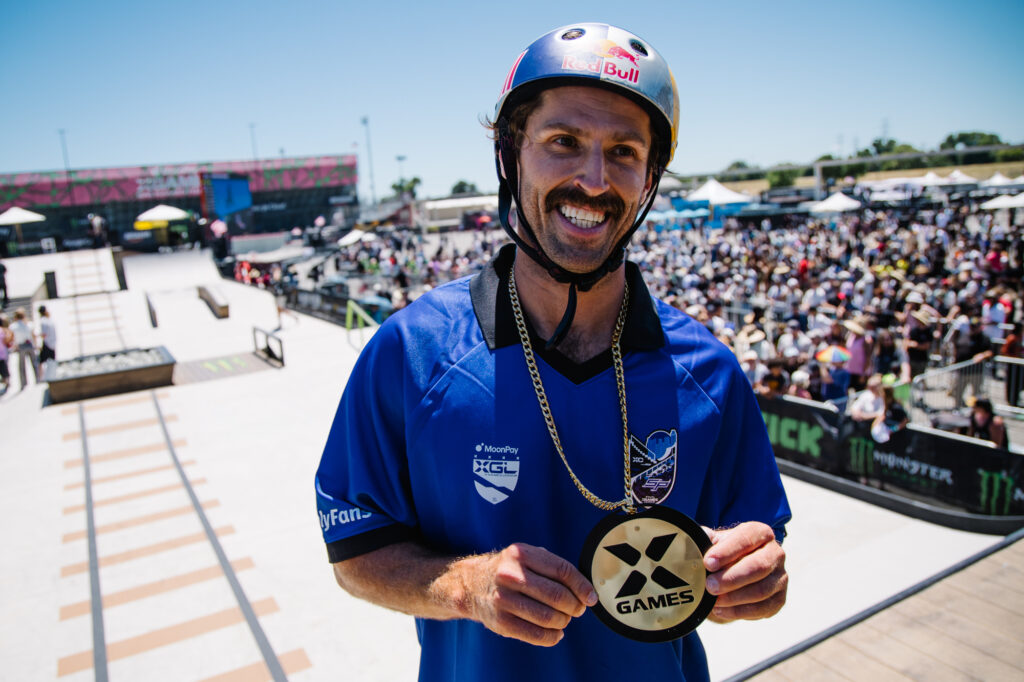
Reynolds’ statistical profile is unparalleled in action sports. He has now medaled in 22 of the 24 BMX Street contests in X Games history. His winning run in Sacramento featured a double truckdriver down the stairs and a technical 180 backward crooks to cab barspin out. Reynolds’ victory not only adds to his individual legacy but positions XC São Paulo as a veteran-heavy powerhouse.
Kevin Peraza of XC Tokyo earned the silver, continuing his streak as the only athlete to win gold in BMX Dirt, Park, Street, and Park Best Trick. The bronze went to Jordan Godwin, a free agent from Wales, who has steadily become a podium staple since his breakthrough in 2024.
Women’s BMX Park: A Rookie Sensation
One of the most significant upsets of the weekend occurred in the Women’s BMX Park Final. Miharu Ozawa, a 16-year-old rookie representing XC Tokyo, made her X Games debut by dethroning the two-time defending champion, Hannah Roberts.
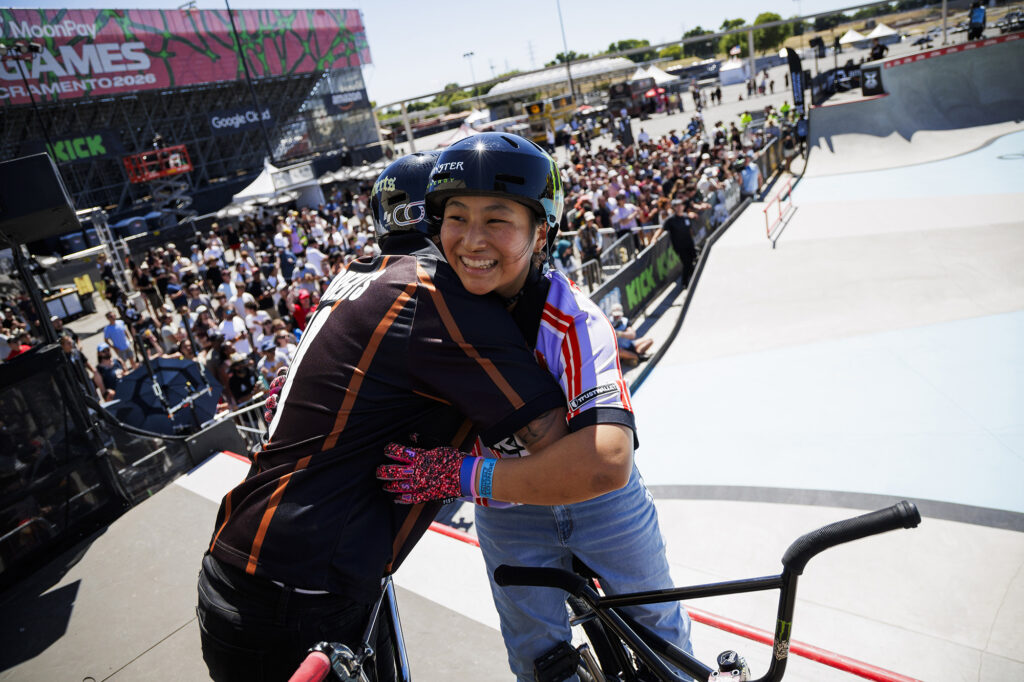
Ozawa’s second and third runs were characterized by high-amplitude airs and technical precision, earning her a score of 95.33. Her victory prevented a "three-peat" by Roberts, who took the silver for XC New York. Kim Müller of Germany secured the bronze, marking her second X Games medal in three appearances. Ozawa’s gold medal performance provides XC Tokyo with a massive advantage in the rookie-of-the-year race and highlights the league’s ability to provide a platform for international talent.
BMX Dirt Best Trick: Ryan Williams and the "Never-Been-Done"
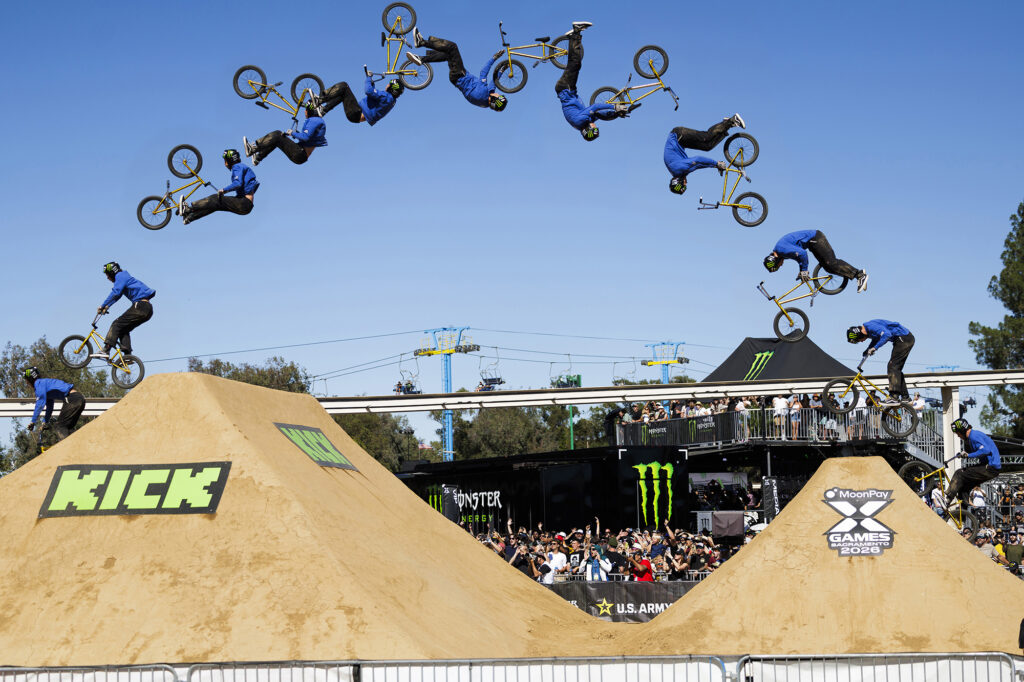
The BMX Dirt Best Trick Final delivered the most spectacular visuals of the day, centered on the rivalry between Ryan Williams (XC São Paulo) and Brady Baker (XC Los Angeles). Williams, a 32-year-old Australian, secured his fourth consecutive BMX Dirt Best Trick title by landing a frontflip cannonball nothing front bikeflip—a trick never before seen in competition.
This victory followed his historic performance on Saturday, where he landed the first-ever 540 frontflip flair on a vert wall. Williams now holds 16 X Games medals. Brady Baker, who had won the BMX Dirt gold on Saturday, took the silver, while Brandon Loupos earned the bronze with a double backflip tailwhip.
Evening Finals: Best Trick and the Storybook Ending
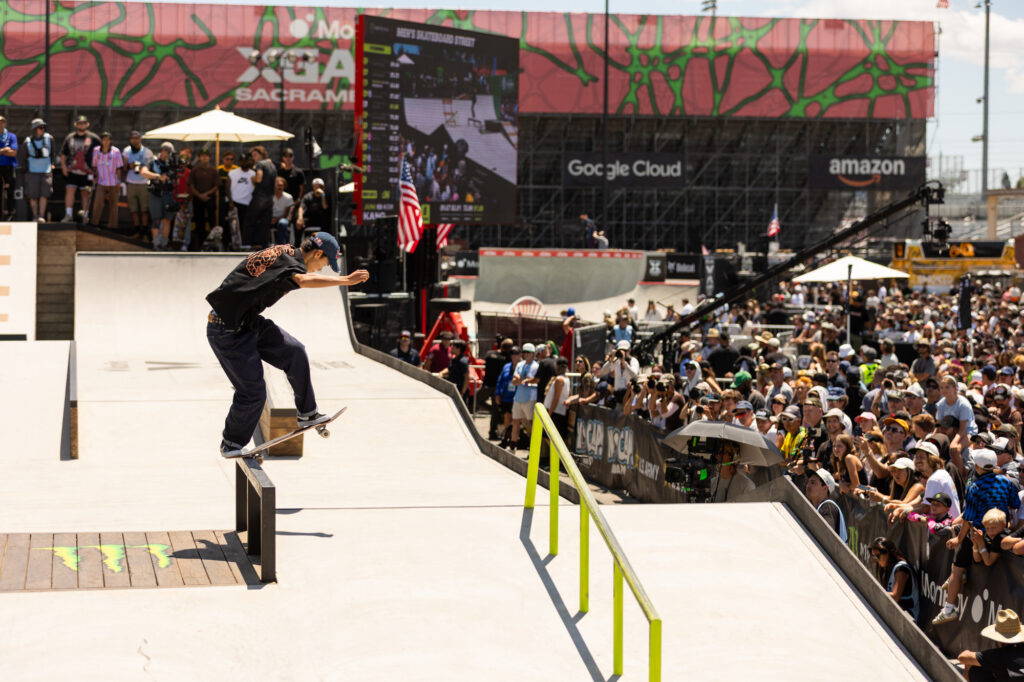
As the sun began to set over Cal Expo, the technical specialists took to the stairs for the Skateboard Street Best Trick finals. Miyu Ito of XC Tokyo doubled her gold medal count for the weekend, winning the women’s event with a frontside bluntslide shuv-it out on the 12-stair handrail. Paige Heyn (XC New York) and Ibuki Matsumoto (XC São Paulo) took silver and bronze, respectively.
In the Men’s Skateboard Street Best Trick, Juni Kang of South Korea achieved a "dream come true" moment. After earning bronze in the Street final on Saturday, Kang secured gold on Sunday with a nollie backside 270 heelflip to boardslide 270 out. Kang’s rise signifies the growing influence of South Korean skateboarding on the global stage. Ginwoo Onodera (XC New York) and Filipe Mota (XC Los Angeles) rounded out the podium.
The final event of the weekend was the MoonPay Women’s Skateboard Vert Final, which provided the most emotional moment of the tournament. Mia Kretzer, the 11-year-old phenom representing XC Los Angeles, captured the gold medal. Kretzer, who was the youngest athlete drafted into the league, landed a 720 mid-run for the first time in competition. Her victory was a pivotal moment for XC Los Angeles, ensuring they remained competitive in the club standings heading into the Japan leg.
Analysis: Implications for the X Games League Season
The conclusion of the Sacramento event provides several key takeaways for the remainder of the 2026 season. First, the "Club" model has successfully created a more structured environment for fans to follow. The success of XC Tokyo and XC São Paulo in Sacramento suggests that these franchises may have the most balanced rosters, blending the raw progression of Japanese skating with the veteran experience of Brazilian and Australian BMX riders.
The reliance on "Free Agents" like Juni Kang and JD Sanchez also suggests that the mid-season "transfer window" or future drafts will be highly competitive. Club managers will undoubtedly be looking to sign these unaffiliated athletes to bolster their points totals before the New Orleans finale.
Financially, the stakes have never been higher. The $500,000 team prize purse represents a significant increase in the earning potential for action sports athletes, who traditionally relied on individual sponsorships. This shift toward a league-based salary and bonus structure could provide greater long-term stability for the sport’s participants.
Chronology and Future Schedule
The MoonPay X Games League Summer Season will follow this timeline:
- June 2026: MoonPay X Games Sacramento (Completed)
- July 4–5, 2026: X Games Chiba, Japan (Stop No. 2)
- July 24–26, 2026: MoonPay X Games Championship, New Orleans (Season Finale)
As the league moves to Chiba, the home-field advantage will shift to XC Tokyo. The Sacramento event has set a high bar for athletic performance and spectator engagement, proving that the move toward a professional league format is a viable and exciting evolution for the X Games brand. With the inaugural championship in New Orleans looming, the pressure now shifts to the club managers to refine their strategies and for the athletes to maintain the blistering pace of progression established at Cal Expo.

