
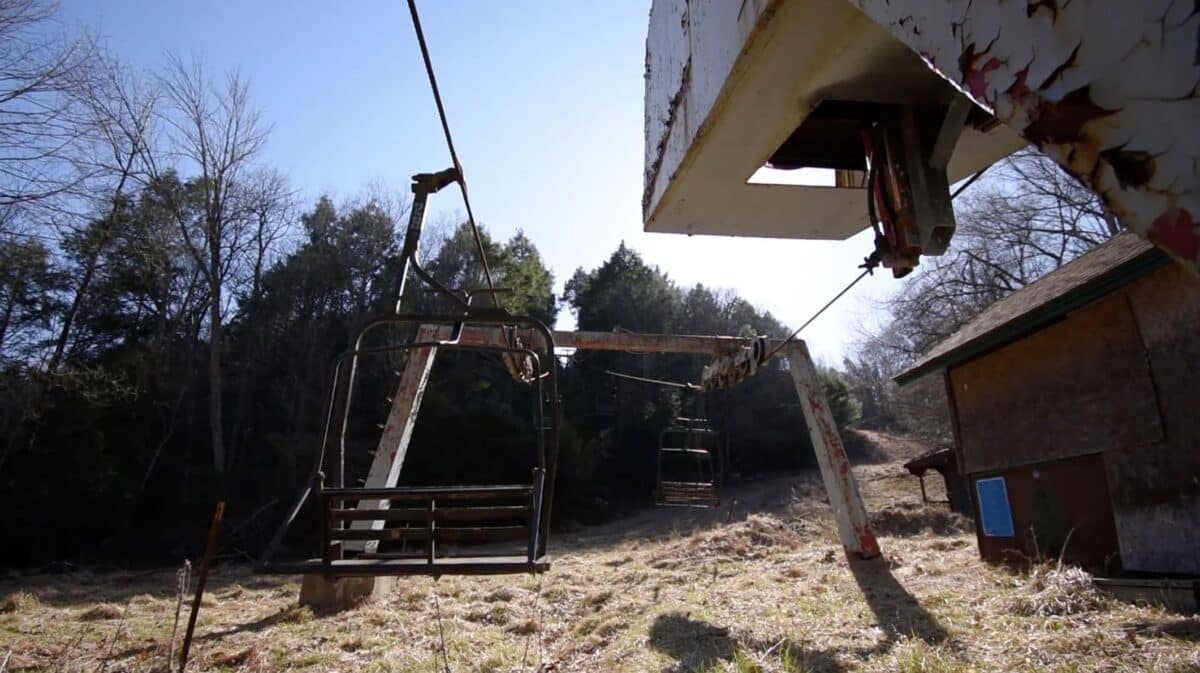
The allure of private ski resorts has seen a resurgence in recent years, promising exclusive experiences and tailored amenities for discerning enthusiasts. However, the history of such ventures in the United States is also dotted with cautionary tales, instances where ambition outpaced sustainability, leading to their eventual abandonment. One such poignant example lies in the picturesque Poconos region of Pennsylvania, where Kahkout Mountain, once a modest private ski area, now stands as a silent testament to the ephemeral nature of recreational enterprises. Abandoned since 2008, the remnants of Kahkout Mountain, including its lifts and trails, offer a haunting glimpse into a bygone era of private skiing, as documented by YouTuber Avery Zucco in 2020.
The Rise and Fall of a Community’s Winter Playground
Kahkout Mountain, a name pronounced "Cake-out," operated from 1972 until its final season in 2008. Nestled within the Winona Lakes Property Owners Association, it served as a private ski area for its residents, though it reportedly allowed guests to purchase lift tickets at various times, fostering a sense of community engagement with its winter offerings. The ski area was characterized by its intimate scale, featuring five distinct trails, two chairlifts, snowmaking capabilities, and a vertical drop of approximately 475 feet. These specifications placed it within the category of small to medium-sized ski operations, common in regions with rolling terrain.
The operational lifespan of Kahkout Mountain was marked by a series of challenges that gradually eroded its viability. A significant setback occurred in the 1990s when a fire ravaged the lodge, a central hub for après-ski activities and community gatherings. This incident necessitated substantial repairs and likely impacted the resort’s revenue streams during a critical period. Further compounding these difficulties was the aging infrastructure, particularly the double chairlift. The cost and complexity associated with overhauling such essential equipment presented a considerable financial burden for a private community association.
Shifting Demographics and Declining Interest
Beyond the physical and financial challenges, Kahkout Mountain also faced a subtle yet significant shift in its user base and community sentiment. Over the decades, the demographic of the Winona Lakes community evolved. Some long-time residents who had developed a deep affection for the ski area eventually moved away, taking their patronage and support with them. Concurrently, newer residents, perhaps attracted to the Poconos for different recreational pursuits or a more tranquil lifestyle, expressed less enthusiasm for skiing. This generational and demographic shift translated into declining demand for the ski resort’s services, making it increasingly difficult to justify the ongoing operational costs.

The Final Curtain: A Board’s Decision and Lingering Presence
The ultimate closure of Kahkout Mountain was precipitated by a confluence of factors, culminating in a pivotal decision by the Winona Lakes Property Owners Association’s board members. Following the lift fire, which remains a point of historical record, the community’s leadership reportedly voted to defund the ski operations. This decision, while perhaps economically prudent at the time, signaled the end of an era for many residents. The lack of sufficient community support, coupled with the substantial costs of maintenance and modernization, rendered the ski resort unsustainable.
Despite its operational demise, the physical infrastructure of Kahkout Mountain has not been entirely reclaimed by nature. Avery Zucco’s exploration in 2020 revealed that much of the resort’s core elements remain remarkably intact. The chairlifts, their towers silhouetted against the sky, still stand as ghostly sentinels. The designated ski trails, though now likely overgrown, are still discernible, tracing the contours of the mountain. This preserved state of abandonment offers a unique window into the past, allowing for a tangible connection to the resort’s history.
A Community’s Enduring Amenities
While the ski slopes have fallen silent, the broader Winona Lakes community complex continues to offer a range of amenities, underscoring the area’s ongoing appeal as a recreational destination. The former lodge, now referred to as the clubhouse, remains an active part of the complex. Surrounding it are well-maintained swimming pools, a basketball court, a playground, and access to six picturesque lakes. These facilities cater to a variety of seasonal activities, from swimming and boating in the warmer months to community events year-round.
Interestingly, there are anecdotal reports suggesting that when sufficient snowfall occurs, the community still facilitates skiing for its residents. This is reportedly done through a shuttle service, transporting skiers to areas with adequate snow cover. This practice, while a far cry from the self-contained ski resort experience of the past, demonstrates a residual appreciation for winter sports within the community. The statement from a resident, "If someone wants to vote for me on the Board, though, I can try to revive it," hints at a persistent desire among some to see the ski operations restored, though the logistical and financial hurdles would undoubtedly be immense.
The Broader Context: Private Ski Resorts in America
The story of Kahkout Mountain is not an isolated incident in the landscape of American private ski resorts. Throughout the 20th and early 21st centuries, numerous such areas emerged, often as extensions of private clubs, communities, or the vision of individual entrepreneurs. Their success was often tied to factors such as a robust local economy, consistent snowfall, effective management, and the ability to adapt to changing market demands and recreational preferences.
Several factors contribute to the challenges faced by private ski resorts:
- High Operational Costs: Maintaining ski lifts, snowmaking equipment, grooming machinery, and staffing requires significant ongoing investment.
- Seasonality: Ski resorts are inherently seasonal, meaning revenue generation is concentrated over a few months, making it difficult to sustain operations year-round.
- Competition: The rise of larger, more accessible public ski resorts with extensive marketing budgets and diverse amenities can draw away potential clientele.
- Demographic Shifts: As seen with Kahkout Mountain, changes in local demographics and recreational interests can lead to a decline in demand.
- Environmental Factors: Inconsistent snowfall patterns, exacerbated by climate change, pose a significant threat to the viability of ski operations, particularly smaller ones with limited snowmaking capacity.
- Capital Intensive Modernization: The need for continuous upgrades to lifts and on-mountain facilities to meet modern skier expectations requires substantial capital expenditure.
The data from the National Ski Areas Association (NSAA) often highlights the consolidation trend within the ski industry, with larger corporations acquiring smaller resorts to achieve economies of scale. This trend can make it challenging for independent or community-run operations to compete. For instance, a study by the NSAA in 2022 indicated that while overall skier visits were strong, profitability for many smaller resorts remained a delicate balancing act.
Analysis and Implications
The abandonment of Kahkout Mountain serves as a microcosm of the broader economic and social forces that have impacted the ski industry. It underscores the critical need for sustainable business models, community engagement, and adaptability in the face of evolving market dynamics and environmental challenges. The fact that elements of the resort remain physically present, albeit in a state of disrepair, also speaks to the potential for heritage tourism or adaptive reuse, though such endeavors would require substantial investment and a clear vision.
The visual documentation provided by Avery Zucco offers valuable historical insight, preserving the memory of Kahkout Mountain for future generations. It prompts reflection on the role of such recreational facilities in community building and the ephemeral nature of even well-intentioned ventures. The story of Kahkout Mountain is a reminder that while private ski resorts can offer unique experiences, their long-term success hinges on a delicate interplay of financial viability, community support, and the enduring appeal of winter sports. The silent presence of its lifts and trails in the Poconos is a powerful narrative of ambition, challenge, and eventual decline in the ever-changing world of recreational landscapes.

