
The rapid expansion of renewable energy infrastructure across the globe has been met with an equally sophisticated surge in organized opposition, characterized by a complex mix of legitimate local concerns and coordinated disinformation campaigns. As nations strive to meet the goals set forth in the Paris Agreement, the transition from fossil fuels to wind, solar, and electric mobility has become a primary target for narratives designed to foster public skepticism. These campaigns frequently leverage social media platforms and traditional news outlets to propagate claims that clean energy technologies are ecologically damaging, economically unviable, or structurally unreliable. While some of the resistance stems from genuine misunderstandings, a significant portion is traced back to well-funded interests seeking to maintain the status quo of the global energy market.
The Evolution of Climate Narratives: A Chronological Overview
The landscape of climate-related messaging has undergone a profound transformation over the last five decades. Understanding the current wave of disinformation requires a look at the historical trajectory of energy industry communications.
In the 1970s and 1980s, internal research from major fossil fuel corporations largely aligned with the emerging scientific consensus regarding the greenhouse effect. However, by the 1990s, public-facing strategies shifted toward outright climate denial. Organizations such as the Global Climate Coalition were formed to question the validity of climate science, successfully delaying international policy interventions during the Kyoto Protocol era.
By the early 2010s, as the physical realities of climate change became harder to ignore, the strategy shifted from "denial" to "delay." This era was marked by the promotion of natural gas as a "bridge fuel" and the emphasis on individual carbon footprints rather than systemic industrial change. In the current decade, the narrative has evolved into what sociologists call "discourses of delay." These modern tactics do not necessarily deny that the climate is changing; instead, they focus on the alleged flaws of renewable solutions, such as the supposed threat of offshore wind to marine life or the environmental cost of lithium mining. This chronological shift represents a tactical pivot from attacking the problem to attacking the solution.
Defining the Conflict: Misinformation versus Disinformation
A critical component of the modern energy debate is the distinction between misinformation and disinformation. While the terms are often used interchangeably, they represent different levels of intent and systemic influence.
Misinformation refers to the accidental spread of false or misleading information. This often occurs at the community level, where concerned citizens share unverified reports about property values or local wildlife impacts. For example, a resident might share a post claiming that solar panels leak toxic chemicals into the soil—a claim largely debunked by materials science—out of a genuine desire to protect their local environment.
Disinformation, conversely, is the intentional creation and dissemination of false information to achieve a specific political or economic objective. In the context of the energy transition, disinformation is frequently a "top-down" phenomenon. Strategic marketing campaigns, often funded by political action committees or industrial lobby groups, seed specific talking points into the public discourse. These narratives are designed to create "choice paralysis" among voters and policymakers, effectively stalling the decommissioning of carbon-intensive infrastructure.
Analyzing the Impact of Fossil Fuel Influence
The financial disparity between the renewable energy sector and the established fossil fuel industry remains a significant factor in the information war. Major oil and gas entities possess the capital to launch multi-million-dollar "greenwashing" campaigns. These advertisements often highlight a company’s marginal investments in biofuels or carbon capture while their primary capital expenditures continue to flow toward the exploration and production of new oil and gas reserves.
Data from corporate filings suggest a disconnect between public relations and capital allocation. While several "Big Oil" firms have publicly committed to net-zero targets by 2050, industry-wide production of oil is projected to remain robust well into the 2030s. This duality serves to pacify public demand for change while ensuring the continued dominance of traditional energy commodities. Furthermore, disinformation campaigns often utilize "astroturfing"—the practice of creating fake grassroots organizations—to give the appearance of widespread local opposition to renewable projects that would otherwise be supported by the majority of the population.
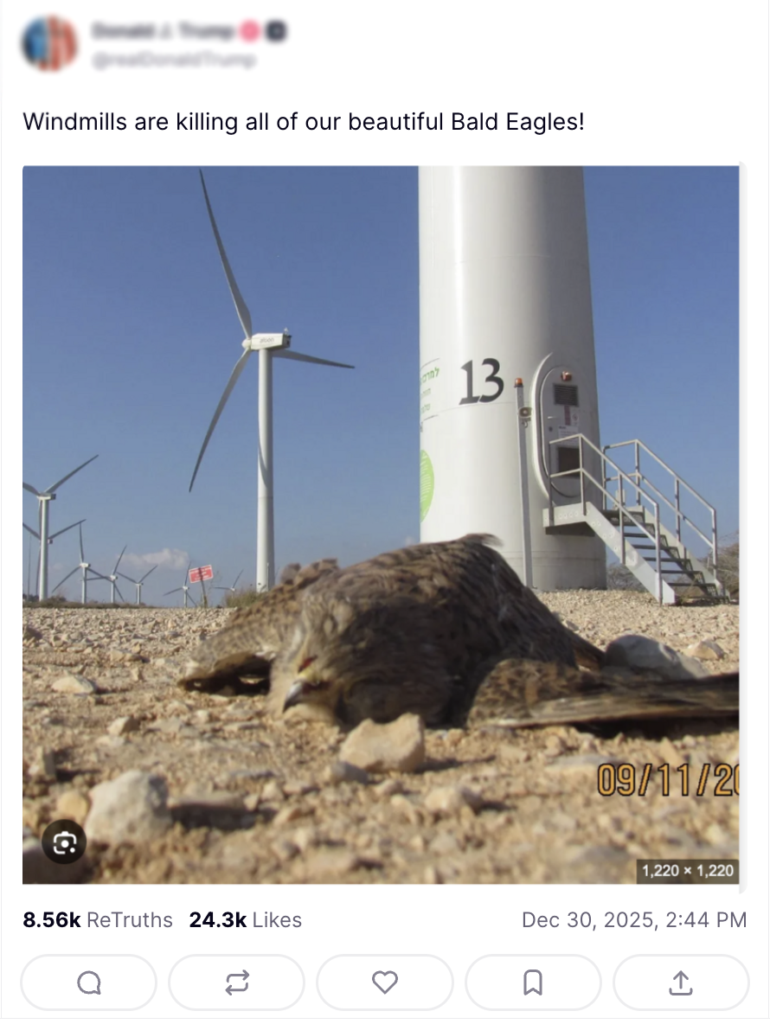
Addressing Common Concerns with Life-Cycle Data
To counter the prevailing narratives of the fear campaign, researchers have turned to life-cycle assessments (LCAs) to provide a factual basis for comparison between traditional and renewable technologies. Two of the most common points of contention involve Electric Vehicles (EVs) and offshore wind energy.
Electric Vehicle Production and Mineral Extraction
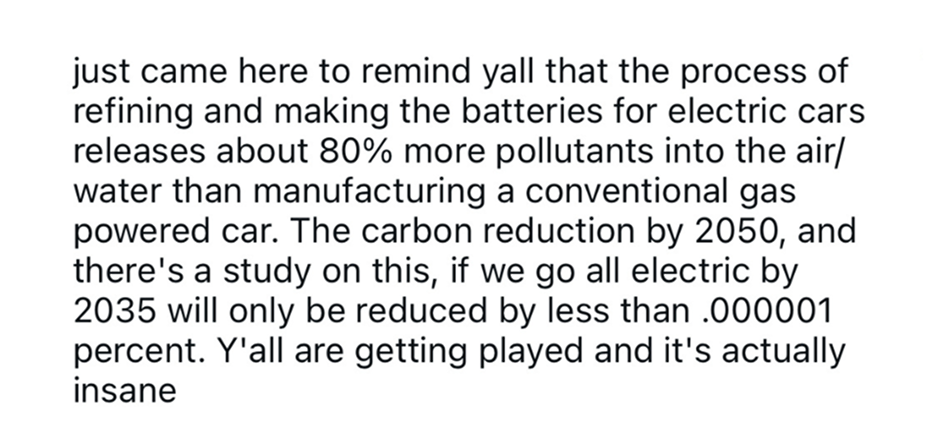
A recurring narrative suggests that the environmental toll of mining minerals like lithium, cobalt, and nickel makes EVs more harmful than internal combustion engine (ICE) vehicles. While mineral extraction is an intensive process with undeniable environmental impacts, empirical data from the Massachusetts Institute of Technology (MIT) provides a broader perspective.
According to MIT’s Energy Initiative, gasoline-powered cars emit, on average, more than 350 grams of CO2 per mile driven over their entire lifetime, including manufacturing and fuel combustion. In contrast, fully battery-electric vehicles generate approximately 200 grams per mile. As the electricity grid becomes "greener" with the addition of more solar and wind power, the carbon advantage of EVs continues to grow. Furthermore, the fossil fuel industry requires the continuous extraction of billions of tons of oil annually, whereas the minerals in an EV battery can be recovered and recycled at the end of the vehicle’s life, creating a potential circular economy that fossil fuels cannot match.
Offshore Wind and Marine Ecosystems
The expansion of offshore wind has faced intense scrutiny, particularly regarding its impact on avian and marine populations. High-profile social media posts have frequently blamed offshore wind surveys for whale strandings along the Atlantic coast. However, the National Oceanic and Atmospheric Administration (NOAA) and the Bureau of Ocean Energy Management (BOEM) have maintained that there is no scientific evidence linking site characterization for offshore wind to the mortality of large whales.
In reality, the greatest threats to ocean ecosystems remain climate change—which causes ocean acidification and warming—and existing industrial activities such as shipping strikes and entanglement in fishing gear. While offshore wind infrastructure does alter the local seabed, studies have shown that the foundations can act as artificial reefs, increasing local biodiversity. The risk of a catastrophic oil spill from offshore drilling remains a significantly higher threat to marine habitats than the localized footprint of wind turbines.
Institutional and Regulatory Responses
Governments and international bodies are beginning to recognize climate disinformation as a threat to national security and economic stability. The United Nations has recently called for a global code of conduct for information integrity, specifically targeting the "organized campaigns" that hinder climate action. In the United States, the Federal Trade Commission (FTC) has been urged by environmental advocates to update its "Green Guides" to more strictly regulate how companies claim to be "sustainable" or "carbon neutral."
In Europe, the "Anti-Greenwashing Directive" was recently adopted to protect consumers from misleading environmental claims. This legislation prohibits the use of generic environmental claims like "environmentally friendly" or "eco" without proof of recognized excellent environmental performance. These regulatory shifts signal a move toward a more transparent information ecosystem where energy providers must back their claims with verifiable data.
Broader Implications for the Global Energy Future
The outcome of this information battle will largely dictate the pace of the global energy transition. Beyond the environmental stakes, there are significant economic and geopolitical implications. The transition to renewables is increasingly driven by cost-effectiveness; according to the International Renewable Energy Agency (IRENA), nearly two-thirds of newly commissioned utility-scale solar and wind projects in 2021 had lower costs than the cheapest new fossil fuel option in G20 countries.
Disinformation acts as a market distortion, preventing the efficient allocation of capital toward these cheaper, cleaner technologies. For communities, the delay of the transition often means missing out on the "green jobs" boom and the long-term price stability offered by renewable energy, which is not subject to the volatile price swings of global oil markets.
As the energy transition continues, the role of scientific literacy and media discernment becomes paramount. Public policy experts suggest that the most effective way to combat disinformation is not just through debunking individual myths, but through "pre-bunking"—educating the public on the tactics used to deceive them. By understanding the patterns of the fear campaign, stakeholders can move past the rhetoric and engage in a more productive dialogue about how to build a resilient, low-carbon future.

The transition to renewable energy is a monumental engineering and social challenge. It requires the deployment of vast amounts of new infrastructure and the reimagining of the global power grid. While legitimate concerns regarding land use, resource extraction, and community impact must be addressed through rigorous environmental review and democratic processes, the influence of coordinated disinformation remains a primary obstacle. Ensuring that the public has access to factual, data-driven information is essential for navigating the complexities of the 21st-century energy landscape.

