
After a remarkable 14-year tenure as the driving force behind Norwegian cross-country skiing, Torbjørn Skogstad has announced his departure from the leadership of the Cross-Country Skiing Committee (LK) within the Norwegian Ski Federation. The 64-year-old, a former dairy farmer from Sletta in Balsfjord, Troms, expressed a profound need to reclaim his personal time, stating, "Now I first need to ‘catch my breath’ and not be tied up and available on the phone all the time." His decision marks the end of an era characterized by intense scrutiny, constant pressure, and a perpetual spotlight on the sport’s successes and challenges.
Skogstad’s departure comes at a time when Norway continues to solidify its position as the undisputed global powerhouse in cross-country skiing. However, his leadership journey was far from a smooth glide on fresh powder. The intense public interest in the sport within Norway, a nation where opinions on its direction are abundant and vociferously expressed, often translated into significant pressure on its leaders. This dynamic created what Skogstad referred to as "wars," reflecting the sometimes contentious debates and public discourse surrounding the sport.
A Steadfast Ascent Through the Ranks
Torbjørn Skogstad’s involvement with Norwegian skiing began long before he assumed the helm of the LK. His path to leadership was a testament to his dedication and incremental progression through various roles. He started as a zone leader in Troms Ski District before the turn of the millennium, gradually accumulating experience and influence. In 2012, he was elected as the leader of the Cross-Country Skiing Committee, a position he would hold for an impressive 14 years, surpassing his predecessor, Hermod Bjørkestøl, who served for 11 years.
Throughout his tenure, Skogstad was consistently re-elected unanimously, a clear indication of the widespread confidence placed in his leadership by the ski federation. Reflecting on his extended period at the helm, Skogstad admitted to Nye Troms, the local newspaper that first reported his departure, that he had not anticipated such a long commitment. "I’m not concerned with records and such, but I probably wouldn’t have dreamed it would be 14 years as leader when I in 2012 was actually a bit on the ‘starting line’ and was put forward as the new leader," he shared. His entry into the leadership role in 2012 was, by his own account, somewhat serendipitous, making his subsequent longevity all the more remarkable.

Navigating Peaks and Valleys: Dominance Amidst Controversy
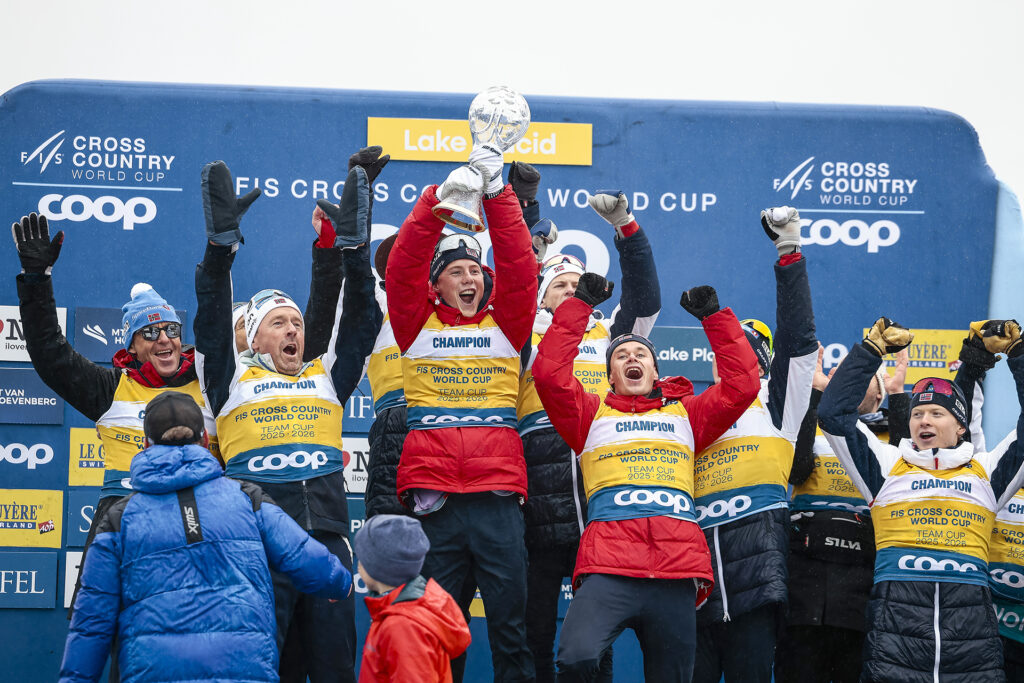
The period under Skogstad’s leadership was marked by an extraordinary era of Norwegian dominance in international cross-country skiing. Athletes like Marit Bjørgen, Therese Johaug, Petter Northug, and Johannes Høsflot Klæbo achieved legendary status, consistently delivering a cascade of victories and medals on the World Cup circuit, at World Championships, and at the Olympic Games. The images of Norwegian skiers celebrating on podiums became a familiar sight, solidifying Norway’s reputation as the premier nation in the sport.
However, this golden age was not without its significant challenges and controversies, casting long shadows over the sport and its leadership. One of the most profound crises occurred in 2016 when two of Norway’s most prominent athletes, Martin Johnsrud Sundby and Therese Johaug, received doping bans. Sundby’s ban stemmed from an elevated level of salbutamol, while Johaug’s was due to a positive test for the steroid clostebol. These incidents sent shockwaves through the sport and placed immense pressure on Skogstad and the ski federation.
Skogstad confessed that the situation was exceptionally difficult. He revealed that had another doping case emerged at that time, he might have considered stepping down. "Had there been one more doping case then, I would probably have stepped down as leader. These were tough times, but it was good that the internationally composed investigation committee of medical expertise concluded that we had not done anything wrong," he stated. The emotional toll was significant, particularly witnessing the distress of the involved athletes and their immediate support staff. The investigations, while ultimately clearing the federation of wrongdoing, were arduous and deeply affected those at the heart of the storm.
Another particularly challenging period for Skogstad involved public scrutiny and criticism regarding his compensation for his role as LK leader. When details of the financial remuneration emerged in the media, Skogstad found himself portrayed as greedy. He described this experience as deeply hurtful, stating, "To be portrayed as greedy is as far from me as a person as possible, so it was really painful. Those who know me know that it is nowhere near the truth, so it was a tough time with major headlines in national media." This episode highlighted the intense public interest and often unforgiving nature of media scrutiny in Norway, even for individuals serving in volunteer or compensated leadership roles within beloved sports.
Financial Fortunes: A Strategic Shift
Beyond the high-profile doping scandals and public relations battles, a significant part of Skogstad’s legacy lies in his strategic approach to the financial management of Norwegian cross-country skiing. Upon taking over leadership in 2012, a pivotal shift occurred: the individual sports within the ski federation were granted greater autonomy and responsibility for their own finances. This decentralization of financial management proved to be a transformative strategy.
Under Skogstad’s guidance and the new financial framework, the annual revenue for cross-country skiing experienced a dramatic increase. From an initial turnover of approximately 25-30 million Norwegian Kroner, it surged to an impressive 80-90 million Kroner per year. Skogstad attributed this growth to the enhanced sense of ownership and accountability fostered by the new model. "It gave the different disciplines greater opportunity to take responsibility for their own economy, and there is no doubt that it was positive for everyone," he remarked. This financial strengthening enabled the sport to invest more effectively in athlete development, coaching, infrastructure, and operational support, further contributing to Norway’s sustained success.
The Golden Age of Cross-Country Skiing
Despite the demanding nature of meetings, which Skogstad acknowledged could sometimes be monotonous, his years at the helm were undeniably punctuated by immense joy and pride. The consistent international success of the Norwegian cross-country ski team provided a powerful source of gratification. Norway’s status as the world’s leading nation was not merely a matter of opinion but was consistently validated by an overwhelming number of medals won across all major competitions. The sheer volume and quality of these victories often left international competitors in awe.
Skogstad expressed a deep sense of gratitude for having been a part of this "golden age." He also emphasized the privilege of working alongside a multitude of exceptionally talented and dedicated individuals within the sport. "I feel privileged to have been part of this golden age, and I have been allowed to get to know many fantastic, capable, and skilled people. I hope to be able to continue to keep in touch with them," he said. This sentiment underscores the collaborative spirit and the strong personal relationships that often underpin sustained success in elite sports organizations.
A New Chapter: Embracing the Future
With 16 years of service to the LK, including his final 14 as its leader, Torbjørn Skogstad felt it was time to pass the baton. "Everything in its own time, and now I felt that 16 years in the LK – and the last 14 as leader – was enough," he stated. The prospect of no longer being on call 24/7 was a significant draw. He anticipates a period of adjustment and perhaps a sense of emptiness at home in Balsfjord, but he is confident that he will find ways to fill his time. The possibility of increased involvement in other forms of board work or governance in the future was not ruled out, perhaps a fitting continuation of his dedication to the sporting community.
However, for those accustomed to reaching him at any hour, the advice is clear: it might be futile to call. Torbjørn Skogstad may well have switched off his phone, signaling his readiness to embrace a well-deserved period of rest and personal time after an impactful and defining era in Norwegian cross-country skiing. His tenure leaves an indelible mark, characterized by both unparalleled sporting achievements and the navigation of significant challenges, ultimately shaping the trajectory of one of Norway’s most cherished national sports.

