
A Test of Versatility: Skiers on the Asphalt
The "10 for Grete" distance—named in honor of the late marathon legend Grete Waitz—served as the primary battleground for these winter athletes. While the event is traditionally dominated by specialists in road racing, the presence of Ski Classics stars added a layer of intrigue to the competition. The narrative surrounding the event was focused on whether the high-intensity aerobic base developed for long-distance cross-country skiing could translate into sub-35-minute 10-kilometer times on a challenging city course.
The results underscored a collective strength among the professional skiing cohort. Despite the lack of specific, high-volume road training, the skiers demonstrated remarkable consistency in their pacing, effectively fending off the pressure of competing against seasoned runners. For these athletes, the Oslo Marathon represents more than just a training run; it serves as a critical diagnostic tool to assess their off-season physical condition before the grueling winter schedule begins.
Stian Hoelgaard Leads the Skiing Contingent
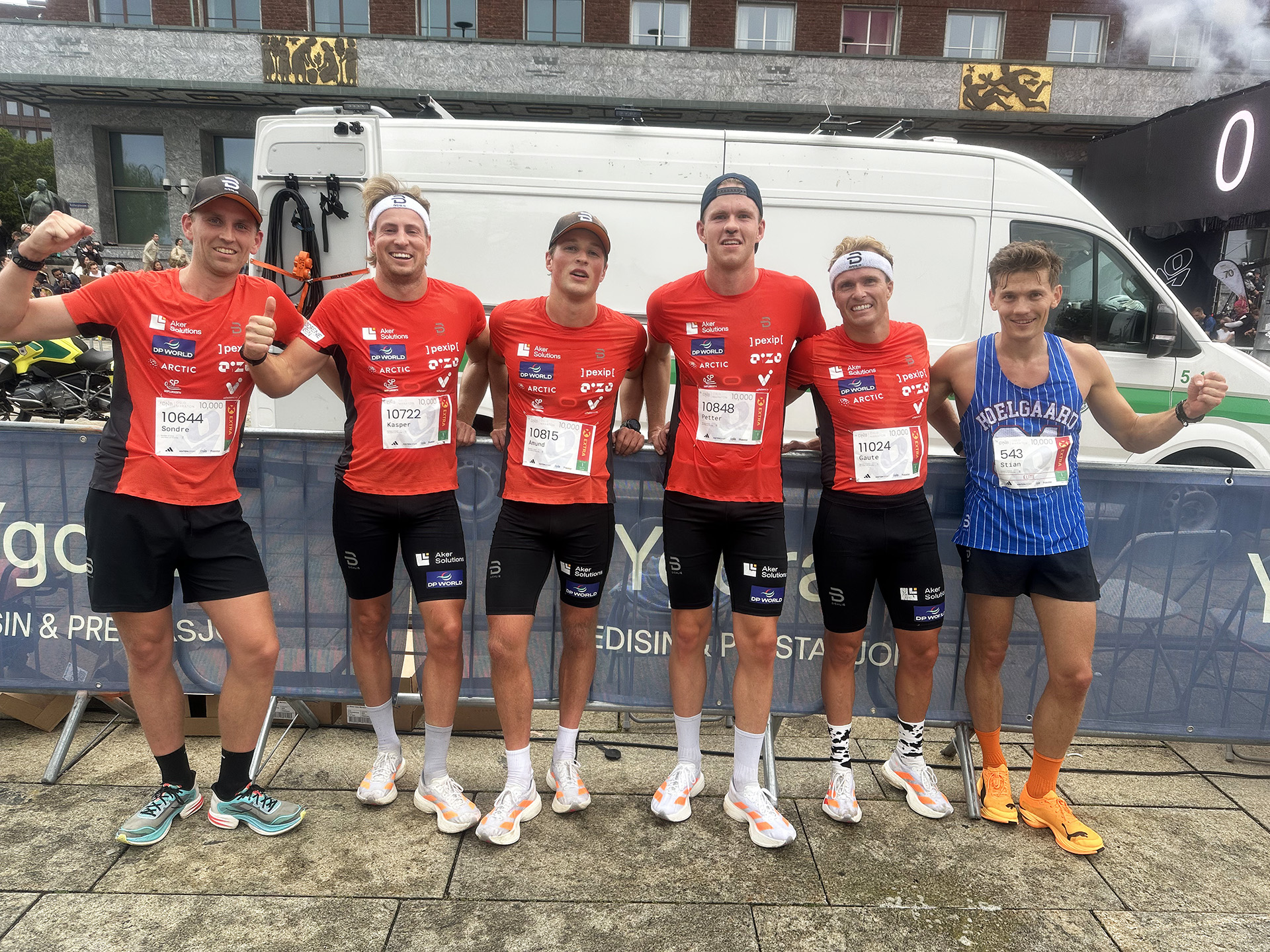
The standout performance among the men’s group came from Stian Hoelgaard. Now representing Nittedal IL, the former professional Ski Classics competitor proved that his competitive fire remains undimmed. Hoelgaard crossed the finish line in an impressive 30 minutes and 37 seconds, securing a 15th-place finish in a field of over 10,000 runners. His performance was widely regarded as the most technically proficient among the skiing group, highlighting his ability to maintain a high turnover and efficient cadence despite the surface change.
Following Hoelgaard, the Team Aker Dæhlie roster engaged in a spirited internal competition. Gaute Kvåle emerged as the fastest of his teammates, clocking in at 31 minutes and 15 seconds to take 27th place overall. His performance was closely scrutinized by coaching staff as a marker of his current cardiovascular efficiency. Petter Stakston followed roughly a minute later, finishing in 32 minutes and 15 seconds to claim 43rd place. The depth of the Team Aker Dæhlie squad was further evidenced by the results of Amund Riege and Kasper Stadaas, who posted times of 32 minutes and 38 seconds and 32 minutes and 43 seconds, respectively. Sondre Bollum rounded out the team’s participation with a time of 33 minutes and 17 seconds, finishing well ahead of the pace set by many high-level competitors.
Heidi Weng’s Podium Streak
On the women’s side, national team star and Olympic relay champion Heidi Weng reaffirmed her status as one of Norway’s most formidable endurance athletes. Competing for IL BUL, Weng secured a spot on the podium for the second consecutive year, finishing third with a time of 34 minutes and 17 seconds.
While the result was slower than her outing in the previous year, Weng offered a pragmatic analysis of the race. "It was a minute slower than last year and one position lower, but I have been running significantly less on asphalt this season," Weng remarked following the race. She noted that her training focus has been heavily tilted toward the upcoming winter season, which requires a specific physiological adaptation different from that of road racing. Despite the slight drop in performance metrics, Weng’s enthusiasm for the event was palpable. "I truly love participating in these races. The atmosphere is incredible, and the opportunity to interact with such a large community of runners is something I deeply appreciate," she added. Weng confirmed that she intends to incorporate more road racing into her training blocks as she prepares for a high-stakes winter campaign.
The Broader Context: Elite Performance at the Oslo Marathon
The event was headlined by Hanne Maridal of Strindheim, who set a blistering pace to claim victory in the women’s category with a time of 28 minutes and 56 seconds. Her performance set a new benchmark for the field, pushing the pace well beyond the reach of the chasing pack. Anna Sirevåg, representing the host club Vidar, took second place with a time of 32 minutes and 12 seconds.
In the men’s race, Abduilahi Dahri Rabri of IL BUL secured the overall victory with a time of 28 minutes and 56 seconds. The fact that both the men’s winner and Heidi Weng represent the same club—IL BUL—was a point of organizational pride, highlighting the club’s dominance in nurturing elite endurance talent across multiple disciplines.
The Oslo Marathon itself has evolved significantly since its inception, now serving as a major international event that bridges the gap between elite athletics and recreational participation. With 30,000 registrants across the full marathon, half-marathon, and the 10-kilometer "10 for Grete" distance, the logistics of the event represent a massive undertaking for the city of Oslo, requiring extensive coordination between local authorities and the organizing body.
Chronology of the Event Day
- 08:00 AM: Final preparations at the start/finish area near the Oslo City Hall as the first waves of the full marathon began.
- 10:30 AM: Start of the "10 for Grete" race, where the elite field, including the Ski Classics stars, commenced their 10-kilometer loop.
- 11:00 AM: Mid-race checkpoint updates showed Hoelgaard maintaining a lead among the skiing cohort, with Kvåle and Stakston within striking distance.
- 11:30 AM: Finish line activity peaked as the top-tier finishers completed their races, with Maridal and Rabri taking top honors.
- 12:30 PM: Post-race interviews with Heidi Weng and other elite participants provided insights into their training cycles and the impact of the race on their seasonal preparation.
Physiological and Training Implications
For athletes like Hoelgaard, Kvåle, and Weng, the Oslo Marathon provides data points that are difficult to replicate in a laboratory setting. While cross-country skiing is a full-body sport that relies heavily on upper-body power and core stability, running on asphalt imposes different stress on the lower limbs and cardiovascular system. The ability of these skiers to perform at a high level without specialized running preparation suggests a high degree of "aerobic transferability."
However, sports scientists often caution that the biomechanical differences between skiing and running can lead to an increased risk of injury if the transition is too abrupt. The skiers’ performance in Oslo serves as a testament to their overall conditioning, but also underscores the necessity of a structured training plan that prevents burnout as they move from the marathon circuit into the winter ski season. The "10 for Grete" is, in many ways, an ideal distance for these athletes—long enough to test their endurance, but short enough to avoid the extreme impact stresses associated with a full 42.2-kilometer marathon.
Future Outlook and Closing Thoughts
The continued participation of elite winter athletes in the Oslo Marathon is a positive development for both sports. It encourages cross-pollination between the running and skiing communities and provides the public with an opportunity to see their winter heroes in a different, highly accessible setting.
As the Ski Classics season approaches, the focus for Hoelgaard, Weng, and their peers will shift back to the snow. However, the data gathered on the streets of Oslo will likely inform their conditioning strategies throughout the autumn months. With Heidi Weng expressing an interest in expanding her presence in future road races, it is likely that the "10 for Grete" will continue to serve as a recurring venue for high-level athletic engagement, further cementing the Oslo Marathon’s status as a premier event in the Norwegian sporting landscape. The results from this year’s race serve as a reminder that regardless of the surface, the core tenets of endurance sport—discipline, aerobic capacity, and tactical pacing—remain universal.

