
Alpine skiing represents one of the most complex mechanical challenges in elite athletics, requiring human beings to navigate high-velocity environments while managing extreme, fluctuating forces that oscillate through the body at every turn. While traditional strength and conditioning protocols often prioritize the raw development of muscular capacity—measuring success through weight room metrics such as maximal squatting or deadlifting—modern sport science reveals that physical output is only one half of the performance equation. The critical, often overlooked factor is the nervous system’s role in regulating, coordinating, and inhibiting force expression when an athlete transitions from a controlled gym setting to the unpredictable, high-stakes environment of a race course.
The Neuromuscular Paradox in Alpine Sports
The fundamental challenge for the alpine skier lies in the discrepancy between "potential" strength and "usable" performance. In the weight room, the environment is static: the floor is level, the bar path is predictable, and the risk of injury is relatively low. On the snow, the mechanical environment is in constant flux. A skier must absorb eccentric loads that can exceed several times their body weight while simultaneously managing rapid changes in edge angle, snow density, and terrain geometry.
Neurological research indicates that the central nervous system acts as a sophisticated regulator, not just a generator of force. It continuously integrates sensory feedback—proprioception from the ankles and knees, vestibular input regarding balance, and visual cues about the upcoming gate—to determine how much motor unit recruitment is appropriate. When the nervous system perceives an unfamiliar or excessively dangerous environment, it may trigger protective inhibitory mechanisms. These mechanisms, often manifesting as reduced muscle firing or stiffening patterns, are not necessarily failures of the athlete; they are survival strategies designed to protect the integrity of the joints and connective tissues.
Chronology of Athletic Development and Force Management
The pathway to elite performance follows a distinct trajectory: first, the athlete builds a physical reserve; second, they learn to access that capacity; and finally, they express that force under extreme conditions.
Historically, coaching philosophies focused almost exclusively on the "reserve" phase—increasing raw muscle mass and peak power output. However, evidence from recent decades in sports biomechanics suggests that this approach has limits. A chronological breakdown of a skier’s development typically begins with General Physical Preparation (GPP), focusing on tissue tolerance and structural integrity. This is followed by Sport-Specific Preparation, where the focus shifts toward eccentric and reactive loading.

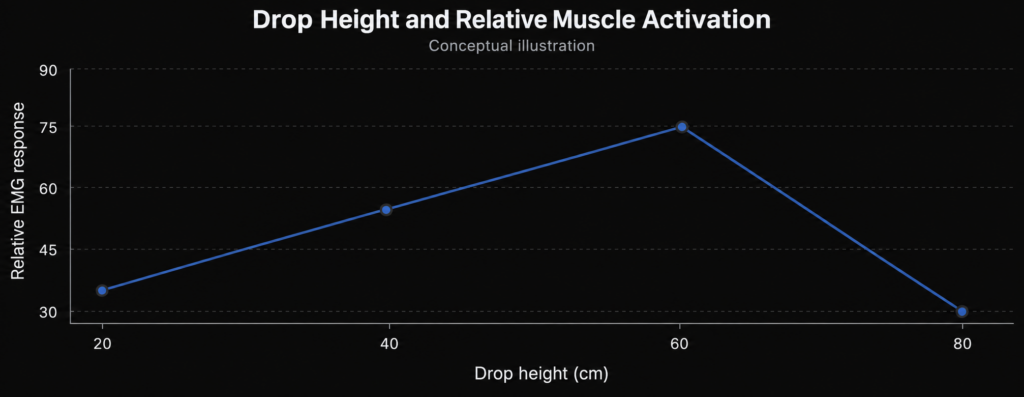
In the mid-2010s, a shift in elite programs saw the integration of drop-jump and plyometric protocols. These were not initially intended for raw height, but rather to train the nervous system to handle "rate of force development" (RFD). Researchers found that as jump heights increased, the athlete’s muscle activation patterns changed. When the drop height was known, the nervous system prepared for the impact with specific motor unit patterns; when the height was unknown, or the demand exceeded the athlete’s current threshold of control, the activation patterns became more chaotic, often resulting in "protective cocontraction," where the athlete stiffens, losing the fluidity necessary for efficient skiing.
Supporting Data and Scientific Analysis
Electromyographic (EMG) studies have provided vital insights into why stronger athletes do not always win. Data from single-leg landing studies demonstrate that as mechanical demands—such as landing height or load—increase, the nervous system often reorganizes the movement strategy. In many cases, an increase in force requirement does not result in a linear increase in muscle activity. Instead, the nervous system may "cap" the output to avoid injury.
This phenomenon is often described in terms of the corticospinal inhibition pathway. Some research suggests that specialized eccentric training can reduce this inhibition, effectively "turning off the brakes" that the brain imposes on the muscles. However, sports scientists warn against applying these findings as a panacea. The goal in training is not to remove all inhibitory control—as that would invite catastrophic injury—but to raise the threshold at which the nervous system feels the need to intervene. By training at high intensities in controlled, progressive settings, the athlete gradually teaches the nervous system that higher levels of force are "safe," thereby allowing for greater expression of power during competition.
Implications for Training Protocols
The implication for ski academies and high-performance coaches is clear: training must be as much about neurological literacy as it is about physical hypertrophy. If a skier reaches a plateau, it is rarely because they have reached their biological ceiling for strength. More often, they have reached their threshold for "perceived safety" within their nervous system.
When an athlete is on a race course, they are essentially solving a high-speed physics problem. If they lack the "physical reserve," they are forced to operate at 90–95% of their capacity just to stay upright. In this state, there is zero margin for error; any bump in the snow or shift in speed leads to a collapse in form. Conversely, an athlete with a larger reserve—built through high-quality eccentric and reactive training—can perform the same maneuver using only 60% of their available capacity. This "neurological headroom" allows them to stay relaxed, maintain fluid movement patterns, and react to the course’s unpredictability without triggering protective inhibition.
Expert Perspectives on Performance Integration
Industry leaders and organizations like the Rowmark Ski Academy have emphasized that technical skiing is fundamentally an act of regulation. A skier must move from simple force capacity to "force regulation," which involves the ability to release force precisely when needed. This requires a transition from the weight room to the snow that involves "perturbation training"—exercises that intentionally introduce instability to force the athlete to maintain coordination under pressure.
"The goal," notes industry literature on the subject, "is not to remove the nervous system’s regulatory mechanisms. It is to expand the conditions under which the athlete can remain coordinated." When an athlete enters a high-speed turn, the timing of their muscle activation—the "pre-activation" of the quadriceps and core before the skis hit the ice—is what separates a podium finisher from the rest of the pack. This timing is a function of neurological adaptation, not just raw muscle size.
Broader Impact and Future Directions
The integration of neuroscience into ski training is shifting the paradigm of how we define the "complete athlete." The four components of performance—force capacity, force regulation, coordinated expression, and performance under uncertainty—must be viewed as a single, unified system.
An athlete who performs flawlessly in the gym but struggles on the hill may be suffering from a "perceptual limitation." They possess the capacity, but their nervous system does not recognize the environment as safe enough to express it. Solving this requires more than just adding weight to the bar; it requires a systematic, progressive exposure to the stressors of the sport. By introducing speed, steeper terrain, and variable snow conditions in a structured manner, coaches can help athletes recalibrate their nervous systems, effectively expanding their comfort zone.
As the sport of alpine skiing continues to evolve, the focus is increasingly moving toward this "neural capacity." With advancements in wearable technology, such as wireless EMG and high-speed motion capture, coaches are now better equipped to monitor when an athlete’s movement strategy begins to break down. This data-driven approach allows for the creation of individualized, load-appropriate training cycles that respect the complexities of the human nervous system.
In summary, while the foundation of skiing remains physical, the ceiling of performance is determined by the nervous system. Athletes who can remain coordinated, fluid, and powerful under the most chaotic conditions are those who have successfully bridged the gap between raw capacity and its effective, real-world expression. This holistic approach to training ensures that when the starting gate opens, the athlete is not just prepared to survive the course, but to dominate it through precise, calculated, and high-level neurological control.

