
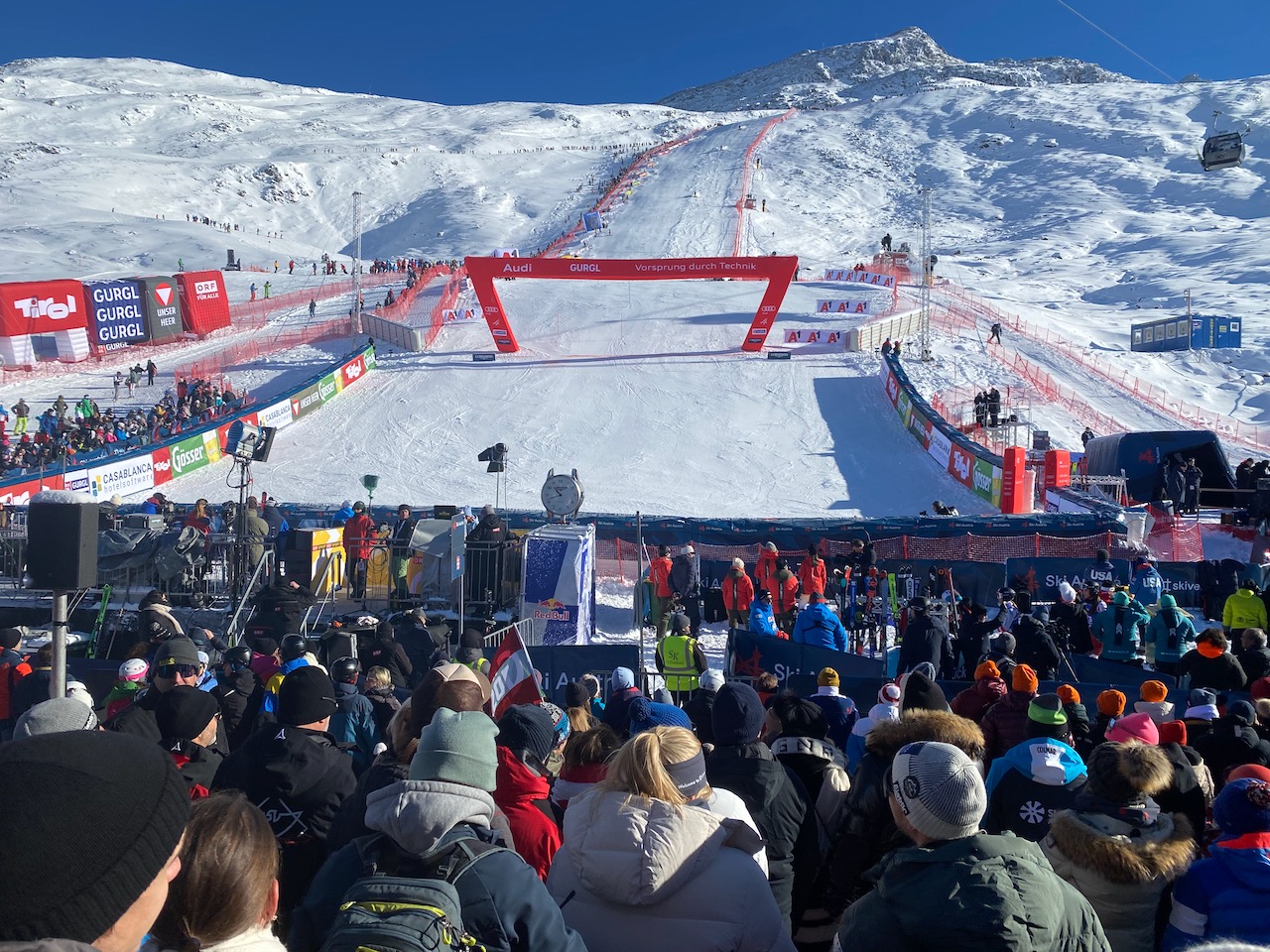
The Alpine skiing world turns its gaze toward the start gate this season as one of the most decorated athletes in the history of the sport, Marcel Hirscher, prepares to contest the upcoming Men’s Alpine Skiing World Cup. Scheduled to return to competitive action on October 6, 2026, the Austrian-born legend, who now races under the flag of the Netherlands, arrives with the intent of proving that his competitive fire remains undimmed despite a tumultuous two-year absence from the slopes.
Hirscher, whose transition to representing his mother’s homeland of the Netherlands in 2024 sent shockwaves through the International Ski Federation (FIS) community, will be starting with bib number 31. This specific positioning—immediately following the sport’s top-seeded athletes—presents a unique technical challenge. On the icy, rutted tracks typical of a World Cup course, the later start position often necessitates a higher level of precision to navigate a surface already degraded by the preceding thirty racers.
A Legacy Defined by Dominance
To understand the magnitude of Hirscher’s return, one must revisit a career that fundamentally reshaped modern alpine skiing. Between 2012 and 2019, Hirscher achieved an unprecedented streak of eight consecutive overall World Cup titles, a record that stands as the gold standard for consistency and technical mastery in winter sports.
His trophy cabinet is further bolstered by two Olympic gold medals earned at the 2018 Pyeongchang Games, where he triumphed in the combined and giant slalom events, along with a silver medal from the 2014 Sochi Games in the slalom. Beyond the Olympics, Hirscher secured seven World Championship gold medals, cementing his reputation as a generational talent who could oscillate between technical finesse in slalom and the high-speed demands of giant slalom with equal efficiency.
The Chronology of a Storied Comeback
Hirscher’s journey back to the professional circuit has been far from linear. After his initial retirement in 2019—at the height of his powers—the sport underwent a period of transition as younger stars like Marco Odermatt began to rise. However, the allure of competition proved too strong to ignore.
- 2019: Hirscher announces his official retirement from professional racing, citing physical exhaustion and a desire to pursue life outside the grueling FIS calendar.
- 2024: After several years of hiatus, Hirscher sparks international headlines by announcing a return to the sport. He confirms he will switch his sporting nationality from Austria to the Netherlands, his mother’s home country, allowing him to compete without the political and bureaucratic constraints often faced by a national team veteran returning to the fold.
- 2024-2025 Season: The comeback is abruptly halted. After only three races, Hirscher suffers a catastrophic injury during a training session, tearing his cruciate ligament. This setback forced him to miss the remainder of the season and, crucially, the following Olympic winter cycle, sidelining him for nearly two years.
- 2026: Following a rigorous rehabilitation process, much of which was conducted at high-altitude training facilities in Argentina to optimize physical conditioning, Hirscher confirms his readiness for the 2026 World Cup circuit.
Technical Analysis and Training Regimen
The transition from a two-year injury layoff to elite-level competition is fraught with physiological hurdles. Hirscher’s decision to base his training in Argentina was a calculated move. By utilizing the Southern Hemisphere’s winter, he gained access to high-quality snow conditions while avoiding the intense media scrutiny of the European press.
Physiotherapists and sports scientists note that for an athlete of Hirscher’s age, the primary concern is not technical skill—which is deeply ingrained—but rather the explosive power required to manage the massive G-forces exerted on the knee during high-speed turns. His bib 31 status implies that FIS officials and organizers are treating his return with cautious respect; he is being granted the opportunity to compete, but he has not been afforded the "top 30" protection usually reserved for established ranking leaders. This forces him to earn his spot on the leaderboard through sheer speed rather than institutional privilege.
Broader Implications for the World Cup Circuit
The return of a figure as iconic as Hirscher has significant implications for the commercial and competitive landscape of alpine skiing.
Commercial Impact:
The "Hirscher Effect" is a well-documented phenomenon in skiing. His presence invariably leads to higher television viewership, increased ticket sales at resort venues, and heightened interest from sponsors. The Dutch skiing federation, traditionally a minor player in the global alpine circuit, has seen a surge in visibility and investment potential since the athlete’s nationality switch.
Competitive Dynamics:
Hirscher’s return adds a layer of complexity to the current rivalry between the sport’s modern leaders. For the current generation of racers, competing against a man they viewed as their childhood idol creates a psychological dynamic rarely seen in other sports. Hirscher is not merely a competitor; he is a benchmark. His performance in the upcoming races will provide a direct metric for how much the sport’s technical standards have evolved in his absence.
Official Stances and Industry Perspectives
While the FIS has maintained a neutral, professional stance, spokespersons have noted that Hirscher’s return is a "positive development for the growth of the sport." Within the Austrian camp—his former home—the reaction has been one of respect. Former coaches and teammates have publicly expressed admiration for his resilience, though they acknowledge that the field is significantly deeper and more competitive than it was when Hirscher first dominated the standings.
Industry analysts at PlanetSKI note that this comeback is as much about the athlete’s internal drive as it is about external accolades. "Hirscher is not returning to make up the numbers," says a lead analyst. "He has invested heavily in his own equipment research and development, and his training in Argentina suggests he is looking for the kind of edge that made him unbeatable in the past. Whether that translates to the current, faster generation of skiers remains the central question of the season."
The Road Ahead: Challenges and Expectations
As the calendar turns toward the first major events of the 2026 season, the pressure on Hirscher will be immense. The bib number 31 signifies that he starts the season as a challenger rather than the hunted. If he can secure a top-ten finish in his opening races, he will likely improve his start position, moving into the top 30 group and mitigating the disadvantage of skiing on tracked-out snow.
However, the reality of modern alpine skiing is that the margins between success and failure are measured in hundredths of a second. The sport has seen a rapid advancement in ski geometry, boot stiffness, and aerodynamic suits over the last 24 months. Hirscher’s ability to integrate these technological advancements with his own veteran instincts will determine if he can bridge the gap between his past glory and his present reality.
Fans and analysts alike are tempering expectations, acknowledging that a cruciate ligament injury, combined with a two-year hiatus, is a hurdle that even the greatest skiers find daunting. Yet, if history is any indication, Marcel Hirscher thrives when faced with adversity. His 2026 campaign is not just an attempt to reclaim a podium; it is a test of whether a sporting icon can successfully transcend the physical limitations of time and injury.
As the race day approaches, the focus remains firmly on that start gate. Whether he podiums or struggles to make the second run, Hirscher’s presence in the start list serves as a testament to the enduring appeal of one of the world’s most demanding winter sports. For the fans who have followed his journey from the slopes of Salzburg to the peaks of Argentina, the 2026 season represents a final, captivating chapter in a career that has already secured its place in the history books.
The sport now waits for the sound of the starting gate, the crunch of the skis on the ice, and the first turn of what promises to be one of the most closely watched seasons in FIS history. Regardless of the outcome, Marcel Hirscher’s return has already achieved one thing: it has ensured that all eyes are firmly fixed on the alpine circuit for the months to come.

