
The eternal paradox of winter travel has long plagued drivers who chase snow-covered destinations: as precipitation improves for recreational purposes, the infrastructure required to access it deteriorates rapidly. The meteorological conditions that create pristine powder conditions for winter sports enthusiasts simultaneously transform mountain passes and rural corridors into treacherous trials of vehicular control. For decades, navigating these hazardous routes demanded a compromise between the aggressive ice-biting traction of metal-studded tires and the civilized, road-preserving ride quality of non-studded alternatives. Today, however, advances in materials science and automotive engineering are fundamentally reshaping this dynamic, eliminating the traditional trade-offs of winter driving through the introduction of adaptive tire technology.
At the forefront of this transformation is Nokian Tyres, a Finnish manufacturer with a nearly century-long history in cold-weather mobility. The company has officially introduced the Hakkapeliitta 01, a winter tire featuring an automated, temperature-sensitive compound layer designed to deploy and retract tire studs dynamically. This technological leap bypasses the manual inconveniences and mechanical limitations of earlier concepts, offering drivers an automated solution to rapidly changing road conditions without requiring manual intervention from behind the wheel.

Main Facts and Technological Breakthroughs
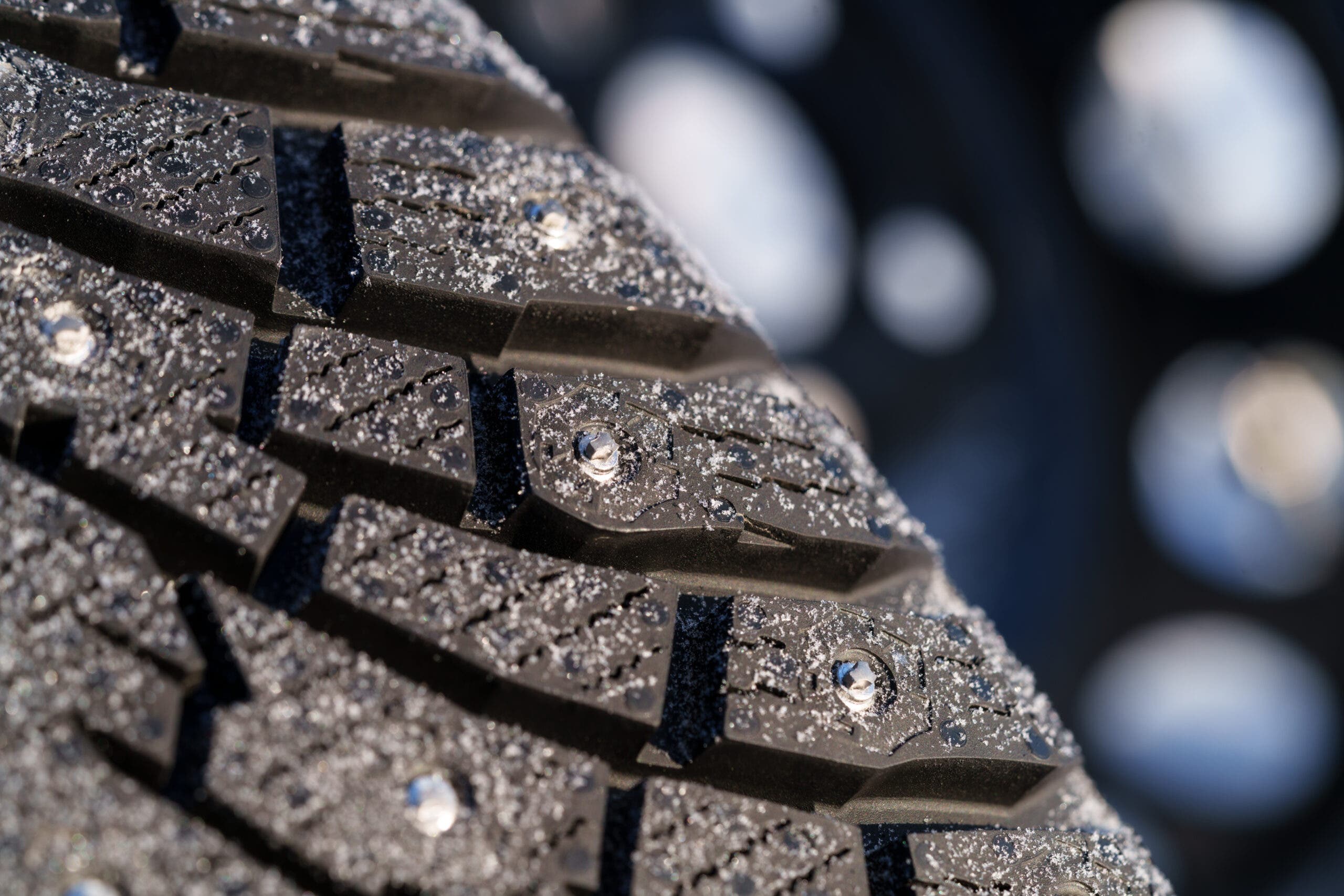
The defining innovation of the Hakkapeliitta 01 lies in its proprietary adaptive base compound. Unlike conventional winter tires, which feature static studs that either remain permanently exposed or require specialized installation, this new model utilizes thermal reactivity to manage its traction elements. As ambient and surface temperatures drop and road conditions deteriorate into packed snow or black ice, the adaptive compound firms up. This hardening action mechanically engages the embedded studs, pushing them outward to bite into slippery surfaces. Conversely, when the vehicle transitions to warmer, dry, or wet asphalt, the compound softens, allowing the studs to retract smoothly into the tire body.
This on-off stud mode yields dual operational benefits. It provides immediate, high-level grip precisely when environmental hazards demand enhanced friction, while drastically reducing pavement degradation and cabin noise when dry conditions resume. According to preliminary testing data, the Hakkapeliitta 01 represents a measurable performance increase over its predecessors, boosting ice grip by 10 percent and wet-surface traction by 5 percent.
Furthermore, the engineering team has addressed environmental and infrastructural concerns associated with studded tires. By minimizing aggressive metal-to-road contact during non-winterized conditions, the tire reduces road wear by up to 30 percent, thereby mitigating the release of harmful particulate matter into the atmosphere. Depending on the specific size variant, certain models also integrate an internal acoustic foam layer designed to dampen cabin noise by as much as eight decibels, addressing a historically common complaint among drivers of studded winter equipment.

A Twelve-Year Chronology of Development
The realization of the Hakkapeliitta 01 is the culmination of decades of corporate heritage blended with modern materials research. Nokian Tyres originally invented the winter tire category 92 years ago in Finland, establishing a legacy of cold-weather experimentation. However, the specific genesis of a retractable stud system dates back approximately twelve years, when company engineers first conceptualized a dynamic traction device worthy of cinematic application.
According to Hans Dyhrman, a representative for Nokian Tyres, the earliest prototypes relied on a mechanical, driver-actuated button system. While effective in principle, the initial iterations were prohibitively expensive and mechanically complex. Engineers frequently joked that the development prototypes cost more than the high-end Porsche test vehicles they were mounted on, rendering the technology entirely unviable for commercial mass production.
Rather than abandoning the concept, the engineering division pivoted toward materials science. Over the subsequent decade, researchers experimented extensively with polymer compounds across varying thermal spectrums. The critical breakthrough arrived when the development team inverted a foundational automotive engineering principle. While high-performance summer and racing tires are meticulously designed to dissipate heat to prevent premature wear and loss of grip, Nokian researchers asked how thermal energy could instead be harnessed to govern tire performance. This conceptual reversal led directly to the development of the patented adaptive base compound that dictates stud movement based on frictional heat and ambient temperature.

Precision Engineering and Manufacturing
The physical architecture of the Hakkapeliitta 01 combines advanced chemical composition with rigorous mechanical geometry. Beyond the adaptive layer, the tire incorporates an internal locking stratum designed to anchor the studs securely when subterranean temperatures dictate maximum retention. The exterior sidewalls are reinforced with aramid fibers—the same high-tensile material utilized in the manufacture of personal body armor—providing exceptional resistance against punctures, cuts, and structural damage caused by sharp potholes, rocks, and glacial debris.
Tread pattern design has similarly been optimized using advanced computer-aided modeling and robotic manufacturing precision. The tire features a dual-siping arrangement, utilizing larger sipes along the shoulders for enhanced cornering stability and shorter sipes in the center tread to maximize linear braking and acceleration response. Furthermore, individual stud placement and layout are customized for every distinct tire size. Because an average passenger tire completes approximately 13 rotations per second at standard highway velocity, the spatial orientation of each stud must be mathematically calibrated to ensure continuous contact patch efficiency across icy, snowy, slushy, and dry surfaces.
Rigorous Field Testing in the Arctic Circle
To validate the performance of the Hakkapeliitta 01 under extreme duress, Nokian Tyres relies on its state-of-the-art testing facility located in Ivalo, Lapland. Situated 200 miles north of the Arctic Circle, the facility experiences sub-zero temperatures for roughly 200 days out of the year, providing a natural laboratory for cold-weather engineering.
Testing protocols at the Finnish facility include a specialized, one-kilometer-long enclosed ice tunnel designed to simulate consistent subterranean freezing conditions. To test the adaptive capabilities of the new tire under transitional states, test drivers routinely run vehicles from a climate-controlled, heated indoor garage directly onto the subterranean ice track. This setup allows engineers to measure stopping distances, lateral G-forces, and thermal reaction times instantaneously as the tires transition from warm pavement simulations to severe ice.
Company leadership emphasizes that while advanced tire technology significantly expands the margin of error in adverse conditions, it remains a complement to, rather than a replacement for, driver competence. Industry experts consistently note that familiarity with anti-lock braking systems (ABS), weight transfer dynamics, and vehicle responsiveness are vital components of winter safety. Practical, controlled experiential training remains essential for motorists unaccustomed to navigating severe meteorological environments.
Broader Industry Implications and Future Outlook
The commercial introduction of the Hakkapeliitta 01 arrives at a time when municipal departments and transportation agencies across North America and Europe are grappling with the ecological and infrastructural costs of traditional studded tires. Many jurisdictions impose strict seasonal limitations on metal studs or outright bans due to the extensive damage they inflict on asphalt surfaces over prolonged periods.

By engineering a tire that autonomously modulates its metal footprint based on thermal feedback, Nokian Tyres presents a compelling solution for regulatory bodies seeking to balance public safety with infrastructure preservation. The reduction in particulate matter pollution combined with lower municipal road maintenance expenditures positions adaptive tire technology as a significant milestone in sustainable automotive engineering. As consumer demand for versatile, all-weather safety features continues to rise, innovations of this caliber are expected to redefine expectations for seasonal mobility, bridging the historical gap between winter grip and year-round practicality.

