
For an individual whose professional and personal life revolves around the slopes, the admission of such a basic yet profound error is, as the editor candidly put it, "embarrassing." However, it is also a powerful testament to the often-underestimated complexity of ski boot fitting, particularly the critical dimension of boot volume. This isn’t a mere comfort issue; it’s a fundamental aspect that dictates control, performance, and ultimately, a skier’s ability to truly connect with their equipment and the mountain. The editor’s journey through countless boot reviews, expert consultations, and gear guides never quite led to connecting the dots on why their boots, while seemingly "snug" and free of glaring hot spots, never delivered that elusive next level of performance.
The Science of Ski Boot Fit: Beyond Shell Size and Flex
In the intricate anatomy of a ski boot, three primary metrics govern fit: shell size (measured in Mondopoint, corresponding to foot length), flex index (indicating stiffness, ranging from soft for beginners to very stiff for experts), and last width, which is the industry term for boot volume. While shell size and flex often dominate discussions and consumer focus—with marketing frequently highlighting advanced shell materials or innovative flex mechanisms—boot volume, or last width, remains arguably the most overlooked—and frequently misjudged—element.
Last width, typically measured across the widest part of the forefoot when the foot is loaded, ranges broadly across models and brands. For instance, a performance-oriented low-volume boot might feature a 98mm last, a mid-volume boot commonly sits at 100mm, and a high-volume, comfort-focused boot could be 102mm or wider. This measurement directly impacts the amount of space around the forefoot, instep, and heel, critically influencing how securely the foot is held within the boot without being constricted or, conversely, having too much room to move.
The challenge lies in the inherent design philosophy of ski boots. Unlike conventional footwear, which allows for varying degrees of looseness, ski boots are engineered for a highly form-fitting, almost compressive experience. This is crucial for ensuring optimal energy transfer from the skier’s body through the boot to the ski edges, enabling precise control and responsiveness. This means that even a boot that is technically too large in internal volume can still feel "tight" to an unaccustomed foot. The sensation of being encased, a departure from the generous space offered by casual footwear like sneakers or sandals, can easily lead skiers to believe they are in a correctly sized boot, when in reality, the internal volume might be excessive, allowing for micro-movements that compromise control. This phenomenon was precisely what the Executive Editor experienced for decades: a feeling of adequate snugness that masked an underlying lack of true precision.
The implications of an incorrect boot volume extend far beyond mere discomfort. A boot with too much internal volume, even if cinched down tightly with buckles or advanced closure systems, will allow the foot to shift, reducing the efficiency of power transmission to the ski edges. This translates to a delayed response, reduced carving ability, a general feeling of being less "connected" to the snow, and increased effort to achieve desired movements. Conversely, a boot that is too low in volume for a skier’s foot can lead to painful pressure points, nerve impingement (e.g., Morton’s neuroma), impaired circulation (leading to cold feet), and ultimately, forcing premature stops and detracting from the overall skiing experience. Both scenarios undermine performance, increase fatigue, and can even contribute to injury risks. A study published in the Journal of Sports Science and Medicine indicated that improper boot fit contributes significantly to foot and ankle discomfort in skiers, with a direct correlation to perceived performance limitations.
A Decades-Long Misconception: The Editor’s Chronicle
The Executive Editor’s personal odyssey highlights a common pitfall within the skiing community, regardless of expertise. With a skiing tenure stretching back to grade school, a deep professional engagement with SKI Magazine’s annual Gear Guides (where countless boots are reviewed), and an extensive personal history of instruction and recreational skiing, one would expect an encyclopedic knowledge of proper equipment. Yet, the subtle nuances of boot volume eluded capture. The editor’s boots always felt "like a firm handshake," a commonly cited ideal in bootfitting circles. There were no obvious "hot spots" – areas of intense pressure – nor significant gaps that would indicate a grossly oversized boot. This made the problem insidious; it wasn’t a glaring flaw but a persistent, subtle impediment that prevented the editor from reaching a higher echelon of skiing proficiency. The ability to tackle steep terrain and enjoy powder days was never truly compromised, but the potential for refined control and advanced technique remained untapped.
The turning point arrived in November 2025, leading up to the 2026 winter season. The editor invested in a new pair of ski boots, notably featuring a BOA closure system. BOA closures, known for their micro-adjustability, even pressure distribution across the instep, and ability to "lock down" the heel, were anticipated to resolve any lingering fit issues and unlock the desired performance. However, during their maiden runs in Vail in December, despite the perceived "firm, perfect fit" facilitated by the advanced closure system, the crucial element of superior control remained elusive. This persistent dissatisfaction, even with state-of-the-art technology, finally prompted a visit to a Surefoot store in Vail Village, seeking solutions in the form of custom footbeds or liners. It was here, in the unassuming environment of a specialized bootfitting shop, that the decades-long mystery began to unravel.
Surefoot: Pioneering Custom Bootfitting Technology
The choice of Surefoot was not coincidental for a seasoned industry professional. Founded in 1982 by brothers Bob and Russ Shay in Park City, Utah, Surefoot emerged from a direct response to a pervasive problem in the skiing world: painful and poorly fitting ski boots. As lifelong skiers and competitive racers, the Shays intimately understood the frustration and performance limitations imposed by ill-fitting footwear. Their pioneering vision was to move beyond the industry’s then-standard "one-size-fits-all" approach and introduce truly customized boot solutions. This ambition led them to develop proprietary technology and processes that revolutionized ski boot fitting. Today, Surefoot stands as a global leader in custom bootfitting, boasting over 30 stores across North America and Europe, a testament to their enduring impact on the sport and their consistent pursuit of individualized fit solutions.
The Surefoot methodology is a comprehensive, multi-stage process designed to create a boot that is a precise extension of the skier’s foot and lower leg. It begins with a meticulous digital scan and foot evaluation. This isn’t merely a measurement of length and width; advanced 3D scanning technology captures the precise contours of the foot, including arch height, instep volume, ankle bone prominence, and crucial heel shape. This data provides an objective, highly accurate blueprint of the foot’s unique topography, which is indispensable for selecting the correct shell and understanding the necessary modifications. This initial step effectively removes the guesswork often associated with traditional, manual bootfitting measurements.
The second critical step involves the creation of a custom insole. Unlike generic insoles that offer minimal, generalized support, Surefoot’s custom insoles are engineered to match the individual arch structure and support the foot precisely. By providing a stable platform, custom insoles reduce foot fatigue, alleviate pressure points, and enhance overall control by optimizing energy transfer from the foot to the ski. They prevent excessive pronation or supination within the boot, ensuring the foot remains in an anatomically neutral and powerful position. These insoles are crafted directly from the 3D scan data, ensuring a perfect interface between the foot and the boot board.
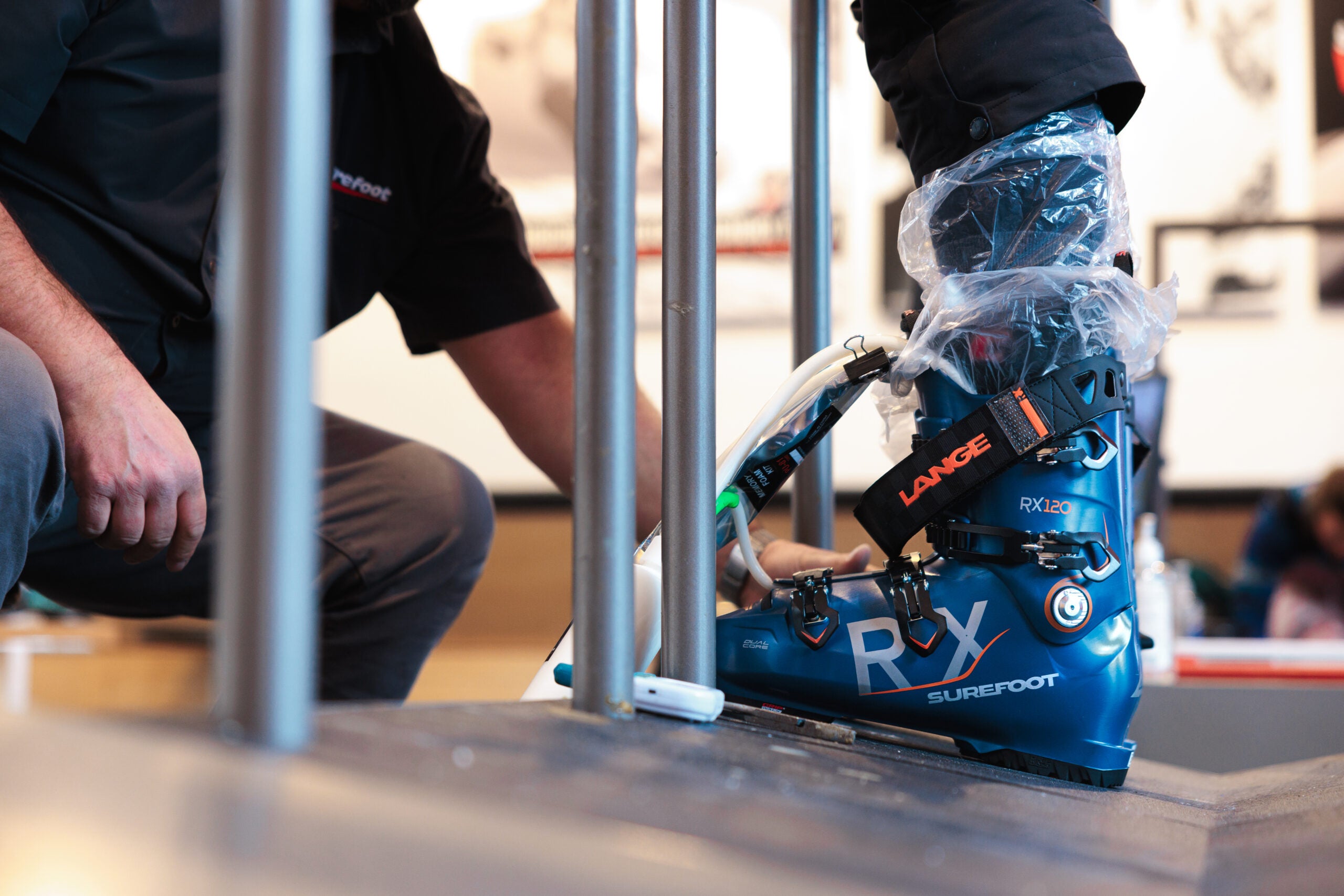
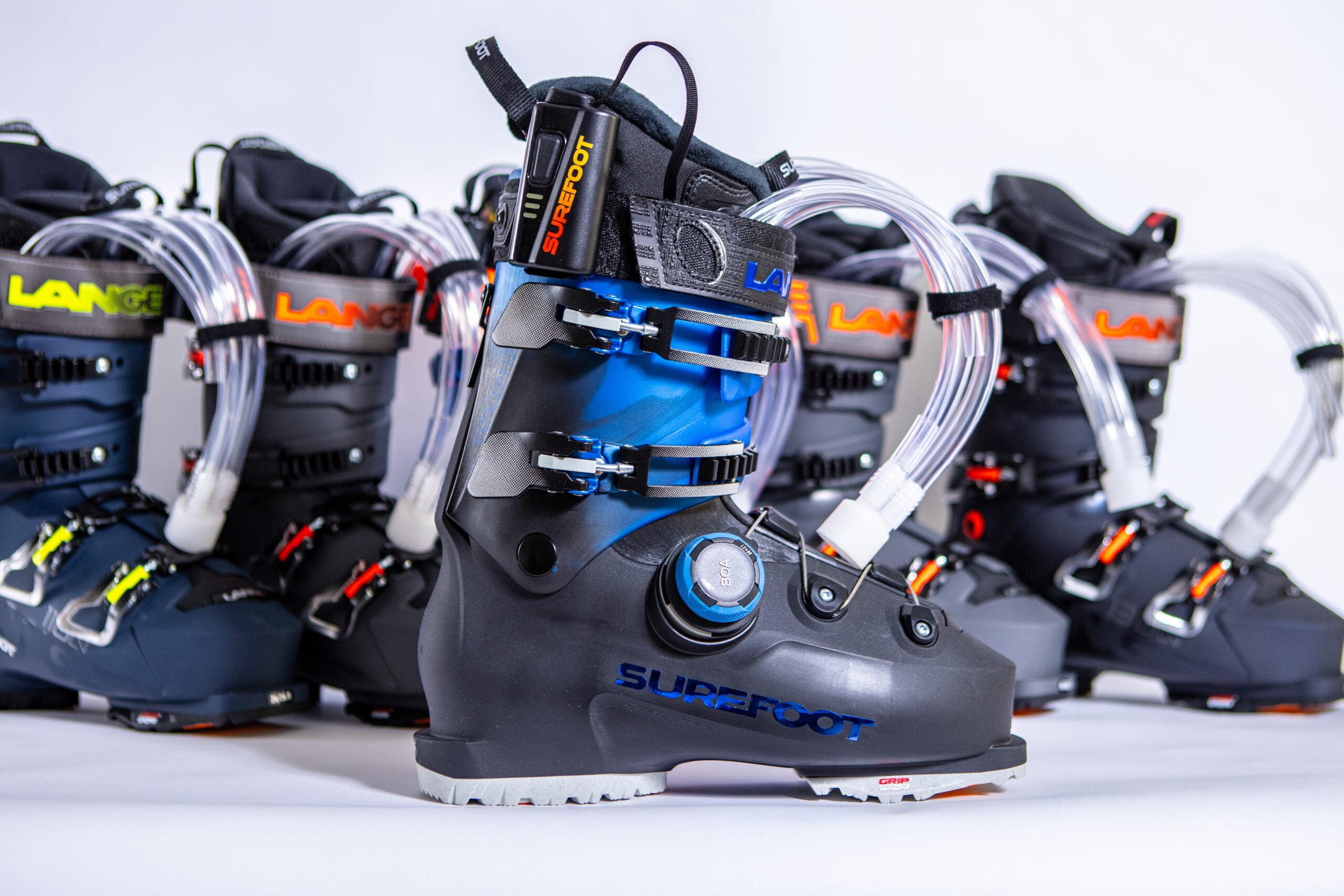
Finally, the Surefoot process culminates in the molding of the boot liner using a specialized chemical foam. This proprietary process involves injecting a liquid foam directly into the liner while the skier’s foot is properly positioned within the boot shell. As the foam expands and cures, it conforms precisely to every nuance of the foot and lower leg, creating a bespoke internal environment. This customized liner provides unparalleled support, eliminates pressure points, and maximizes comfort and responsiveness. The resulting fit is a true anatomical match, far superior to traditional, off-the-shelf liners that often pack out and lose their shape over time, leading to a breakdown in fit. A significant added benefit of Surefoot boots and liners is the inclusion of boot heaters, a welcome feature for any skier, particularly those prone to cold extremities, ensuring comfort and extended time on the slopes. This feature significantly enhances the overall skiing experience, as cold feet are a common complaint that can cut short a day on the mountain.
The Revelation and Its Transformative Impact
It was during the initial 3D scan and evaluation that the Surefoot technician uncovered the Executive Editor’s long-standing issue: low-volume feet with distinctively narrow heels. This critical piece of information, overlooked for decades, immediately clarified the root cause of the editor’s persistent fit issues. "Have I ever been fitted in a low-volume boot?" the technician inquired. The answer, decades in the making, was a resounding "Never." A knowing smile from the technician confirmed the diagnosis: "Oh yeah, that’s going to make a big difference." This simple exchange encapsulated the revelation, instantly validating the editor’s persistent, albeit vague, feeling that something wasn’t quite right with previous boot setups.
The entire process, from scan to final fit, was completed in approximately an hour. The editor walked out with a new pair of Tecnica Mach1 LVs, a boot specifically designed with a low-volume last, coupled with a Surefoot custom liner and a removable insole that could also be utilized in other performance footwear. The inclusion of boot heaters, a standard Surefoot offering, was a practical bonus, addressing the editor’s perennial battle with cold toes.
The subsequent testing throughout the remainder of the 2026 season confirmed the impact. While the difference was described as "subtle," it was unequivocally "noticeable." The immediate enhancement in control, particularly in challenging or technical terrain, was a significant breakthrough. This newfound precision instilled a surge of confidence, allowing the editor to push boundaries and focus on refining technique rather than battling equipment limitations. Although a minor degree of heel lift persisted due to the editor’s unusually slender heels, Surefoot technicians were able to mitigate this with custom wedges, demonstrating the ongoing, complimentary support available at any Surefoot location for fit tweaks. This continuous service underscores Surefoot’s commitment to achieving and maintaining the perfect fit, emphasizing that bootfitting is often an iterative process.
Broader Implications for the Skiing Community and Industry Trends
The Executive Editor’s experience is more than just a personal anecdote; it serves as a powerful case study for the entire skiing community. It highlights several critical implications for both individual skiers and the broader ski industry:
-
Prioritization of Fit Over Brand/Aesthetics: Many skiers are drawn to specific brands, colors, or the visual appeal of a boot. This story emphasizes that fit, particularly volume, should be the paramount consideration. A visually appealing boot that doesn’t fit correctly will always underperform and detract from the experience. This shift in consumer mindset is crucial for optimizing the sport.
-
The Indispensable Value of Expert Bootfitting: The incident underscores the irreplaceable role of a highly trained and experienced bootfitter. While online research and peer advice are valuable, only a professional with specialized tools and knowledge can accurately assess foot anatomy and match it to the correct boot shell and customization options. The Surefoot process, with its digital scanning and custom molding, exemplifies the pinnacle of this expertise, demonstrating that human expertise combined with advanced technology yields superior results.

-
Performance and Progression: A correctly fitted boot is not merely about comfort; it is a direct conduit to improved performance. Enhanced control, quicker edge engagement, better balance, and reduced fatigue all contribute to a skier’s ability to progress their skills, tackle more challenging terrain, and ultimately derive greater enjoyment from the sport. For the editor, it meant finally having "the right tools to finally level up." This direct link between fit and skill advancement is a powerful motivator for seeking professional help.
-
Longevity in Sport and Injury Prevention: The ability to ski for "another 25 years," as the editor now feels is a "viable option," speaks volumes about the long-term benefits of proper fit. Comfortable, supportive boots reduce the risk of common skiing-related ailments such as blisters, bunions, nerve compression, and even more severe issues stemming from instability in the ankle or foot, which can lead to knee or lower leg injuries. This ensures that skiing remains an enjoyable and sustainable activity throughout one’s life, fostering lifelong participation.
-
Industry Awareness and Education: The editor’s story implicitly calls for greater industry awareness and education regarding boot volume. While manufacturers have made strides in offering boots with varying last widths across their product lines, the message needs to penetrate deeper into retail environments and consumer consciousness. Skiers need to be educated to ask about volume, not just size and flex, and retailers need to train their staff comprehensively on these nuances. This could involve more standardized training programs for bootfitters and clearer communication from brands about their boot geometries.
Conclusion: A Call to Action for Skiers
The evolution of ski boot fitting, exemplified by companies like Surefoot, points towards an increasingly personalized future. As technology advances, we can expect even more sophisticated scanning techniques, AI-driven fitting algorithms, and new materials for liners and shells that offer greater adaptability and comfort. The core principle, however, will remain unchanged: the foot is the foundation of skiing, and its interface with the boot is the most critical connection for translating human input into ski performance.
The Executive Editor’s journey from decades of unknowingly suboptimal fit to the clarity and performance offered by a properly volumized and customized boot serves as a powerful lesson for every skier, from novice to expert. It reinforces the idea that true mastery, even of equipment, often requires a deep dive into the details that might initially seem insignificant. For any skier aspiring to maximize their potential, minimize discomfort, and prolong their time on the snow, investing in a professional, custom bootfitting experience, with particular attention to the often-neglected dimension of boot volume, is not just recommended—it’s essential. The right boots, it turns out, aren’t just about holding your foot; they’re about unlocking your full potential on the mountain and ensuring many more years of joyful, confident skiing.

