
For decades, winter driving and outdoor recreation have shared an inherent paradox: the very meteorological conditions that produce pristine alpine powder and ideal winter sports environments simultaneously transform regional transportation networks into treacherous hazards. Commuters and winter enthusiasts navigating mountain passes frequently face the dual challenge of loose snow accumulation, black ice, and rapidly shifting road surfaces. Historically, mitigating these roadway risks required motorists to compromise, choosing between the aggressive ice traction of traditional studded tires or the smoother, quieter ride and reduced pavement wear of non-studded winter alternatives.
This compromise has largely been eliminated with the introduction of the Nokian Tyres Hakkapeliitta 01. Representing a significant technological leap in automotive winter safety, the new tire features an automated, on-demand adaptive stud system that engages and retracts based on real-time road conditions and ambient temperatures. This innovation addresses a century-old engineering puzzle, offering drivers immediate traction enhancement during hazardous winter weather while preserving road infrastructure and reducing cabin noise during dry conditions.
A Century of Winter Tire Innovation
The development of the Hakkapeliitta 01 builds upon a 92-year legacy rooted in Finland, where Nokian Tyres pioneered the world’s first winter tire design in 1934. Operating in regions characterized by extreme sub-zero temperatures and prolonged snow seasons, the company’s research and development division has continually pursued the elusive goal of creating a single tire capable of performing seamlessly across an unpredictable spectrum of winter environments—from dry asphalt to deep slush and polished ice.
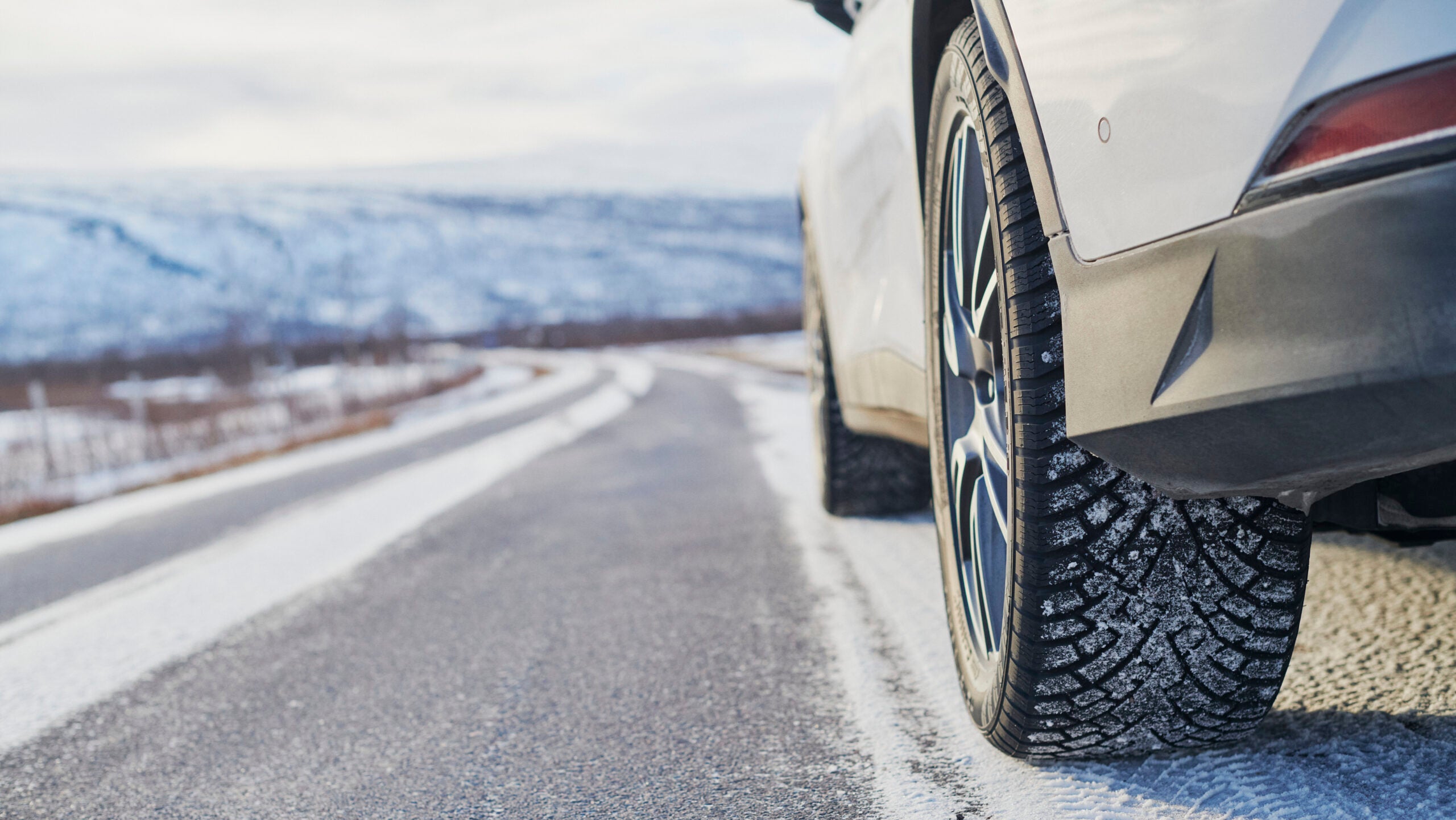
The journey toward the Hakkapeliitta 01 spans more than a decade of intensive materials science and mechanical engineering. According to Hans Dyhrman, a representative for Nokian Tyres, the foundational concept originated approximately twelve years ago with the fabrication of an initial prototype. That early iteration utilized a mechanical, driver-activated button system designed to deploy tire studs on command.
"We actually created a retractable-stud concept tire, where you pushed a button and the studs came out," Dyhrman explains, reflecting on the early developmental phase. "Our engineers joked that each tire probably cost more than the Porsche that we tested them on. It was nowhere near commercially viable."
Despite the prohibitive cost and mechanical complexity of the initial manual prototype, the project established a proof of concept that motivated engineers to pivot their research. Over the subsequent decade, the development team investigated how varying rubber compounds reacted to temperature shifts, ultimately shifting their focus to a traditional enemy of tire longevity: heat.
The Science of Adaptive Compounds
In conventional high-performance, summer, and racing tires, thermal management is centered around heat dissipation. Excessive heat generation accelerates tread wear and diminishes grip by softening the rubber compound beyond its optimal operating window. Nokian Tyres’ engineering team inverted this traditional automotive principle, asking how thermal energy could instead be harnessed to govern tire performance across disparate weather scenarios.

The breakthrough resulted in a patented adaptive base compound layer integrated into the Hakkapeliitta 01. When vehicles transition from cold, icy environments into warmer, dry conditions, the slight increase in friction-generated thermal energy causes the adaptive base layer to soften. This chemical reaction allows the embedded studs to automatically retract flush with the tread surface. Conversely, when ambient temperatures drop and road surfaces freeze, the compound hardens, locking the studs in place to bite directly into packed snow and ice.
This automated mechanism eliminates the need for manual driver input or mechanical actuators. Beyond the adaptive layer, the Hakkapeliitta 01 incorporates several advanced structural technologies. The tire sidewalls are reinforced with aramid fibers—the same high-strength material utilized in aerospace manufacturing and protective body armor—providing enhanced resistance against cuts, punctures, and structural damage caused by sharp potholes, rocks, and debris.
Furthermore, the tread design features a sophisticated matrix of sipes. Larger, aggressive sipes are positioned along the shoulders to optimize cornering stability, while shorter sipes are concentrated in the center blocks to enhance braking and acceleration response.
Precision Manufacturing and Rigorous Testing
Achieving uniform performance across high-speed rotations requires exacting manufacturing tolerances. At highway speeds, an average-sized automotive tire completes approximately 13 rotations per second. To ensure consistent traction throughout every revolution, the stud layout of the Hakkapeliitta 01 is individually optimized for each specific tire size, with placement executed via high-precision robotic assembly.

The tread incorporates two distinct stud geometries: one profile specifically engineered to maximize longitudinal grip during braking and acceleration, and a secondary profile designed to maintain lateral stability during cornering maneuvers.
To validate these engineering feats, Nokian Tyres subjected the Hakkapeliitta 01 to extensive evaluation at the company’s dedicated testing facility in Ivalo, Lapland. Situated 200 miles north of the Arctic Circle, the facility experiences freezing temperatures for approximately 200 days each year. Testing protocols utilized a specialized, snake-like covered ice tunnel spanning one kilometer in length, simulating uniform, controlled ice-rink conditions.
To test the tire’s adaptive transition capabilities, engineers utilized an experimental setup involving a heated garage situated at the terminus of the ice tunnel. By driving vehicles directly from the heated enclosure onto the freezing test track, researchers measured the instantaneous response time and stopping distance reductions of the adaptive studs under rapidly changing thermal conditions.
Quantitative Performance Metrics and Environmental Impact
Empirical data gathered from testing facilities indicates measurable performance improvements over previous generations of winter tires. The Hakkapeliitta 01 demonstrates a 10 percent improvement in ice grip and a 5 percent increase in wet-surface traction compared to its predecessor.
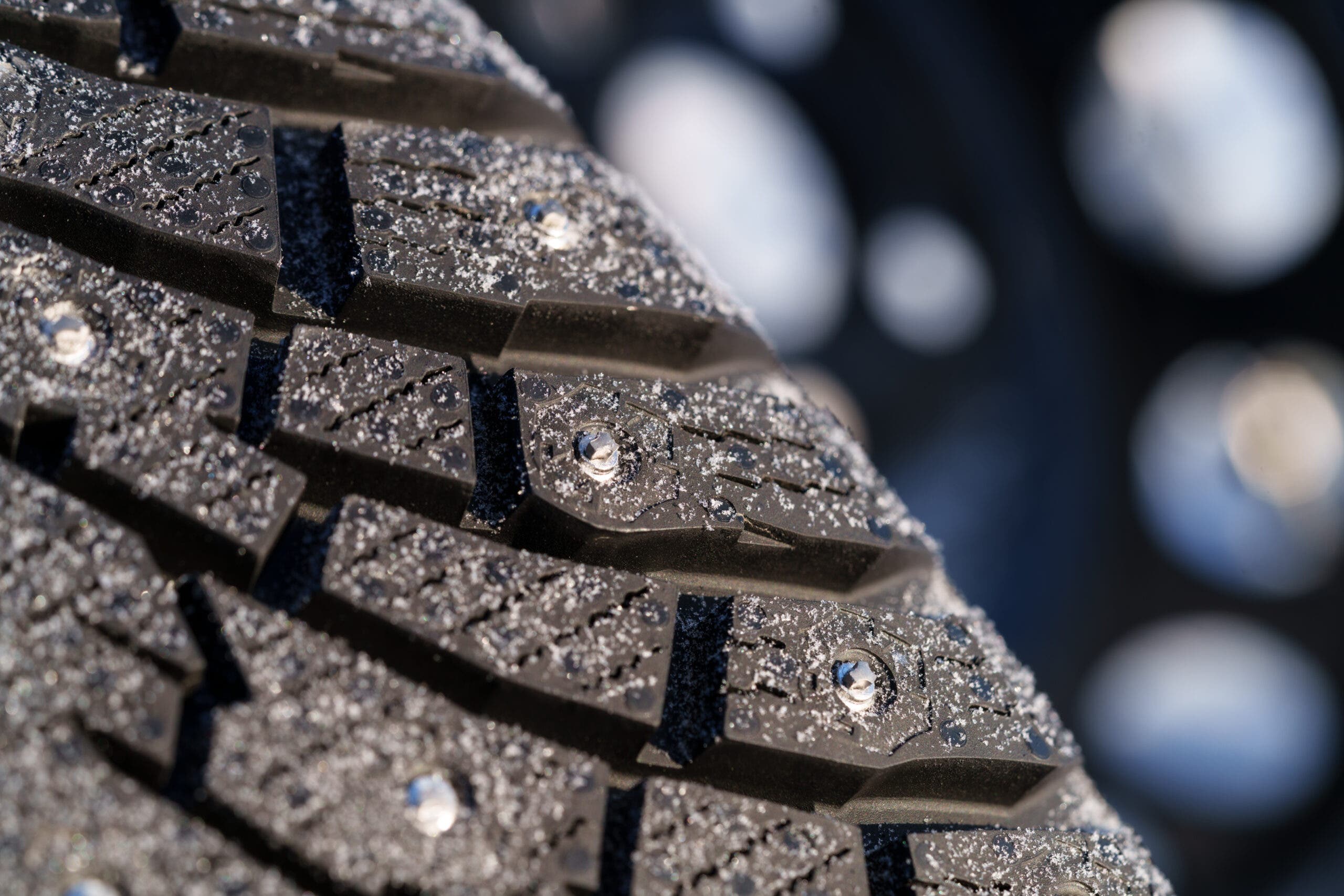
In addition to safety enhancements, the tire’s ability to retract studs on dry pavement yields significant environmental and infrastructural benefits. By preventing unnecessary metal-on-asphalt contact during uncompromised road conditions, the Hakkapeliitta 01 reduces road wear by up to 30 percent. This reduction not only extends the operational lifespan of public roadways but also substantially decreases the generation and release of airborne particulate matter associated with traditional winter driving.
Acoustic engineering was also a primary consideration during development. Certain size variants of the Hakkapeliitta 01 incorporate an internal sound-absorbing foam layer designed to mitigate cavity resonance, lowering interior cabin road noise by up to eight decibels.
Broader Implications for Winter Mobility and Driver Education
The introduction of self-adjusting stud technology signals a shift in the automotive aftermarket industry toward intelligent, responsive safety components that minimize reliance on manual driver intervention. By automating the transition between studded and non-studded performance profiles, manufacturers aim to bridge the safety gap caused by driver hesitation or delayed seasonal tire swaps.
However, industry experts emphasize that advanced tire technology remains only one component of comprehensive winter safety. Hans Dyhrman notes that mechanical capabilities must be complemented by practical driving experience and an understanding of vehicle dynamics.

"In terms of actually driving in winter, practice is most important," Dyhrman states. "You may not have grown up in winter conditions, different cars have different capabilities, and you will always need a bit of practice to understand your vehicle, how your tires react to different conditions, and how your ABS works."
As transportation authorities and safety organizations continue to evaluate the implications of responsive infrastructure-friendly tire designs, innovations like the Hakkapeliitta 01 establish a new benchmark for winter mobility, combining active safety engineering with sustainable infrastructure preservation.

