
The traditional gap year for an aspiring professional in the ski industry typically involves bumping chairs on a lift line or teaching toddlers the fundamentals of a pizza-wedge turn, but for Dr. Greg Lichtman, the interval between his formal education and his medical career was defined by high-stakes clinical research at Vail’s prestigious Steadman Philippon Research Institute (SPRI). This formative period, spent investigating the biomechanical nuances of knee stability alongside U.S. Ski Team athletes, provided Lichtman with a unique perspective on the most dreaded acronym in winter sports: the ACL. Today, as a practicing orthopedic surgeon based in Auburn, California—strategically located near the world-class terrain of North Lake Tahoe—Lichtman has transitioned from the research lab to the operating room. Yet, despite his expertise in reconstructive surgery, his professional mission is driven by a counterintuitive goal for a surgeon: keeping skiers out of his office entirely.
Lichtman’s approach to sports medicine is a synthesis of his East Coast skiing roots, his fellowship training at the University of Massachusetts, and his ongoing role as a pool physician for the U.S. Women’s Ski Team. This multifaceted background has allowed him to witness the full spectrum of knee trauma, from the recreational "weekend warrior" catching an edge on icy Vermont hardpack to elite racers navigating the high-velocity demands of the World Cup circuit in Portillo, Chile, and Val d’Isère, France. His observations have led to a critical realization regarding the disparity between skiing and land-based sports like soccer or basketball. While the latter have benefited from decades of robust, data-driven injury prevention programs that have slashed ACL tear rates by up to 60 percent, the skiing community remains largely reactive rather than proactive.
The Biomechanics of Rupture: The 60-Millisecond Window
To understand how to prevent an ACL tear, one must first understand the brutal efficiency with which the injury occurs. The Anterior Cruciate Ligament (ACL) is a primary stabilizer of the knee, preventing the tibia (shin bone) from sliding forward in front of the femur (thigh bone) and resisting excessive rotational forces. In the context of skiing, Lichtman identifies two primary "mechanisms of injury" that account for the vast majority of tears.
The first is the "Slip-catch" mechanism. This frequently occurs when a skier’s downhill ski loses contact with the snow during a turn. As the skier attempts to regain purchase, the ski suddenly catches the snow, causing the leg to straighten and then abruptly flex under extreme compression. In a window of just 60 milliseconds—faster than the human nervous system can consciously react—the lower leg undergoes an internal rotation and valgus (knock-kneed) stress. This rapid loading exceeds the tensile strength of the ACL, resulting in a complete or partial rupture.
The second mechanism is the "Phantom Foot" injury. This is a classic "backseat" scenario where the skier is off-balance, with their hips below their knees and their weight shifted toward the tails of the skis. In this vulnerable position, if the skier falls backward and away from their uphill side, the tail of the downhill ski acts as a lever. Because the modern ski and boot act as an extension of the foot—the "phantom foot"—they create a massive amount of torque. When the skier’s weight is thrust onto the inside edge of that downhill ski while the knee is deeply flexed, the resulting twisting force is channeled directly into the knee joint before the binding has the opportunity to release.
Environmental and Physiological Risk Factors
Lichtman’s clinical experience in both the Sierra Nevada and the Northeast has highlighted how environmental conditions dictate injury patterns. On the East Coast, the prevalence of man-made snow and icy "hardpack" increases the frequency of Slip-catch injuries, as skis are more prone to skittering and suddenly grabbing the surface. Conversely, in the Tahoe region, the heavy, wet snow often referred to as "Sierra Cement" creates a different set of challenges. This dense snow can easily throw a skier into the backseat, making them susceptible to the Phantom Foot mechanism.
Beyond the snow itself, Lichtman points to "flat light" or low-visibility conditions as a significant environmental hazard. When a skier cannot perceive changes in terrain or snow texture, their ability to maintain a proactive, athletic stance is compromised. This leads to reactive skiing, which almost inevitably results in the "backseat" posture that Lichtman identifies as the primary red flag for impending injury.
Physiology also plays a decisive role. Lichtman notes a statistical spike in ACL injuries during the month of December. This is attributed to a combination of "early-season legs"—where the musculature is not yet conditioned for the specific demands of skiing—and the cumulative fatigue of a full day on the mountain. As the quadriceps and hamstrings tire, they lose their ability to support the knee joint, and the skier’s center of gravity naturally drifts backward. "Fatigue awareness is critical," Lichtman emphasizes. He advocates for "quitting while you’re ahead," noting that the final run of the day is statistically the most dangerous because the body’s compensatory mechanisms are exhausted.
The Prevention Protocol: Beyond the Wall Sit
While the "wall sit" is a staple of pre-season conditioning, Lichtman argues that it is insufficient for true injury prevention. To protect the ACL, a skier must focus on the "posterior chain" and the stabilizers of the hip. Specifically, he highlights the importance of the gluteus medius. This muscle is responsible for lateral leg movement and is instrumental in preventing the knee from collapsing inward (valgus) during a turn. If the gluteus medius is weak, the knee is more likely to enter the high-risk "knock-kneed" position when under load.
Furthermore, Lichtman stresses the role of core stability, including the obliques and deep abdominal muscles. A strong core allows a skier to recover from a momentary loss of balance without being thrown into the backseat. By maintaining a "forward" position—where the shins are pressed firmly into the tongues of the boots and the hands are kept over the skis—the skier ensures that the skeletal structure and larger muscle groups absorb the forces of the turn, rather than the delicate ligaments of the knee.
Gear and Technology: The Binding Dilemma
A common misconception among recreational skiers is that their bindings will always protect them from an ACL injury. However, as Lichtman points out, most ACL tears occur before the binding even has the chance to release. Standard alpine bindings are designed to release primarily in response to forces at the toe and heel in a vertical or lateral direction, but they are often less sensitive to the specific rotational torques that cause ACL ruptures.
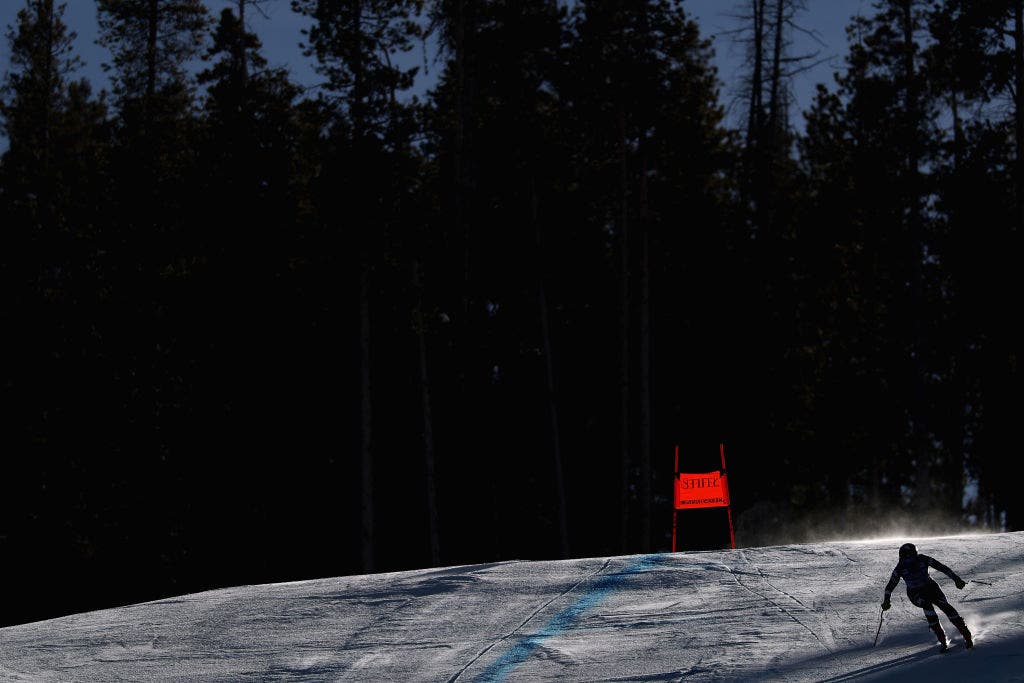
Lichtman advises that skiers must be honest about their "DIN" settings—the industry-standard scale for binding release force. While professional racers like Breezy Johnson require high DIN settings to prevent "pre-release" at speeds of 80 mph, the average recreational skier does themselves a disservice by "cranking down" their bindings. "We are not all World Cup athletes," Lichtman says. Ensuring that bindings are professionally adjusted based on accurate height, weight, and skill level is a fundamental safety step. He also points to ongoing research into multidirectional release systems, such as those found in Look bindings or specialized "knee-friendly" binding brands, as a positive step toward reducing injury rates, though he maintains that no gear setup is a substitute for proper technique and conditioning.
The Path Forward: Data and Education
The future of skiing safety, according to Lichtman, lies in narrowing the gap between skiing and land-based sports in terms of validated prevention programs. In soccer, the "FIFA 11+" program—a standardized warm-up focusing on core strength, plyometrics, and balance—has revolutionized player longevity. Lichtman believes the skiing industry needs a similar, universally adopted protocol.
As a pool physician for the U.S. Women’s Ski Team, Lichtman is part of a cohort of medical professionals working to bring this high-level data to the general public. By traveling with the team to Lillehammer, Norway, and other global venues, he observes firsthand how elite athletes use "dry land" training to bulletproof their joints. His goal is to translate these elite-level insights into actionable advice for the average skier.
The broader implications of Lichtman’s work extend beyond the individual. ACL reconstructions are not only physically taxing, requiring six to twelve months of grueling rehabilitation, but they also carry a significant economic burden and can lead to long-term issues like osteoarthritis. By shifting the focus from the operating table to the pre-season gym and the ski school, Lichtman is advocating for a cultural shift in the sport. The message is clear: while modern medicine can repair a knee, the best "surgery" is the one that never has to happen. Armed with an understanding of biomechanics, a commitment to conditioning, and a respect for the limits of one’s own fatigue, skiers can enjoy the mountains while significantly reducing their risk of a season-ending injury.

