
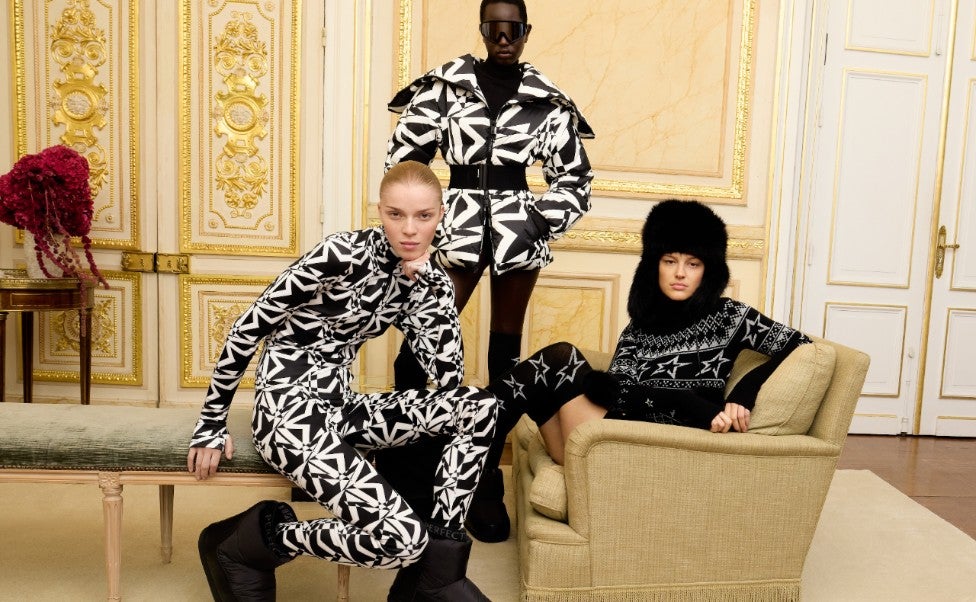
The recent collaboration between Perfect Moment, a luxury French skiwear brand, and H&M, the Swedish multinational fast-fashion retailer, has ignited considerable discussion across the fashion and outdoor industries. Announced earlier this year, the collection, featuring vibrant patterns, metallic finishes, and signature star motifs, represents a significant "masstige" venture – the merging of mass-market appeal with prestige branding. This partnership, updated March 31, 2026, 02:17 PM, comes at a time when consumers are increasingly scrutinizing brand values, particularly concerning environmental responsibility, making the juxtaposition of these two brands particularly noteworthy.
Perfect Moment: A Legacy Forged in the Alps
Perfect Moment’s journey began in 1984 in Chamonix, France, a renowned hub for extreme sports. Founded by Thierry Donard, a celebrated filmmaker and former professional skier, the brand initially carved a niche in high-performance gear designed for freeride athletes. Its early ethos was deeply rooted in the rugged demands of alpine exploration, prioritizing functionality, durability, and a distinct connection to the mountain environment. This heritage positioned Perfect Moment closer to technical outerwear brands known for their performance attributes than to the more fashion-centric ski brands of the era.
The brand underwent a significant transformation in 2010 following its acquisition by European entrepreneurial couple Jane and Max Gottschalk. Under their stewardship, Perfect Moment pivoted towards a luxurious aesthetic, seamlessly blending high-performance materials with contemporary fashion trends. This strategic shift saw the brand embrace vibrant color palettes, sophisticated silhouettes, and eye-catching designs, establishing its current identity as a purveyor of aspirational ski and resort wear. Today, Perfect Moment is synonymous with iconic pieces such as its high-end puffer jackets, often retailing upwards of $800, elegantly flared ski pants priced around $600, distinctive knit sweaters, and branded goggles. Its target demographic comprises affluent consumers seeking stylish, high-quality apparel for both on-slope activities and après-ski engagements. The brand’s commitment to quality and longevity is explicitly stated in its mission: "Perfect Moment believes that using less is better. That’s why we design our apparel with a focus on durability and longevity," further emphasizing a "responsibility to do so with the smallest impact to nature."
H&M: The Fast Fashion Colossus and its Evolving Narrative
In stark contrast stands H&M, a global retail behemoth operating over 4,000 stores across more than 60 countries. Renowned for its rapid trend adoption, affordability, and extensive global supply chain, H&M has long been a leading proponent of the fast-fashion model. This business approach, characterized by quick turnaround times from design to retail, frequent new collections, and competitive pricing, has democratized fashion, making contemporary styles accessible to a broad consumer base. However, this model has also attracted substantial criticism, particularly concerning its environmental impact and labor practices. H&M has frequently been cited as a major fast-fashion offender, facing accusations of contributing to textile waste, excessive resource consumption, and significant carbon emissions throughout its supply chain.
In response to mounting public pressure and evolving consumer awareness, H&M has, in recent years, made concerted efforts to integrate sustainability into its corporate narrative and product offerings. Initiatives such as its "Conscious" collection, garment recycling programs, and commitments to using more sustainable materials have aimed to address these concerns. Despite these efforts, many critics argue that the fundamental high-volume, rapid-turnover nature of the fast-fashion business model inherently limits its ability to be truly environmentally friendly. The brand’s immense scale and operational speed present formidable challenges to achieving genuine sustainability, often leading to accusations of "greenwashing" – the practice of making unsubstantiated or misleading claims about the environmental benefits of a product, service, or company.
The "Masstige" Phenomenon: A Strategic Imperative
The collaboration between Perfect Moment and H&M is not an isolated incident but rather indicative of a broader strategic trend within the global fashion industry known as "masstige" – a portmanteau of "mass" and "prestige." This phenomenon involves high-end brands partnering with mass-market retailers to create capsule collections, offering consumers a taste of luxury at more accessible price points. Such collaborations serve multiple strategic objectives for both parties.
For luxury brands like Perfect Moment, these partnerships provide an opportunity to expand their reach beyond their traditional affluent customer base, introduce their aesthetic to a new, broader demographic, and generate significant brand awareness. It can also infuse new energy into the brand, positioning it as dynamic and culturally relevant. While there’s always a risk of brand dilution, careful curation and limited-edition releases can mitigate this, maintaining the brand’s aspirational allure.
For mass-market retailers like H&M, collaborations with prestigious brands offer a powerful tool for elevating their brand image, injecting novelty into their collections, and attracting new customers who might otherwise not shop at their stores. These partnerships often create significant buzz, driving traffic both in-store and online, and can enhance the perception of the retailer as a trendsetter or a destination for curated fashion. Previous successful "masstige" collaborations, such as Target’s long-standing designer partnerships or H&M’s own high-profile ventures with designers like Karl Lagerfeld, Versace, and Balmain, underscore the commercial viability and marketing power of this strategy. These collaborations frequently sell out rapidly, demonstrating a strong consumer appetite for accessible luxury.
The Unforeseen Alliance: Reactions and Expectations
Given the divergent brand philosophies and market positioning, the announcement of the Perfect Moment x H&M collection was widely perceived as unexpected. A press release shared with SKI magazine quoted H&M’s Creative Advisor and Head of Design for Women’s Wear, Ann-Sofie Johansson, noting that the collection was "unexpected, dynamic, and sure to spark excitement." This statement succinctly captures the calculated risk and potential reward inherent in such a venture. Industry analysts quickly weighed in, with many suggesting that the collaboration aimed to tap into the growing demand for stylish ski and winter apparel that transcends pure performance, aligning with the burgeoning "après-ski" fashion trend that emphasizes aesthetics as much as, if not more than, technical capability.
Consumers reacted with a mix of anticipation and skepticism. Enthusiasts of Perfect Moment expressed excitement at the prospect of owning pieces with the brand’s distinctive flair without the premium price tag. Conversely, some long-time customers and environmentally conscious consumers voiced concerns regarding the apparent contradiction between Perfect Moment’s stated commitment to durability and minimal environmental impact, and H&M’s reputation as a fast-fashion leader. This tension forms a critical undercurrent to the collection’s reception and broader implications.
Product Performance: A Pragmatic Assessment
The Perfect Moment x H&M collection comprised a range of items, including sweaters, bodysuit baselayers, and puffer jackets, designed primarily with après-ski aesthetics and casual resort wear in mind. A hands-on evaluation of select pieces aimed to assess their performance, particularly in the context of their intended use versus traditional high-performance ski gear.
A key item tested was a baselayer top, priced at approximately $60. Despite not being crafted from Merino wool, a common benchmark for high-performance baselayers due to its natural moisture-wicking and thermal properties, the H&M iteration performed commendably. Constructed from a synthetic performance material, it effectively wicked away sweat, making it suitable for active use. The design featured a flattering zippered mockneck, aligning with contemporary ski fashion trends. The sizing was noted to run slightly large, suggesting that for colder conditions, a tighter Merino layer underneath would optimize warmth and fit, effectively allowing the H&M baselayer to function as a stylish pseudo-midlayer. Its reasonable price point makes it an attractive option for skiers seeking a chic yet functional piece for après-ski events or milder days on the slopes.
The puffer jacket, retailing at $329, presented a different set of observations. Its oversized silhouette, while aesthetically appealing and on-trend, impacted its practical performance on the slopes. The design appeared intentionally boxy, accommodating layering underneath, but resulted in a looser fit overall, particularly around the torso, while the sleeves maintained a more standard fit. From a functional standpoint, the jacket’s pocket configuration proved to be a significant drawback for active skiers. It featured only two external pockets, secured by magnetic closures, and a single inner pocket with a top opening. This limited and less-than-secure storage capacity is a notable deficiency for skiers who typically require multiple secure pockets for lift passes, phones, and other essentials. The magnetic closures, in particular, raised concerns about the potential loss of items during dynamic movement.

Despite these functional limitations, the jacket possessed several commendable features. Its unique fit was undeniably flattering, contributing significantly to its style quotient. The hood was notably designed to accommodate a ski helmet, a practical feature often overlooked in fashion-forward outerwear. For warmer, casual days on the slopes, or for primary use in après-ski settings, the jacket offers a fair price point, particularly for consumers prioritizing style. The most distinctive aesthetic element, a large star design on the back, served purely as a fashion statement, perfectly encapsulating the collaboration’s focus on visual appeal over rigorous technical specifications.
The Sustainability Conundrum: A Core Contradiction
The most significant point of contention surrounding the Perfect Moment x H&M collaboration lies in the stark contrast of their stated environmental philosophies. Perfect Moment explicitly champions durability and longevity, aiming for minimal environmental impact – principles that align with a slow fashion ethos. H&M, conversely, despite its recent sustainability initiatives, operates within the high-volume, rapid-turnover framework of fast fashion.
This inherent contradiction raises important questions for consumers and the industry at large. Can a brand like Perfect Moment maintain its ethical stance while partnering with a company often criticized for its environmental footprint? For H&M, does this collaboration genuinely advance its sustainability agenda, or is it primarily a marketing play to enhance its brand image through association with a more ethically perceived partner? Industry watchdogs and environmental advocacy groups continue to scrutinize such collaborations, emphasizing the need for transparent supply chains, verifiable material sourcing, and measurable reductions in environmental impact. The long-term success of such "masstige" collaborations may increasingly depend not just on commercial appeal, but also on how effectively they navigate these complex ethical and environmental landscapes.
Market Implications and Future Outlook
The Perfect Moment x H&M collaboration represents a strategic gamble for both brands, with potential far-reaching implications. For Perfect Moment, the partnership offers unparalleled global exposure, potentially introducing its distinctive aesthetic to millions of new consumers who may then aspire to invest in its core luxury line. It democratizes the brand’s visual identity, making its "look" more accessible and culturally pervasive. However, the risk of brand dilution remains, as its exclusivity could be perceived as compromised by association with a mass-market retailer.
For H&M, the collaboration bolsters its efforts to elevate its brand image, moving beyond the pure fast-fashion stereotype towards a more design-conscious and aspirational positioning. It allows H&M to capture a segment of the market seeking stylish, trend-driven skiwear without the luxury price tag, diversifying its product portfolio. The rapid sell-out of the collection, despite the limited restock plans, indicates a strong market demand for such accessible luxury partnerships.
Ultimately, this collection is designed for a specific segment of the skiing public: those who prioritize style and aesthetic over the most rigorous technical performance. It caters to the "lifestyle skier" or the "après-skier" who appreciates fashion-forward resort wear. None of the items are positioned for professional athletes or individuals seeking gear that will withstand extreme conditions or multi-season heavy use. Instead, it offers a "sweet spot" for consumers looking to infuse their winter wardrobe with a touch of Perfect Moment’s signature panache without committing to the brand’s premium pricing. The collaboration underscores a continuing trend in the fashion industry where boundaries between luxury and mass market are increasingly fluid, driven by consumer demand for aspirational styles and brands’ desires for broader reach and renewed relevance. As the market continues to evolve, such high-low collaborations are likely to become even more prevalent, challenging traditional notions of brand identity and value in the process.

