
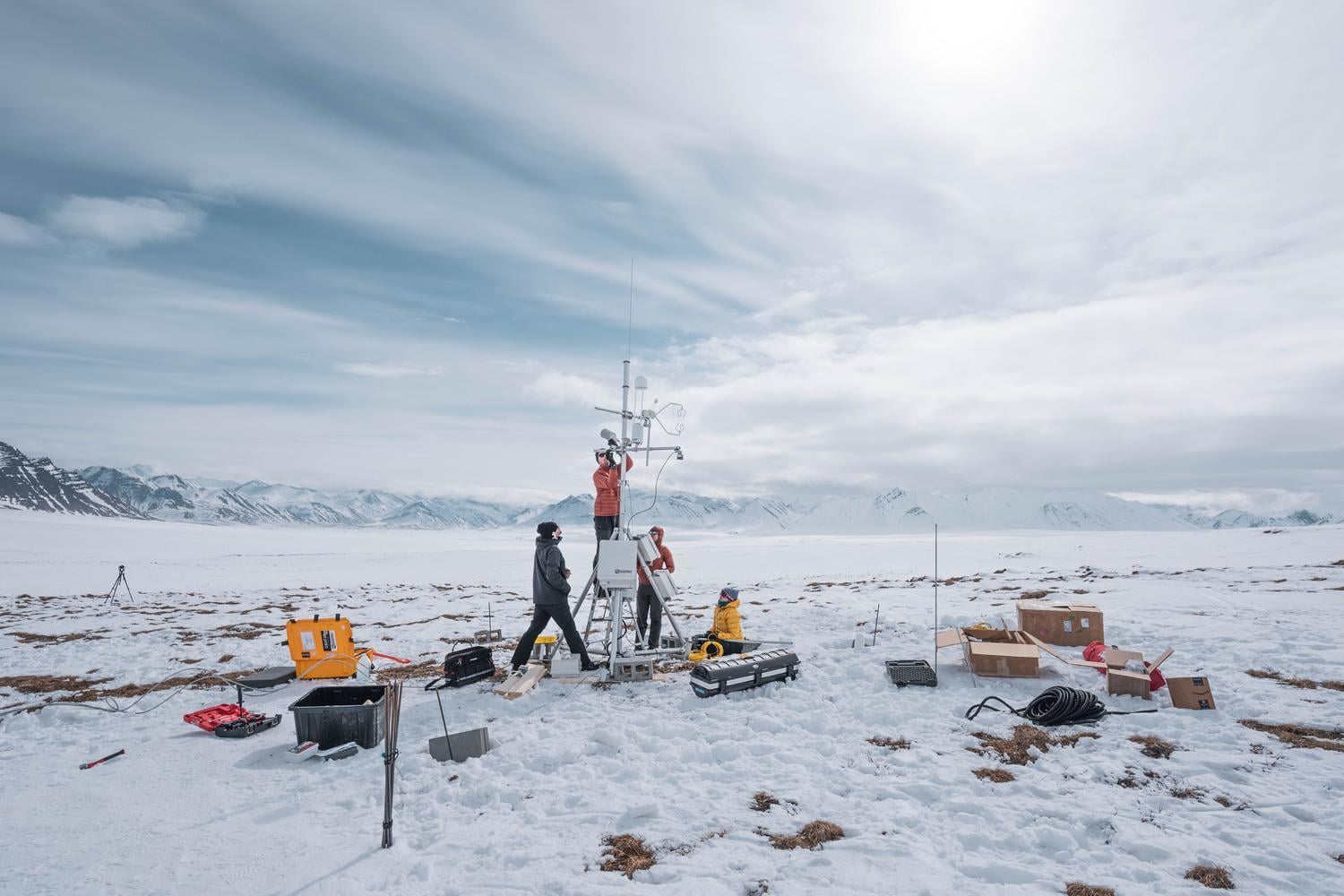
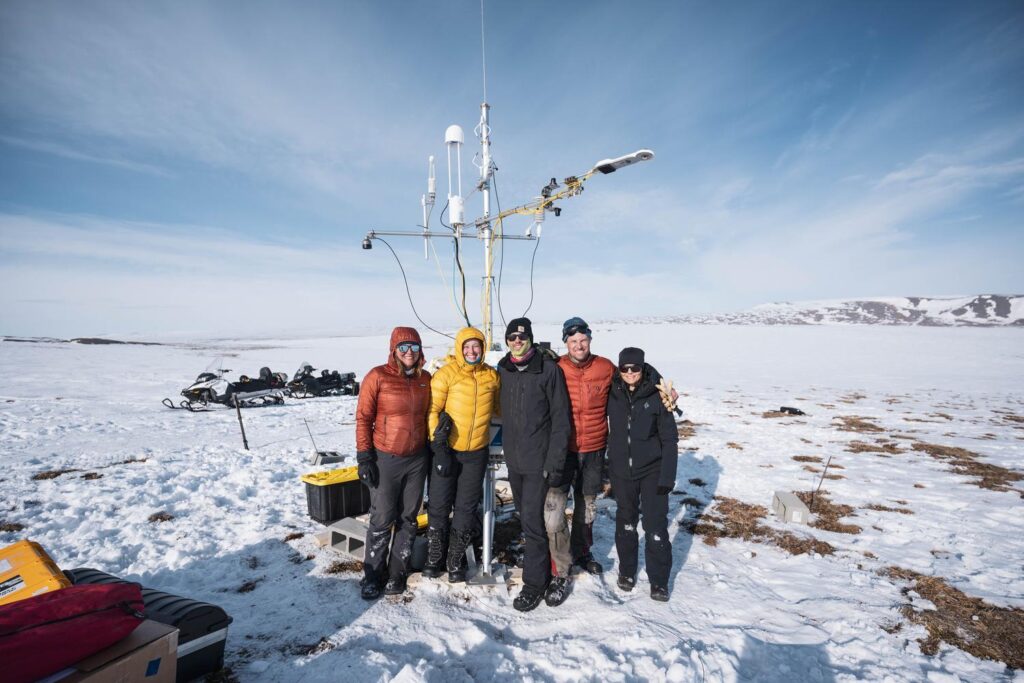
In the frigid reaches of Alaska’s North Slope, a team of researchers has completed a critical mission to monitor the accelerating decay of Arctic permafrost. Led by Dr. Kelly Gleason, an assistant professor of eco-hydro-climatology at Portland State University, and Dr. Jenny Watts, an ecologist and carbon flux expert from the Woodwell Climate Research Center, the expedition focused on the installation of advanced monitoring equipment at a permafrost thaw slump near the Toolik Field Station. This initiative represents the first time a flux tower has been deployed in the Arctic specifically to evaluate methane and carbon dioxide emissions from a rapidly collapsing permafrost feature, providing scientists with real-time data on one of the most significant "tipping points" in the global climate system.
The expedition, conducted under the auspices of the Protect Our Winters (POW) Science Alliance, underscores a growing urgency within the scientific community to quantify the "invisible" feedback loops of the Arctic. As the region warms at nearly four times the global average—a phenomenon known as Arctic Amplification—the permanently frozen ground that has stabilized the landscape for millennia is beginning to fail. This failure does not merely change the geography of the North Slope; it threatens to release vast quantities of ancient carbon into the atmosphere, potentially undermining international efforts to limit global warming.
The Logistics of Arctic Science: Deploying the Flux Tower
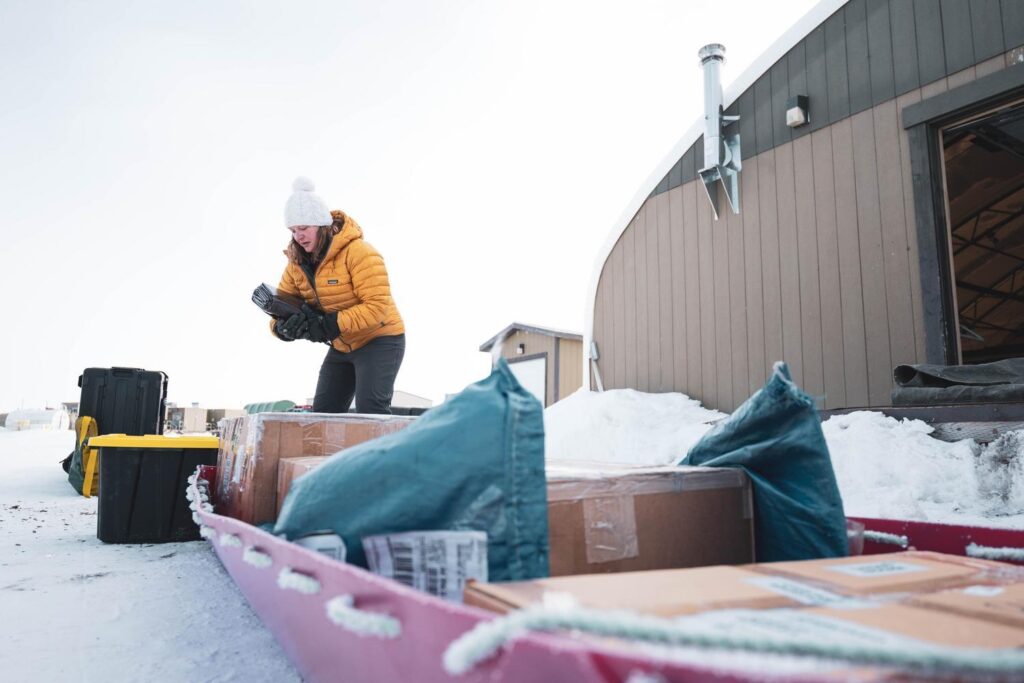
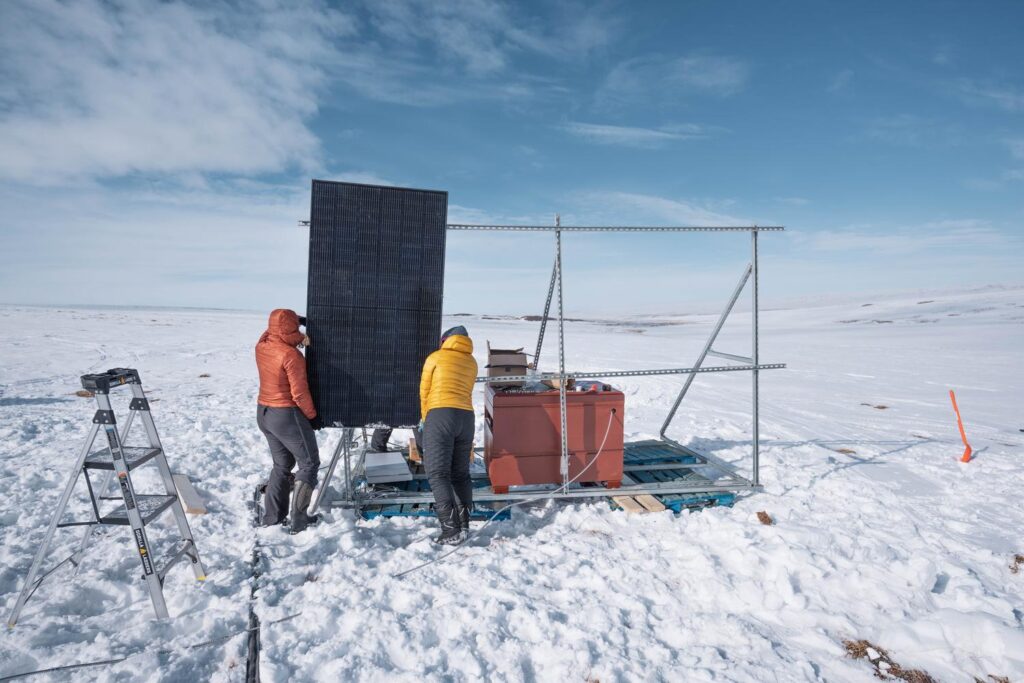
The deployment of scientific equipment in the Arctic is a feat of engineering and physical endurance. Operating out of the Toolik Field Station, a premier long-term ecological research site managed by the University of Alaska Fairbanks, the team transported several tons of equipment across the tundra via snowmachines and sleds. The payload included a 15-foot-tall aluminum frame, guy-lines, cement anchors, and four large solar panels designed to provide power through the Arctic’s extreme seasonal shifts.
Central to the mission’s success was the transport of eight deep-cell batteries, each weighing over 100 pounds, and a massive electrical enclosure to house the sensitive recording instruments. These tools are designed to measure "carbon flux"—the exchange of carbon between the land and the atmosphere. By positioning the tower directly over a thaw slump, the researchers can now capture precise measurements of methane and carbon dioxide as they escape from the newly exposed, decomposing organic matter.
Understanding Permafrost Thaw Slumps
Permafrost is defined as ground that remains frozen for at least two consecutive years. In the Arctic, this frozen layer can extend hundreds of meters deep, acting as a massive subterranean refrigerator that stores the remains of ancient plants and animals. Current estimates suggest that Northern Hemisphere permafrost contains between 1,400 and 1,600 billion metric tons of carbon—nearly twice the amount currently present in the Earth’s atmosphere.
A thaw slump is a dramatic and visible manifestation of permafrost degradation. These features occur when ice-rich permafrost melts, causing the ground to lose its structural integrity and collapse or "slump" downhill. This process exposes "ancient" organic material that has been locked away for thousands of years. Once exposed to oxygen and warmer temperatures, microbes begin to break down this material, releasing greenhouse gases.
"Thaw slumps are hot spots for carbon emissions," noted the research team. While the surrounding intact tundra also contributes to the carbon cycle, the concentrated release from these erosion features is significantly higher. Despite their impact, these localized collapses are rarely accounted for in global climate models, which typically focus on gradual, top-down thawing rather than abrupt structural failures. The data from the new flux tower aims to fill this critical gap in climate forecasting.
The Snow Paradox: Albedo vs. Insulation
A primary focus of Dr. Gleason’s contribution to the mission involved the complex role of snow in the Arctic energy balance. In her work at Portland State University, Gleason typically examines snow as a vital water resource for the Western United States. However, in the Arctic, the value of snow shifts from its liquid volume to its physical properties: reflectivity (albedo) and insulation.
The "Albedo Effect" is a cooling mechanism where white snow reflects up to 90% of incoming solar radiation back into space. As the Arctic warms, increased moisture in the atmosphere—driven by a lack of sea ice and increased evaporation—has led to heavier snowfall in certain regions. On the surface, deeper snow might seem beneficial for cooling the planet; however, Gleason’s research highlighted a more troubling counter-effect.
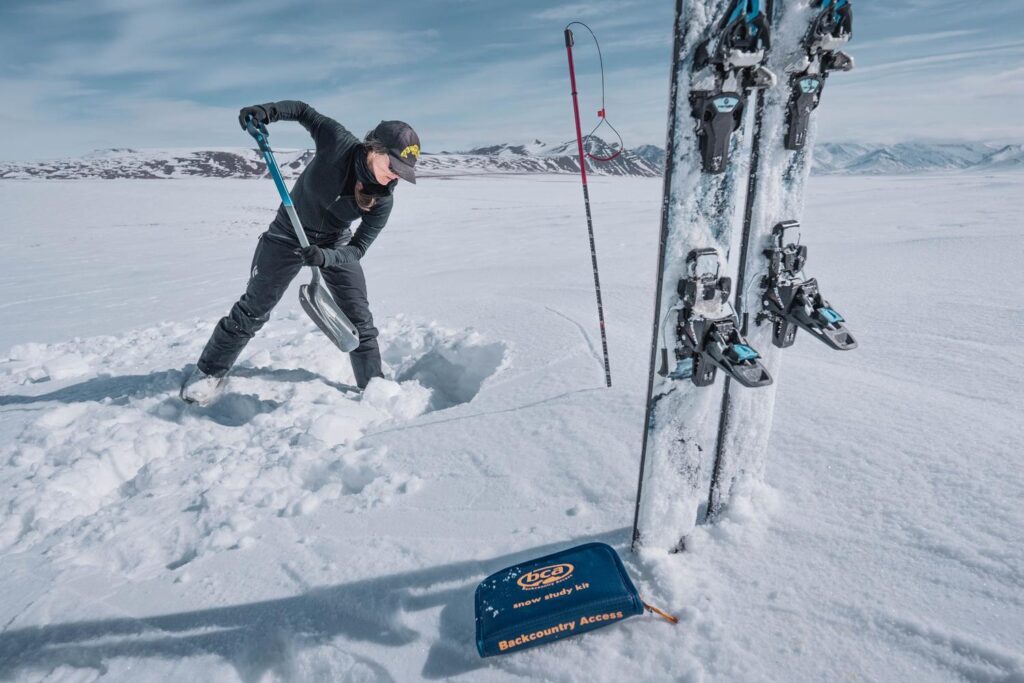
During the expedition, Gleason conducted snow pit analyses to compare temperature profiles between shallow and deep snowpacks. The findings revealed a stark contrast in how snow interacts with the ground:
- Deep Snowpacks (approx. 2 meters): The team found that while the surface temperature was -3°C, the temperature near the soil surface was significantly warmer, at nearly -3°C, despite an intermediate layer of -8°C. This suggests that the thick snow acts as a powerful thermal blanket, trapping the Earth’s internal heat and shielding the ground from the sub-zero Arctic air.
- Shallow Snowpacks (approx. 57 centimeters): In contrast, shallow snow allowed the ground to cool more effectively. These pits showed a steady decline in temperature, reaching -10°C at the base.
The implications of this "insulation effect" are profound. If deeper winter snow prevents the permafrost from refreezing deeply during the winter, the ground remains at temperatures where microbial activity can continue year-round. This leads to a "hidden" feedback loop where more snow actually accelerates the thawing of the permafrost it covers.
The Chronology of Change in the North Slope
The North Slope has seen a rapid escalation in environmental shifts over the last decade. Historically, the region was characterized by stable, frozen tundra and predictable seasonal cycles. However, the timeline of recent observations indicates a system in flux:
- 2010–2015: Increased reports of "thermokarst" activity, where melting ground ice creates irregular surfaces of marshy hollows and small hummocks.
- 2016–2020: A surge in the frequency of abrupt thaw events, including the formation of large-scale slumps and the drainage of tundra lakes.
- 2021–Present: Record-breaking summer temperatures in the Arctic have accelerated the rate of "active layer" thickening—the top layer of soil that thaws each summer—placing deeper permafrost at risk.
The installation of the flux tower at Toolik marks a new chapter in this chronology, moving from observational photography to high-resolution, continuous data collection.
Institutional Collaboration and Advocacy
The expedition highlights the evolving role of the scientist in the 21st century. The involvement of the Protect Our Winters (POW) Science Alliance represents a bridge between academic research and public advocacy. POW, an organization often associated with professional athletes and outdoor enthusiasts, has increasingly leaned on its Science Alliance to provide the factual foundation for its climate policy efforts.
"Science shows us what’s happening, but advocacy gives us a path forward," Dr. Gleason stated regarding the mission. By turning field observations into narratives that resonate with the public and policymakers, the team hopes to catalyze action on carbon emission reductions. The data gathered at Toolik will be shared with the broader scientific community to refine the accuracy of the Intergovernmental Panel on Climate Change (IPCC) projections.
Broader Impact and Global Implications
The fate of the Alaskan North Slope is inextricably linked to global climate stability. The "Arctic Feedback Loop"—where thawing permafrost releases gases that cause more warming, which in turn thaws more permafrost—is a non-linear process that could potentially bypass human-controlled emission reductions.
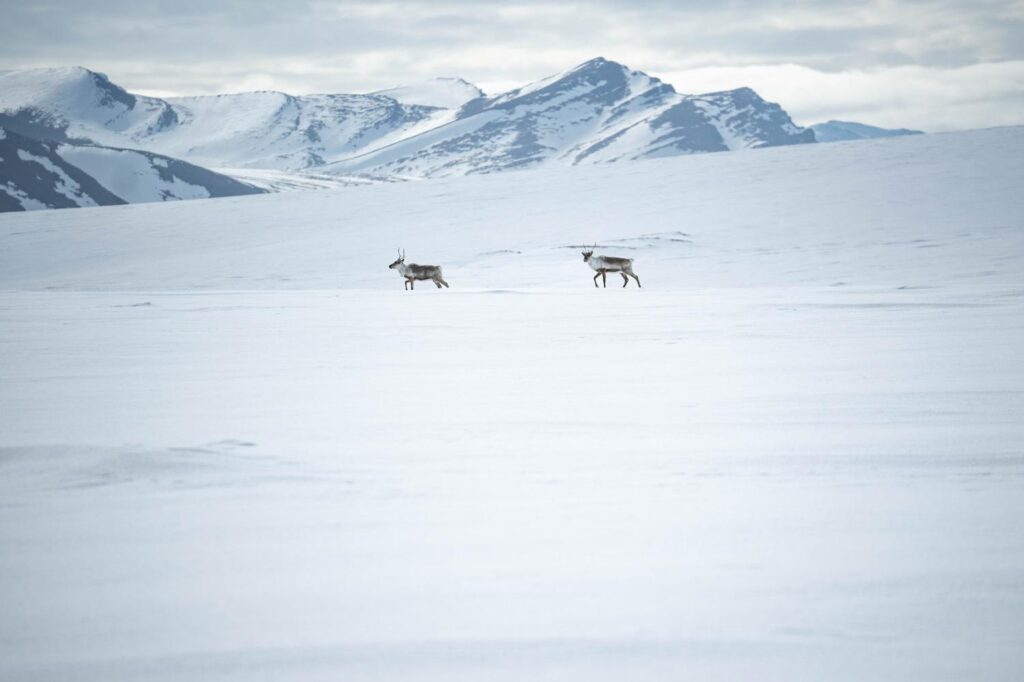
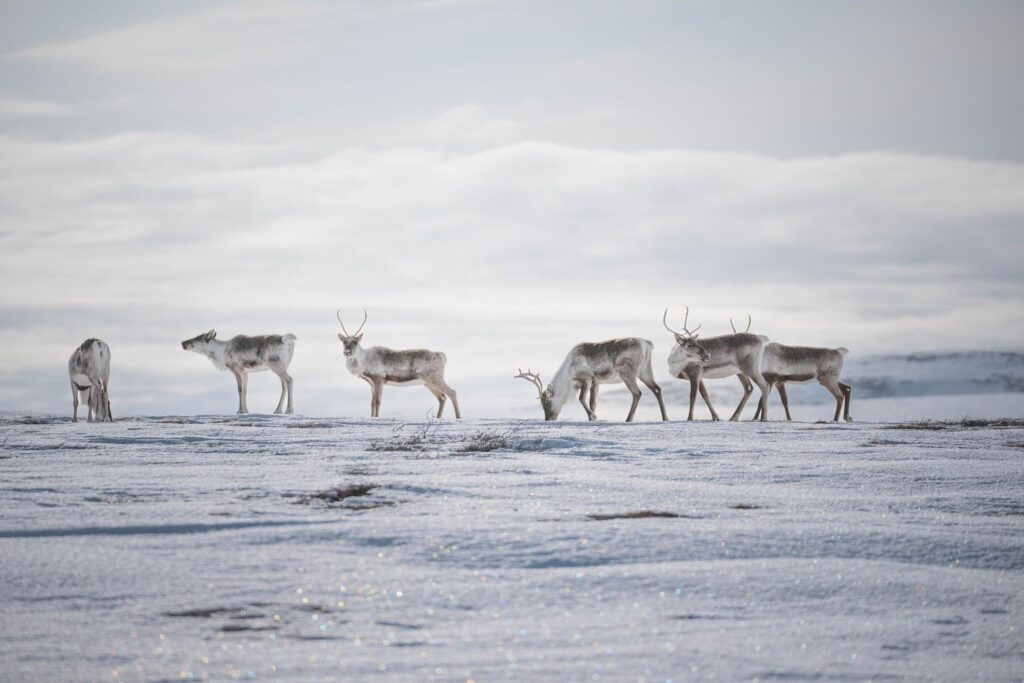
If the high-emission scenarios currently being monitored by Gleason and Watts become the norm, the resulting "carbon bomb" could make it virtually impossible to meet the goals of the Paris Agreement. Furthermore, the physical changes to the Arctic landscape affect local biodiversity, including the caribou herds that migrate across the North Slope and the indigenous communities that rely on stable ground for infrastructure and subsistence.
As the flux tower begins its long-term monitoring at the thaw slump, the scientific community awaits the first full year of data. These measurements will provide a definitive look at whether these "slumps" are localized anomalies or the leading edge of a massive, region-wide release of greenhouse gases. For now, the mission stands as a critical sentinel on the front lines of climate change, documenting a landscape that is changing faster than the models can predict.

