
Nestled in the remote, rugged terrain of Swedish Lapland, approximately 120 miles north of the Arctic Circle, Riksgränsen Ski Resort has developed a pioneering operational strategy to safeguard its vital chairlift infrastructure against the region’s notoriously fierce windstorms. The resort’s unique "storm-proofing" technique involves tethering chairlifts together, a proactive measure designed to mitigate potential damage and ensure operational resilience in the face of extreme weather conditions. This innovative approach underscores Riksgränsen’s commitment to maintaining guest safety and operational continuity in one of the world’s most challenging ski environments.
The Arctic Challenge: Extreme Winds at Riksgränsen
Riksgränsen Ski Resort is renowned for its unique location and the exceptional skiing experiences it offers, particularly its ability to provide skiing under the midnight sun during the summer months. However, this remote Arctic setting also presents significant meteorological challenges. The resort is frequently subjected to powerful windstorms, with wind speeds that can regularly exceed 25 meters per second (approximately 56 miles per hour), and occasional gusts that can be substantially higher. Such conditions pose a substantial risk to the delicate machinery and exposed structures of ski lifts, including chairlifts, which are susceptible to swaying, cable damage, and even catastrophic structural failure.
Historically, the standard operating procedure for ski resorts facing high winds involves ceasing lift operations. This typically means closing lifts to prevent damage and ensure passenger safety. However, for a resort like Riksgränsen, where the ski season extends into the spring and summer, and where the allure of the midnight sun draws visitors, prolonged closures due to wind can significantly impact the guest experience and the resort’s operational viability. The economic implications of frequent lift closures can also be considerable, affecting revenue streams and visitor satisfaction.
The "Storm-Proofing" Solution: A Novel Approach
The development of the chairlift tethering system at Riksgränsen represents a significant adaptation to the local environmental conditions. While specific technical details of the system are proprietary, the core concept involves physically connecting adjacent chairlift chairs when the resort anticipates or is experiencing severe wind events. This connection, likely through robust, weather-resistant tethers or locking mechanisms, serves to stabilize the chairs and reduce their individual movement.
By linking the chairs, the force of the wind is distributed across multiple units rather than acting solely on each individual chair. This collective anchoring effect is intended to prevent excessive swaying, which can lead to chairs colliding with support towers or other chairs, or even detaching from the haul rope. The system is likely designed to be deployed and retracted efficiently by resort staff, enabling a rapid response to changing weather patterns.
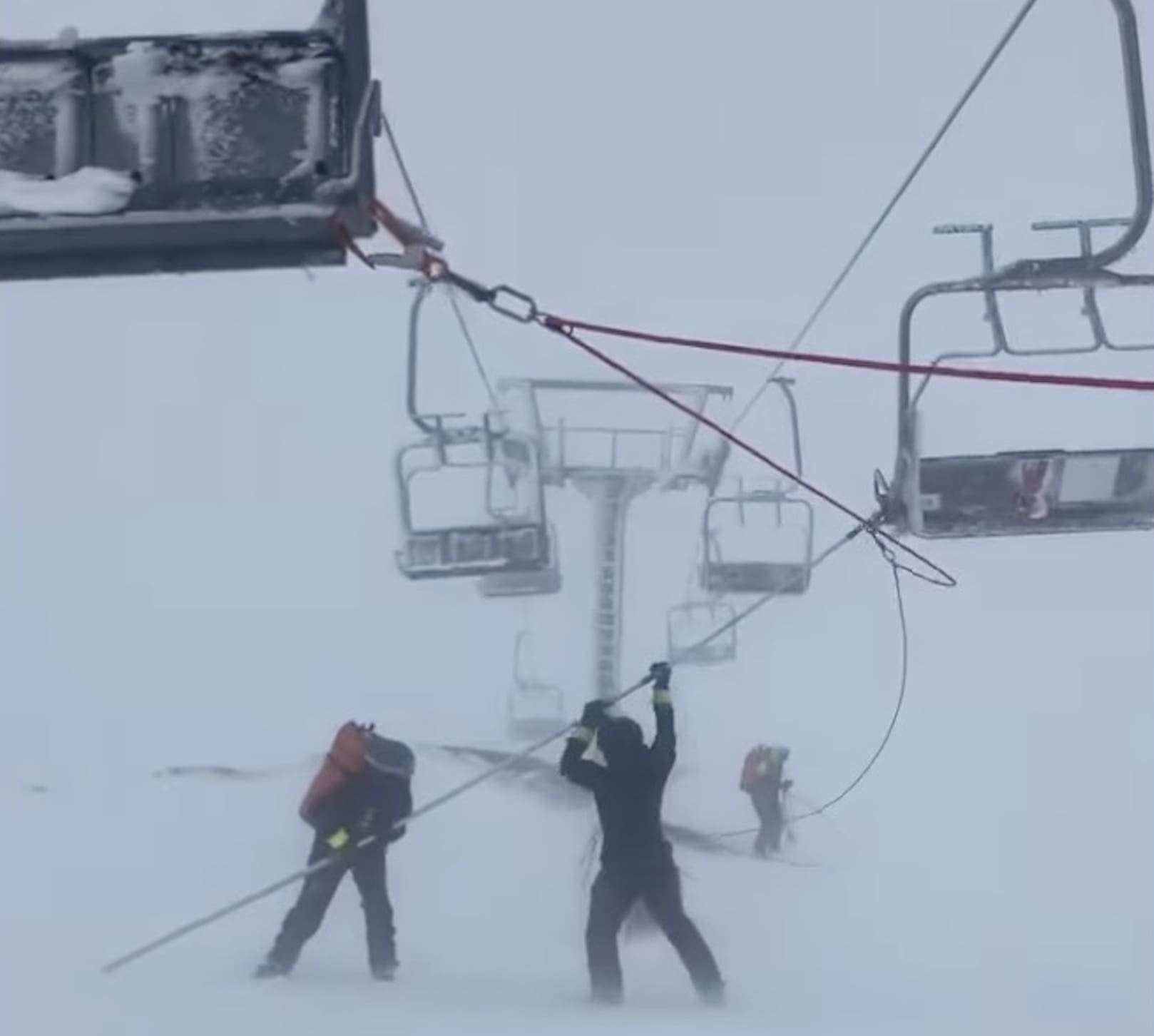
The effectiveness of such a system can be understood through basic physics. Unrestrained, individual chairs in high winds would experience significant aerodynamic drag and fluctuating lift forces, leading to chaotic and potentially damaging movements. By tethering them, the system creates a more rigid structure, reducing the amplitude of oscillations and limiting the maximum displacement of each chair. This is analogous to how multiple interconnected components in an engineering structure can offer greater stability under stress than individual, isolated parts.
Background and Chronology of Adaptation
While the exact date of the implementation of the Riksgränsen tethering system is not publicly detailed, it is understood to be a response to years of experience managing the impact of Arctic weather on lift operations. Ski resorts in high-latitude regions have long grappled with wind-related challenges. However, the systematic and proactive tethering of chairlifts appears to be a distinctive innovation by Riksgränsen.
The decision to develop and implement such a system would likely have followed a period of observation and risk assessment. This would involve analyzing historical wind data, documenting incidents of weather-related lift closures, and evaluating the potential for damage. The development process would then involve engineering and testing prototypes to ensure the system’s reliability, safety, and ease of use under demanding conditions.
The operational timeline would likely involve:
- Pre-Season Planning and Training: Resort staff would be trained on the deployment and retraction procedures for the tethering system.
- Weather Monitoring: Continuous monitoring of weather forecasts and real-time wind speed data would be crucial.
- Decision to Deploy: When wind speeds are predicted to reach critical thresholds, or when observed winds become severe, resort operators would make the decision to deploy the tethers.
- Deployment: Trained personnel would secure the chairs according to established protocols.
- Operational Status: Depending on the severity of the winds and the efficacy of the tethering system, some lift operations might continue, albeit at a reduced speed, or the lifts might be temporarily shut down with the tethers in place to prevent damage.
- Retraction: Once wind conditions subside to safe levels, the tethers would be retracted, allowing for the resumption of normal operations.
Supporting Data and Context
The Arctic region is characterized by its extreme climate. Average wind speeds in northern Scandinavia can be significantly higher than in more temperate mountainous regions. For instance, meteorological data from comparable Arctic stations often report prevailing winds in the range of 15-20 m/s, with frequent gusts exceeding 30 m/s. These figures highlight the persistent nature of strong winds in the area.
The structural integrity of chairlifts is designed with certain wind tolerances in mind. However, these tolerances are typically based on average conditions and occasional strong gusts, not sustained high winds. The forces exerted by wind on a chairlift are complex, involving drag, lift, and potential buffeting. When wind speeds increase, these forces escalate exponentially. For example, doubling the wind speed can quadruple the drag force. This rapid increase in force can quickly exceed the design limits of individual components, leading to stress, fatigue, and eventual failure.

Potential Implications and Broader Impact
The successful implementation of Riksgränsen’s chairlift tethering system has several significant implications for the ski industry and for resorts operating in challenging environments:
- Enhanced Operational Continuity: By mitigating the risk of damage, the system allows Riksgränsen to potentially keep its lifts operational for longer periods during windy conditions, thereby increasing the available skiing days for guests. This is particularly valuable for a resort that attracts visitors for its unique seasonal offerings, such as midnight sun skiing.
- Reduced Maintenance Costs: Preventing wind-induced damage to chairlift infrastructure can lead to substantial savings in repair and maintenance costs. Avoiding major structural repairs or replacement of damaged components would represent a significant financial benefit.
- Improved Guest Experience: Fewer lift closures translate to a more consistent and enjoyable experience for skiers and snowboarders, enhancing customer satisfaction and potentially boosting repeat visitation.
- Model for Other Resorts: Riksgränsen’s innovative approach could serve as a model for other ski resorts located in regions prone to high winds, such as parts of Norway, Iceland, or even the Rockies and Alps, where wind can be a significant operational disruptor. Adaptation of this technology or similar principles could enhance the resilience of ski infrastructure globally.
- Safety Enhancements: While the primary goal is to prevent equipment damage, the system inherently contributes to safety by reducing the likelihood of mechanical failures that could potentially endanger passengers.
Official Responses and Community Reactions (Inferred)
While direct quotes from Riksgränsen officials or local authorities regarding the tethering system are not publicly available in the provided text, the resort’s continued operation and its reputation suggest a positive reception to this innovative strategy. It is reasonable to infer that the resort management views this as a necessary and effective investment in its infrastructure and operational capabilities.
From a guest perspective, such an initiative would likely be viewed favorably, as it demonstrates a commitment to providing a reliable skiing experience despite environmental challenges. For the local community and stakeholders in the tourism industry, the ability of Riksgränsen to maintain operations during adverse weather would contribute to the economic stability of the region.
The Riksgränsen Experience: More Than Just Skiing
Beyond its innovative approach to weather management, Riksgränsen offers a unique set of amenities that complement its challenging ski terrain. The resort promotes its "Relaxen Spa" as an integral part of the visitor experience. This facility offers saunas with panoramic views of the surrounding Arctic landscape, allowing guests to unwind after a day on the slopes. The juxtaposition of the rugged wilderness with the comfort of the spa is highlighted by the resort as a key element of its appeal, embodying a blend of adventure and relaxation. The mention of Midsummer skiing under the midnight sun further emphasizes the resort’s distinctive seasonal offerings, drawing parallels between the natural phenomenon of perpetual daylight and the exhilaration of downhill skiing.
In conclusion, Riksgränsen Ski Resort’s "storm-proofing" of its chairlifts is a testament to the ingenuity and adaptability required to operate in extreme environments. By developing and implementing this tethering system, Riksgränsen not only protects its valuable infrastructure but also enhances its operational reliability and the overall guest experience, setting a precedent for other resorts facing similar meteorological challenges.

