
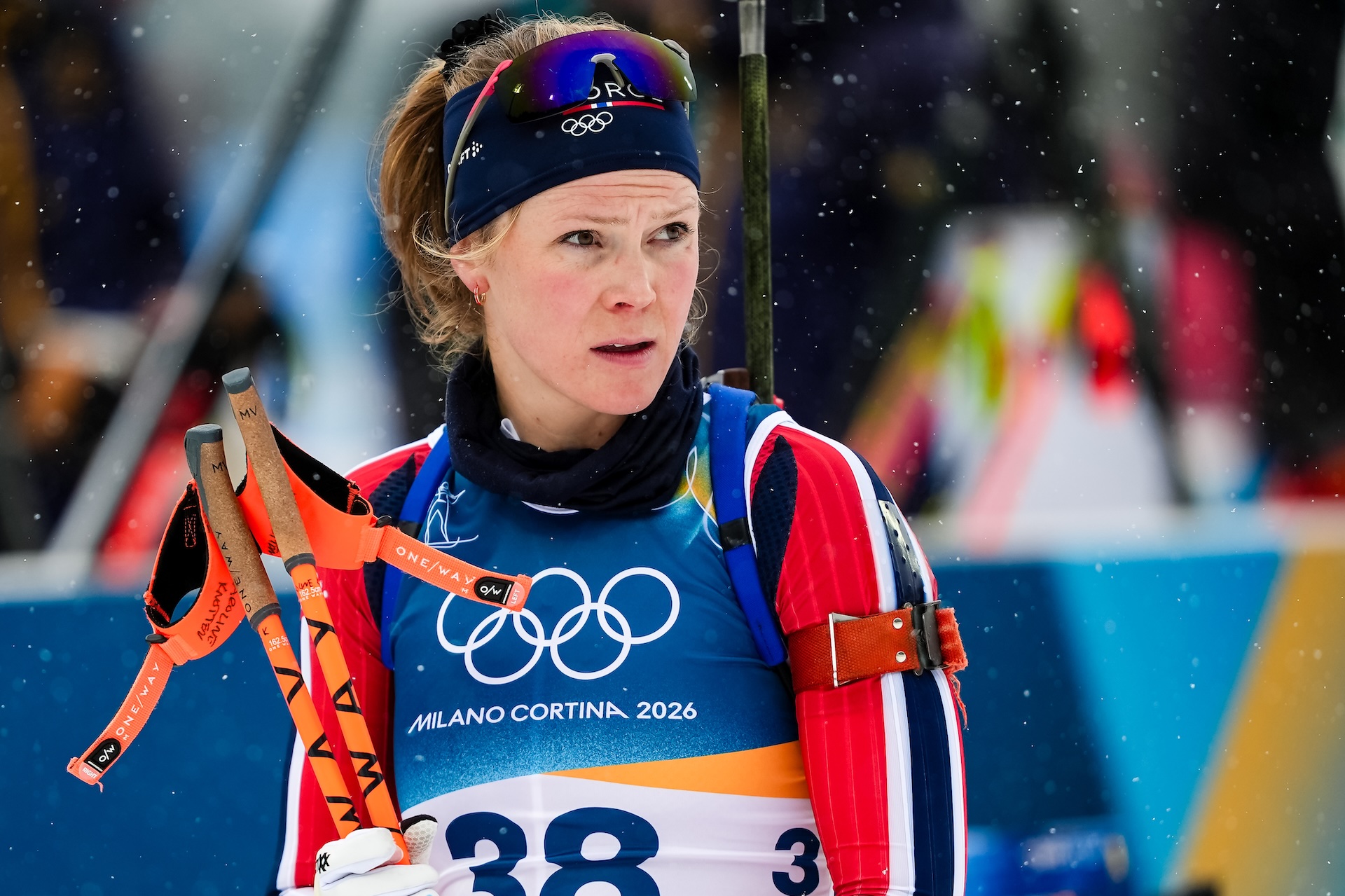
One year after her contentious departure from the Norwegian national biathlon team, a period marked by her disagreement with the previous coaching staff’s training philosophy, Karoline Knotten has officially rejoined the elite squad. The 31-year-old biathlete, who has since enjoyed a remarkably successful season competing independently, cited the significant coaching overhaul as the sole reason for her return. This decision signifies a pivotal moment for both Knotten and Norwegian biathlon, potentially reshaping the team’s trajectory towards the next Olympic cycle.
Knotten’s absence from the national team followed a period of significant friction. In late 2023, she was reportedly dropped from the squad due to a divergence in opinion regarding the training methods and overall program implemented by then-head coaches Patrick Oberegger and Sverre Håber Kaas. This disagreement led Knotten to pursue a season of private training, a decision that, in retrospect, proved to be strategically astute. Despite operating outside the established national team structure, she achieved a bronze medal at the 2026 Winter Olympics and secured an impressive six podium finishes in World Cup events, including two victories. This stellar performance underscored her undeniable talent and competitive drive, inevitably drawing attention back to her potential role within the national program.
The catalyst for Knotten’s reintegration appears to be the complete restructuring of the coaching team. Oberegger and Kaas are no longer part of the national squad, replaced by new leadership that has evidently aligned with Knotten’s expectations. Speaking to Nordic Magazine, Knotten expressed her long-held desire to return to the national team but emphasized that this return was contingent on a change in coaching personnel. "I wanted to come back to the national team the whole time, but not until there were new coaches," Knotten stated. The appointment of Sverre Olsbu Røiseland as a new coach was a particularly significant factor in her decision. "When Sverre Olsbu Røiseland was hired as the new coach, I knew I wanted to come back," she confirmed, highlighting Røiseland’s influence in her decision-making process.
A New Era of Coaching: Welcoming Familiar and Fresh Faces
The coaching landscape within the Norwegian biathlon team has undergone a significant transformation. Alongside Sverre Olsbu Røiseland, Marthe Kristoffersen has also been appointed to a coaching role. Kristoffersen, a former World Cup competitor herself, brings a wealth of experience to the team. Her previous coaching tenure includes two successful seasons with the Norwegian cross-country skiing team, specifically with Team Eksjøhus. Prior to that, she accumulated several years of experience working with the Norwegian Ski Federation’s regional team, Elon Innlandet.
Knotten has expressed considerable enthusiasm for the prospect of working under Kristoffersen’s guidance. The prospect of having a female coach is particularly noteworthy for Knotten, who acknowledges a limited history of working with women in coaching roles throughout her career. "It is an honor to have her as a coach. I haven’t had many female coaches in my career, so it will be interesting to see how it will be," Knotten commented. While emphasizing that competence and enthusiasm are the paramount qualities in a coach, she conveyed satisfaction with what she has observed so far. This sentiment suggests a positive initial impression and a hopeful outlook for the collaborative dynamic.
The Value of Team Cohesion: Beyond Individual Success
While Knotten’s private season was marked by individual triumphs and undeniable sporting success, she openly admits to having missed the camaraderie and collective spirit of being part of a national team. Following her separation from the national squad, Knotten trained independently, supported by a private team. This support system primarily consisted of Roger Grubben as her coach and her mother, Ann Karin Offigstad Knotten, who served as her day-to-day manager and "boss." This arrangement allowed her a high degree of autonomy and control over her training regimen, which clearly paid dividends.
However, the psychological and social aspects of elite sport often extend beyond purely physical performance. The shared experiences, mutual support, and collective drive inherent in a team environment are crucial for many athletes’ motivation and overall well-being. Knotten’s acknowledgment of missing "the fellowship" underscores the importance of these intangible factors. Her return to the team signifies a desire to reintegrate into this collective dynamic, aiming to leverage the synergy of working alongside her peers and contributing to the broader goals of Norwegian biathlon.
A Strengthened Elite Squad for the Future
Knotten’s re-entry into the national team positions her as one of six athletes on the elite squad for the 2026-2027 season. This select group includes some of Norway’s most prominent biathletes: Maren Kirkeeide, Juni Arnekleiv, Ingrid Landmark Tandrevold, Marthe Kråksund Johansen, and Gro Randby. The inclusion of Knotten, with her recent individual successes and proven track record, adds significant depth and competitive firepower to an already formidable roster. "I am really looking forward to it, and I hope we can take steps together," Knotten expressed, conveying her anticipation and commitment to contributing to the team’s collective progress.
Her career trajectory is one of consistent achievement. The 31-year-old from Lillehammer is embarking on her ninth season in the World Cup circuit. Since her debut in Pokljuka in 2018, she has participated in 190 World Cup races for Norway. Her record speaks volumes about her sustained excellence: she has stood on the podium 30 times and secured 14 victories. This impressive statistics solidify her status as a top-tier athlete, capable of contending for victories on any given race day.
Historical Context and Previous Disagreements
The circumstances surrounding Knotten’s initial departure from the national team were a topic of considerable discussion within the Norwegian sports media. While the specific details of the disagreements over training methods were not fully disclosed publicly, the general sentiment indicated a fundamental difference in approach between Knotten and the then-coaching staff. Elite athletes often have deeply ingrained beliefs about what works best for their bodies and performance, and any perceived misalignment can lead to significant friction.
The 2022-2023 season saw Knotten’s performance dip slightly, which may have been a contributing factor to the team’s decision-making process regarding her inclusion and the direction of her training. However, her subsequent private season, culminating in Olympic success and multiple World Cup podiums, serves as a powerful testament to her self-awareness and her ability to adapt and excel under a different training paradigm. This outcome inevitably led to a reassessment of the situation by the Norwegian Biathlon Federation.
Analysis of Implications and Future Prospects
Knotten’s return is more than just a personal reintegration; it carries broader implications for the Norwegian biathlon program. Her individual success while training privately demonstrated that alternative training models can be highly effective. This could lead to a more open and adaptable approach within the national team structure, potentially fostering greater individualization of training plans. The federation’s willingness to welcome back an athlete who previously left due to coaching disagreements suggests a commitment to pragmatism and prioritizing athlete well-being and performance.
The inclusion of Marthe Kristoffersen as a coach also presents an interesting dynamic. Her experience in cross-country skiing, a sport with significant parallels to biathlon, could bring fresh perspectives and innovative training techniques. Furthermore, having a female coach on the team may resonate particularly well with some of the female athletes, fostering a unique understanding and support system.
The immediate future for Knotten and the national team will involve integrating her seamlessly back into the team’s operations. The focus will likely be on building strong working relationships with the new coaching staff and her teammates, aiming to harness the collective strength of the squad. With the next Olympic Games on the horizon, the Norwegian team is undoubtedly looking to maximize its potential, and Knotten’s presence is a significant boost to those ambitions. Her journey from athlete outside the system to a key member once again highlights the dynamic and sometimes unpredictable nature of elite sports careers and the importance of adaptable leadership within national sporting federations. The success of this renewed partnership will be closely watched as the season progresses and as the team looks towards future international competitions.

