
The International Ski Federation (FIS) has formally announced the framework for the 2026-2027 Alpine Ski World Cup season, marking the 61st year of the world’s premier international circuit for alpine skiing. Spanning two continents and featuring a rigorous schedule for both men and women, the season is set to commence in the traditional glacier setting of Sölden, Austria, in October 2026 and will conclude in March 2027 at the Sun Valley resort in Idaho, USA. This upcoming season is distinguished not only by its grueling calendar of speed and technical disciplines but also by the inclusion of the 49th Alpine World Ski Championships, which will take place in the Swiss resort of Crans-Montana.
As the global skiing community prepares for this milestone season, the schedule reflects a strategic balance between historical European "Classics" and an expanding footprint in North America. The 2026-2027 campaign serves as a vital bridge between the 2026 Milano-Cortina Winter Olympics and the 2029 World Championships in Narvik, Norway. Consequently, the season is expected to be a period of intense transition, infrastructure testing, and the emergence of a new generation of talent following the post-Olympic reshuffling of national teams.
The 49th FIS Alpine World Ski Championships: Crans-Montana 2027
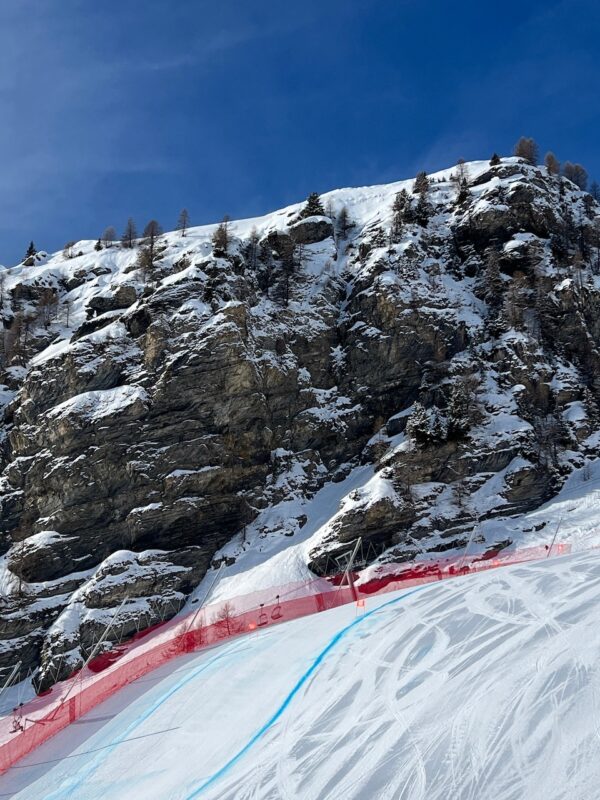
While the World Cup circuit tracks the overall season-long performance of the world’s best skiers, the undisputed pinnacle of the 2026-2027 winter will be the World Championships in Crans-Montana, Switzerland. Scheduled from February 1st to 14th, 2027, the event returns to the iconic Haut-Plateau for the first time in exactly four decades, following the legendary 1987 championships.

Crans-Montana has spent the last two decades solidifying its reputation as a premier host, having organized consistent World Cup and European Cup events since 2008. The resort’s resume includes the 2009 European Cup finals and the 2011 Junior World Championships, providing a proven operational foundation for an event of this magnitude. Local organizers have confirmed that the preparation phase is now in its most critical stage. With less than a year to go until the opening ceremony, the focus has shifted to large-scale volunteer recruitment, the commencement of ticket sales, and the finalization of temporary infrastructure to accommodate the tens of thousands of spectators expected to descend upon the Valais region.
"Crans-Montana is entering a key preparation phase," a representative from the resort stated. "Volunteer recruitment, ticket sales, and infrastructure planning are now underway as the destination prepares for one of the biggest events in Alpine skiing." The technical demands of the Mont Lachaux and Nationale courses are expected to provide a formidable challenge for the athletes, ensuring that the 49th edition of the championships honors the legacy of the 1987 event while showcasing modern competitive standards.
The Season Opener and the North American Swing
The 2026-2027 World Cup season follows the established tradition of beginning on the Rettenbach Glacier in Sölden, Austria. The season-opening Giant Slalom races for women and men are scheduled for October 24th and 25th, respectively. Following the glacier opener, the tour moves to Northern Europe for Slalom events in Levi, Finland, and then back to the Alps for the Gurgl Slalom in Austria.
In a move to maximize the early-season snow reliability of high-altitude North American resorts, the tour will cross the Atlantic in late November. The men’s circuit will visit Copper Mountain, USA, for a Super-G and Giant Slalom, while the women’s circuit returns to Killington, Vermont. Killington’s return is particularly noteworthy; the venue was absent from the 2025-2026 calendar to allow for massive upgrades to its snow-making systems and chairlift infrastructure, specifically the replacement of aging lifts that serve the Superstar trail.
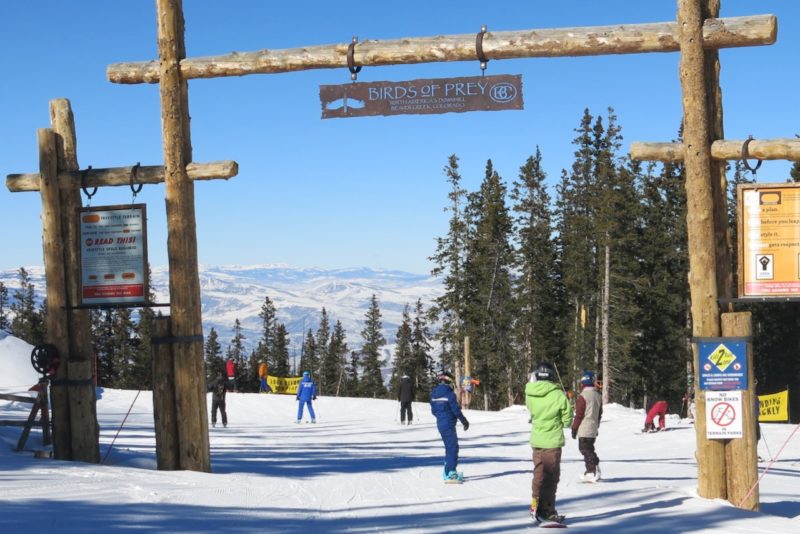
The North American leg continues into December with the men moving to Beaver Creek, Colorado, for a comprehensive "speed" weekend featuring two Downhills, a Super-G, and a Giant Slalom on the legendary Birds of Prey course. Simultaneously, the women will compete in Tremblant, Canada, for a double-header of Giant Slaloms before heading to Beaver Creek themselves. The inclusion of the women on the Birds of Prey course—traditionally a men’s speed venue—marks a continued effort by FIS to provide women with more challenging and iconic downhill terrain.
Winter Classics and Technical Innovation in the Alps
Returning to Europe in mid-December, the circuit enters its most traditional phase. Val d’Isère, France, will host the men’s technical events, while St. Moritz, Switzerland, will host the women’s speed events. St. Moritz is notably reintroducing a Giant Slalom to its program for the first time since 2016, adding variety to a venue usually dominated by Super-G.
The 2026-2027 season also emphasizes the modernization of classic venues through night racing. Alta Badia, Italy, will debut its first-ever Men’s Night Slalom just before Christmas, made possible by a significant investment in a new state-of-the-art floodlighting system. Similarly, Flachau, Austria, will host a Night Giant Slalom and a Night Slalom for the women in early January. These night events are designed to capture peak-time television audiences and enhance the atmosphere for spectators on-site.
A new addition to the calendar is Gosau, Austria, which will host its first-ever World Cup races on December 28th and 29th, taking the slot traditionally held by Lienz. Furthermore, Bormio, Italy, returns to its regular spot on the World Cup calendar. After serving as a primary venue for the 2026 Winter Olympics, Bormio will once again offer its notoriously icy and physically demanding Stelvio course for the men’s year-end speed races.

The "January Gauntlet": Tradition and Legacy
January remains the most prestigious month for Alpine skiing, featuring the "Big Three" Swiss and Austrian classics: Adelboden, Wengen, and Kitzbühel. These venues are the only three to have been part of the World Cup circuit since its inception in 1967.
The month begins with the technical mastery required at Adelboden’s Chuenisbärgli, followed by the longest downhill in the world at Wengen’s Lauberhorn. The crescendo of the month occurs in Kitzbühel, where the Hahnenkamm races—specifically the Streif downhill—remain the ultimate prize in professional skiing. The inclusion of Cortina d’Ampezzo later in the month ensures that the legacy of the 2026 Olympics continues to drive interest in the sport, as the "Queen of the Dolomites" remains a staple for women’s speed events.
Late Season Adjustments and the Road to Narvik 2029
The post-World Championship period in late February and March features several strategic venue shifts. Garmisch-Partenkirchen, Germany, will take over two women’s downhill races originally slated for Lenzerheide, Switzerland, due to course limitations on the latter’s upper sections. However, Lenzerheide will retain its Super-G events.
Saalbach, Austria, which hosted the 2025 World Championships, will remain a key fixture with two speed races in late February. In Scandinavia, the Swedish venue of Åre has been moved to the men’s calendar for technical races in mid-March, while Soldeu in Andorra takes Åre’s former spot on the women’s circuit.

Perhaps the most significant long-term development is the provisional scheduling of women’s races in Narvik, Norway, in March 2027. Narvik is currently undergoing extensive renovations and infrastructure development in preparation for hosting the 2029 World Championships. The 2027 races will serve as a critical "test event" to evaluate the resort’s readiness for 2029, though this remains subject to final FIS confirmation based on construction progress.
The Grand Finale: Sun Valley 2027
The season will conclude at Sun Valley, Idaho, which serves as the host for the 2026-2027 World Cup Finals. This marks the second time the prestigious season-ending event will be held in Sun Valley, a resort with a deep history in American ski racing.
The finals are structured to provide a definitive conclusion to the season’s title races for the Crystal Globes. The schedule is as follows:
- March 20–21: Men’s and Women’s Downhill and Super-G (Speed Events).
- March 23–25: Men’s and Women’s Giant Slalom and Slalom (Technical Events).
The races will take place on the "Challenger" course, a run known for its sustained steepness and technical complexity. By hosting the finals in the United States, FIS continues its push to increase the sport’s profile in the North American market, capitalizing on the popularity of American stars and the world-class facilities available in the Rocky Mountains.
Analysis of Implications: A Season of Stability and Growth
The 2026-2027 season represents a calculated effort by FIS to maintain the sport’s heritage while adapting to 21st-century challenges. The increased number of night events and the return to high-altitude venues like Copper Mountain and Beaver Creek suggest an organization keenly aware of the need for snow security and broadcast flexibility.
From a competitive standpoint, the season will be defined by how athletes manage the transition from the 2026 Olympic cycle. Historically, the year following an Olympics sees a high rate of veteran retirements and a surge in performance from younger "dark horse" contenders. With the World Championships in Crans-Montana acting as a mid-season focal point, the 2026-2027 World Cup will be a test of endurance and peak performance timing.
Furthermore, the logistical complexity of the season—ranging from the Arctic Circle in Finland to the high deserts of Idaho—highlights the massive economic engine behind Alpine skiing. The investment in new lighting in Alta Badia and Flachau, and the infrastructure overhaul at Killington, demonstrate that despite the environmental pressures facing winter sports, the World Cup remains a vital and evolving global property. As the 61st season approaches, the focus remains on the purity of the race: the hunt for hundredths of a second on the world’s most demanding slopes.

