
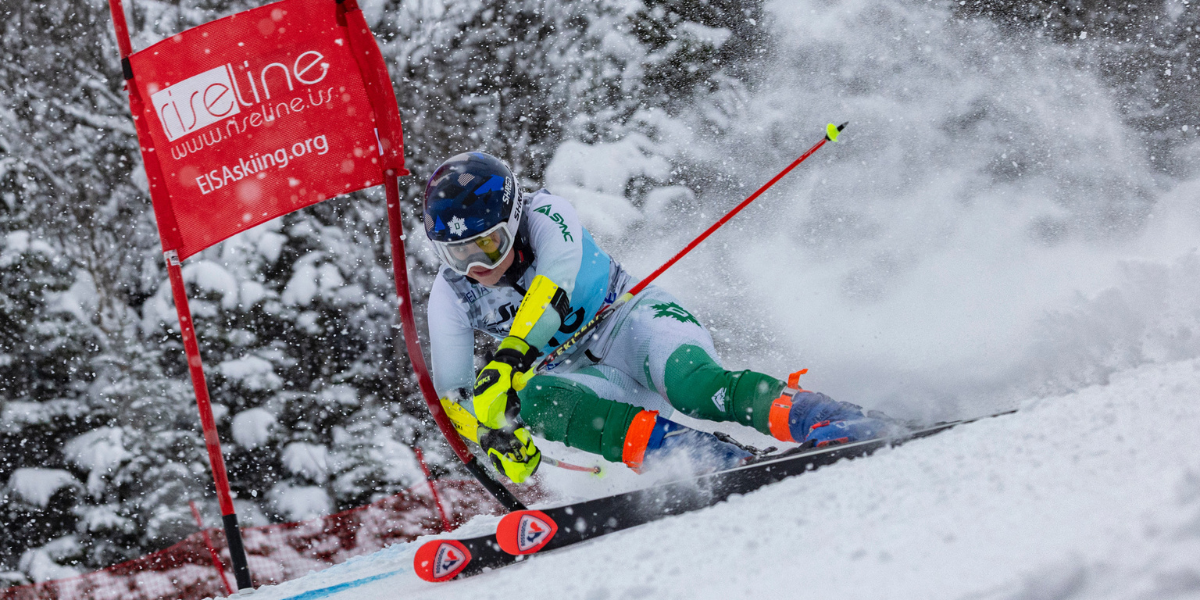
Beatrice May, a freshman at Dartmouth College, found her collegiate ski racing season take an unanticipated turn, culminating in an extraordinary qualification for the 2026-27 Stifel U.S. Ski Team. Initially focused on technical events and the collegiate circuit, May’s consistent, breakout performances in downhill during the NorAm Cup circuit unexpectedly propelled her into the national team pipeline, a feat she herself admits she hadn’t fully comprehended as it was unfolding. Her remarkable journey underscores the dynamic and unpredictable nature of elite ski racing, where raw talent and adaptability can forge new career paths.
A Season of Unforeseen Triumphs and Strategic Shifts
Entering her freshman year, May’s athletic calendar was meticulously planned around the demands of NCAA racing and the pursuit of a spot at the FIS Junior World Ski Championships in technical disciplines. She had honed her skills over years, primarily in slalom and giant slalom, making her sudden dominance in speed events all the more surprising. The NorAm Cup, North America’s premier developmental circuit, became the unexpected crucible for her transformation. It serves as a vital proving ground for aspiring World Cup athletes, offering critical FIS points and a direct pathway to the U.S. Ski Team for those who meet stringent performance criteria.
May’s performance throughout the NorAm downhill season was nothing short of phenomenal. She secured five top-10 finishes, including a decisive victory in the final downhill race of the season and a podium finish at Whiteface Mountain in February. These consistent results culminated in a third-place ranking in the NorAm downhill standings. This robust showing not only marked her as a formidable competitor but also quietly satisfied the demanding criteria for the Stifel U.S. Ski Team, a benchmark typically achieved by more seasoned athletes or those explicitly targeting speed events. The irony was not lost on May, who confessed, "I hadn’t really looked at the criteria because I thought it didn’t apply to me." This revelation speaks volumes about her understated approach and the organic evolution of her racing prowess.
Her exceptional NorAm campaign brought her tantalizingly close to an automatic World Cup start position, missing it by a mere 30 points. While a significant achievement, it was the broader impact of her downhill results – securing a spot on the national team – that truly redefined her trajectory. This unexpected twist for a skier primarily focused on technical disciplines and collegiate competition highlights a rare versatility and natural aptitude for speed.
From New Hampshire Slopes to National Team Aspirations: A Chronology of Development
Beatrice May’s skiing narrative began, like many in New England, steeped in family tradition and the charm of local slopes. Her earliest memories are rooted in the joy of the sport, starting at the tender age of two. Cranmore Mountain in New Hampshire served as her initial playground, a place where laughter with her older brother and father on trails like "Easy Street" defined her introduction to skiing. The atmosphere was playful, unstructured, and devoid of the competitive pressures that would later emerge. "It was a lot of fun," she reminisces, recalling days spent skiing with a cherished stuffed animal.
The transition from playful recreation to competitive aspiration began at age eight when she joined Cranmore’s U10 race program. By U12, the nascent desire to compete solidified into a serious commitment. "I realized that I really wanted to keep doing it and it became something that was super important to me," May explains. This burgeoning passion was significantly influenced by her older brother, whose own involvement in ski racing and subsequent enrollment at Burke Mountain Academy illuminated a clear path for Beatrice.
The Formative Influence of Burke Mountain Academy
For ambitious young ski racers in the Eastern United States, Burke Mountain Academy (BMA) stands as an iconic institution, renowned for its rigorous academic and athletic development programs. Founded in 1970, BMA has a storied history of producing Olympic and World Cup athletes, fostering a unique culture where elite skiing is integrated with a demanding scholastic curriculum. For May, the connection to Burke developed organically and proved profoundly impactful.
Her initial exposure to Burke coaches during summer camps at Mount Hood and Loveland left an indelible impression. She quickly recognized the caliber of coaching and the accelerated learning environment. "They were just so great to me, and I felt like I learned so much and improved so quickly," May recounts. A pivotal figure in her development was coach Ashley Davenport, who provided not only expert guidance but also personal support. Prior to her family’s full relocation to East Burke, Vermont, May even resided with Davenport’s family during parts of middle school to facilitate her training with the academy. This deep level of personal investment from her coaches underscored Burke’s commitment to its athletes.
Eventually, her family made the full move to East Burke, allowing May to continue her academy years as a day student, living just a short distance from the campus. The comprehensive approach at Burke, she believes, extended far beyond the technical aspects of skiing. "The community is so strong and the coaches and all the staff care so much about you," May affirms. "It just really forces you to figure out what you want and how you can find success and what habits work for you." The self-discipline, resilience, and strategic thinking instilled at BMA became foundational elements of her athletic and personal growth, lessons that would prove invaluable in her collegiate and burgeoning professional career.
Navigating the Pressures of Collegiate Ski Racing at Dartmouth
May’s arrival at Dartmouth College ushered in a new chapter, presenting a unique set of challenges and opportunities distinct from her academy experience. While familiar with the Eastern collegiate racing circuits and many of her competitors, the mental and emotional landscape of NCAA skiing proved to be a significant adjustment. The individualistic nature of junior racing gave way to a team-centric environment, fundamentally altering the stakes of each run.
"It’s like turning ski racing into a team sport," May observes, highlighting the collective responsibility inherent in collegiate competition. A DNF (Did Not Finish) or a suboptimal performance no longer solely impacted her individual standing but carried implications for the entire team’s aggregate score. This added layer of pressure, while initially daunting, ultimately fostered a deeper understanding of teamwork and collective endeavor. Despite admitting that her freshman season at Dartmouth did not yield the individual results she had initially hoped for, the experience was transformative. "I certainly learned a lot," she reflects, expressing optimism for future seasons and her ability to adapt to the collegiate format. The opportunity to balance elite academics with high-level athletics at an Ivy League institution remained paramount, a dream solidified when she received her Dartmouth acceptance notification while competing at NorAm races in Panorama, British Columbia – "It was such a great feeling," she recalls.
Junior Worlds: A Milestone Achievement Above the Arctic Circle
A significant personal goal for May’s freshman season was to qualify for the FIS Junior World Ski Championships. This aspiration, nurtured for years, culminated in her selection to represent the United States at the prestigious event in Narvik, Norway, located above the Arctic Circle. The experience was not only a career highlight but also a profound personal journey.
The Junior World Championships represent a crucial international platform for emerging talent, bringing together the brightest young skiers from around the globe. May’s participation was particularly noteworthy as she competed in every contested event: Team Combined, Super-G, Giant Slalom, and Slalom. (The downhill event was regrettably canceled due to adverse weather conditions). "I’ve never really been able to represent the U.S. on that scale," May stated, emphasizing the immense pride she felt. "So to be able to do it also in all events – it was just a super cool experience all around." This multi-event engagement underscored her versatility and competitive spirit, proving her capability across different disciplines on a world stage.
Beyond the competitive aspect, the geographical and cultural immersion in Narvik left a lasting impression. May had never ventured so far north, and the opportunity to witness the ethereal beauty of the Northern Lights during training above the Arctic Circle was a "bucket list" moment. This blend of athletic challenge and unique cultural experience made her Junior Worlds debut an unforgettable chapter in her burgeoning career.

The Downhill Revelation: From Technical Focus to Speed Dominance
The most startling development of May’s season was her unexpected prowess in downhill. Despite her extensive background and training emphasis on technical events like giant slalom and slalom, it was the raw speed discipline that ultimately opened the door to the U.S. Ski Team. Her consistency in NorAm downhill races was remarkable: she finished in the top 15 in every race she completed, save for one DNF on Copper Mountain, and secured five top-10 placements.
What makes this breakthrough even more extraordinary is the context: "It had been almost like 10 months since I last skied speed," May revealed, indicating a significant lack of specialized preparation. This suggests an innate talent for downhill and a remarkable ability to transfer skills across disciplines. May attributes much of this success to the technical refinements she had been working on in giant slalom. "I think the things I was working on were patience and gradual rolling onto the new ski," she explained. "I think that very directly translates into speed." This insight underscores the interconnectedness of ski racing fundamentals, where mastering subtle technical nuances in one discipline can unlock potential in another.
She also credits the guidance of coaches within the regional development system, including former World Cup winner Alice McKennis Duran, for her rapid progression in speed events. McKennis Duran, a proven speed specialist, likely provided invaluable insights into line, aerodynamics, and mental approach specific to downhill. However, beyond technical coaching, May discovered a profound connection to the discipline itself. "I enjoy it so much and I love going fast," she articulated, pinpointing the intrinsic motivation that often underpins athletic excellence. This natural affinity, combined with transferable skills and expert mentorship, created the perfect storm for her downhill breakthrough.
The Road Ahead: Balancing Collegiate Ambition and National Team Demands
Beatrice May now stands at a pivotal juncture in her athletic career. With one season of NCAA racing under her belt, Junior World Championship experience, and the coveted Stifel U.S. Ski Team criteria secured, she faces the complex challenge of balancing elite collegiate athletics with the demands of a national team program. This dual-path approach is a significant undertaking, requiring meticulous planning, unwavering commitment, and flexibility from both the athlete and the institutions involved.
Historically, athletes have navigated this balance with varying degrees of success. Some opt to defer or take leaves of absence from college to fully commit to the national team, while others attempt to integrate both, often with reduced collegiate racing schedules. The U.S. Ski Team often encourages athletes to pursue higher education, recognizing the importance of holistic development, but the rigorous international training and competition calendar can make full-time enrollment challenging.
"I’m going to try to do both to some degree," May stated, acknowledging the uncertainty of the exact path forward. This decision will undoubtedly involve close consultation with Dartmouth’s athletic department, her academic advisors, and U.S. Ski & Snowboard officials to craft a sustainable and effective plan. The implications for her development are significant. A full commitment to the U.S. Ski Team would provide access to unparalleled coaching, training facilities, and international competition exposure, accelerating her progression toward the World Cup circuit. Maintaining her connection to Dartmouth, conversely, offers a robust academic environment, team camaraderie, and a valuable support system that many athletes cherish.
Regardless of the precise balance she strikes, May’s unexpected downhill season has undeniably altered the conversation around her future. Her versatility across technical and speed events positions her as a unique asset for the U.S. Ski Team, offering diverse opportunities for competition. As she prepares for the next phase of her career, one thing remains certain: Beatrice May has firmly established herself as a rising star in American ski racing, her journey a testament to talent, adaptability, and the thrill of embracing the unexpected. The ski world will be watching to see how this remarkable freshman continues to carve her own unique path to success.

