
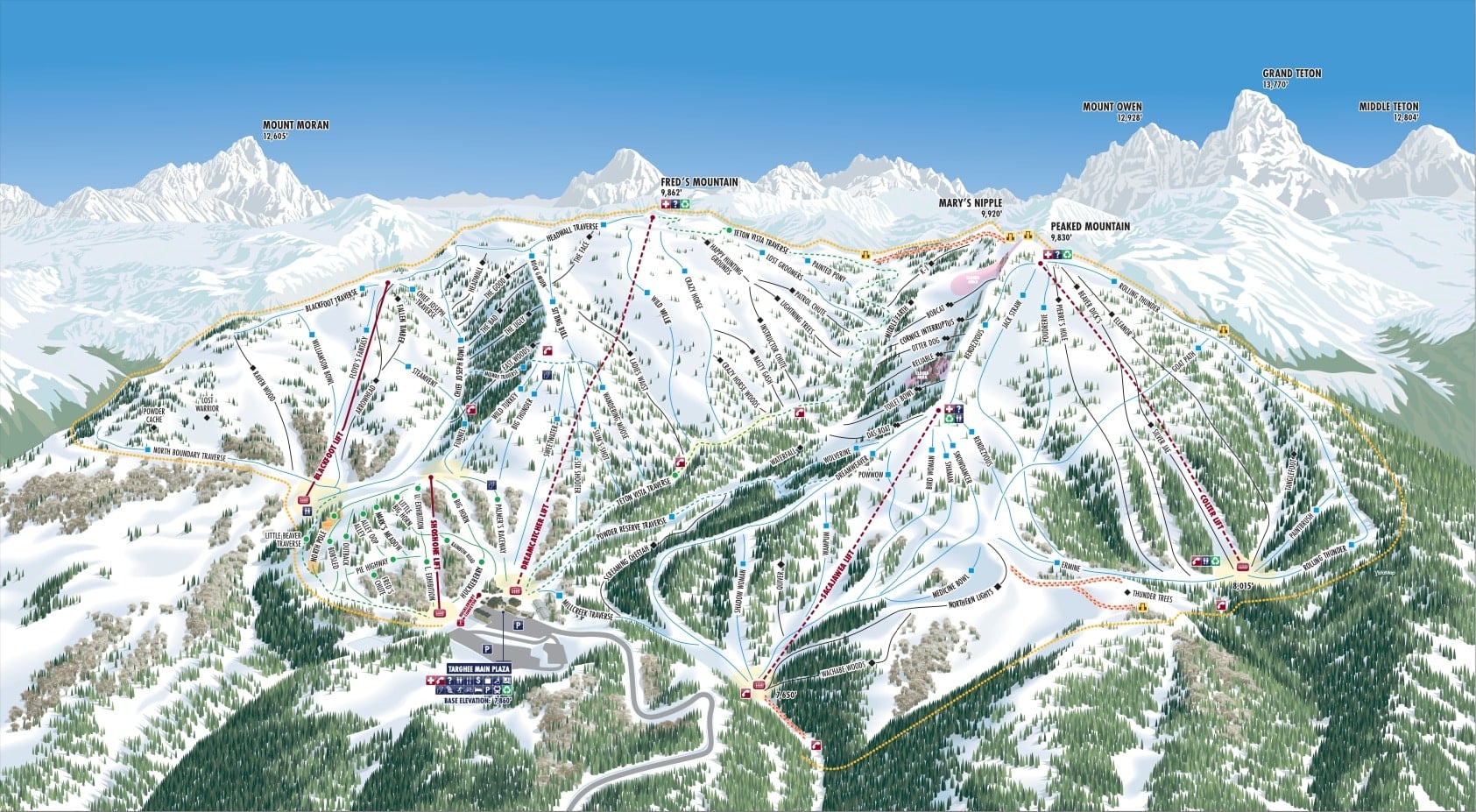
The proposed expansion of Grand Targhee Resort, a prominent ski destination straddling the Idaho-Wyoming border, has officially entered a crucial objection period following preliminary approval from the U.S. Forest Service. While this marks a significant step forward for the resort’s long-term vision, it is far from a guaranteed realization. The coming weeks are poised to be a period of intense scrutiny and potentially significant pushback from various stakeholders, including environmental advocacy groups and, notably, the local governments whose jurisdictions are directly impacted by the resort’s growth. The resort’s master plan outlines an ambitious strategy for increased capacity, encompassing new skiable terrain, upgraded lift infrastructure, enhanced guest facilities, and expanded services. However, the path from preliminary approval to full implementation is complex and fraught with potential challenges.
A Detailed Look at the Expansion Proposal
The core of Grand Targhee’s expansion initiative is rooted in a desire to elevate the guest experience and accommodate growing demand, while also addressing operational needs. The preliminary approval from the Forest Service, while a positive development, comes with caveats. Notably, the proposed boundary expansion has been subject to adjustments, and a key component of the plan – the construction of an on-mountain restaurant – will require separate site-specific approval. This layered approval process highlights the sensitivity of the project and the various ecological and community considerations at play.
The expansion plan, in its entirety, aims to unlock new areas of the mountain for skiing and snowboarding, potentially increasing the resort’s overall capacity and appeal. This includes the development of new trails, the installation of modern lift systems designed to improve skier flow and access, and the construction of new buildings to support operations and enhance visitor amenities. The resort has previously provided a more in-depth overview of these plans, emphasizing the potential economic benefits and improved recreational opportunities.
The Crucial Role of Local Government: A Tale of Two Teton Counties
The differing perspectives and priorities of the two Teton Counties – one in Idaho and the other in Wyoming – represent a significant focal point in the ongoing debate surrounding Grand Targhee’s expansion. The resort’s unique geographical position means it draws visitors and economic activity from both states, yet the tax revenue generated primarily benefits Teton County, Wyoming. This disparity has fueled considerable discussion and strategic planning within Teton County, Idaho.
Teton County, Idaho: Seeking Financial Equity
For Teton County, Idaho, the primary concern is the perceived lack of direct financial benefit from the presence of Grand Targhee Resort. Despite a significant number of visitors and residents traveling through Idaho’s Teton County to access the resort, the associated tax revenue flows predominantly to the Wyoming counterpart. This situation is particularly acute for communities within Idaho’s Teton County that are reportedly grappling with funding basic public services.
In response to this fiscal imbalance, Teton County, Idaho, has initiated efforts to explore potential revenue-sharing agreements with Teton County, Wyoming. A report by the Jackson Hole News & Guide detailed that Idaho’s Teton County has committed funds towards a collaborative study with Wyoming’s Teton County. The objective of this study is to comprehensively analyze the economic and environmental impacts of Grand Targhee Resort on both communities and to determine the feasibility of a mutually beneficial tax revenue-sharing arrangement.
Teton County Commissioner Dan Powers has articulated a forward-thinking approach to these discussions. "Teton County, Wyoming, is making an effort to collaborate with us, talk to us, and we should be entering into this meeting in that spirit – in a spirit of collaboration," Commissioner Powers stated. "Offering to pay our small share is a good start to getting that meeting off upright foot." This sentiment suggests a willingness on the part of Idaho’s Teton County to engage constructively, with the potential for tax revenue acting as a catalyst for greater receptiveness to the resort’s growth plans. Historically, Idaho’s Teton County has expressed reservations regarding the expansion, but the prospect of financial participation could significantly alter this stance.
Teton County, Wyoming: Asserting Environmental and Boundary Concerns
In stark contrast, Teton County, Wyoming, has adopted a more assertive and, in some aspects, adversarial position regarding Grand Targhee’s expansion. This county has formally voiced its opposition to the resort extending its operational boundaries. Their concerns are multi-faceted, encompassing not only the physical expansion of ski terrain but also the potential environmental and aesthetic impacts of new developments, such as the proposed on-mountain restaurant. The construction of such a facility, they argue, could negatively alter the visual landscape from surrounding peaks, impacting the natural beauty that is a cornerstone of the region’s appeal.
The Jackson Hole News & Guide also reported that Teton County, Wyoming, intends to submit a strongly worded letter to the U.S. Forest Service, reiterating their objections. This proactive stance underscores their commitment to safeguarding the existing character of the region and maintaining the resort within its current footprint.
Teton County Commissioner Len Carlman has candidly described the nature of their engagement. "Some parts of it indeed may be helpful and constructive and friendly, but some parts of it strike me as necessarily adversarial," Carlman remarked. "We wanted to keep the resort inside its boundaries." This statement clearly indicates a firm resolve to resist any expansion that encroaches beyond the established perimeters.
Furthermore, Teton County, Wyoming, has signaled a readiness to pursue legal avenues if their concerns are not adequately addressed. Commissioner Luther Propst conveyed this determination: "We’re not hating on anybody. We’re not trying to ruin their lives… I’d love it if we can resolve the issues. If not, I’d like to make sure that the judiciary has the opportunity to weigh in on whether our comments as a cooperative agency have been given the respect that the statutes and regulations warrant." This suggests a willingness to engage in litigation to ensure their objections are heard and considered at the highest levels of regulatory and judicial review, highlighting the seriousness with which they view the potential ramifications of the expansion.
A Timeline of Scrutiny and Decision-Making
The preliminary approval granted by the Forest Service serves as a commencement point for a defined objection period. During this phase, interested parties, including environmental organizations and local government bodies, have the opportunity to formally submit their concerns and arguments against the proposed expansion. Following the objection period, the Forest Service will meticulously review all submitted feedback. This review process will likely involve extensive deliberation, potentially including further consultations with Grand Targhee Resort, the objecting parties, and relevant agencies.
The timeline for this review and the subsequent decision-making process is not explicitly defined but is expected to be thorough, given the complexity of the issues and the significant stakeholder involvement. A final decision on whether to grant full approval for the expansion, or to impose further conditions or modifications, will ultimately rest with the U.S. Forest Service.
Broader Implications for the Region
The Grand Targhee expansion proposal is more than just a resort development project; it is a microcosm of broader debates concerning land use, economic development, and environmental stewardship in mountainous regions. The resort’s growth could bring substantial economic benefits, including job creation and increased tourism revenue, which are attractive propositions for local economies. However, these potential benefits must be weighed against the environmental impacts, such as habitat disruption, increased traffic, and strain on local resources.
The current situation at Grand Targhee underscores the intricate balance required to manage recreational development in sensitive ecosystems. The differing approaches of Teton County, Idaho, and Teton County, Wyoming, highlight the complex intergovernmental relationships that often characterize cross-jurisdictional projects. The outcome of this objection period and the subsequent Forest Service decision will not only shape the future of Grand Targhee Resort but could also set precedents for similar development proposals in other Western U.S. mountain communities. The engagement of environmental groups is also a critical factor, as their input often focuses on the long-term ecological health of the region, ensuring that development is sustainable and responsible.
The resort’s efforts to expand, while driven by a vision for growth and enhanced visitor experiences, are now inextricably linked to the ongoing dialogue about fiscal fairness, environmental preservation, and the responsible management of public lands. The coming months will be pivotal in determining whether Grand Targhee’s ambitious plans will materialize, and under what conditions.
Image Credits: Grand Targhee Resort.

