
Vermont has recently been subjected to a series of extreme weather phenomena, a trend that has become increasingly pronounced in recent years. While heavy snowfall and significant flooding from severe rainstorms have become familiar challenges for the Green Mountain State, a more unusual and destructive event struck last week. A part of Woodstock, a town that has unfortunately become accustomed to the impacts of natural disasters, experienced yet another significant weather event when two tornadoes touched down.
Tornado Outbreak in Central Vermont
On Thursday, severe weather systems swept across New England, with the intensity of the storm reaching a notable peak over Vermont. The National Weather Service (NWS) confirmed that two tornadoes touched down within the state, leaving a trail of damage in their wake. The most significant of these events occurred in West Woodstock, a scenic area known for its natural beauty and its proximity to popular recreational destinations.
West Woodstock Tornado Details
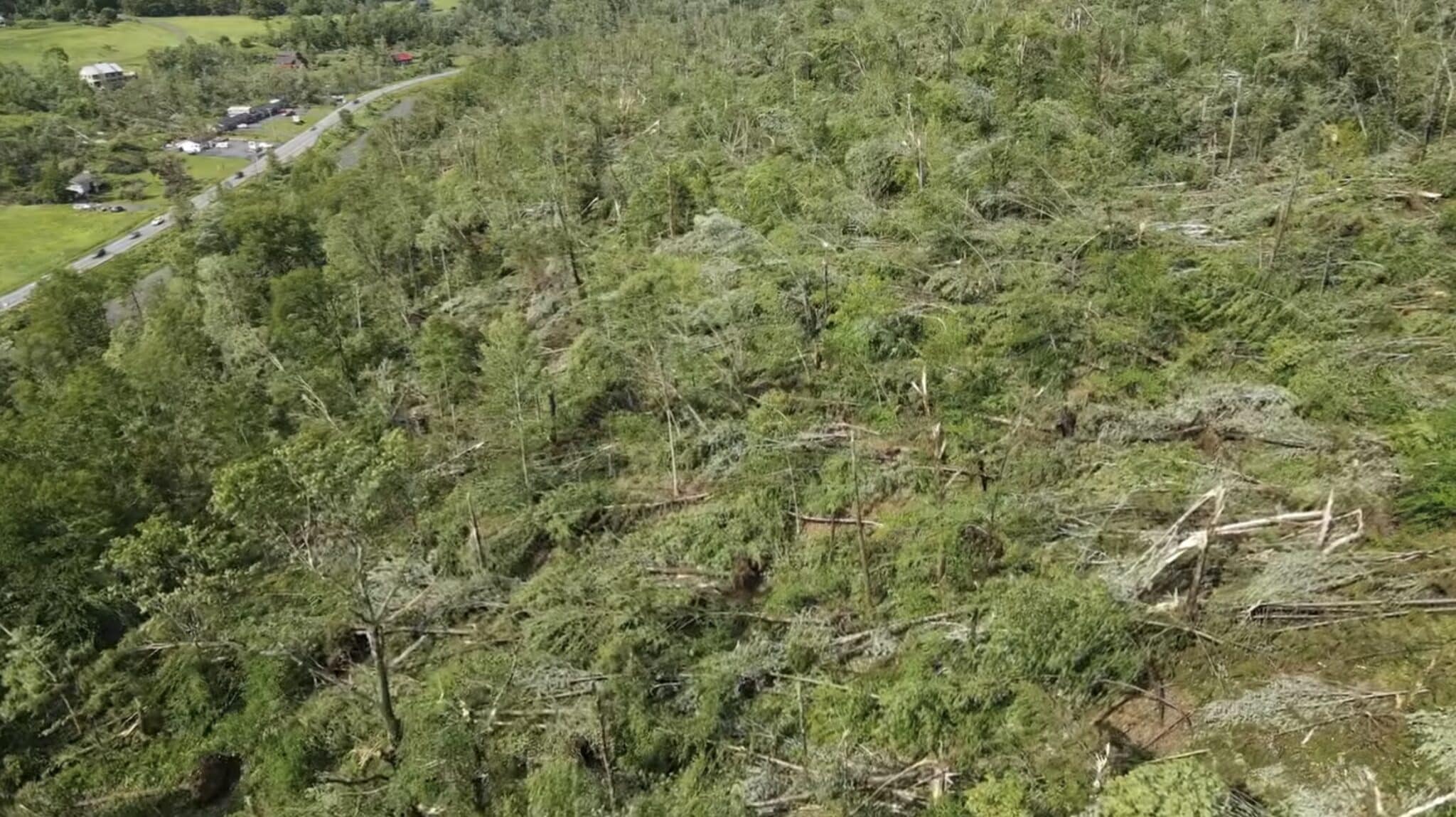
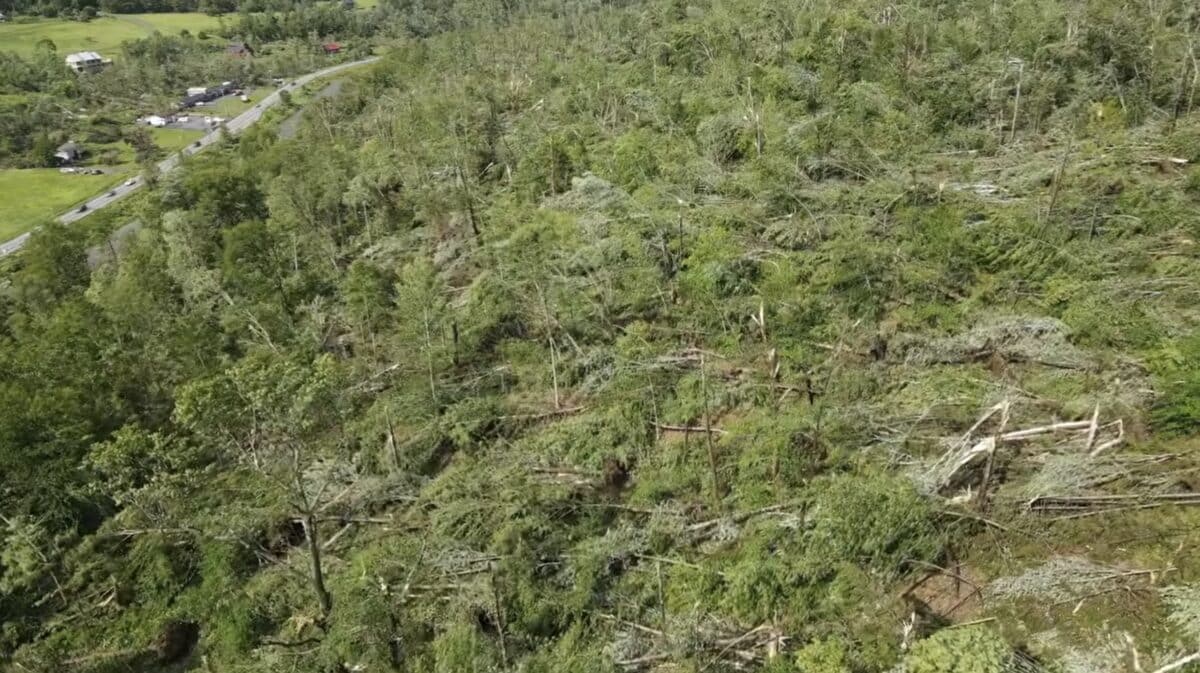
The tornado that struck West Woodstock was classified as an EF1 on the Enhanced Fujita Scale. This classification indicates that the tornado possessed maximum wind speeds estimated to be around 100 miles per hour. The twister carved a path approximately 1.34 miles long, resulting in substantial damage to the local environment and infrastructure. A primary casualty of the storm was the region’s tree cover, with numerous trees being uprooted or significantly damaged. Beyond the natural landscape, multiple buildings in the area also sustained damage, highlighting the destructive power of the event.
The affected area in West Woodstock is situated along U.S. Route 4, a vital corridor that connects Woodstock to Bridgewater and further west towards the popular ski resort town of Killington. This stretch of highway frequently runs parallel to the Ottaquechee River, an area that has previously been vulnerable to flooding. Among the businesses directly impacted by the tornado were the Sleep Woodstock motel, which suffered roof damage, and the Mountain Cremary. This incident echoes the challenges faced by businesses in this vicinity just last year, when flooding in 2023 caused significant damage to properties along the Ottaquechee River. The recurrence of severe weather events in such close proximity raises concerns about the resilience of the region’s infrastructure and its ability to withstand these increasingly frequent natural disasters.
Lincoln Tornado and Broader Context
A second EF1 tornado was reported in Lincoln, a town located near the Sugarbush Resort. While also classified as an EF1 with similar wind speeds, the damage in Lincoln was less conspicuous. This is attributed to the tornado’s path primarily traversing a heavily forested area, where the impact on human structures was minimal. However, the presence of two tornadoes within a single severe weather outbreak in Vermont underscores the unusual nature of the event.
This recent outbreak is not an isolated incident for Vermont. The state has experienced other tornado activity earlier this year, with a tornado touching down in Williamstown back in April. This earlier event, also an EF1, served as a precursor to the more widespread tornado activity observed last week. The increasing frequency of these powerful weather events in Vermont, a state not historically known for frequent tornado activity, is a cause for concern and warrants further investigation into the meteorological factors contributing to these phenomena.
Meteorological Analysis and Supporting Data
The classification of these tornadoes as EF1 is based on damage assessments conducted by meteorologists from the National Weather Service. The Enhanced Fujita Scale categorizes tornado intensity based on the degree of damage caused, correlating it with estimated wind speeds. An EF1 tornado, with winds between 65-85 mph, can cause significant damage, including stripping bark from trees, overturning mobile homes, and damaging roofs. The reported 100 mph winds for the West Woodstock tornado place it at the higher end of the EF1 category, explaining the considerable damage observed.
While Vermont is not considered a prime tornado alley like some Midwestern states, it is situated within a region that can experience tornadic activity under specific atmospheric conditions. These conditions typically involve a strong low-pressure system, atmospheric instability, and sufficient wind shear (changes in wind speed and direction with height). The severe weather that moved through New England on Thursday likely provided the necessary ingredients for tornado formation.
Historical Tornado Activity in Vermont
Historically, Vermont experiences a relatively low number of tornadoes per year compared to more southerly states. According to NOAA’s Storm Prediction Center, the average annual number of tornadoes in Vermont is less than one. However, this average can be misleading, as years with significant outbreaks, like the one experienced last week, can skew the long-term statistics. The occurrence of two EF1 tornadoes in a single day is indeed a rare event for the state. The previous tornado in Williamstown earlier this year also indicates a potential uptick in activity.
Official Responses and Community Impact
Following the tornadoes, emergency management agencies and local authorities in Vermont initiated damage assessments and began coordinating response efforts. The immediate focus was on ensuring the safety of residents, clearing debris from roadways, and assessing the structural integrity of damaged buildings.
Local Reactions and Preparedness
While direct quotes from affected residents were not immediately available in the initial reports, the damage to businesses like the Sleep Woodstock motel suggests a tangible economic impact on the community. The recurring nature of natural disasters in Woodstock, from flooding to now tornadoes, likely heightens community anxiety and underscores the importance of robust disaster preparedness plans. Local officials are expected to work with state and federal agencies to secure aid for recovery efforts.
National Weather Service Involvement
The National Weather Service plays a crucial role in confirming tornado touchdowns through post-storm surveys. Their trained meteorologists analyze radar data, witness accounts, and damage patterns to accurately rate the intensity of tornadoes. This scientific classification is vital for understanding the severity of the event and for informing future preparedness and mitigation strategies. The NWS will likely continue to monitor weather patterns in the region to anticipate and warn of future severe weather events.
Broader Implications and Future Outlook
The recent tornado outbreak in Vermont raises important questions about climate change and its potential influence on weather patterns. While directly attributing any single weather event to climate change is complex, scientists generally agree that a warming planet can lead to more extreme weather events, including more intense storms. The increased frequency of severe weather, including tornadoes in regions not typically associated with them, is a trend that warrants continued scientific scrutiny.
Infrastructure Resilience and Climate Adaptation
The damage sustained by businesses and infrastructure in Vermont highlights the need for increased resilience in the face of a changing climate. This includes investing in stronger building codes, improving early warning systems, and developing more effective strategies for managing natural disasters. For towns like Woodstock, which have experienced multiple types of severe weather events, a comprehensive approach to disaster preparedness and climate adaptation is becoming increasingly critical.
Economic and Social Impact
The economic impact of these tornadoes extends beyond immediate repair costs. It can affect local tourism, business continuity, and the overall recovery of affected communities. The psychological toll on residents who have experienced repeated natural disasters can also be significant. Supporting these communities through long-term recovery and rebuilding efforts will be essential.
The occurrence of two EF1 tornadoes in Vermont serves as a stark reminder of the unpredictable and powerful nature of weather. As the state and the wider region continue to grapple with the impacts of severe weather, a proactive and informed approach to climate adaptation and disaster resilience will be paramount.
Image Credits: WCAX-TV, MyNBC5-WPTZ

